I have a small but growing collection of palm leaf manuscripts so it was interesting to learn more about these manuscripts from this paper
A Selective Review of Scholarly Communications
on Palm Leaf Manuscripts
Abstract - The very purpose of this paper is to provide a meticulous review of
literature on various aspects of palm leaf manuscripts. Through the process of review, it aims to
highlight the antiquity of palm leaf manuscripts, the process of seasoning and writing over the
leaves, the physical, chemical and biological factors of deterioration, the classification and
cataloguing process of manuscripts, different traditional / modern methods of preservation and
conservation as well as the viability and prospects of digital preservation of manuscripts and the
attempts taken by various manuscript libraries for digitization.
http://digitalcommons.unl.edu/cgi/viewcontent.cgi?article=3838&context=libphilprac
Showing posts with label Bibliophilia. Show all posts
Showing posts with label Bibliophilia. Show all posts
Wednesday, August 24


Friday, April 8
A Gentleman's Library
On one of the auction sites that I lurk, I came across this fascinating auction, entitled, A Gentleman's Library: collectibles, Books, Paintings and Curiosities.
And then I saw these 126 objects and sat back to imagine what kind of a library would this be? what kind of a gentleman would that be? it would obviously be a large airy room, with tall wooden bookcases with glass doors somewhere or other, with loads of shelves filled with fascinating curios and objects.
the gentleman is obviously fairly rich, very well educated and very widely read across a variety of subjects, topics, ages and locations. He also has an active imagination and has an eye for the interesting and curious.
As part of my research into spices, I am also checking probate records of spice merchants, and I think what you leave behind is a fascinating indication of what you are. What a fascinating exercise to look at what you leave behind and then try to think about what you were...
btw, didnt buy anything, far too expensive for my taste..
And then I saw these 126 objects and sat back to imagine what kind of a library would this be? what kind of a gentleman would that be? it would obviously be a large airy room, with tall wooden bookcases with glass doors somewhere or other, with loads of shelves filled with fascinating curios and objects.
the gentleman is obviously fairly rich, very well educated and very widely read across a variety of subjects, topics, ages and locations. He also has an active imagination and has an eye for the interesting and curious.
As part of my research into spices, I am also checking probate records of spice merchants, and I think what you leave behind is a fascinating indication of what you are. What a fascinating exercise to look at what you leave behind and then try to think about what you were...
btw, didnt buy anything, far too expensive for my taste..
Thursday, May 21
The beauty of palm leaf manuscripts (3): storage and preservation
As I've mentioned to you earlier kids, we have three old old manuscripts. Not exactly a full library which will need retrieval eh?
But information retrieval is very important these days. If you do computer science, one of the first things they will teach you is to how to do information retrieval and searches. In a variety of areas, you need to know how to categorise information so that you can retrieve it easily. There's no point in having information and not being able to get to it.
Think about it. People Google for information but they have forgotten that Google also filters and arranges information. So for example if I'm looking for a film or museum opening hours, yes Google is fine. But if I'm looking for say information relating to film or collections, I'm not going to start there. That's where Google scholar comes in. Or science direct or other search engines where more detailed and particular information is served up to you.
SEO. search engine optimisation is an entirely newish field where your content is served up. More efficiently.
But here we hark back to an older age where we have Palm leaf manuscripts. How do you store them? One of my ladies, Hypathia, who I've spoken about before, worked in the library of Alexandria. Can you imagine trying to retrieve a scroll from those towering cupboards? Difficult eh?
Love
Baba
The beauty of palm leaf manuscripts (3): storage and preservation - Asian and African studies blog
http://.typepad.co.uk/asian-and-african/2015/02/the-beauty-of-palm-leaf-manuscripts-3-storage-and-preservation.html?utm_campaign=Feed%3A+asian-and-african+%28Asia+and+Africa%29&utm_medium=email&utm_source=feedburner
(via Instapaper)
In my two previous posts on this topic, I looked at palm leaf manuscripts from central Thailand and the northern Thai regions. In this final post on the beauty of palm leaf manuscripts in Tai manuscript cultures, I will take a closer look at traditional retrieval aids, and storage and preservation methods. Some temple libraries held large numbers of manuscripts which were stored in specially made furniture. Due to the fact that many manuscripts were wrapped in a piece of cloth, and the title or contents were rarely mentioned on the front leaf or front cover of a manuscript, quick retrieval of a particular manuscript was only possible if certain finding aids and methods were in place. For example, the manuscripts could be arranged in a systematic order within one cabinet, and several cabinets could be placed in a systematic order in the library building. One important finding aid was the title indicator. A title indicator, which could constitute a beautiful little work of art itself, was attached to a rope, and the rope was wound around the manuscript.

Wooden title indicator covered with black lacquer, and text incised in Tham script on gold background. Lanna, 19th century. British Library, Or.16555. Acquired from Dr Henry Ginsburg’s bequest, in memory of Dr Henry Ginsburg.

Title indicators made from wood or bamboo were important means of identifying manuscripts when these were stored together in large numbers in wooden cabinets. The length of a title indicator could range from 100 to 400 mm. Bamboo and wooden indicators were often simple strips with the title and list of contents of the manuscript incised or written on, but sometimes wooden and ivory indicators could be carved with beautiful floral ornaments. Often they were lacquered red or black and decorated with gold leaf before the text was incised.

Two wooden title indicators covered with red lacquer, with text incised in Tham script on a gold background. Lanna, 19th century. British Library, Or.14528-9.
Monday, May 11
In the original Sleeping Beauty tale – the Princess is raped by the Prince
I came across this bald statement, “in the original Sleeping Beauty Tale, the princess is raped by the prince”. This was totally gobsmacking to me, so I went looking for the original. And found it. It was originally written by a gentleman called as Giambattista Basile in Italy way back in the 16th century.
Here is the original tale’s synopsis.
In Giambattista Basile's version of Sleeping Beauty, the sleeping beauty is named Talia. By asking wise men and astrologers to predict her future after her birth, her father (who is a great lord) learns that Talia will be in danger from a splinter of flax. The splinter later causes what appears to be Talia's death; however, it is later learned that it is a long, deep sleep. Unlike the version of Sleeping Beauty known today, Basile's version consists of a more gruesome plot. After Talia (Sleeping Beauty) falls into deep sleep, she is seated on a velvet throne and her father, to forget his misery of what he thinks is her death, closes the doors and abandons the house forever. One day, while a king is walking by, one of his falcons flies into the house. The king knocks, hoping to be let in by someone, but no one answers and he decides to climb in with a ladder. He finds Talia alive but unconscious, and after crying aloud that he is unable to wake her, he carries her to a bed and rapes her. Afterwards, he leaves her in the bed and goes back to his kingdom. Though Talia is unconscious, she gives birth to twins — one of whom keeps sucking her fingers. Talia awakens because the twin has sucked out the flax that was stuck deep in Talia's finger. When she wakes up, she discovers that she is a mother and has no idea what happened to her. One day, the king decides he wants to go see Talia again. He goes back to the palace to find her awake and a mother to his twins. He informs her of who he is, what has happened, and they end up bonding. After a few days, the king has to leave to go back to his realm, but promises Talia that he will return to take her to his kingdom.
When he arrives back in his kingdom, his wife hears him saying "Talia, Sun, and Moon" in his sleep. She bribes and threatens the king's secretary to tell her what is going on. After the queen learns the truth, she pretends she is the king and writes to Talia asking her to send the twins because he wants to see them. Talia sends her twins to the "king" and the queen tells the cook to kill the twins and make dishes out of them. She wants to feed the king his children; instead, the cook takes the twins to his wife and hides them. He then cooks two lambs and serves them as if they were the twins. Every time the king mentions how good the food is, the queen replies, "Eat, eat, you are eating of your own." Later, the queen invites Talia to the kingdom and is going to burn her alive, but the king appears and finds out what’s going on with his children and Talia. He then orders that his wife be burned along with those who betrayed him. Since the cook actually did not obey the queen, the king thanks the cook for saving his children by giving him rewards. The story ends with the king marrying Talia and living happily ever after.
not something you would want to teach your kids, eh?
Wednesday, May 6
![tumblr_mwjcz890qP1s5eow5o1_540[1]](https://blogger.googleusercontent.com/img/b/R29vZ2xl/AVvXsEiJF33Slt8ZmLAlUa1EoGQ2QSqvw3sBltGbx6ikBiVLdDg45g32u04pQ4iREcO_9RJhb_3Icj8ZtlbNa-H8ETCwqJuQOWQQwnYeVWDM7gmHehLNv0SnL5v3NnG0wAh-FPFQl8EOWZrm8Mc/s1600-h/tumblr_mwjcz890qP1s5eow5o1_54013.jpg "tumblr_mwjcz890qP1s5eow5o1_540[1]")
Thursday, March 26
Book Review: The Panama Hat Trail
In my experience, travel books have a built in advantage, the reader is already pre-disposed towards the destination so even crap books get a bit of a bye. But even adjusting for that factor and the fact that I am an idiot, sometimes a book comes along which is a sheer pleasure to read.
this book by Tom Miller, first published in 1986, takes you through a journey behind the Panama Hat which is made in Ecuador. He has a fascinating way of describing the country, the Indians, the regular moans about coffee, the issues with the traffic and bus travel, he describes the hat, Gosh, he describes the hat process. The man ends up in the depths of the forest to pluck the particular straw and then moves through entire supply chain from those depths of the forest down the history, geography, religion, culture, anthropology, economics of Ecuador to the showrooms in New York where these Panama Hats, now revalued hugely from the original price of literally cents to the farmers of the straw to the hundreds of dollars that a purchaser of a Montecristo Fini hat will pay. Some of these straw hats are so finely woven that they can hold water.
Amazing book. I learnt so much about the country. Like India, it also lost huge swathes of territory and does stupid nationalistic things like map controls (you cant show the land that Ecuador lost in the war with Peru). And I now have to go check out the bookstores in Quito, found out there are two there which stock English language books besides the usual fiction pap. And the man has a sense of deprecating humour which is lovely and refreshing. Loved it.
And it doesn't talk about Galapagos at all. So as a very respected member of the travel book species, it comes very highly recommended. One of the best books that I have read. So much that I recommended it to my son, whose response was a gratifying “ummm, ok”
Friday, March 20
The latest precious – an 18th century Buddhist Manuscript from Tibet
So here’s the latest precious :)
![tz8[1]](https://blogger.googleusercontent.com/img/b/R29vZ2xl/AVvXsEjSKbw7QZK_AVqwV0MJ3t2vl4VYz7YMZbhG_2r5sEh2bB7FFld_3flC5aC7T_WKSjYyu6EhJl6u-4_M5npbM88HSw2ZHTdxwUhD4n324EPGhpYE3lfuI4xKrLlvtomTV-Z4NFYSop6nYXQ/s1600-h/tz813.jpg "tz8[1]")
![tz4[1]](https://blogger.googleusercontent.com/img/b/R29vZ2xl/AVvXsEj0oEU3WlUBZrMjbteE3M6KUxfCRPYmZX11tGm9t-aAnekxV3LVNcrtZkG4Jh5yDmoW99D4xVHedILSpE4kiamBB7_smJSpTI_8LKTsJwqBTFeVU2m-vYmYfmQDeGPT72LavYbFmVRJxH8/s1600-h/tz413.jpg "tz4[1]")
there are 24 handwritten pages on 12 sheets, both sides. Each of them is written in Tibetan and on every alternative page, there is a painting of a deity. The paper is heavy parchment very roughly finished, not polished at all. The paint looks like water colours…the ink looks like charcoal
fascinating, I need to get this translated…fascinating parallels with Bengali / Sanskrit script, no?
Wednesday, March 11
So what do you give a boy on his 18th birthday?
So Kannu turned 18 in 2013. Besides loads of various presents, I thought of gifting him a set of 18 books, something that can give him some help. Plus he is off to read PPE at Oxford so perhaps some of the books could help him there? So I cast my net far and wide. Asked friends and family. Asked quite a lot of people at work. Also friends from various universities. And of course, researched the net. So the total number of recommendations that I got were about 600 books in total.
That was a seriously badass list and I could easily have brought them all for him :) but maybe not. The idea to just give him 18 books focussed my disorderly mind. I had to guard about the ever present danger of putting through my dreams and views on him, although in hindsight, this can hardly be resolved. All parents ascribe their dreams and visions on their kids.
So here are the 18 books (well, it turned out to be 19..but what the hell) that I gave him.
- Norman Mailer’s the naked and the dead – its one of those classic war novels, talking about the incredible band of brothers, the cruelty in war, the raw emotions, the loneliness of mankind, power relations.
- Shivaji Savant’s Mrityunjaya – the Story of Karn. An incredibly moving story of Karn. Well I had to give that to him, no?
- Colin Ford – The Republic of Plato – perhaps the most important book on politics, philosophy and political theory, which talks about what it means to be a just man and a just state. Written somewhere around the Peloponnesian War, its a brilliant book. I was tempted to bung in Thucydides in here as well but maybe that would have been too much.
- Hamilton, Madison and Jay – the Federalist Papers – this is a classic, a must read for anybody who is interested to know how humans have organised themselves in the USA. I am a great believer in the USA and its great strengths. It goes into much more detail than the constitution and is seriously good. I was quite tempted to include the works by Ambedkar in here about the constitution of India, what a brilliant man..but had to regretfully decline,
- Toqueville’s Democracy in America – the classic book by a Frenchman who describes USA…its a fascinating read on what makes Democracy.
- Aristotle – Politics. Another of those classics of politics, how human beings organise them. His work has resonance down the centuries.
- Leviathan – Hobbes. Another classic work on statecraft and politics, dating back to 1651, talks about the structure of the state, society and representative governments. A conservative tome, its vital to be read to understand why republicanism came around. I was quite tempted to throw in Thomas Paine’s works in here as well.
- Gary Zukav – The Dancing Wu Li Masters – well, a nice little overview of Physics, with a dash of mysticism thrown in.
- Richard Feynman – Surely you're joking Mr. Feynman. A light hearted collection of essays by this prize winning Physicist. Loved it.
- Sigmund Freud – Three essays on the theory of Sexuality – the classic book on sexuality. Hopefully this will help expand his thinking about this human act.
- Maslow on Management – the classic book on what it takes to explain, predict and manage workplace behaviours.
- Lord Chesterfields Letters – I first read the book “Letters to His Son on the Art of Becoming a Man of the World and a Gentleman” way back when I was a nipper and the letters to his son deal with mostly personal deportment, politics, geography, history, classical literature. Quite an impressive collection. Plus the element of sadness is always there, Lord Chesterfield’s son died before which was seriously sad. Its quite interesting to note that these were written from 1737 to 1768. Fascinating.
- Bhagvad Gita – well, this had to be given, no? pretty much standard for him to know and understand India and Hinduism.
- Tracy Kidder – Mountains beyond Mountains – this is a story about Dr. Paul Farmer and how he fought Tuberculosis around the world. I thought that would help him understand why its so important to help out in the world and make some changes/difference to it. Amazing man.
- Vladimir Nabokov’s Lolita. Forget the sexual aspects of the book, although that is fascinating anyway. Its the language of the book which is brilliant. Truly amazing wordplay. Perhaps just a shade below Gibbon (who I also considered in this list).
- Orson Scott Card – Enders Game – one of the classics of Sci Fi. But not just because of that angle that I gave him. Kannu would go through reading for the PPE at Oxford, one of the toughest intellectual courses in the world and this could provide him with some guidance and light hearted relief.
- William Styron – Sophie’s Choice. I really struggled with this book. Should I give this to him? I have read this book recently and I wasnt sure if he was mature enough to understand the bloody consequences and narration of the book. The Nazi era, the concentration camps, the sexual imagery, the mental health issues, the drug issues, the mental torture of Sophie. But then, I have to trust him, no? tough choice.
- Jack London – The Call of the Wild – well, I am a dog lover. Kannu with his asthma issue has never been able to live with dogs, so I thought this classic would help him understand the joys of having dogs.
- Marjane Satrapi – Persepolis – I figured a graphic novel will help expand his thoughts on how to read books and novels in a different way. Its set in Iran during the time of the Islamic Revolution. Fascinating book.

There were so many other books, so decided to do book reviews and write to him about these. Anyway, it was a fascinating exercise. Made me think about myself, him, what would help and perhaps most importantly, made me realise what awesome power books have to influence people across the ages and boundaries.
Tuesday, March 10
Extreme examples of bibliophilia

Bibliophilia to a crazy degree….I am sure some people will agree :)

You say windows are a view to the outside world? I disagree
Thursday, December 11
![tumblr_nerj0whjhw1rnvzfwo1_1280[1]](https://blogger.googleusercontent.com/img/b/R29vZ2xl/AVvXsEgTSoE85xYp5colwPsPwwOE-z9ql4iasDGn5ABU98a0MkInua2olEFvYhRAdbjJwuMCBX9YrsVcU9_-3frOK0wQBsLBiFdkTyiC0XDKqCsSdiiPWvFnTuRwnDthzYPTidTyLjvBcylVQkA/s1600-h/tumblr_nerj0whjhw1rnvzfwo1_128013.jpg "tumblr_nerj0whjhw1rnvzfwo1_1280[1]")
Friday, December 5
![tumblr_nflh10zp891r2w023o1_400[1]](https://blogger.googleusercontent.com/img/b/R29vZ2xl/AVvXsEjUE-YJzZq_WtHfaQ19g-V8JUvjMdu98AKZbvUw5ngerEV_bk7s7fJu64aHI2eeWNEVXxhPdRzm4JR46CCB73IY37accRyVEjSrocMHoCXg9nuPH_yCqN72KkQW7NKqNrzgD29XyvTWWSA/s1600-h/tumblr_nflh10zp891r2w023o1_40013.jpg "tumblr_nflh10zp891r2w023o1_400[1]")
Friday, October 17
A little slice of heaven
I saw this photo today. And for some strange reason, I just stared at it for a long long time.
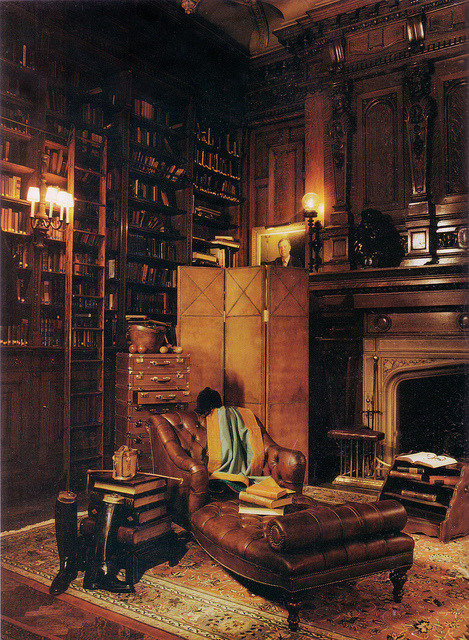
this is just an amazing image. this is my dream place…and I WILL have it :)
Monday, October 13
But Is It a Book?
You are right, kids. We do have too many books. We also have a ton of e-books. But this was the best overview that I've read about the basic difference between an ebook and a physical book. There are differences kids. We have so many rare and antiquarian books. The difference I'm seeing in reading a book published in the 18th century versus the same book downloaded fromarchive.com is so different. You have a sense of reverence and history when you're reading a book. A feeling of togetherness with the ancients.
Still form and functionality are being diverged. Bit sad but we have to move with the times.
Love
Baba
But Is It a Book? - Wired Campus - The Chronicle of Higher Education
http://chronicle.com/blogs/wiredcampus/but-is-it-a-book/38001
Editor’s Note: Jennifer Howard spent a week in early July at the University of Virginia’s Rare Book School, taking a course on “Born-Digital Materials: Theory & Practice.” This is the first in a series of posts on the experience.
Charlottesville, Va. — What makes a book a book? For Michael F. Suarez, director of the Rare Book School at the University of Virginia, a collection of texts on an e-reader doesn’t qualify in the fullest sense.
Over macaroni and cheese in early July at the Virginian, an eatery across from the university’s Grounds, Mr. Suarez talked with The Chronicle about how much more there is to a book than the words that go into it.
“When you take the text of Moby-Dick and pour it into a Kindle, you strip out the bibliographic codes and you strip out the social codes,” he says. “You lose that hermeneutic surplus of meaning that the book is.”

Tuesday, September 16
The debt to your parents
So I bought this little antiquarian book published in 1889, Hypatia. She is a favourite of mine (here’s a previous post) and bought it as a birthday present.
![2-IMG_8317_zpsfff03a54[1]](https://blogger.googleusercontent.com/img/b/R29vZ2xl/AVvXsEgYvhb6tptL26kLUKoRfUuhA1IJ0Md2Cbq-cRgGv5MunwZ7b-RxqHrfoTv2xEdA2faeuL8XLYFnvhC6FvySKFLhxF_dTNr33jUwoy3EDob_jo1tM9oFhsMIAAbZNLvjX8lVosbcF_TObls/s1600-h/2IMG_8317_zpsfff03a5416.jpg "2-IMG_8317_zpsfff03a54[1]")
But this was the interesting part.
![1-IMG_8313_zps83da352a[1]](https://blogger.googleusercontent.com/img/b/R29vZ2xl/AVvXsEgt-UEMwulgVkF9seHAb7PNCoGdoPzRn4RM87dDk7yZDRQ8wgzDY1aYXpoUe2JvaW6cStmkQZzAJ_yE_HVH9D4RIQguGza_uILJS2ElxQ1p9hDGuluGXXJFHw-RCZEHDFmuKbAhX75Wjus/s1600-h/1IMG_8313_zps83da352a15.jpg "1-IMG_8313_zps83da352a[1]")
Makes on think, eh? beautifully articulated. One doesn't usually find such emotional though wonderfully elucidated dedications these days, they are all namby pamby. In any case, you don't see massively compound sentences anyway. I wonder if there are any people out there with the patience to appreciate compound sentences any more?
Saturday, July 26
Voynich manuscript
Kannu
Books exert a strange fascination over me. Old books even more. We have a small collection of rare and antiquarian books, some of which are about 300 years old.
It's the same kind of feeling I get when I'm slowly rubbing the glyphs on a Mexican pyramid or an Egyptian tomb. The feeling of walking and talking with the ancients. It's almost a mystical feeling. Once one of my bosses asked me where I got my ideas from? I told him the old quote. If you want a new idea, read an old book. People who read history widely son are able to draw on the wisdom and experiences of the ancients. We learn by our experiences and by the experiences of others. You cannot just rely on your experiences. No time and why make mistakes. Hence books help you avoid mistakes at the least and at the best know how to take advantage.
Imagine this manuscript. If you get a chance, pop into the British library and see their display of rare books. Blows your mind.
Love
Baba
Voynich manuscript - Wikipedia, the free encyclopedia
http://en.wikipedia.org/wiki/The_Voynich_manuscript
The , described as “the world’s most mysterious manuscript”,[3] is a work which dates to the early 15th century (1404–1438), possibly from northern Italy.[1][2] It is named after the book dealer Wilfrid Voynich, who purchased it in 1912.
Some pages are missing, but there are now about 240 vellum pages, most with illustrations. Much of the manuscript resembles herbal manuscripts of the 1500s, seeming to present illustrations and information about plants and their possible uses for medical purposes. However, most of the plants do not match known species, and the manuscript’s script and language remain unknown. Possibly some form of ciphertext, the Voynich manuscript has been studied by many professional and amateur cryptographers, including American and British codebreakers from both World War I and World War II.[4] It has defied all decipherment attempts, becoming a famous case of historical cryptology. The mystery surrounding it has excited the popular imagination, making the manuscript a subject of both fanciful theories and novels. None of the many speculative solutions proposed over the last hundred years has yet been independently verified.[5]
The Voynich manuscript was donated to Yale University’s Beinecke Rare Book and Manuscript Library in 1969, where it is catalogued under call number MS 408 and called a “Cipher Manuscript”.[6][7]
Monday, June 23
Little book of magic
What a wonderful little book.
![tumblr_n3sq2ytfFu1t271yno1_500[1]](https://blogger.googleusercontent.com/img/b/R29vZ2xl/AVvXsEg3ClBj5oKbWHsi0RbDsJSihw-S80_cKTT9T2oZrhVWJwMqCYSDZiLCauCBdPzuhaudSKlQJ8T5m28GSd13nNeVRZFt5Nb_jPu1Lo52rZxy4GLZ4hLtdiEaTyCZD6wa3fbG5FV0cdZI1v8/s1600-h/tumblr_n3sq2ytfFu1t271yno1_50013.jpg "tumblr_n3sq2ytfFu1t271yno1_500[1]")
![tumblr_n3sq2ytfFu1t271yno7_250[1]](https://blogger.googleusercontent.com/img/b/R29vZ2xl/AVvXsEjWC6f5noYOg69rniPwLh8caH7CYHnQXZ9meBqH1xszXTyMD0S5CIl9Fzz7TWPr7sDf8Ezqt37RRQpwpcRDS9KLccaAKoLznEwVUCRiLb4nby2HlSSvIR9R7HIWcBOvM_9p0PH0_CEigiM/s1600-h/tumblr_n3sq2ytfFu1t271yno7_25013.jpg "tumblr_n3sq2ytfFu1t271yno7_250[1]")
this is the little book of magic, a 17th century Icelandic manuscript written on animal skin and contains magical spells and stuff.
the full book is available here.
Monday, March 17
She cares not a turd':
Generally I absolutely hate people scribbling on books. They need to be pristine kids. The very idea of writing all over it is a bit foreign to me. It's like defacing them.
But then defacement for somebody may be fascinating for somebody else. Here's a nice little investigative article on some scribbles on an old old book.
And yes I do give a turd if you deface our books!
Love
Baba
'She cares not a turd': Notes on a 16th century Squabble - Medieval manuscripts blog
http://britishlibrary.typepad.co.uk/digitisedmanuscripts/2014/01/she-cares-not-a-turd-notes-on-a-16th-century-squabble.html
While we were preparing the catalogue entry for Harley MS 7334, one of our most recent uploads to Digitised Manuscripts, we came across a very curious marginal note, and would like to solicit your ideas about it.

Decorated initial ‘W’(han) at the beginning of the Canterbury Tales, England (London or East Anglia, c. 1410), Harley MS 7734, f. 1rBut first a bit of background. This manuscript is a relatively early copy of Chaucer’s famous Canterbury Tales, and was created c. 1410 in England, probably in East Anglia. The scribe who penned it was responsible for other manuscripts containing the Canterbury Tales (such as Corpus Christi College, Oxford, MS 198, for example), leading some scholars to propose that it was a production of a commercial scriptorium specialising in such texts. Harley MS 7334 has a rather complicated ownership history, and passed through a number of different hands during the tumultuous 15th and 16th centuries. The task of untangling its provenance is both aided - and complicated - by the profusion of notes, signatures, and inscriptions that can be found throughout the manuscript, many of which were added by later hands.
Thursday, February 27
Aztec codices
Kids
I saw these codices in the Mexico City museum of anthropology. They are extraordinarily beautiful works of art. They don't have words or letters. But like the Han script or the mandarin or Japanese or Korean script, they are ideograms. Pictures. The Chinese Japanese and Korean characters have now evolved from the original picture to an idealised character but in these codices, you can see the original diagrams. Each of them tell a story. They are long, anything between 5 to 15 meters long, folded up and people will read from them.
![448-IMG_3491_zps5e13f61b[1]](https://blogger.googleusercontent.com/img/b/R29vZ2xl/AVvXsEguw71tsF1-zyBbp2oFgA7IKcgi61JSrTKeCsKI3SKt7bzpoN6-x3Ci7_MYnAJZIDWMdpCdlYpK_BW342tan8rJKmZCrLRIuu68kDbAc5NpLzmQyJ7APQ-Svx_OWDiWaHH07mn5Omr6oCc/s1600-h/448IMG_3491_zps5e13f61b13.jpg "448-IMG_3491_zps5e13f61b[1]")
![449-IMG_3494_zps1248b8cb[1]](https://blogger.googleusercontent.com/img/b/R29vZ2xl/AVvXsEhlsMdlU6F4XZUzc0RP9RH10ddxOweOSOCSmqPizzRx1Nisq0u_dkCr2laLoPtJJLgm40ZLn-q_Sav1ZeKG15DOjUu4ub9dBPLTizjf2LceEgdhpcO90vSK4-u9LCp9KeTmIyT57jmpgO8/s1600-h/449IMG_3494_zps1248b8cb13.jpg "449-IMG_3494_zps1248b8cb[1]")
The colours are vibrant, 600 years since they were created. And I fogged up the glass cabinet by peering so closely at them.
I'm trying to find a replica of these documents for our home but in the meantime you can read about them here or if kannu goes to oxford, then we can go see them in that museum.
Absolutely beautiful. And Diya, these are examples of what you want to do, illustrations :)
Love
Baba
Aztec codices - Wikipedia, the free encyclopedia
http://en.wikipedia.org/wiki/Aztec_codices
Detail of first page from the Boturini Codex, depicting the departure fromAztlán.
Aztec codices (Nahuatl: Mēxihcatl āmoxtli Nahuatl pronunciation: [meː'ʃiʔkatɬ aː'moʃtɬi]) are books written by pre-Columbian and colonial-era Aztecs. These codices provide some of the best primary sources for Aztec culture. The pre-Columbian codices differ from European codices in that they are largely pictorial; they were not meant to symbolize spoken or written narratives.[1] The colonial era codices not only contain Aztec pictograms, but also Classical Nahuatl (in the Latin alphabet), Spanish, and occasionally Latin.
Although there are very few surviving pre-conquest codices, the tlacuilo (codex painter) tradition endured the transition to colonial culture; scholars now have access to a body of around 500 colonial-era codices.
Friday, November 15
Orality, Writing and the Image in the Maqamat: Arabic Illustrated Books in Context
This was one of the most interesting articles about an antiquarian book that I have read. This is about a book called as Maqamat of al Hariri, going back to the 13th century, by which time Islam had well established for 2 centuries and Islamic traditions were moving from the violence to the cultured. So this book had elements of art, rhetoric, Islamic jurisprudence, dramatics, legal disputes, charity, painting, politics, etc. etc. It was popular across the world, at least the Islamic World. The book has a series of chapters, each chapter about how a man preaches amazingly on a particular topic and then gets quite a lot of alms and charity and then is exposed as a charlatan. I quote
The pattern established in the first story remains relatively unchanged throughout the text: each new episode is narrated by al-Harith, who witnesses a masterpiece of eloquence by an old or a young man, a woman, a poet, a storyteller, an orator, a person able to read the stars, to resolve grammatical problems, to pronounce authoritatively on legal issues, and so on.5 All of them turn out to be one and the same Abu Zayd, whose performance earns him a generous reward, after which al-Harith discovers the subterfuge; in most cases, he goes on to confront Abu Zayd before both characters part.
![AHIS_881_fu1[1]](https://blogger.googleusercontent.com/img/b/R29vZ2xl/AVvXsEhIZbn5utpXHhIUWLaDDat_uKLbnl2tDwLXqAo4BW39skMNsfqtcsDOJzyCISV4Sf5kQOfSOHXa4Farbx1QEjyIAW4QtfDsrJkGOOjjp72O_gcRCWMOVc11YfjP5UI8iJChsI9KpbjA5ig/s1600-h/AHIS_881_fu113.jpg "AHIS_881_fu1[1]")
What I found amusing was this part.
Besides a solid educational background, the owners of illustrated versions of the work must have boasted some degree of material wealth and deemed pictorial representation acceptable, at least in private, like many people in society appear to have done. In this era, figural art was being deployed on an unprecedented scale in manuscripts, ceramics, textiles, metalwork, statues and figurines, particularly in Iran, Iraq and Syria.30 This phenomenon was, needless to say, not to the liking of all. ‘The angels will not enter a house in which there is a dog or an image’, a well-known religious saying asserted.31 An equally widespread hadith warned that ‘on the Day of Judgement, those who make images (al-musawwirun) will be punished most severely by God’, with some versions adding that they ‘will be called upon to breathe life into what they have created, but they will not succeed’.32
the recent arguments about the Mohammad Cartoons is evidence that so many people still have their heads up the backside of some fundo view of the world. As can be seen, rebellion against this senseless stricture was pretty much widespread across the world and since the beginning. And this is also why accusations of hypocrisy is widespread. I again quote
Such vehement proscriptions did not reverse the societal trends which they implicitly denounced, but one consequence may have been that figural art was generally reserved for private consumption. There is little direct evidence to support this idea, apart from fact that the objects bearing such images were of a private rather than public nature. But it seems likely on the basis of context. The enclosed space of urban homes and their inner courtyards were sheltered from outside interferences by Islamic law. This applied even to houses in which the owners gave themselves over to such unlawful activities as music and drinking, so long as the sound or odour did not blatantly reach outside their walls.35 Theological injunctions against images and legal protection from zealous intrusion thus appear as two sides of the same coin, reflecting a reality in which the norms of religious orthodoxy were plainly ignored by many.
Bah!
but thankfully as the author says, these wonderfully illustrated books came down history for us to see and admire.
![AHIS_881_f7[1]](https://blogger.googleusercontent.com/img/b/R29vZ2xl/AVvXsEgkPhMxTJ1qeDzTYoMpAvPx_-dn3bz4LFy3mginBxY2I-n4QERCoN_HyTplH3OAhksDnfwixei5zgGAOBYKuQZ7_18rM0DSzJguQ7SkM6RMKZPfJOGDLHUbBEqRhxcWmnr6-lNiMZWjeWs/s1600-h/AHIS_881_f714.jpg "AHIS_881_f7[1]")
![AHIS_881_f10[1]](https://blogger.googleusercontent.com/img/b/R29vZ2xl/AVvXsEjcbh0RTnJ7UGquSovCRrr_oSUhL9nvH3tjQPPqERw0tp6pKjamVOigViTgccEIvzEdCkSbiWvzgJpe7cLhsg1XH47Wf70dQAfK3oujsJL6DgEGb1SEOOCnyXbt7mYSeX1IIe82PjbcJME/s1600-h/AHIS_881_f1013.jpg "AHIS_881_f10[1]")
and what’s this???are they kissing? :P
![AHIS_881_f14[1]](https://blogger.googleusercontent.com/img/b/R29vZ2xl/AVvXsEindiEy44XpWXbKsvjnwUhKZWV3p7VHfOfvjq9_VN_rnyyRhdWsg6TcgXcOHGW1S-hYJUp8ept9U9U69vjkEKH3HOIzoJz7BUSlo-UK1M-jT3hJD3KrJ_X8h1QpjWWQajwfwjsQQBNR0jc/s1600-h/AHIS_881_f1413.jpg "AHIS_881_f14[1]")
![AHIS_881_f15b[1]](https://blogger.googleusercontent.com/img/b/R29vZ2xl/AVvXsEgnzjd02LuHREPFqjkMMTMn1UqZLvc4Dcpd-MiA33bzmv7lZiw1i9V5SUeIWytBpuiOAQ5NwRA4Ocv8Om7M0xYXtm21m9fICscTRFm1di5AWGbElsfz6a5IPCxHlRFeetD_c6NbEgl7_Oo/s1600-h/AHIS_881_f15b13.jpg "AHIS_881_f15b[1]")
Sunday, February 17
Lilavati
I saw a copy of this book by Bhaskara II which Emperor Akhbar had asked to be commissioned in Farsi at the Mughal Exhibition in the British Library in London. It was beautiful. But the story resonated with me and I quote from the wiki site
His book on arithmetic is the source of interesting legends that assert that it was written for his daughter, Lilavati. A Persian translation of the Lilavati was commissioned in 1587 by Emperor Akbar and it was executed by Faizi. According to Faizi, Lilavati was Bhaskara II’s daughter. Bhaskara II studied Lilavati's horoscope and predicted that she would remain both childless and unmarried. To avoid this fate, he ascertained an auspicious moment for his daughter's wedding and to alert his daughter at the correct time, he placed a cup with a small hole at the bottom of a vessel filled with water, arranged so that the cup would sink at the beginning of the propitious hour. He put the device in a room with a warning to Lilavati to not go near it. In her curiosity though, she went to look at the device and a pearl from her bridal dress accidentally dropped into it, thus upsetting it. The auspicious moment for the wedding thus passed unnoticed leaving a devastated Bhaskara II. It is then that he promised his daughter to write a book in her name, one that would remain till the end of time as a good name is akin to a second life
now that’s a dad for you…
and while researching this, came across this place in Rajasthan..what a shame its falling to pieces..
Subscribe to:
Posts (Atom)