A daily dose of odds and sods, some interesting, some bizarre, some funny, some thought provoking items which I have stumbled across the web. All to be taken with a grain of daily salt!!
So we will be going to this country in couple of months. This promises to be great fun. We will be spending time in Galapagos and Quito and the Amazonia resort over 2 weeks. And we will be driving from Quito to the Amazonia resort. It's going to be quite a fun time. The country seems to have gone through some really torrid times indeed. You can see how the geography of the country has an impact on its politics and history. That's why a knowledge of geography is very important. Whist we shape the landscape, the landscape shapes is much more. I hope you two have fun. Keep your eyes open and observe. This is the first time you two are going to go to a Spanish speaking country in South America. Totally different culture, history, food everything. Fun times.
What is now Ecuador was home to a variety of indigenous groups that were gradually incorporated into the Inca Empire during the fifteenth century. The territory was colonized by Spain during the sixteenth century, achieving independence in 1820 as part of Gran Colombia, from which it emerged as its own sovereign state in 1830. The legacy of both empires is reflected in Ecuador's ethnically diverse population, with most of its 15.2 million people being mestizos, followed by large minorities of European, Amerindian, and African descendants.
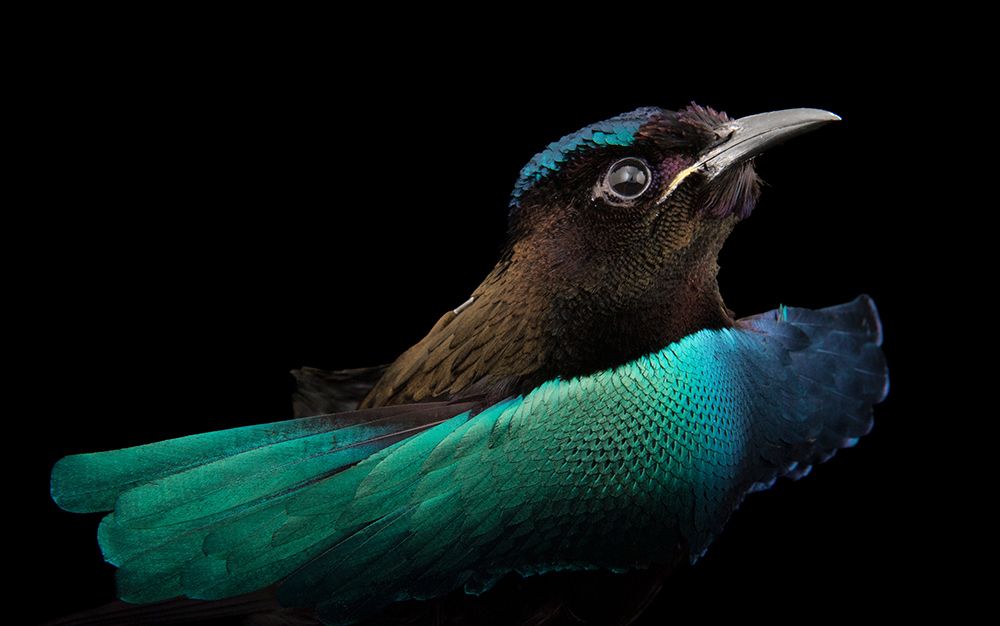
Something relating to our Ecuador visit. And to Darwin of course. A most fascinating overview of why males spend so much time in impressing females. And other males so that they are frightened away from the females. We aren't that different from animals or peacocks and this has driven our behaviours. Very interesting to note how human behaviour is also aligned to ensuring our mitochondria is aligned with our partner's. Love Baba Why do the most flamboyant males have the evolutionary edge? – Alex Riley | Aeon Essays https://aeon.co/essays/why-do-the-most-flamboyant-males-have-the-evolutionary-edge (via Instapaper)
For a large part of his life, Charles Darwin didn't like peacocks. It wasn't their loud vocalisations – a high-pitched, piercing combo of laughter and screaming. That he could deal with. What kept him up at night was the peacocks' tails. As he wrote to a friend in 1860, the sight of those ornate feathers made him feel sick whenever he gazed at them. Why? Because he couldn't explain them. The plumes of turquoise, blue and brown, trailing behind many times the bird's body length or spread into a wide fan of flamboyancy, was an affront to his theory of evolution by natural selection, a process founded on efficiency and removal of extravagance.
Not only is such a train of feathers metabolically costly, it is also readily visible to any carnivore looking for an easy meal. With all the predation, pathogens and diseases that living things need to overcome, Darwin wondered, how could such self-destructive beauty evolve? Why would an animal go to such extremes to make life harder, and death more likely? He finally hit on a plausible answer in 1871. In the second part of his book The Descent of Man, he explained that there is more to life than mere survival. Animals need to have sex, too. And because females are often more heavily invested than males in egg production and parental care, they are more likely to take the lead in choosing mates, too. As Darwin wrote: 'It's not a struggle for existence, but a struggle between the males for the possession of the females.'
Kannu Did you notice the payments scanner in the taxis we took in Quito? Here's a bit more information on the system. I was completely gobsmacked to be in a country which doesn't have its own currency that it controls. I know the euro is something like that but to live in a country which has willingly given up control of its currency means such a giant loss of sovereignty that I'm amazed. One of the reasons why I hate the euro. I as a citizen have no power over the currency is such a crazy situation. And then the irony that a leftist government (remember how all the guides were fulminating against the president?) having no control over its currency and being driven by the arch priest of right wingers, the USA. And the final indignity, the central bank building is now converted into a sodding numismatic museum. Tragic son tragic. Remind me to tell you about blockchains sometime. Love Baba Ecuador Is The World'sic First Country With A Public Digital Cash System http://www.fastcoexist.com/3049536/ecuador-is-the-worlds-first-country-with-a-public-digital-cash-system (via Instapaper) The runaway success of mobile money products like M-Pesa, which first took off in Kenya, has inspired dozens of copycats around the world. Many countries in Africa, Asia, and Latin America now have services allowing people to store and transfer money using their cellphones. But there's something different about Ecuador's new Sistema de Dinero Electrónico. It's being operated not by a private phone carrier or financial company, but Ecuador's left-leaning government. M-Pesa-like products have been hailed for bringing millions of people into the formal financial system, enabling commerce between people in different locations, and cutting theft and tax avoidance. But Diego Martinez, an economist in Ecuador's central bank, says the government wanted its own service, because it thinks it can reduce the transaction costs that come with private offerings.
You will recognise this from our trip to Ecuador. We drove on this road when we went up to the Amazonia hakuna matata resort. And you'll also recognise the language that this article mentions. Kannu, remember the people we had during the white water rafting time? The guide, his wife and others? They spoke Quechua.
This idea of having gods on or alongside roads is a very long tradition. When I was recently in india, every pass and mountain road had Hindu and Muslim shrines next to it. Remember where we stopped to have lunch on the way to the resort? That had a Madonna shrine as well. It's for people to pray for good luck and fortune in the journey and return.
Every June, after the rainy season ends in the grassy highlands of southern Peru, the residents of four villages near Huinchiri, at more than 12,000 feet in altitude, come together for a three-day festival. Men, women and children have already spent days in busy preparation: They've gathered bushels of long grasses, which they've then soaked, pounded, and dried in the sun. These tough fibers have been twisted and braided into narrow cords, which in turn have been woven together to form six heavy cables, each the circumference of a man's thigh and more than 100 feet long.
Dozens of men heave the long cables over their shoulders and carry them single file to the edge of a deep, rocky canyon. About a hundred feet below flows the Apurímac River. Village elders murmur blessings to Mother Earth and Mother Water, then make ritual offerings by burning coca leaves and sacrificing guinea pigs and sheep.
Shortly after, the villagers set to work linking one side of the canyon to the other. Relying on a bridge they built the same way a year earlier—now sagging from use—they stretch out four new cables, lashing each one to rocks on either side, to form the base of the new 100-foot long bridge. After testing them for strength and tautness, they fasten the remaining two cables above the others to serve as handrails. Villagers lay down sticks and woven grass mats to stabilize, pave and cushion the structure. Webs of dried fiber are quickly woven, joining the handrails to the base. The old bridge is cut; it falls gently into the water.
At the end of the third day, the new hanging bridge is complete. The leaders of each of the four communities, two from either side of the canyon, walk toward one another and meet in the middle. "Tukuushis!" they exclaim. "We've finished!"
And so it has gone for centuries. The indigenous Quechua communities, descendants of the ancient Inca, have been building and rebuilding this twisted-rope bridge, or Q'eswachaka, in the same way for more than 500 years. It's a legacy and living link to an ancient past—a bridge not only capable of bearing some 5,000 pounds but also empowered by profound spiritual strength.
To the Quechua, the bridge is linked to earth and water, both of which are connected to the heavens. Water comes from the sky; the earth distributes it. In their incantations, the elders ask the earth to support the bridge and the water to accept its presence. The rope itself is endowed with powerful symbolism: Legend has it that in ancient times the supreme Inca ruler sent out ropes from his capital in Cusco, and they united all under a peaceful and prosperous reign.
The bridge, says Ramiro Matos, physically and spiritually "embraces one side and the other side." A Peruvian of Quechua descent, Matos is an expert on the famed Inca Road, of which this Q'eswachaka makes up just one tiny part. He's been studying it since the 1980s and has published several books on the Inca.
For the past seven years, Matos and his colleagues have traveled throughout the six South American countries where the road runs, compiling an unprecedented ethnography and oral history. Their detailed interviews with more than 50 indigenous people form the core of a major new exhibition, "The Great Inka Road: Engineering an Empire," at the Smithsonian Institution's National Museum of the American Indian.
"This show is different from a strict archaeological exhibition," Matos says. "It's all about using a contemporary, living culture to understand the past." Featured front and center, the people of the Inca Road serve as mediators of their own identity. And their living culture makes it clear that "the Inca Road is a living road," Matos says. "It has energy, a spirit and a people."
Matos is the ideal guide to steer such a complex project. For the past 50 years, he has moved gracefully between worlds—past and present, universities and villages, museums and archaeological sites, South and North America, and English and non-English speakers. "I can connect the contemporary, present Quechua people with their past," he says.
Rumi Colca gateway, Cusco, Peru, 2014 (Doug McMains)
Numerous museum exhibitions have highlighted Inca wonders, but none to date have focused so ambitiously on the road itself, perhaps because of the political, logistical and conceptual complexities. "Inca gold is easy to describe and display," Matos explains. Such dazzling objects scarcely need an introduction. "But this is a road," he continues. "The road is the protagonist, the actor. How do we show that?"
The sacred importance of this thoroughfare makes the task daunting. When, more than a hundred years ago, the American explorer Hiram Bingham III came across part of the Inca Road leading to the fabled 15th-century site of Machu Picchu, he saw only the remains of an overgrown physical highway, a rudimentary means of transit. Certainly most roads, whether ancient or modern, exist for the prosaic purpose of aiding commerce, conducting wars, or enabling people to travel to work. We might get our kicks on Route 66 or gasp while rounding the curves on Italy's Amalfi Coast—but for the most part, when we hit the road, we're not deriving spiritual strength from the highway itself. We're just aiming to get somewhere efficiently.
Not so the Inca Road. "This roadway has a spirit," Matos says, "while other roads are empty." Bolivian Walter Alvarez, a descendant of the Inca, told Matos that the road is alive. "It protects us," he said. "Passing along the way of our ancestors, we are protected by the Pachamama [Mother Earth]. The Pachamama is life energy, and wisdom." To this day, Alvarez said, traditional healers make a point of traveling the road on foot. To ride in a vehicle would be inconceivable: The road itself is the source from which the healers absorb their special energy.
"Walking the Inca Trail, we are never tired," Quechua leader Pedro Sulca explained to Matos in 2009. "The llamas and donkeys that walk the Inca Trail never get tired … because the old path has the blessings of the Inca."
It has other powers too: "The Inca Trail shortens distances," said Porfirio Ninahuaman, a Quechua from near the Andean city of Cerro de Pasco in Peru. "The modern road makes them farther." Matos knows of Bolivian healers who hike the road from Bolivia to Peru's central highlands, a distance of some 500 miles, in less than two weeks.
"They say our Inka [the Inca king] had the power of the sun, who commanded on earth and all obeyed—people, animals, even rocks and stones," said Nazario Turpo, an indigenous Quechua living near Cusco. "One day, the Inka, with his golden sling, ordered rocks and pebbles to leave his place, to move in an orderly manner, form walls, and open the great road for the Inca Empire… So was created the Capac Ñan."
This monumental achievement, this vast ancient highway—known to the Inca, and today in Quechua, as Capac Ñan, commonly translated as the Royal Road but literally as "Road of the Lord"—was the glue that held together the vast Inca Empire, supporting both its expansion and its successful integration into a range of cultures. It was paved with blocks of stone, reinforced with retaining walls, dug into rock faces, and linked by as many as 200 bridges, like the one at Huinchiri, made of woven-grass rope, swaying high above churning rivers. The Inca engineers cut through some of the most diverse and extreme terrain in the world, spanning rain forests, deserts and high mountains.
At its early 16th-century peak, the Inca Empire included between eight million and twelve million people and extended from modern-day Colombia down to Chile and Argentina via Ecuador, Bolivia and Peru. The Capac Ñan linked Cusco, the Inca capital and center of its universe, with the rest of the realm, its main route and tributaries radiating in all directions. The largest empire in its day, it also ranked as among the most sophisticated, incorporating a diverse array of chiefdoms, kingdoms and tribes. Unlike other great empires, it used no currency. A powerful army and extraordinary central bureaucracy administered business and ensured that everyone worked—in agriculture until the harvest, and doing public works thereafter. Labor—including work on this great road—was the tax Inca subjects paid. Inca engineers planned and built the road without benefit of wheeled devices, draft animals, a written language, or even metal tools.
The last map of the Inca Road, considered the base map until now, was completed more than three decades ago, in 1984. It shows the road running for 14,378 miles. But the remapping conducted by Matos and an international group of scholars revealed that it actually stretched for nearly 25,000 miles. The new map was completed by Smithsonian cartographers for inclusion in the exhibition. Partly as a result of this work, the Inca Road became a UNESCO World Heritage site in 2014.
Before Matos became professionally interested in the road, it was simply a part of his daily life. Born in 1937 in the village of Huancavelica, at an altitude of some 12,000 feet in Peru's central highlands, Matos grew up speaking Quechua; his family used the road to travel back and forth to the nearest town, some three hours away. "It was my first experience of walking on the Inca Road," he says, though he didn't realize it then, simply referring to it as the "Horse Road." No cars came to Huancavelica until the 1970s. Today his old village is barely recognizable. "There were 300 people then. It's cosmopolitan now."
As a student in the 1950s at Lima's National University of San Marcos, Matos diverged from his path into the legal profession when he realized that he enjoyed history classes far more than studying law. A professor suggested archaeology. He never looked back, going on to become a noted archaeologist, excavating and restoring ancient Andean sites, and a foremost anthropologist, pioneering the use of current native knowledge to understand his people's past. Along the way, he has become instrumental in creating local museums that safeguard and interpret pre-Inca objects and structures.
Since Matos first came to the United States in 1976, he has held visiting professorships at three American universities, as well as ones in Copenhagen, Tokyo and Bonn. That's in addition to previous professorial appointments at two Peruvian universities. In Washington, D.C., where he's lived and worked since 1996, he still embraces his Andean roots, taking part in festivals and other activities with fellow Quechua immigrants. "Speaking Quechua is part of my legacy," he says.
Among the six million Quechua speakers in South America today, many of the old ways remain. "People live in the same houses, the same places, and use the same roads as in the Inca time," Matos says. "They're planting the same plants. Their beliefs are still strong."
But in some cases, the indigenous people Matos and his team interviewed represent the last living link to long-ago days. Seven years ago, Matos and his team interviewed 92-year-old Demetrio Roca, who recalled a 25-mile walk in 1925 with his mother from their village to Cusco, where she was a vendor in the central plaza. They were granted entrance to the sacred city only after they had prayed and engaged in a ritual purification. Roca wept as he spoke of new construction wiping out his community's last Inca sacred place—destroyed, as it happened, for road expansion.
Nowadays, about 500 communities in Ecuador, Peru, Bolivia and northwestern Argentina rely on what remains of the road, much of it overgrown or destroyed by earthquakes or landslides. In isolated areas, it remains "the only road for their interactions," Matos says. While they use it to go to market, it's always been more than just a means of transport. "For them," Matos says, "it's Mother Earth, a companion." And so they make offerings at sacred sites along the route, praying for safe travels and a speedy return, just as they've done for hundreds of years.
That compression of time and space is very much in keeping with the spirit of the museum exhibition, linking past and present—and with the Quechua worldview. Quechua speakers, Matos says, use the same word, pacha, to mean both time and space. "No space without time, no time without space," he says. "It's very sophisticated."
The Quechua have persevered over the years in spite of severe political and environmental threats, including persecution by Shining Path Maoist guerrillas and terrorists in the 1980s. Nowadays the threats to indigenous people come from water scarcity—potentially devastating to agricultural communities—and the environmental effects of exploitation of natural resources, including copper, lead and gold, in the regions they call home.
"To preserve their traditional culture, [the Quechua] need to preserve the environment, especially from water and mining threats," Matos emphasizes. But education needs to be improved too. "There are schools everywhere," he says, "but there is no strong pre-Hispanic history. Native communities are not strongly connected with their past. In Cusco, it's still strong. In other places, no."
Still, he says, there is greater pride than ever among the Quechua, partly the benefit of vigorous tourism. (Some 8,000 people flocked to Huinchiri to watch the bridge-building ceremony in June last year.) "Now people are feeling proud to speak Quechua," Matos says. "People are feeling very proud to be descendants of the Inca." Matos hopes the Inca Road exhibition will help inspire greater commitment to preserving and understanding his people's past. "Now," he says, "is the crucial moment."
This story is from the new travel quarterly, Smithsonian Journeys, which will arrive on newstands July 14.
I don't like rats. Seriously. It might be cultural or it could be historical due to their reputation of spreading disease but I'm not exactly a rat lover. Even though I loved watching ratatouille. And the fact that Ganesh's personal animal is a rat. Go figure.
Heck I hate pigeons as well and call them flying rats. They are very destructive indeed. They gnawed through many books we had in bhopal. Tragic. And clothes and and and. Never ending battle against these buggers.
Reminds me of the problem I started to face when I was at the previous bank. We moved into a new building and suddenly started to find, after some time, a spate of network outages. Weird. Networks don't go down that often. So we dug (no pun intended) into it.
People started to eat too much at their desks and would drop food and crumbs. They would also store food stuff in their cupboards and desks. This would attract rats inside the building who loved this cornucopia.
So we had to get rat catchers in. Change behaviour. Removed all the dustbins. Ask the cleaners to hoover every night. Not fun.
Still quite an interesting story about rats. Also talks about Galapagos :)
On the front lines of humanity’s high-tech, global war on rats
By Josh Dzieza
Last May, a member of Alberta’s rat patrol paid a visit to a farm on the outskirts of Sibbald, a small town near the Saskatchewan border. He found holes bored into the foundation of a grain silo and feces littering the trash pit: telltale signs of a rat infestation, probably 100 strong. He scattered aquamarine pellets of poison, then returned with seven pest control officers, including Phil Merrill, head of the province’s rat patrol. Using a crane, they hoisted the granary off its foundation, watching for anything scurrying out, one officer standing ready with a shotgun. All the rats were dead. The patrol stomped on the burrows, then burned the silo for good measure. It was a bit of a disappointment, Merrill said. A few years earlier, they’d gunned down 157 rats at a single farm.
Merrill was swigging chocolate milk and recounting stories of past infestations as we drove toward the control zone, a sparsely populated buffer between Alberta, the largest inhabited rat-free region on Earth, and the rest of the infested planet. There was the rat in an Air Canada cockpit (chased down the tarmac, killed) and the infestation at the dump (poisoned, monitored with night-vision cameras to be sure). Keeping the province rat-free requires constant vigilance, and every spring and fall, Merrill and his team patrol the zone.
All members of the genus Rattus are banned from the province, but Alberta is especially alert for one species: the brown rat, also known as the wharf rat, sewer rat, and Norway rat. That last one is a bit of a misnomer: the species traces its origins to northern China and reached Europe only in the 18th century, where it scurried aboard ships and made landfall in North America around the time of the American Revolution. Fast, strong, and highly adaptable, it’s now present just about anywhere humans live or visit.
A structure in Alberta suspected of rat infestation and subsequently burned down. Image courtesy of Phil Merrill
Alberta had the good luck of being one of the last places rats invaded, and in 1950, the government decided to keep them out rather than try to control them once they gained a foothold. The first and most important step was to teach Albertans — some of whom had never seen rats before — to fear and hate them. Preserved rat corpses were exhibited at schools and fairs, and the government printed World War II-style posters depicting a province besieged by rodent hordes. The message was clear: if the rats were to be kept out, all citizens had to do their part — fortifying their farms, reporting incursions, and if need be, taking up arms.
The campaign has been largely successful, and half a century on, Albertans remain vigilant. Merrill’s rat patrol has a hotline, 310-RATS, where people can report possible sightings. The hotline gets hundreds of calls a year, mostly false alarms — misidentified muskrats or pocket gophers. When Albertans do spot a rat, they often act quickly, beating it to death with bats or shovels before calling it in. They even report their neighbors for keeping pet rats, or fancy rats, as exterminators call them. Rats are rats, and Alberta’s government gives them no quarter. Sometimes the owners have their rats flown out of the province, but generally, Merrill said, “We take care of them.”
Alberta’s landscape makes eradication feasible. It’s sparsely populated, and its sprawling farms and small towns provide few structures where rats can shelter from the harsh winters. The 250,000-square-mile province is protected by the Rocky Mountains in the west, frigid forests to the north, and badlands to the south. Accordingly, the government concentrates its efforts on a 400-mile-long strip on the eastern border with Saskatchewan.
As the nine members of the patrol travel through the control zone, they check every building that might harbor a rat. They examine foundations for signs of gnawing, ask farmers if they’ve seen anything suspicious, and hand out buckets of poison pellets. Merrill, an energetic and affable 64-year-old who’s worked pest control since 1971, says that the key to catching a rat is to think like a rat: you want a granary, preferably an old wooden one; you want bales of barley or something with a bit of protein to snack on; and you want water. Each time Merrill clears a site, he marks it on a GPS map with a skull and crossbones.
We pulled up to a farmhouse, and Merrill knocked on the door. “Rat patrol here, come to see if you’re harboring any rats,” he called out. A gangly, weathered man in his 60s invited Merrill in, pulled out a chair, and the two swapped local rat gossip.
They discussed a dilapidated grain house just over the border in Saskatchewan. As a rule, rats stick close to home, rarely traveling more than a few hundred feet from their nest, but when things get too crowded, some venture out, running through the surrounding fields; most die, but a few find a new building and start to breed. Merrill reckoned there were hundreds of rats in the grain house, and the colony was sending rats out in a 5-mile radius. With the cooperation of the other province’s pest control officer, he wanted to poison it, maybe raze it completely. “We’ve got to fight them over there so we don’t have to fight them over here,” he told me.
In my experience, travel books have a built in advantage, the reader is already pre-disposed towards the destination so even crap books get a bit of a bye. But even adjusting for that factor and the fact that I am an idiot, sometimes a book comes along which is a sheer pleasure to read.
this book by Tom Miller, first published in 1986, takes you through a journey behind the Panama Hat which is made in Ecuador. He has a fascinating way of describing the country, the Indians, the regular moans about coffee, the issues with the traffic and bus travel, he describes the hat, Gosh, he describes the hat process. The man ends up in the depths of the forest to pluck the particular straw and then moves through entire supply chain from those depths of the forest down the history, geography, religion, culture, anthropology, economics of Ecuador to the showrooms in New York where these Panama Hats, now revalued hugely from the original price of literally cents to the farmers of the straw to the hundreds of dollars that a purchaser of a Montecristo Fini hat will pay. Some of these straw hats are so finely woven that they can hold water.
Amazing book. I learnt so much about the country. Like India, it also lost huge swathes of territory and does stupid nationalistic things like map controls (you cant show the land that Ecuador lost in the war with Peru). And I now have to go check out the bookstores in Quito, found out there are two there which stock English language books besides the usual fiction pap. And the man has a sense of deprecating humour which is lovely and refreshing. Loved it.
And it doesn't talk about Galapagos at all. So as a very respected member of the travel book species, it comes very highly recommended. One of the best books that I have read. So much that I recommended it to my son, whose response was a gratifying “ummm, ok”
I have to admit that this was one of the strangest books I've ever read. It's like it's written by a madman whose just slightly off phase to the rest of the world. It's about, God know what, set in 1984, about turtles, Galapagos, genetic faults, rockets, ghosts, a ship, riots and wars, humankind who evolve into furry creatures.
the man wrote this book in the backdrop of a severe currency and financial crisis on one hand, and the emerging AIDS epidemic on the other hand. Between these two events, humankind collapses…curious, we just had a severe financial crisis and dodged the EBOLA crisis, weird, eh?
So I'm going to go to Galapagos in a few months and this book was recommended. Well I'm not sure it helped me understand Ecuador or Galapagos at all. Nice collection of quotes though.
Would i recommend this book? Not sure. It'll make your hair hurt. Seriously weird book. Maddening. My first experience with Vonnegut’s work…am I too old to appreciate fiction like this?




/cdn0.vox-cdn.com/uploads/chorus_asset/file/3691570/Grate_color_1.0.jpg)
/cdn0.vox-cdn.com/uploads/chorus_asset/file/3691456/unnamed-1.0.jpg)
