A daily dose of odds and sods, some interesting, some bizarre, some funny, some thought provoking items which I have stumbled across the web. All to be taken with a grain of daily salt!!
this was such a fascinating read. Yes, there was slavery in the UK but to its credit, it was perhaps the first to fight very hard against slavery as well. Here's a story of how the UK fought for ending slavery in Brazil.
In the late afternoon of Saturday 22 April 1848, the British cruiser H.M.S. Grecian gave chase to a suspicious-looking ship it encountered off the coast of Bahia, Brazil. By midnight, the Greciansucceeded in seizing the slave ship Bella Miquelina. One week later, the Bella Miquelina sailed into the Bay of All Saints at Salvador, Bahia, Brazil under the direction of a British prize crew. The appearance of this captured vessel with 517 Africans on board “set off alarms” all over the city. Many Bahians feared that disembarkation might cause the spread of disease and increase slave resistance in the city. As negotiations unfolded during the next 48 hours between Bahian authorities and British representatives, a group of 80 men attacked the Bella Miquelina in hopes of gaining control over the ship and taking the Africans. The British prize crew successfully held of this attack. In the midst of this turbulent milieu, a fugitive African slave named John Freeman rowed a small boat to the side of the Grecian and asked for assistance. Commander L.S. Tindal allowed Freeman to remain on board. Six weeks later, the Bella Miquelina returned to Sierra Leone and the Africans were freed by the British Vice-Admiralty Court at Freetown. One year later, Freeman returned to Sierra Leone on board H.M.S. Adventure as a free man. These events shed light on British strategies to suppress the slave trade to Brazil in 1848 as well as Brazilian and African responses.
whilst people are getting all excited about Brexit, I am always reminded about what Zhou En Lai (China Premier) was reputed to have said in 1971 about the French Revolution of 1789..."too early to say"> By the way, the quote is wrong, see here. But I like the idea that there are very long term repercussions and we need to be cognisant of that. I frequently use the example that we are still paying for World War 1...No literally, the British Public was still paying for World War 1 expenditure till recently.
its 115 years back now...1900. You had the Ottoman Empire. you had the austro-hungarian empire, the russian empire, the german empire, all faffing around. Also, Norway was part of Sweden then..no Finland.
in 2016, all of this has gone...Brexit, my dear friends, is a pimple on the dimple on the left arse of a busy ant in the greater sweep of things.
I havent read the book, just read the review and it was interesting in its own rights. You normally associate Indian emigrants as labourers and agricultural workers during the British Empire because that's what they were in the majority, but you dont really hear about the other professions. Yes, Yes, I know Gandhi was a lawyer and there were many who went out there to setup businesses but professions? not that much. the abstract is quite interesting
The story of Indian doctors in Kenya has been “almost entirely written out of the history books” (1). Thus begins Anna Greenwood and Harshad Topiwala’s careful and exhaustively researched monograph, which aims to rectify this oversight by providing a collective biographical portrait of the two hundred or so Indian doctors who practiced Western medicine in Kenya between 1895 and 1940. Topiwala, the son of a Kenya Indian doctor, and Greenwood, a historian of East Africa’s colonial medical service, argue that Indians supplied a “cheap, and also appropriately educated, medical labour force” (33), yet faced harsh material conditions, unequal pay, and a largely hostile European medical establishment. The British colonial state, understaffed and undercapitalized, initially leaned heavily on India for a range of assets—the wealth of its traders, the labor of its indentured servants, and the expertise of its professionals. Yet, as white settlement and political power surged in Kenya by the early 1920s, the Indian presence came to be seen more as a threat than a resource. By 1924, the colonial medical service dismissed its forty-four Indian doctors under the cynical banners of …
One does not normally think about male rape at all given the differences in the numbers and the gender perspectives in society and reporting. But it does happen and for the victim, I am sure it has similar huge impacts.
this paper was quite interesting to read about how the police react. When you realise that the policing reaction to female rape itself is so challenging and difficult despite the pressure and visibility, the situation with male rape has to be several levels below.
read and reflect.
The current paper focuses on police responses to male rape in England, UK. The data come from police officers and voluntary agency practitioners who completed in-depth interviews and qualitative questionnaires (N = 70). Questions about handling male rape cases were asked. The present paper focuses specifically on issues relating to the ways in which the police handle male rape cases. Thus, the way the police investigate male rape is critically explored. The police data were analysed using thematic analysis. Key issues emerged in the findings: male rape victims often get a poor response from the police; the police culture shapes officers’ practices and decisions regarding male rape cases; and some police officers often see male rape complainants as making false allegations. If male rape victims are seen as supposedly falsely reporting, the implication of this is that the ‘dark’ figure of crime may develop because ‘false’ reports are ‘no crimed’, giving a distorted view of the extent to which male rape occurs. I argue that the police’s treatment of male rape victims is largely influenced and shaped by preconceived ideas about male rape and gender bias. This paper attempts to tackle negative police treatment, and it raises awareness of male rape. It is significant to examine how the police manage male rape cases, to make changes to encourage reporting so that better services can be provided to rape victims.
Forget the current situation where we have seen a significant change in the GDP figures, but nations rely on a very long history to develop. Patents. Universities. Infrastructure. Dams. Irrigation Networks. Institutions. All those help and have a very long chain.
Look at the UK, its growth rate was extraordinary and that is what provides you hope that the UK will prosper and develop much more. It will have to rely on the institutions, infrastructure, universities to keep on developing further.
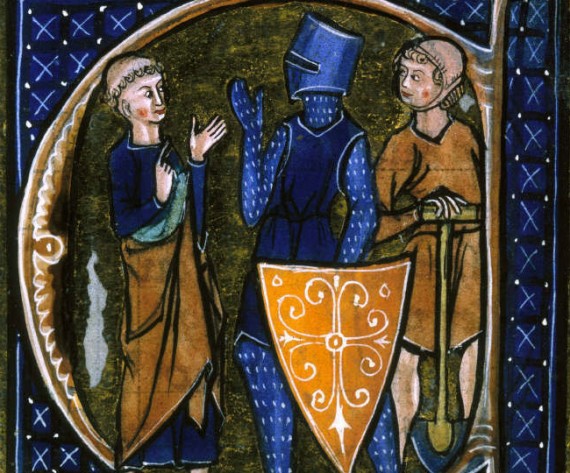
There's the Hindu caste system. Where everybody is divided into castes based upon what you do. And then a bewildering array of sub castes. It's all rubbish of course but still exists I'm afraid. I read about how Dalits, the untouchables and lowest caste people were sold off as slaves by upper classes to the Dutch in the 18th century in India. Tragic. But it was curious to read how this kind of work/profession based societal classification and how it was in the Middle Ages in England and France eh? It took a revolution to remove it in France. You still have it in England but hopefully the class based society will get removed soon without a revolution. Have a lovely day kids. Love Baba Those who pray, those who work, those who fight - Medievalists.net http://www.medievalists.net/2016/01/31/those-who-pray-those-who-work-those-who-fight/
(via Instapaper)
When people first start learning about the Middle Ages, one of the first concepts they are told was that medieval society was divided into three groups – those who pray, such as priests and monks; those who work, like farmers; and those who fight, the warrior class. How did this idea get started and what does it actually mean?
Cleric, Knight and Workman representing the three classes – from British Library Ms Sloane 2435, f.85 '
The concept of the three orders for society is not something you find in the Bible, or in classical sources. The closest thing that to it comes from the seventh-century encyclopedia writer Isidore of Seville, who makes a short reference to the Romans having divided themselves into three groups: senators, soldiers and plebeians.
It seems that our first reference to the idea of three orders comes from a curious source – an Old English translation of Boethius' The Consolation of Philosophy. This work was written by King Alfred the Great (probably with a team of scholars to help him) in the late-ninth century, and he often included his own commentary. It is here that you can find this statement: I wished for tools and resources for the task that I was commanded to accomplish, which was that I should virtuously and worthily guide and direct the authority which was entrusted to me. You know of course that no-one can make known any skill, nor direct and guide any enterprise, without tools and resources; a man cannot work on any enterprise without resources. In the case of the king, the resources and tools with which to rule are that he have his land fully manned; he must have praying men, fighting men and working men. You know also that without these tools no king may make his ability known. Another aspect of his resources is that he must have the means of support for his tools, the three classes of men.
In his article, "The 'Three Orders' of society in Anglo-Saxon England" Timothy Powell explains some of the thinking behind this statement: Alfred's formula is descriptive rather than prescriptive. He is not instructing the three orders in their duties, he is doing the reverse; he is meditating on his own duty to the effect that it is incumbent upon the king to ensure the three orders have the wherewithal they need to fulfil their functions. Alfred does not dwell on the theme; he mentions it as an aside. The point of the passage is not social commentary but a reflection on how he, King Alfred, should exercise his talents to ensure that his memory not be forgotten.
A simple cross, right? a simple wooden cross. I went to my son's college at Oxford yesterday, a parent lunch. In the Chapel, there was a drinks reception and I was just wandering around doing my usual church investigation. And that's where I spotted this.
so what's the story? This cross was the first wooden cross erected on the grave of Noel Godfrey Chavasse. His father, Rev Francis Chavasse, founded St. Peter's College where my son studies.
Here's the gentleman concerned and his story is amazing. The master of the college alluded to him and then it was so fascinating that I went looking for more details. The man was an olympian. He got a first from Trinity College Oxford. Became a doctor. Joined the Army and then went over to France during World War 1. He won the Military Cross. Then was promoted. And then was mentioned in Dispatches. And then two citations follow when he became the only double VC winner in the war.
Captain Noel Godfrey Chavasse, M.C., M.B., Royal Army Medical Corps.For most conspicuous bravery and devotion to duty.During an attack he tended the wounded in the open all day, under heavy fire, frequently in view of the enemy. During the ensuing night he searched for wounded on the ground in front of the enemy's lines for four hours.Next day he took one stretcher-bearer to the advanced trenches, and under heavy shell fire carried an urgent case for 500 yards into safety, being wounded in the side by a shell splinter during the journey. The same night he took up a party of twenty volunteers, rescued three wounded men from a shell hole twenty-five yards from the enemy's trench, buried the bodies of two officers, and collected many identity discs, although fired on by bombs and machine guns.Altogether he saved the lives of some twenty badly wounded men, besides the ordinary cases which passed through his hands. His courage and self-sacrifice, were beyond praise.
this was on 9th August 1916. Then next year around the same time..
War Office, September, 1917. His Majesty the KING has been graciously pleased to approve of the award of a Bar to the Victoria Cross to Capt. Noel Godfrey Chavasse, V.C., M.C., late R.A.M.C., attd. L'pool R. For most conspicuous bravery and devotion to duty when in action. Though severely wounded early in the action whilst carrying a wounded soldier to the Dressing Station, Capt. Chavasse refused to leave his post, and for two days not only continued to perform his duties, but in addition went out repeatedly under heavy fire to search for and attend to the wounded who were lying out. During these searches, although practically without food during this period, worn with fatigue and faint with his wound, he assisted to carry in a number of badly wounded men, over heavy and difficult ground. By his extraordinary energy and inspiring example, he was instrumental in rescuing many wounded who would have otherwise undoubtedly succumbed under the bad weather conditions. This devoted and gallant officer subsequently died of his wounds.
The other two double VC winners ever were related to him. The first one, Lt. Col. Arthur Martin Leake actually treated Chavasse for his wounds. The second double VC winner in WW2, Captain Charles Upham, was related to Chavasse by marriage. He was engaged to Frances Gladys Ryland Chavasse, one of his cousins who was also mentioned in dispatches in 1945 at Monte Cassino.
I am simply dumb-struck at the man and the connections thereof. Can you believe it? this chap, got a first at oxford, then studied medicine, then showed bravery of a level that you cannot imagine (and not that of anger, but of mercy and healing which I believe is of a higher level than just shooting) and then the most incredible coincidences.
most extraordinary story. You can read his letters here. The letter show him as a most humble man..and then his courage! I am totally amazed and humbled.
This was a funny episode indeed. Slightly related to my research as well as the Dutch were, by this time, shipping vast quantities of spices from the East Indies and India over to Europe. Plus the east India company and Dutch east India company (VOC) were competing as well for trade routes and spice supplies.
Anyway, it was funny reading about how people went into a war and nobody knew it :)
Some historians consider England's Scilly conflict to be the longest war in known history, dragging on for a staggering 335 years. Yet one side was not a country in its own right, there were no casualties for the entire duration, and not a single shot was fired. Neither side even remembered they were still at war until someone checked the paperwork.
All of which begs the question: if war is declared but neither nation remembers, does it still count?
The Isles of Scilly are five inhabited islands and a multitude of other uninhabited rocks off the coast of Cornwall at the southwestern tip of England. With a population of roughly 2,000, the islands rely on fishing and tourism as the main sources of income. It is doubtful that anyone would consider them an international threat. Yet, somehow, they were at war with the Netherlands from 1651 until a mere 30 years ago.
Cromwell's Castle, a 17th-century fort, on the island of Tresco, in the Isles of Scilly. (Photo: Nathan Siemers/flickr)
To understand the origins of the 335-Years' War, we need to go back in English history to the time of the Second Civil War (1642-1648), fought between Oliver Cromwell's Parliamentarians and the Royalists, better known as the Roundheads and the Cavaliers. Cornwall was one of the last Royalist strongholds, but in 1648, it too fell into Cromwell's hands. Britain being an island nation, it had one asset in its Navy, which had declared its support for the Royalists. And so, as the Parliamentarians swept across the country, the Navy was pushed further back until its only possible safe harbor was the Isles of Scilly. At the time, the Isles were owned by Sir John Grenville, a close friend of Prince Charles (later King Charles II), and therefore a staunch Royalist.
Meanwhile, across the English Channel, the Dutch were winning their independence from Spain in the Eighty Years War. The English had been allies with the Dutch since the war's beginning, thanks to the protestant Queen Elizabeth 1. As the Netherlands gained independence they naturally wanted to maintain good relations with England, but with Civil War underway, they had to decide whom to support. Since it looked as though the Parliamentarians would overthrow the Royalists, the Dutch chose to ally with them. This included the support of the Dutch Navy. The Royalist Navy, down in the Scilly Isles, put up quite a strong resistance, seizing a number of Dutch ships and a great deal of cargo.
In the spring of 1651, Admiral Maarten Tromp of the Dutch Navy landed to demand reparations. Seeing that none were forthcoming, he reputedly declared war on the Isles of Scilly.
A painting showing the Siege of the Schenkenschans, part of the 80 year war between the Dutch and the Spanish. (Photo: Public Domain/WikiCommons)
Within a matter of weeks, a final push by the Parliamentarians led to the surrender of the remaining Royalist ships. The Dutch knew that they no longer faced any sort of threat and set sail for home. It seems they forgot one minor detail: the Scilly Isles weren't technically a nation in their own right and so no one remembered to make the peace.
Years turned into decades, turned into centuries, and the war with the Dutch fell into local folklore. Generations passed on the tale that the islands remained at war with the Netherlands. No officials seemed to know if it was true or not.
Admiral Maarten Tromp of the Dutch Navy, who reputedly declared war on the Isles of Scilly. (Photo: Public Domain/WikiCommons)
Finally in 1985, a member of the island council and a keen local historian, Roy Duncan, decided to investigate the story for himself. He wrote to the Dutch Embassy, asking them to look into the matter. A response came back: after much searching, it seemed that no record existed of a peace treaty ever being signed. On April 17, 1986, the Dutch Ambassador visited the Isles of Scilly to sign said peace treaty, thereby putting an end to what is now fondly referred to as the 335-Years' War.
Whether the declaration of war was legally binding remains in doubt to this day. Some historians argue that Tromp had no authority to declare war, and was simply blustering in the hopes of receiving compensation for damaged and lost goods. Furthermore, even if his declaration had merit, it surely would have been resolved in the 1654 treaty between England and the newly-formed Netherlands.
The ceremony marking the signing of the peace treaty in 1986 was more of a publicity move than it was an important event in international relations. Even Duncan admitted that the issue of the war had been "a joke for many years". The signed declaration of peace remains on display in the Council Chambers in Hugh Town on St. Mary's Island, and a quirky incident of British history has allowed the Isles of Scilly to lay claim to a place in the record books.
So here's the story I read. It is about this pilot who managed to successfully torpedo the most ferociously defended target and got a VC. His citation read
Flying Officer Kenneth Campbell, 22 Squadron, Royal Air Force Volunteer Reserve.In recognition of most conspicuous bravery. This officer was the pilot of a Beaufort aircraft of Coastal Command which was detailed to attack an enemy battle cruiser in Brest Harbour at first light on the morning of 6th April 1941. The aircraft did not return but it is known that a torpedo attack was carried out with the utmost daring. The battle cruiser was secured alongside the wall on the north shore of the harbour, protected by a stone mole bending around it from the west. On rising ground behind the ship stood protective batteries of guns. Other batteries were clustered thickly round the two arms of land which encircle the outer harbour. In this outer harbour near the mole were moored three heavily armed anti-aircraft ships, guarding the battle cruiser. Even if an aircraft succeeded in penetrating these formidable defences, it would be almost impossible, after delivering a low-level attack, to avoid crashing into the rising ground beyond.This was well known to Flying Officer Campbell who, despising the heavy odds, went cheerfully and resolutely to the task. He ran the gauntlet of the defences. Coming in at almost sea level, he passed the anti-aircraft ships at less than mast-height in the very mouths of their guns and skimming over the mole launched a torpedo at point-blank range.The battle cruiser was severely damaged below the water-line and was obliged to return to the dock whence she had come only the day before. By pressing home his attack at close quarters in the face of withering fire on a course fraught with extreme peril, Flying Officer Campbell displayed valour of the highest order.- See more at: http://ww2today.com/6th-april-1941-kenneth-campbell-attacks-the-gneisenau?utm_source=feedburner&utm_medium=email&utm_campaign=Feed%3A+WorldWarIIToday+%28World+War+II+Today*+%29#sthash.rNyGiDWr.dpuf
But this photograph blew my mind
This is a vertical photograph of the flak over this area few nights before. These are tracers. And you know that only one in say 10 bullets is a tracer. So the actual amount of lead and exploding shells is actually 10 times of this photograph. And you have to fly through this insane multiple curtains of death, whilst your bombardier is begging you to fly steady and straight because his norton bombsights cannot handle movements. I dont think I can even comprehend the levels of bravery involved. And then we have bloody students demanding safe spaces. The mind boggles.
This is what pisses me off about the uk. We allow all kinds of corrupt bastards and people with war crimes and religious fundos into the uk. And despite so much evidence that foreign governments offer up, we do sweet sod all. We have anti bribery and anti corruption laws for years and broadly speaking, literally zero people have been prosecuted. Now you can't believe that there are simply no guilty people in the uk? Bollocks. This is why I admire the USA. It's going after the bastards. So it's not 100% accurate but what the hell. They are doing something at least. What are we doing? Forget about Europe or other parts of the world. Heck even Switzerland is going after corrupt people like the situation in Malaysia. Bah. Truly pisses me off. Look forward to watching the movie with you Kannu. Missing you :) Love Baba Wanted by U.S.: The Stolen Millions of Despots and Crooked Elites http://www.nytimes.com/2016/02/17/business/wanted-by-the-us-the-stolen-millions-of-despots-and-crooked-elites.html (via Instapaper)
Teodoro Nguema Obiang Mangue, scion of the ruling family of Equatorial Guinea, one of Africa's smallest countries. Prosecutors say his country's citizens are victims of his "relentless embezzlement and extortion." Frank Franklin II/Associated Press
It's hard to imagine a public official with more toys than Teodoro Nguema Obiang Mangue, who spent $300 million on Ferraris, a Gulfstream jet, a California mansion and even Michael Jackson's "Thriller" jacket. The buying spree is all the more remarkable since this scion of the ruling family of Equatorial Guinea, one of Africa's smallest countries, bought all this while on an official salary of $100,000 a year.
But legal action by the Justice Department has brought an end to Mr. Obiang's spendthrift ways. His $30 million Malibu estate is on the market, as are his luxury cars and six life-size Jackson statues. Proceeds from these sales are earmarked for citizens of Equatorial Guinea, who prosecutors claim are victims of Mr. Obiang's "relentless embezzlement and extortion."
read what Winston Churchill had to say about going to war in My Early Life: “Let us learn our lessons. Never, never, never believe any war will be smooth and easy, or that anyone who embarks on that strange voyage can measure the tides and hurricanes he will encounter. The statesman who yields to war fever must realise that once the signal is given, he is no longer the master of policy but the slave of unforeseeable and uncontrollable events.
“Antiquated War Offices, weak, incompetent or arrogant commanders, untrustworthy allies, hostile neutrals, malignant fortune, ugly surprises, awful miscalculations – all take their seats at the Council Board on the morrow of a declaration of war. Always remember, however sure you are that you can easily win, that there would not be a war if the other man did not think he also had a chance.” As they say, wars never survive contact with the enemy.
This is the problem, people simply dont understand the issues that you will face after going to war. Every time, without fail, the costs of going to war are much higher than what you expected or anticipated or even planned for. Even now, every of the little wars or big wars have unexpected and unanticipated costs all over the place. Jaw Jaw is better than war war as the other quote goes.
And to a much lesser extent, son, same thing happens in business as well. Your resources may not be the best ever. Your support may not be good. Your competitor may do something else. Your customers may not buy into your proposition. The trick is to be flexible and be willing to move smoothly and react to unforeseen circumstances :)
Love
baba
I saw this article when using the Financial Times app and thought you might be interested:
Financial Times, Putin is learning what Churchill knew -- From Mr Charles Lucas. Sir, Vladimir Putin should read what Winston Churchill had to say about going to war in My Early Life
I have to admit Kannu that I didn't know much about Balfour. His main claim to fame for me was the Balfour declaration where it states that the government of United Kingdom looks upon with favour the establishment of a state for Jews in Palestine. Not one of our country's finest hours I'm afraid. This was done around the time of the world war 1 where we were rampantly making promises and playing around with imperialism to the nth degree. Truly horrendous behaviour. What you see in the Middle East today can be drawn directly to the stupid moronic steps we took there son. And that's why I hate foreign interventions. Look at this. Interventions a hundred years back are making my children unsafe. So by stopping interventions, I can make my great great grandchildren safe. Long term son. People don't think long term.
Anyway, that was the history behind the Balfour declaration. But this note actually brought the man alive. He seems to be a ferociously brilliant man with a philosophical bent. I didn't realise his intellectual powers.
Now there's a man to emulate. Whilst I'm not going to say he's a polymath, but still to be so amazing in government, diplomacy and academics is very impressive.
Btw you didn't tell me when you want me to pick you up son on Thursday?
A good piece from the papers of *L.R. Reeve on A.J. Balfour, as a former U.K. Prime Minister he is the highest ranking subject so far (along with Lloyd George.) As usual Reeve is good on his subject's voice and oratorical skills. Reeve's frequent presence at congresses and symposiums of 'leaders of thought' shows him as an almost Zelig-like figure...He ends on a joke, that if not true, ought to be.
Despite his deceptively ornamental appearance, the late Earl Balfour was a worker. Although his attractive manner was unperturbed and casual, he must have experienced periods of unremitting labour through many months; otherwise he could never have written so many theses and philosophical books, added to political publications, parliamentary labours, constituency engagements and university visits.
His career as a statesman, philosopher and eminent speaker, is too well known to need emphasizing in great detail, but a few outstanding phenomena regarding his life should never be forgotten. In appearance he was probably the most aristocratic representative of his period, and was the greatest asset to the perpetuators of the class system. When in his seventieth year he was the leader of a mission to America in 1917, he was one of the most popular visitors England could have sent at any time, because he increased our prestige and disarmed criticism. I mention "perpetuators". Let me make it clear I am not suggesting that Balfour was a determined fighter to maintain the contemporary status quo. He seemed to be fully aware that in this world of fluctuations, there must be modifications of the class system, and an acknowledgement that injustices should be eliminated until the rights of all people are recognized. At one time he was Chancellor of his old university Cambridge. At Trinity College, he was as much at home among professors and dons, as he was in the House of Commons, or a stately mansion. Due to the success of his books on philosophy and politics, he was a most respected figure in the assemblies of learned men. During this phase in his life, less is known about his perfect control of a symposium among leaders of thought. His chairmanship on these occasions was masterly; and possibly his most finished activities in the chair were shown during an international congress of Philosophy at Oxford where at one meeting there was a discussion on Relativity. There I witnessed two unexpected aspects of his personality, the first was his voice. I anticipated a drawl and a Cambridge accent, but on the contrary there was no drawl; certainly an educated, but a robust, decisive voice and manner with no vocal legacy from his university; and I expected a somewhat diffident method of control. Instead, after four days I felt he ought to write an instructive volume on "How to be a Chairman". We all remember congresses and summer schools where sessions have been spoilt by ineffective people in charge. Balfour showed that he had learned aptitudes besides statesmanship, philosophy; authorship and the art of conversation. Possibly one minor fault during his control at this congress, was when Henri Bergson, the great French philosopher, rose from among the audience to give a short contribution of about five minutes. Bergson looked around and asked in impeccable English, "Shall I speak in English?" As nobody answered he addressed us in French. A pity, for I am sure only a minority understood his language. Balfour should have asked for our native tongue; but I wish now that I had thought to do so. It is unnecessary to dwell too much on such an intellectually intoxicating congress, but an event on the Sunday afternoon is worthy of mention. It was during an exceedingly vigorous discussion on Morality and Religion. Was a code possible without a belief? The arguments were heated but healthy, and I was particularly interested when Welldon Carr, an extremely attractive-looking man, jumped up. "When you ask whether Morality is possible apart from Religion I just don't know what you mean:" He quickly sat down, but from the smiles and affirmative nods Carr was probably voicing the opinion of many. When Balfour summed up he gave us his own personal view: "Of course Morality is possible without Religion; but it would be the harvest of a very impoverished soil." I can never recall his exact words, but he also stated: "Morality occurs when two Ultimate Ends clash. " It is clear that one cannot delve into all Lord Balfour's many triumphs during his long life, but two major events always command my greatest deference; for each successful result was a justification of his leadership in national affairs. In 1886, when his uncle Lord Salisbury, made him secretary for Ireland, the Irish Nationalists received the appointment with contempt, but before very long the contempt gradually developed into an unwilling respect for one of the most courageous statesmen of his time, who turned one of the most turbulent periods in Irish administration into stability, and defeated the Plan of Campaign. Repeatedly his courage and audacity in Ireland itself won the admiration of friend and foe alike. The second great achievement was his leadership of the mission to America in 1917. Here a psychologist was needed and was found. Few people know that he was at one time president of the National Institute of Industrial Psychology. His knowledge of human nature was so extensive that Americans took him to their hearts and paid him the unusual compliment of inviting him to address the House of Representatives. His speech was probably faultless, for on great occasions his approach was robust, decisive and logical, and I can think of no man of his generation better able to secure regular, vital co-operation between America and Britain. Having mentioned one presidential office, may be an opportune moment to look at one or two other major appointments. He was a Fellow of the Royal Society; he became president of the British Association for the Advancement of Science; and as for his crowning glory as Prime Minister of Great Britain he is among the immortals of modern times: such as Disraeli, Gladstone, Asquith and Lloyd George. Macmillan and Wilson are unassailable at the present time. We may know the historian's verdict on their contributions to mankind in another half-century. An aristocratic and public school background did not prevent Balfour being a good mixer, and he did not believe that the inhabitants of castles are the only ones born to lead. With his great knowledge of philosophy how would he but respect those outstanding philosophers born of low degree from whose books he learned so much. In Trinity College alone, most of the paintings of great men who look down from the walls were born in modest homes. Newton's widowed mother kept a farm; Porson's father was a Norfolk saddler; the great Richard Bentley was self-taught; and from my slight knowledge of great continental thinkers I know many outstanding minds emerged from humble surroundings. Balfour must have quickly realized that in parliament one finds some of Britain's greatest intellects. He certainly appreciated the intelligence of one great Welshman. I trust the story is not apocryphal, for I have read that during his last illness, when informed that the end was near and asked whether he would like a visit from anyone outside the family and household, he expressed a wish to see Lloyd George. Great learning does break down the social barriers of society. I doubt whether he knew the number of his honorary degrees, graduates' gowns and decorations, but probably he was unusually gratified to be awarded the Order of Merit; and of the many parts he played, I have heard of his captaincy of a golf club, enjoying many holes at beautiful Sheringham, Norfolk; of tennis in his seventies, and of his musical achievements. His was a long life of varied political experiences; a life of infinite variety which encountered the vicissitudes of outrageous fortune known to most of us. He never hesitated to accept an opportunity to learn of some unusual phase of human experience. I believe it is true that on one occasion he sat with one or two acquaintances in a certain London club which was under the scrutiny of the police. Although suspicion was unwarranted, an officer and several constables entered the premises. The inspector asked one of the group. "Who are you?" "Home Secretary," was the unexpected response. The interrogator turned to another: "I suppose you are the Prime Minister?" "As a matter of fact I am," replied Mr Balfour.
* The papers of the long defunct literary agency Michael Hayes of Cromwell Road S.W.5 - parts of a manuscript memoir by one L.R. Reeve of Newton Abbot, South Devon. Mr Reeve was attempting to get the book (Among those Present: Very Exceptional People) published, but on the evidence of the unused stamp Hayes never replied and L. R. Reeve published the book himself through the esteemed vanity publisher Stockwell two years later in 1974.
L R Reeve had, in a long life, met or observed a remarkable selection of famous persons. He presents 'vignettes' of 110 persons from all grades of society (many minor or even unknown) they include Winston Churchill, Dorothy Sayers, H H Asquith, John Buchan, the cricketer Jack Hobbs, J.B. Priestley, H.G. Wells, Marconi, E.M. Forster, Duchess of Atholl, Marie Stopes, Oliver Lodge and Cecil Sharp -- 'it is unnecessary to explain that many have known have not known me. All of them I have seen, most of them I have heard, and some of them have sought information, even advice from me." Reeve states that the unifying qualification all these people have is '… some subtle emanation of personality we call leadership, and which can inspire people to actions unlikely to be undertaken unless prompted by a stronger will."
Reeve was a teacher throughout his life and deputy head of 3 London schools, headmaster of Loughborough emergency schools, ex-president of London Class Teachers Association and very early member of the British Psychological Society (55 years)... I calculate he was probably born in about 1900. His style is markedly unexciting but he has much information unavailable elsewhere.. He sent several typed manuscripts to (from the smell) the chain-smoking agent Hayes…
Here's an interesting book review son, on the slavery issue around the Indian Ocean. This area actually saw greater numbers of slaves and for longer compared to the Atlantic side and that wasn't anything less. It's just that we know more about the slavery trade to the Americas than we know about the Indian Ocean trade, the Arab trade, the intra-African trade. That was brutal as well. India has a huge slavery market and elements of that in terms of indentured servitude still survives to this day!
But still this book gives some perspectives on the slavery trade in the Indian Ocean despite the lacunae.
Indian Ocean Slavery in the Age of Abolition. New Haven: Yale University Press, 2013. 264 pp. $35.00 (paper), ISBN 978-0-300-16387-2.
Reviewed by Marina Carter (Research Associate, School of History, Classics and Archaeology, University of Edinburgh) Published on H-Slavery (November, 2015)
Indian Ocean Slavery in the Age of Abolition, edited by Robert Harms, Bernard K. Freamon, and David W. Blight, is the latest of several publications that help to address the comparative neglect of the Indian Ocean vis-à-vis the Atlantic in the literature on slavery and the slave trade, while emphasizing that the two are not readily comparable. As Harms notes in his introduction, "the older Indian Ocean commercial economy never lost its identity. Underneath the dominant European capital and shipping, networks of indigenous traders travelling in traditional vessels remained vibrant and even expanded in the nineteenth century" (p. 3). The collected essays in this volume navigate carefully through these choppy waters of complex identities and competing spheres of influence and cover much ground.
A fellow alumni of yours died recently. I knew of him of course but didn't know the details. Till I read his obit in the economist. Quite an amazing man. He did so much but at end of the day, he did one thing which really appealed to me son, he 'lived' life to his full. You can't say much more than that can you? Full life. I've shared this with you before but it's worth sharing again.
You're applying for internships now and are slowly laying the foundation stones of your life. And you are living as well. I'm very happy with you son. I was talking about you with Dadu and he's very happy with you as well.
I went to walk in the Virginia Waters park yesterday morning. Very early in the morning to catch the morning dawn on a particularly beautiful bridge. It was truly breathtaking. Go for a walk sometime son. Down the riverside. Just you. No phones no music no nothing. Just go for a walk. 2-3 hours. With nothing but the river and trees and Swans and ducks and fish and the gentle lapping of water against the river banks. Do it as an experiment. Tell me how you feel afterwards.
Fun times eh?
Have a lovely week son. Beginning of your term. Fun times.
Baba
Success by Ralph Waldo Emerson
SUCCESS
To laugh often and much to win the respect of intelligent people and affection of children; to earn the appreciation of honest critics and endure the betrayal of false friends; to appreciate beauty, to find the best in others; to leave the world a bit better, whether by a healthy child a garden patch or redeemed social condition; to know even one life has breathed easier because you have lived. This is to have succeeded.
When I read this and posted it on Facebook son, one of my friends posted a photo of a multi coloured kitten with unicorn horn and butterfly horns. As an allegory to how greens see their world. It's not just rose tinted spectacles. It's like they are completely zonked out of their heads.
Some of the policies I agree with. Like drug legalisation or prostitution decriminalisation. That's for individual rights. But most of the rest? I was just gaping at the list. And thinking. 1 in 10 Brits support this party.
And the people who are authoring these kinds of documents aren't stupid. I'm guessing they are educated and have a modicum of economic sense. Or do they?
in a strange way, it makes sense. Tax everything so every economic activity will be stupidly reduced. Wealth creation will drop. Educational diversity and standards will be buggered up. So people will be progressively stupider and stupider. And therefore the first objective of consuming less and less will be achieved as they will turn into drooling idiots who cannot handle complicated modern equipment.
Classic.
But they will influence policy going forward. Countries where the green movement is strong have dozens of policies like Australia and Germany.
Six months ago, they were on the very edges of British politics. Now, they are within touching distance of dictating terms to the future government.
A surge in support has seen the Green Party overtake the Liberal Democrats in the polls, with support at 11 per cent. Membership is now greater than Ukip’s.
And, with hopes of winning three seats in the general election, Natalie Bennett believes her party will take part in a “confidence and supply” arrangement, propping up a fragile minority administration in exchange for key policies.
What might they demand?
The party is often dubbed the “Ukip of the left”. But an examination of the party’s core priorities - in a document called Policies for a Sustainable Society, set at the party’s annual conference - reveals they are far more radical in their aims than Nigel Farage’s outfit.
In the short term, a Green administration would impose a string of new taxes, ramp up public spending to unprecedented levels and decriminalise drugs, brothels and membership of terrorist groups.
In the long term, they want to fundamentally change life as we know it.
HMS ‘Erebus’ Passing Through the Chain of Bergs,1842 by Richard Brydges Beechey || Oil on canvas, 78.8 x 111.76 cm || Collection: National Maritime Museum
I have talked about this episode separately when I went to see the exhibition in the British Museum (haven't blogged the photos yet…) but when I saw this painting, it was truly earth shattering.
Here’s the story of HMS Erebus. What an extraordinary story of exploration and discovery and and the truly tragic end of the brave ship and its men.
King Charles I was beheaded on 30 January 1649 outside Banqueting House in Whitehall. His embalmed body was put into a coffin and taken to St James’s. Parliament then gave permission for the King to be buried in the Chapel of St George at Windsor. Mr Herbert who had been a groom of the royal bedchamber was entrusted with overseeing the interment.
Lord Clarendon later stated that the King’s body could not be found at Windsor some years later. There was a suggestion that King Charles II had re-interred his father at Westminster Abbey.
Well, these were beautiful lessons to learn, and yes, I have ordered the book. Now that I am also teaching school children as part of the STEM Ambassadorship, its vital for me to make sure that every minute I have with them is lighting the fire. This was really really interesting. I started to apply this to my junior talent pool members who I run a training course every 2 weeks.
So few lessons learnt for this teacher.
Bring everybody with you, not just the first person to raise their hands. wait till everybody else has had a think about it.
move around the room. This is what I hate, when I am lecturing or teaching, and i have to be stuck out there in the front. Moving around is fun and allows you to engage everybody.
Teaching can be taught, and you can learn even now when you're my advanced age…
and yes, teaching isn't just imparting lessons, its a performance art.
explain to the students what you are trying to do and how you are trying to help them.
road to mastery leads through hard work, you have to push myself.
the article talks about TeachFirst, something that I am involved with heavily, its a great initiative..Also look at this letter we got, isn't that nice?
Letter from the Rt Hon Greg Clark MP The Minister for Universities, Science and Cities, Rt Hon Greg Clark MP, recently joined STEM Ambassadors to launch British Science Week at a school in Kent. The Minister participated in the activities and commended the STEM Ambassadors attending. Following the event the Minister expressed his desire to thank all STEM Ambassadors for volunteering their time. The Minister’s letter follows below. Kind regards, Kirsten Bodley, CEO STEMNET
Dear STEM Ambassador, I want to thank you for volunteering your time and energy to support the STEM Ambassadors programme and inspiring young people to study science, technology, engineering and mathematics. I was fortunate enough, on the first day of British Science Week, to see some of you in action at a school in my constituency. I met more of you on my recent visit to the Big Bang Fair in Birmingham. I was pleased to see the diverse range of sectors and professions that the STEM Ambassadors represent and highly impressed by the enthusiasm and commitment of those of you I met. During my recent visits I joined STEM Ambassadors and a group of Year 8s on several activities involving glow sticks and a 3D printer, and could see the enthusiasm these hands-on activities inspired. I know that all year round STEM Ambassadors plan and present exciting activities like these, which are an important part of the educational and inspirational process. You’ll know how important the STEM workforce is to the country’s current and future economic growth. And to remain a world leader in research and technology we need a future generation that is passionate about, and skilled in, STEM. That is why the Government funds activities like the STEM Ambassadors Programme and British Science Week. I am delighted that the STEM Ambassadors Programme is approaching an important milestone of almost 30,000 volunteers. I’m encouraged that 40% of these are women, inspiring both girls and boys to consider STEM careers. I have been extremely impressed with what I’ve seen and heard during my recent visits and want to extend my thanks to all of you for your continued support for the STEM Ambassadors Programme, and your commitment to inspiring future generations. We couldn’t do it without you, thank you.




![tumblr_nl0b9vKamx1qzix81o1_540[1]](https://blogger.googleusercontent.com/img/b/R29vZ2xl/AVvXsEhpUHVJgEl8aPDEGu0uYPcKsEY1R53tS32Aeshk6lZO_eoSuwZpuczsG8vpvqDuJK5XEW23Fzqk9MJ_c56r2JlN2skWjf2INUTlF_C8fCS8HgvhhVF-8eyEVZTrqBmkYAMQJb-uEmHFXDg/s1600-h/tumblr_nl0b9vKamx1qzix81o1_54013.jpg "tumblr_nl0b9vKamx1qzix81o1_540[1]")
![Durand_line_crop[1]](https://blogger.googleusercontent.com/img/b/R29vZ2xl/AVvXsEg8OByQnN5Q1LWwMlWfAKZ9qNQrSTAPG2gdXYkH8jBmUoet0kkIZqOp65fxPp7d9qRp8IDKqSz7vPTmRRW45CMsLxkBLZg38lVYkRF4dF8AmMqp9ubXpIDpIVNcI5mutYSrDy9yq_pVlLI/s1600-h/Durand_line_crop13.jpg "Durand_line_crop[1]")
![sykes_picot_by_FT[1]](https://blogger.googleusercontent.com/img/b/R29vZ2xl/AVvXsEgAFat0RODLecKrOdvvta5UBN4C4bubD30qn6RezXdYFkj1WI18o16LOS8BK5ZqznFe-gRsQLpv72-tZkgVb7A3ibCvducwuLPpHLRajcIm0xeeZYkodjwNFcxt_Q5OfUkHDwQbkRIuY1c/s1600-h/sykes_picot_by_FT13.png "sykes_picot_by_FT[1]")
![asianbordmap1[1]](https://blogger.googleusercontent.com/img/b/R29vZ2xl/AVvXsEiq0R1fyyy9WhL5ImDgsWBpem9H4amf1xCRtsmKrNWnqvM1ZUPJa8d7y_NsL5BBNcFX7q77RHaOg5lU8DQlOQatqNWO44dt3qDylwae8UJ5ZEwBpj4tv8O-xd2Luw7ec59OIiPMP-CAhKg/s1600-h/asianbordmap114.png "asianbordmap1[1]")


