Kannu
This was an interesting argument from one of your oxford uni mates. Do you know this fellow?
I am conflicted about vegetarianism and non-vegetariansm. If you had asked me few years back, I would have been a strict non-veg, if you take my bacon away, there will be blood on the floor, and no pun intended. But I am starting to wonder now, from a medical perspective as well as an ethical perspective. And then there is the joke, I eat meat not because i love meat but because I hate animals. My work with the animal charity also is making me question non-vegetarianism. Finally, I go see the zoo's and feel really bad about the animals, specially after seeing them out in the wild, magnificent creatures and we pen them into tiny cages. Sad.
You may want to give this prize a shot..what do you think?
Love
Baba
Practical Ethics Ethics in the News


Should vegans eat meat to be ethically consistent? And other moral puzzles from the latest issue of the Journal of Practical Ethics
Dec 24th 2015, 05:32, by Brian D. EarpShould vegans eat meat to be ethically consistent? And other moral puzzles from the latest issue of the Journal of Practical Ethics
By Brian D. Earp (@briandavidearp)
The latest issue of The Journal of Practical Ethics has just been published online, and it includes several fascinating essays (see the abstracts below). In this blog post, I'd like to draw attention to one of them in particular, because it seemed to me to be especially creative and because it was written by an undergraduate student! The essay – "How Should Vegans Live?" – is by Oxford student Xavier Cohen. I had the pleasure of meeting Xavier several months ago when he presented an earlier draft of his essay at a lively competition in Oxford: he and several others were finalists for the Oxford Uehiro Prize in Practical Ethics, for which I was honored to serve as one of the judges.
In a nutshell, Xavier argues that ethical vegans – that is, vegans who refrain from eating animal products specifically because they wish to reduce harm to animals – may actually be undermining their own aims. This is because, he argues, many vegans are so strict about the lifestyle they adopt (and often advocate) that they end up alienating people who might otherwise be willing to make less-drastic changes to their behavior that would promote animal welfare overall. Moreover, by focusing too narrowly on the issue of directly refraining from consuming animal products, vegans may fail to realize how other actions they take may be indirectly harming animals, perhaps even to a greater degree.
Thursday, December 24
Fwd: Should vegans eat meat to be ethically consistent?


Friday, January 8
Nation on a Platter
You might have heard about this quote: "Tell me what you eat, and I will tell you what you are", by Anthelme Brillat-Savarin who was a gourmet and lawyer in his book, The Physiology of Taste, published in 1825. It is quite true, we form some significant social and cultural frameworks around what we eat. What is also very interesting is how the cuisine has changed or has changed because of external influences. For example, I am hearing so much about the rise in the eating of meat + diary products in India and China and how that is driving the increased carbon emissions across the world as well as leading to something of a food crisis.
Over the past few years, my interest in food has grown after having had dropped into a hiatus. Grew up in a Bengali household which loved food, and Ma has won many prizes in cooking all kinds of wonderful dishes in the continental, desserts, Bengali, Mughlai etc culinary ranges. And of course you have macher jhol bhaat (fish curry and rice) which is the staple food for all Bongs. Then for various reasons, went off food as a thing to be savoured and it became something that needs to be done. Had the opportunity to eat in many countries but never really managed to enjoy and savour it till few years back when I left smoking. That's when I rediscovered my palate. Also, it allowed me to spend time in the kitchen with the kids, with my little princess being the chef in charge of the recipe book, my son as the helper, me as the general dogsbody and my wife as the helper/saver/firefighter/advisor, etc. Quite a lot of fun to be had and these days, the entire deciding on the recipe, shopping for the ingredients, the preparation, the cooking, the eating has become a weekend family activity. Much fun to be had.
But besides that, I am also exploring the history and culture behind the various cuisines of the world and have made friends with some good gastronomic experts, such as Vikram Doctor of the Economic Times who is an absolute giant in this area, my friend Luca who is a Cordon Bleu chef etc. So it was with interest that I noticed a paper (details at the bottom) which talks about the food and cuisine in Colonial Bengal times. The basic underlying argument is interesting. When the Brits came over, they felt that eating tons of meat was a clear distinction between themselves and the natives in Bengal. Here's an example of a menu at an ordinary British household in Calcutta.
We dine too at two o’clock in the very heat of the day . . . I will give you our bill of fare . . . . A soup, a roast fowl, curry and rice, a mutton pie, a fore-quarter of lamb, a rice pudding, tarts, very good cheese, fresh churned butter, fine bread, excellent Madeira (that is expensive but eatables are very cheap).
another one:
Our chota haziri, or little breakfast, was at five-thirty to six, and consisted of tea, eggs boiled or poached, toast and fruit . . . . Breakfast at eleven consisted of fried or broiled fish, a dish or two of meat—generally fowl cutlets, hashes and stews, or cold meat and salad followed by curry and rice and dessert. We drank either bottled beer—the universal Bass—or claret . . . . Between four and five there was tea and cakes, . . . . Dinner at half past seven or eight consisted of soup, and entr´ee, roast fowls or ducks, occasionally mutton, and in cold weather once or twice beef, an entremet of game or a savoury, and sweets
I feel full just reading the damn description. Can you imagine this kind of food being ingested? But this is what was considered as "masculine" behaviour, the antithesis of the feminine Indian Hindu man, who mostly ate rice and vegetables. I quote:
According to the eighteenth-century historian, Robert Orme, the diet of the ‘people of Indostan’ exacerbated these shortcomings, dependent as it was on rice, an ‘easily digestible’ food, obtained with little labour, and thus ‘the only proper one for such an effeminate race’. Even among such ‘generally lethargic’ people, Bengalis were especially known for their feeble, ‘effeminate’ ways, and for their slothful habits. Herbert Risley, the amateur British ethnologist and physical anthropologist, observed that Bengali effeminacy had much to do with the ‘relaxing climate’, the ‘enfeebling diet’, and the premature maternity of women
This was discussed at great length around the 1870's in the Hindu Mela Meetings and a quote gives an interesting view of the reaction of the grand poo bah's in Bengali society. See the links with marital race, military powers, etc.
Consider, for example, the following passage from a treatise on food written by Chunilal Bose, a Chemistry Professor at the Calcutta Medical College and one-time Chemical Examiner to the Government of Bengal: The health and physique of the Bengalis were not so poor a few generations ago. Time was when the people of this province were not unaccustomed to military life and service, for they formed regiments which successfully fought against the disciplined army of the Mughal Emperors of Delhi. In the latter half of the 18th century . . . they showed their prowess, courage, endurance and the other manly qualities of a soldier in successfully counteracting the military operations of the French in the struggle for supremacy in South India. There was then plenty of nourishing food (such as milk and fish) available in the land, and people could afford to take them in the right quantity. It is the dearth of these two staple articles of food in Bengal at the present moment that has made the diet of the generality of the people so poor in its nutritive value and has contributed to the deterioration of the health and the lowering of the resisting power against the onslaught of diseases. It is the duty of every true son of Bengal to devise means and adopt measures for the increased supply of milk and fish throughout the province. This will improve the diet of the people and make the country smile once again in health and prosperity.
So what's the recommendation?
In order to make up for the deficiency in protein, he prescribed ‘a more liberal allowance of protein-foods of animal origin [e.g. milk, fish, meat and eggs] in the present-day diet of the people’.
Because of all these pressures, couple of interesting changes came up and that are cookbooks and the expression of what a proper housewife should be able to cook/serve in her household. A typical bhadramahila in the Bengali household should be able to (and this was in 1874):
Native Brahmin dishes of rice and curry; meat in the Moghul style; sweetmeats made from chhana, coconut, semolina, lentils, pumpkin, and thickened milk; western-style pickles and jams, cakes, biscuits, puddings, and bread; and Indian roti, luchi, and puri
Funny that I can recognise this in my own mother's cuisine. Not much has changed, eh? But at the same time, to aid the lady, cookbooks started coming out. The first one came out in 1831 and a second edition in 1854. The first magazine dedicated to cooking emerged in 1883. See this quote from a book published in 1900 as an example of how far cuisine and martial feelings got involved:
In our Bengal, some aspects [of life] are characterized by a lack of orderliness (bidhibaddha bhav). In this country, there is no discipline (srinkhala) and finesse (paripatya) in any matter. This [distinctively] Bengali trait is especially noticeable in the way we eat. Fish and cream (kshir) freely go together to make an abra-ca-dabra of our diet; such a diet is asmuch detrimental to health as it is against the scriptures (shastra). One of my principal objectives is to rescue the Bengali cuisine from this chaos, and to give it a disciplined character. Unless this is done, Bengali cuisine will never develop a backbone. It is not of much use to collect a few recipes and publish them in a book. Just as a disciplined regiment of even a few soldiers is of much greater use in war than the mobilization of millions of troops, so is discipline a crucially important matter in the writing of cookbooks. This discipline is not evident in the few books on food that have been written in Bengal. It is for this reason that I have started with the staple vegetarian food of rice, and [then] systematically moved on to other categories.
But now comes the other pressure point, and that is the nationalistic pressures to create an Independent India. And that meant that the cuisine again had to show some difference between the natives and the British. Guess where this goes? It goes to the vegetarian versus non-vegetarian business. While the author does not mention this, but this also leads to the rise of Hindu nationalism via the vegetarianism versus the Muslim non-vegetarianism. There is much discussion on the dharmic (both Hindu and Buddhist) nature of vegetarianism. Anyway to show the civilisational refinement of the East versus the materialistic West, this quote is great:
‘To this date, the Europeans have not mastered the exquisite art of combining different vegetables [into a marvellous dish] . . .. Many a century will pass before the Western race will manage to learn these mysteries of vegetarian cooking’.
Swami Vivekananda, interestingly enough, took the opposite view:
As long as men have to practise rajas, as required by the modern age, there is no other alternative than meat-eating. It is true that king Asoka saved the lives of a couple of millions of animals by his sword, but is not a thousand years’ slavery even more terrible than this? Which is a greater sin—to kill a few goats, or to fail to protect the honour of my wife and daughter, and to fail to prevent others from plundering the food meant for my children? Let those who belong to the elite, and do not have to win their bread by physical labour, shun meat. But as for those who have to provide for their subsistence by means of continuous physical toil, forcing them to be vegetarians is one of the reasons for the eclipse of our national independence. Japan is an illustration of what good, nutritious food can achieve.
The debate still keeps on going. As I mentioned, 100 years on from the above debate, its still raging but now its an issue of climate change.
I quote:
“The first elephant is the huge increase in demand from emerging countries like China and India. These countries are eating more meat. It takes about 4 kg of cereals to produce one kg of pork, and about two kg of cereals to make one kg of poultry meat. So a dietary shift towards meat in countries with populations of over 1 billion people each has an enormous impact on commodity markets,” noted the Danish commissioner.
Read some more about this.
This is something that I have seen quite a lot, specially in USA and EU, their carbon consumption is not really going down, but they are now getting concerned about the carbon consumption of China and India. Well, tough, you cannot stop the change in dietary requirements, folks. Here's an idea, think about GM foods, but no, that's not good either. Anyway, I dont want to go banging on and on about this, but I thought this historical argument was quite interesting to see how one part of the culture of India has changed due to pressures coming in from outside as well as inside.
Nation on a Platter: the Culture and Politics of Food and Cuisine in Colonial Bengal, by JAYANTA SENGUPTA, Department of History, University of Notre Dame, 219 O’Shaughnessy Hall, Notre Dame, IN 46556, USA.
Modern Asian Studies 44, 1 (2010) pp. 81–98. C Cambridge University Press 2009 doi:10.1017/S0026749X09990072
Wednesday, November 18
Pain and animals/vegetables
Ok, right off the bat, I have to confess that I love meat and eat it as much as I can, meat, fish, eggs, you name it. I also like eating vegetables. But what gets my goat are the vegetarian Nazi's who want to stop me from enjoying my fried eggs or a big juicy steak. And perhaps the most common explanation is that I cause pain or take life. When i respond that you are worse, you kill and eat the babies (fruit, vegetables, seeds, etc.), I just eat adults, I get bewildered stares. And less spoken about the religious nuts, the better. Anyway, here’s some links that I got when there were some good discussions on this topic on a list.
For the religious nuts who think that halal killing is less painful to animals, here, choke on this.
BRAIN signals have shown that calves do appear to feel pain when slaughtered according to Jewish and Muslim religious law, strengthening the case for adapting the practices to make them more humane. "I think our work is the best evidence yet that it's painful," says Craig Johnson, who led the study at Massey University in Palmerston North, New Zealand.
Johnson summarised his results last week in London when receiving an award from the UK Humane Slaughter Association. His team also showed that if the animal is concussed through stunning, signals corresponding to pain disappear (New Zealand Veterinary Journal, vol 57, p 77).
But how about the fact that plants also do react when you cut them? The sap release or the protection that they give by withdrawal or coagulation of the end. Remember the experiments carried out by Jagdishchandra Bose? The plants show clear cut chemical and biological responses to heat, cutting or any other kind of damage. They give out chemical signals when they are under attack from pests and so on and so forth. So while they dont react to pain as we define pain, but a reaction is definitely there. And its the height of total hypocrisy to claim that we are happy to go about only saving animals when our definition is involved but not other responses.
You might say that this plant reaction to being cut or boiled is an automatic reaction. But lets stick your hand in fire and then see what’s your automatic reaction. See what I mean?
On a more serious note, the damn Taliban have now picked up on this. I quote:
Waziristan, Pakistan. In an apparent attempt to appear forward looking and scholarly, Taliban has declared that Plant Psychology, a disputed field of study under Plant Physiology, is compatible with their own disputed version of Islam. After researching and vegetating investigating for decades, Taliban scholars have finally concluded that plants and vegetables have life and they react to physical and psychological stimuli i.e. plants don’t only feel pain and agony, but they can even hate you for mistreating them.
“Subhanallah! This is a tight slap on the face of infidels who have been calling us backward and enemies of modern science, even though we love RDX, AK47s and audio-video messages. But finally our wise men have been able to conclude what the kaafirs couldn’t even comprehend for so many years. Inshallah, now we will spread the light of our knowledge everywhere.” Taliban CMO Maulana Mushroom Azahar declared from a mountain top.
This is the first time Taliban has discovered something in the field of science, even though they have been pretty regular with discovering new meanings of religion, crime and punishment each day. But this discovery by Taliban has caused them to issue a rather quirky command for the whole Muslim world, which has been already implemented in the Swat Valley and South Waziristan.
Taliban scholars have concluded that since plants and vegetables can feel pain and agony and can even hate you, they are as good as animals and birds. They have declared that halaal, or the prescribed method of slaughtering in Islam, will apply to plants and vegetables too.
Are these halaal or jhatka vegetables?
“With this new information bestowed upon us by Allah, it’s beyond doubt that chopping or cutting of vegetables is as good as slaughtering of an animal. Undoubtedly, the current style of vegetable cutting is haraam. Muslims all over the world are indulging in this sin unknowingly, but now that we have shown them the true path they must reform themselves, or we will have to punish them.” Mushroom Azahar warned the gathering and asked his supporters to behead anyone chopping vegetables in jhatka style i.e. briskly slicing the vegetables apart.
This new command is reportedly causing a lot of inconvenience to the local population, especially to the housewives, who are now spending almost the whole day preparing food. According to the way prescribed by Taliban scholars, people have to first swipe vegetables with a sharp knife without splitting it into two or more disjoint pieces and then wait for the moisture or natural juice of the vegetables to dry up. Taliban scholars have declared these moisture or juices as being equivalent to an animal’s blood. Once the vegetables are considerably dried up, people are allowed to cut the vegetables into separate and smaller pieces.
Local people, especially the women, have been unable to do anything else other than cooking food since the command has been implemented in the area. Restaurants in the region too have been seeing huge backlog as they have been unable to meet demand for vegetables from customers. Such developments have caused everyone in the area to spend more time on food preparation and consumption than anything else. But surprisingly, not everyone is complaining.
“After they banned playing football, watching television, celebrating local festivals, and going to school, we had a lot of free time and we didn’t know what to do. Now all of us are busy cutting and chopping vegetables. I guess they have done a nice job.” Assif Zordari, a local resident told our reporter.

Sunday, October 25
Seafood medley
I was sort of told off last week from one of my chaps in India that I have stopped blogging and I should start it off. Well, here’s a tentative dip back into the wide world of blogging, lol.
Yesterday we were shopping for the Halloween Birthday party for the 2 witches at home (Joey’s birthday is 31st Oct and Diya’s birthday is 1st Nov) so we mix it up on Halloween day and then have decided to have a costume party :). Anyway, had quite a lot of fun with Karn in shopping for Halloween decorations.
Then we went to place an order for the cake at Waitrose. BTW, guys, Waitrose makes the bestest and greatest cakes :) Here’s one from last year when Ma was here and we celebrated her birthday. She is as ferocious and old as dinosaurs :)

So there Kannu told me off for not having cooked for a long time. Ok, so asked him what he wants to eat and he expressed a desire for Salmon. So, went off to get a good set of Salmon fillets, then got some mussels and large prawns, some spring onions, some sugar snap peas (no spinach, they were all a bit limp), a small tin of 4 cheese sauce and some mushroom soup. It was a quick meal, heated up the soup, then cooked the mussels in some butter and garlic, tossed the prawns in some lemon and garlic. Grilled the fillets for 15 minutes. Boiled up some water with some vegetable stock and plonked the spring onions and sugar snap peas into it to steam a bit. Then all served up on a nice warm plate. He gobbled it all up and then, surprise of surprise, he kissed me, hugged me and said, thanks Dad for a great meal. Now we are talking, nice to know that his old dad can still get him up and going :)
Then we went for dessert. Ma (whom I met last weekend in Mumbai) made some of my favourite laddu’s. Sesame Laddu’s and Coconut Laddu’s. This tin was full up when she gave me last weekend and over the past week and here, you can see the depredations on this.

Sunday, February 1
How to cook Corn in a Cup
My description of a recipe to a friend.
madcapmagician: i cooked sweet corn for the kids
madcapmagician: lol
madcapmagician: for tea
madcapmagician: they wanted me to do a corn in a cup
madcapmagician: lol
madcapmagician: well
madcapmagician: its a very complicated recipe
madcapmagician: you take out corn from the freezer
madcapmagician: which is in a frozen pack
madcapmagician: and then you swear while you struggle to take out the rubber band
madcapmagician: and then end up cutting the damn thing off
madcapmagician: then the entire lump of frozen corn drops on your toes
madcapmagician: then you swear some more
madcapmagician: and go hunting for the fast melting (we have underfloor heating in the kitchen)
madcapmagician: blobs of corn
madcapmagician: then you collect them
madcapmagician: Diya helps in walking on many lumps
madcapmagician: then you wash them
madcapmagician: and then put them into a bowl
madcapmagician: put them into the microwave for 5 minutes
madcapmagician: till then you rummage through cupboards because you cant find anything
madcapmagician: and then get all the condiments in a row
madcapmagician: then go and read the economist and forget about the corn
madcapmagician: till Diya comes and scolds you
madcapmagician: you rush to the microwave
madcapmagician: and find that it has cooled down
madcapmagician: so you plonk another 2 minutes on it
madcapmagician: and swear some more
madcapmagician: then you find 4 small dishes
madcapmagician: and then get told off by Diya for using picnic bowls
madcapmagician: so put the picnic bowls back inside the cupboard
madcapmagician: and then china bowls are brought out
madcapmagician: then go pick up the corn bowl from the microwave
madcapmagician: swear some more because its frigging hot and you forgot to use oven gloves
madcapmagician: and then you hop around while waving your hands like a demented goat
madcapmagician: then shove the hands under the kitchen tap
madcapmagician: the tap obviously goes to the full so that water splashes all over the kitchen
madcapmagician: swear some more
madcapmagician: then dry off the sink, the bowls, the daughter, the hands, the condiments
madcapmagician: find that the salt bowl now has 2 gallons of water in it
madcapmagician: swear some more
madcapmagician: go hunting for some dry salt
madcapmagician: find it
madcapmagician: repeat enterprise with rubber bands and plastic salt sacks
madcapmagician: then load hot corn into the china cups
madcapmagician: and then make magic with soya sauce, cheese, lime juice, a dash of chilli powder, a dash of garlic, coriander, butter, some garnishing of cheddar cheese, some piri piri powder, and then mix
madcapmagician: ladle it out
madcapmagician: and watch the kids eat with gusto.

Quote of the day:
There is no excellent beauty that hath not some strangeness in the proportion. - Sir Francis Bacon
Quote of the Day:
Not all chemicals are bad. Without chemicals such as hydrogen and oxygen, for example, there would be no way to make water, a vital ingredient in beer.
--Dave Barry
Monday, October 20
Sunday, September 14
The land of the midnight biryani
I was in Hyderabad last week and will be checking out the food there, in particular Haleem and Biryani, all over again. And yes, I agree with Pravin Nair, waistline be damned, the biryani there is just wonderful.
Biryani is the ultimate test for a chef. As a rule, whenever I go to a restaurant where I might be going back again, I try out the biryani and that too the beef/lamb/goat type. If that works out, then the restaurant is perfect.
How do you make it? Here's a video.
Friday, February 15
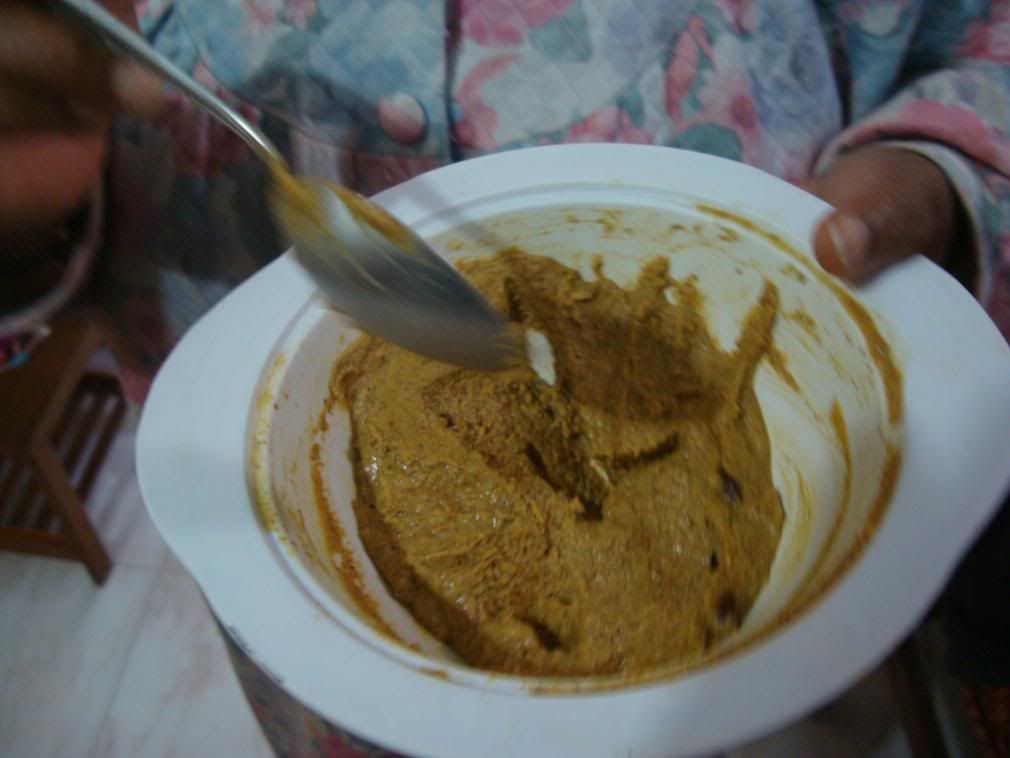
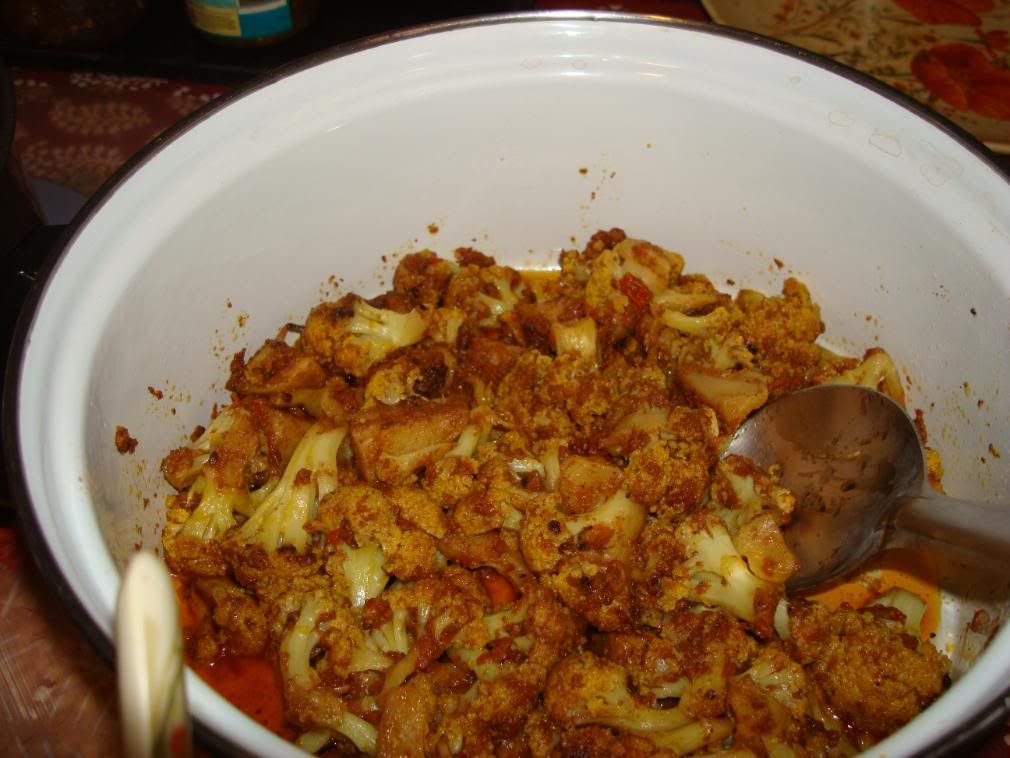
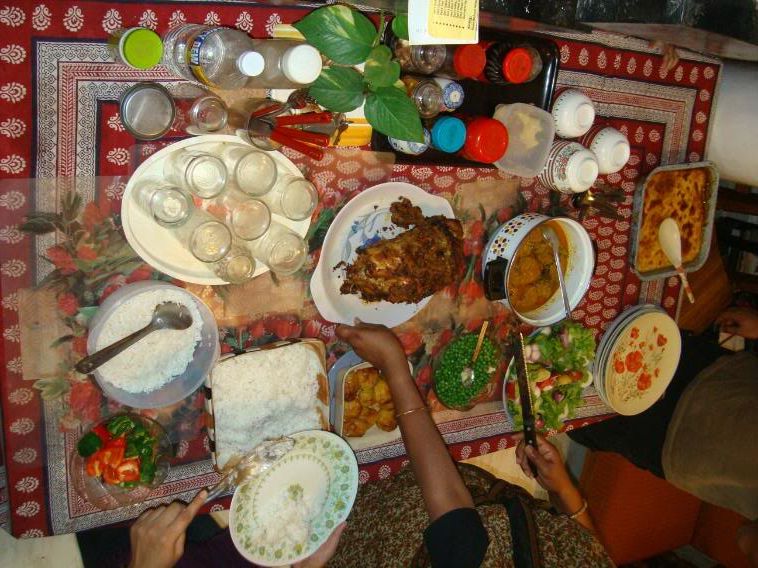
Photo Essay: Me Mum's cooking!
Ok, I am going to get into so many types of trouble for this essay. Lets see, my wife is going to get upset because I am praising my mum's cooking, my stomach's going to get upset because I will be cramping at the thought, my shirt will be upset with the drool, the vegetarians will be upset with the non-vegetarian food being cooked and so on and so forth. But, hey, it was GOOOOOOOD food. And when its grandkids wanting specific food, grandma went all overboard.
My mum's amazing, she has retired now, but she just retired as a full professor of geography, she acts on the stage, film and radio and has awards for them, she paints and sculpts, she was a very good classical dancer before the knees gave way, wonderful singer, she has got awards for her language skills and contributions to Hindi, Sanskrit, Urdu and Bengali, she is busy gallivanting around the world (every year or so, she takes off to go around the world somewhere, her recent trip was to Egypt!), she cooks divinely. Oh!, she can ride, hunt and shoot.
She taught me how to skin and dress a rabbit and a pigeon! :). She is very well read and collects Ganesh figurines (a photo essay on that is forthcoming). She did the interior decoration as well as the architecting of our (and several other houses!), she knits the most amazing jumpers and even sewed my shirts and trousers when we used to be a bit tight for money. Very impressive, is me mum. And this year, if everything works out fine, we will write a book together. But that's jumping the gun, here are some of her culinary masterpieces.
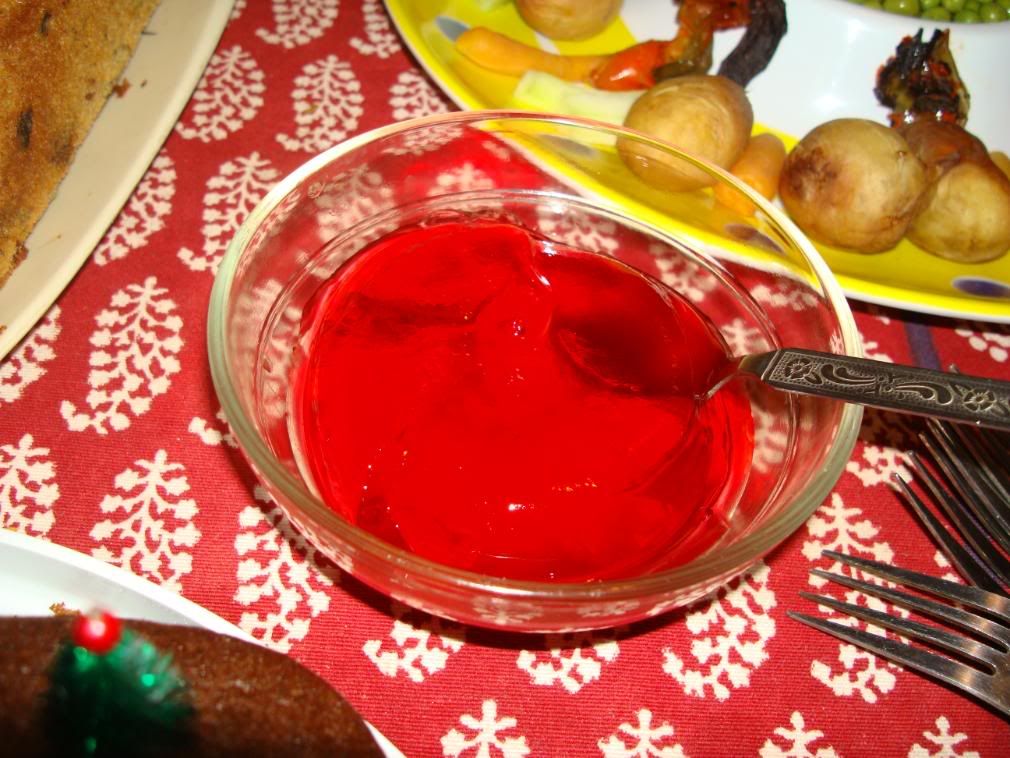
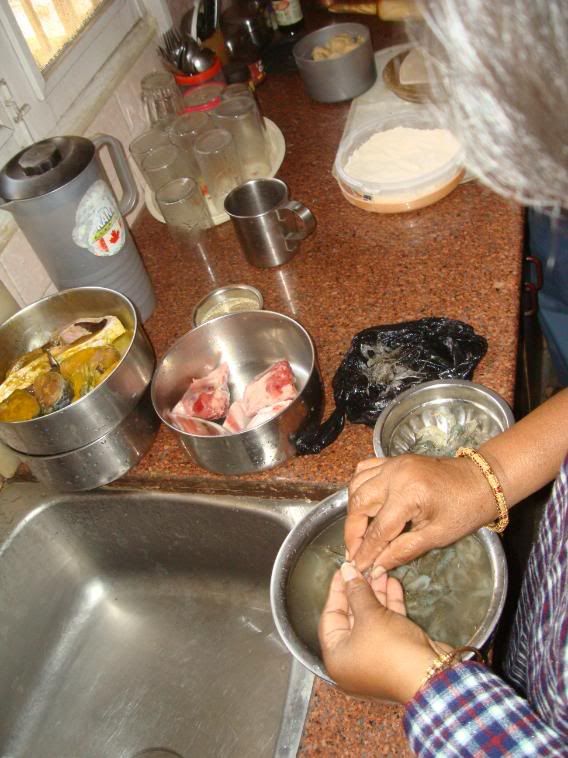
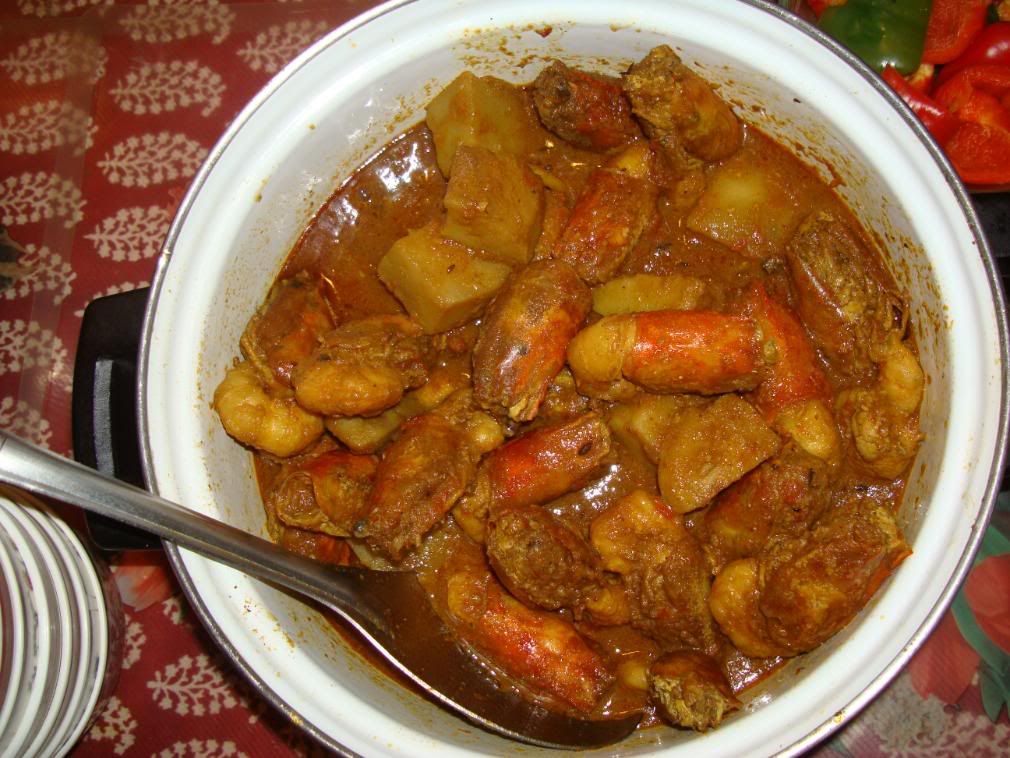
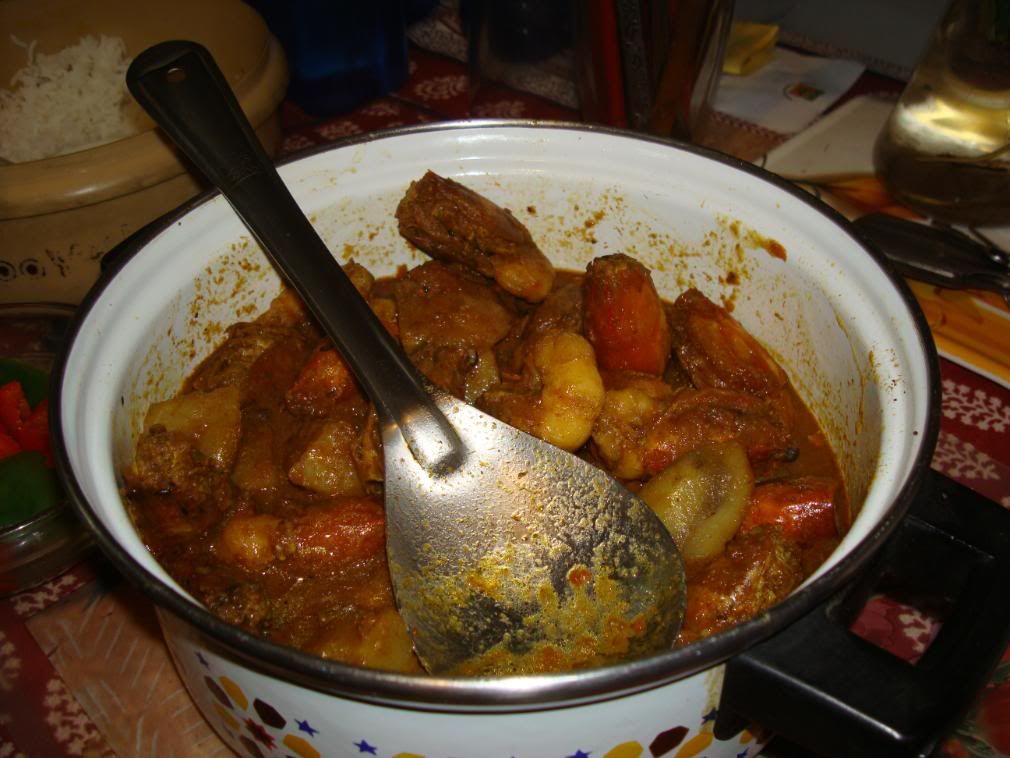

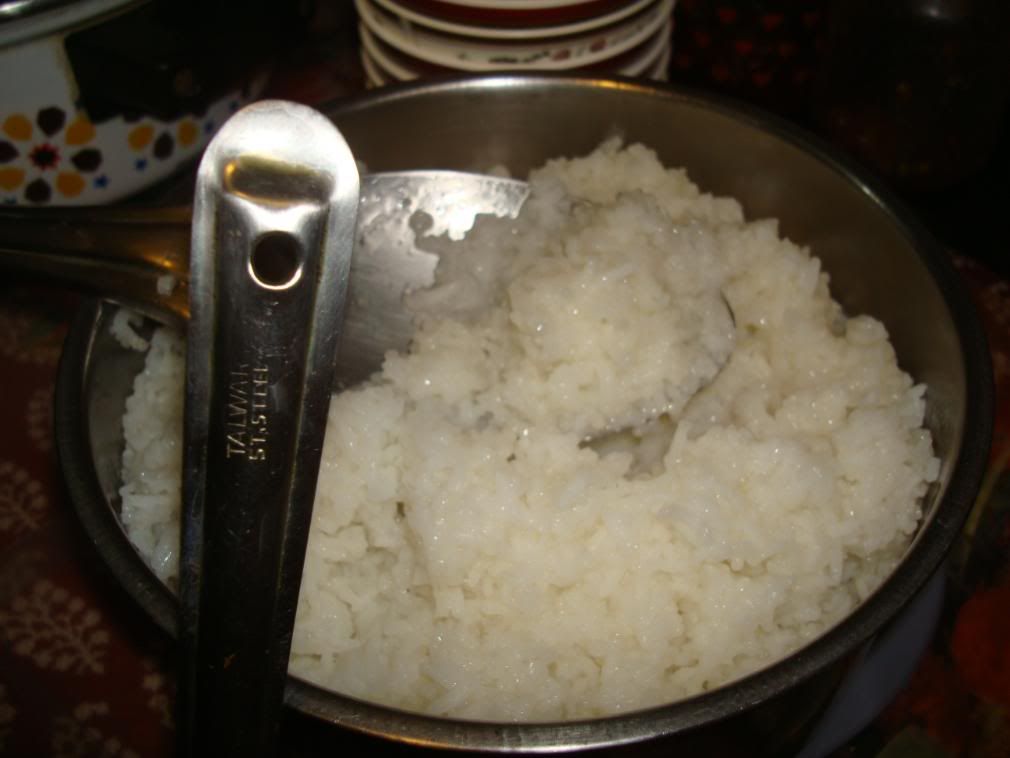
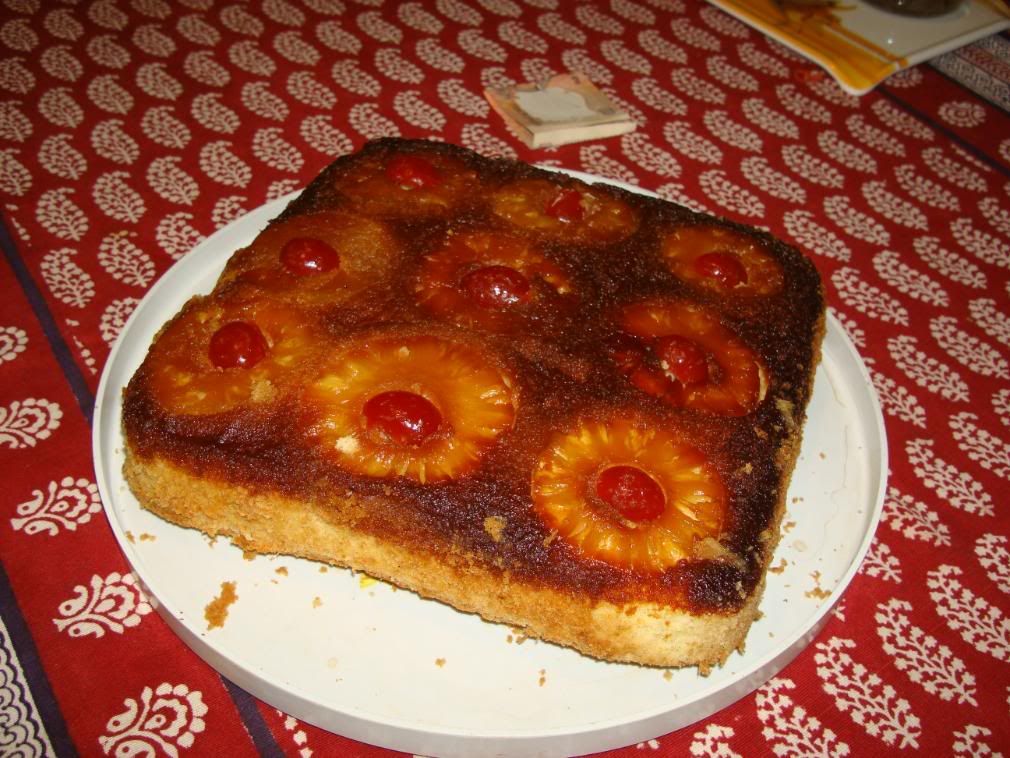


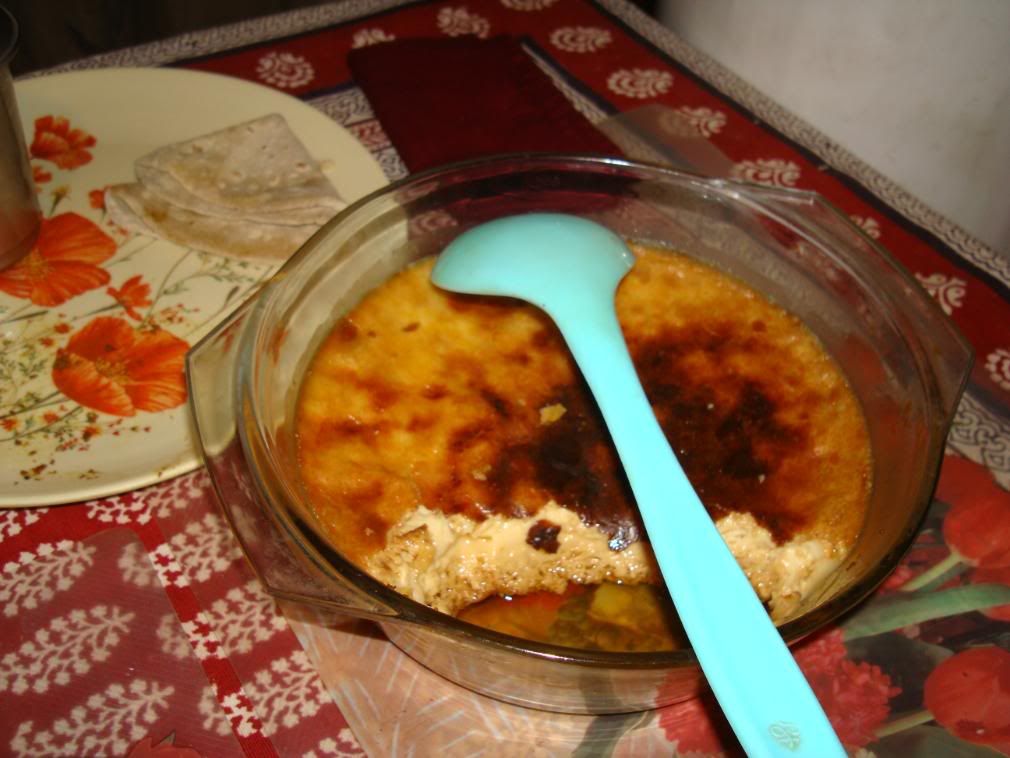

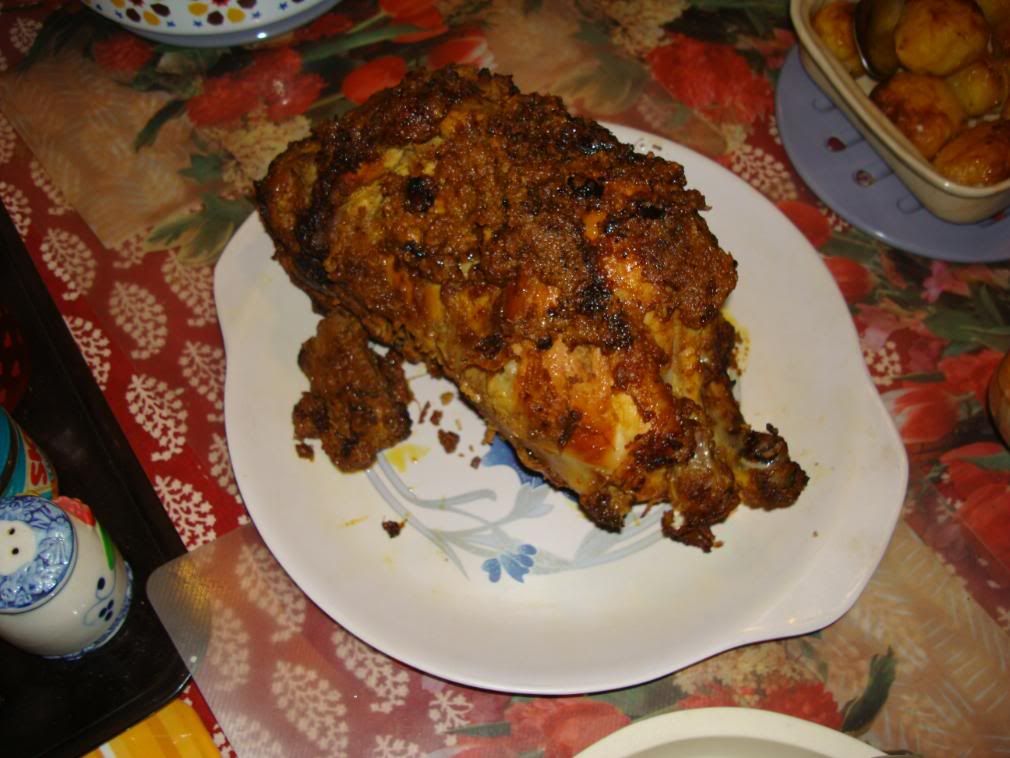
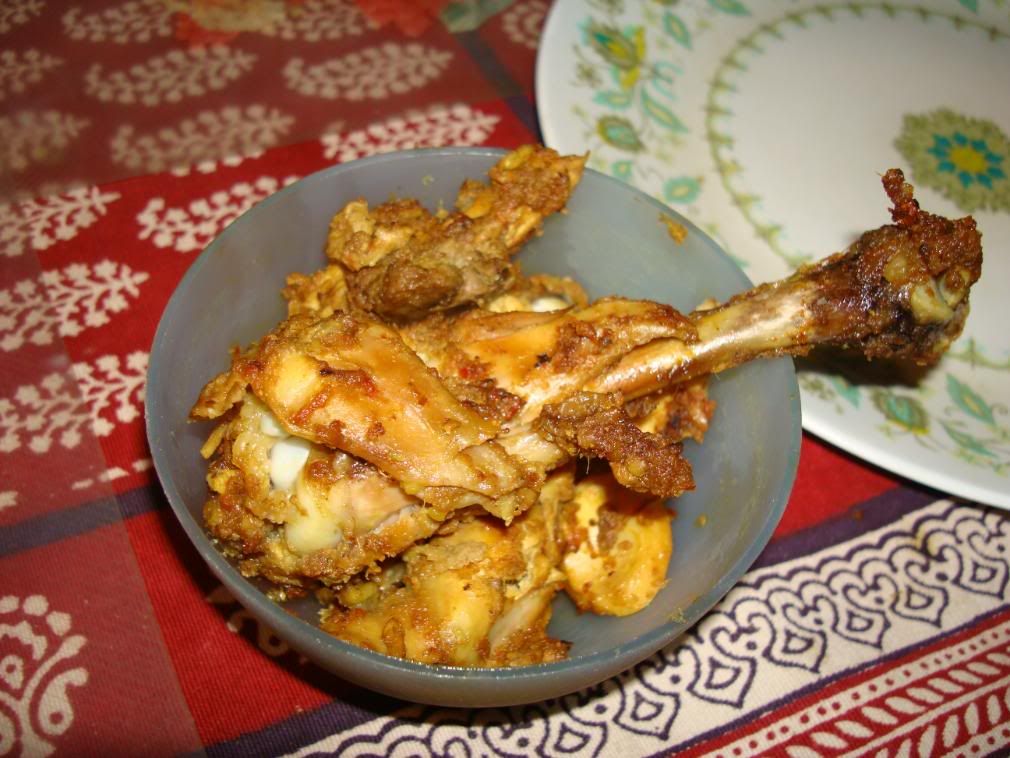
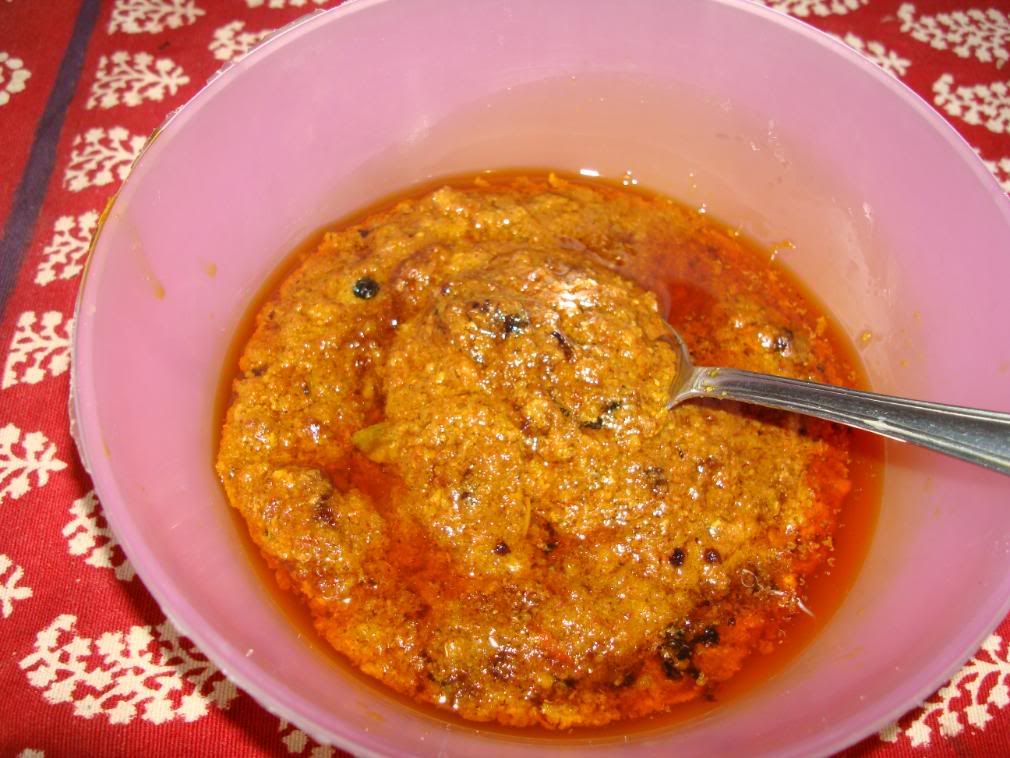
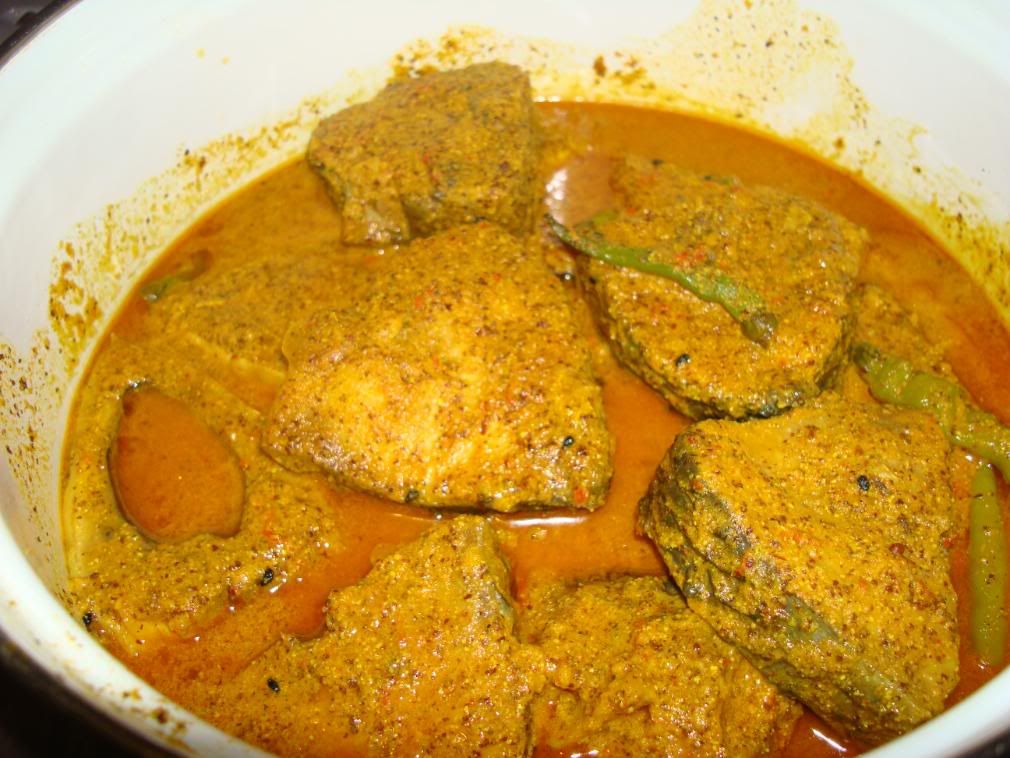
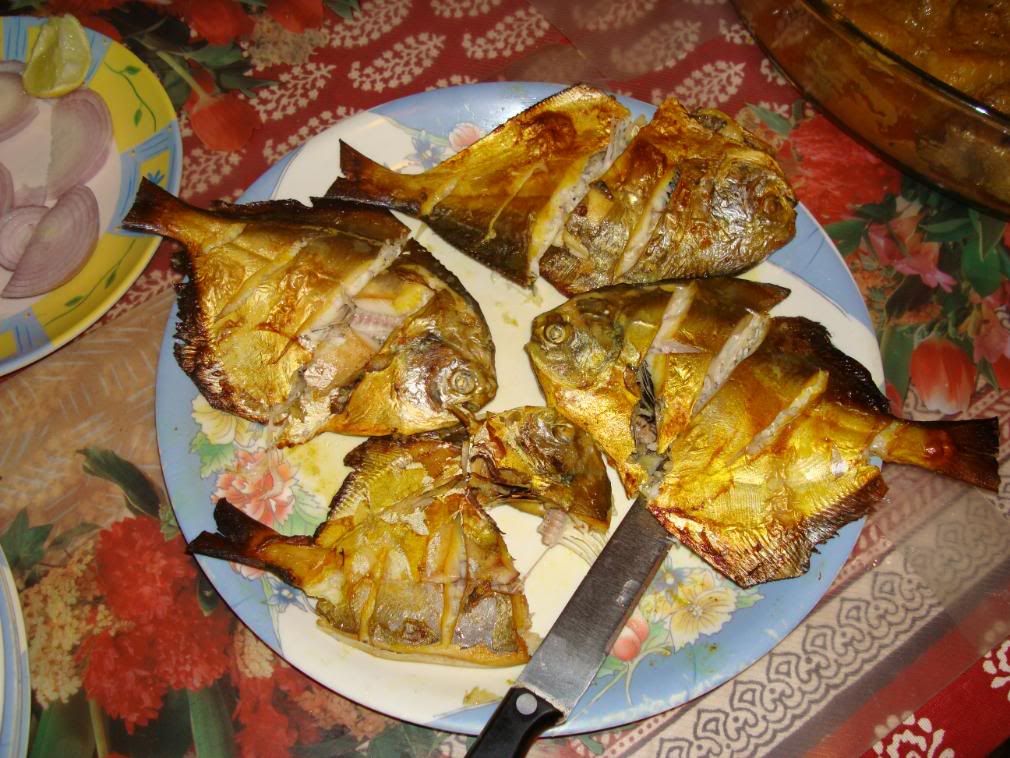


Boiled vegetables and she also made her own special mayonnaise. Yummy if absolutely terrible for my spreading waistline!.


Saturday, January 26
Photo Essay: A Dastarkhan in Lucknow
A Dastarkhan is the name of the white sheet which is spread out on the floor of a room and then food served on top of it. You can find the usage of this word from Iran to Afghanistan to Pakistan to India, and I bumped into this in Lucknow. So it can be called as a the place where very fragrant food dishes are served and so it turned out in Lucknow.
Lucknow is famous for its cuisine. Specially its kebabs which are so soft that they melt in your mouth and there are a variety of Kebabs in Lucknow. Kakori Kebabs, Tunde Kebabs, Skek Kebabs, Hariyali Kebabs, Galawat Kebabs etc. etc. (also try Shreemal) (Also see here for a good overview of Kebabs in India). There are two reasons why they are so soft that they would melt in their mouth.
The first is that the Nawabs of Lucknow were so indolent that they did not want to even chew. The second reason given is that because they were so spoilt, by the time they hit their twenties, their teeth had rotted away due to drug usage and over-indulgence in the Lucknow desserts and sweets.
Be that as it may, I have all my teeth and boyo, the kebabs were brilliant. But I do not like the food served in the big restaurants and given that my-laws are vegetarian, it means that we have to order in. So I decided to go buy some good meat stuff and what I wanted was from the road-side stalls.
And my father-in-law pointed me into this direction. It was a short street, hardly 50 meters long, with about 6 shops on the left and 2 on the right.

We went to dastarkhan which was the second shop on the right.

And the cooks were busy cooking. Notice the sign in the background, only refined oil is used. What is India coming to???? refined oil? what happened to engine oil?

It was quite crowded with people queued out outside

people eating inside quickly, this was in December, it was cold, but still was heaving outside

There were people wanting take away as well.

Here's your menu. I personally thought it was a bit expensive. Compared to other places that I have eaten, that is. A full chicken for 150 rupees? That's expensive. But then, the aroma was brilliant.

The order for the kebabs and biryani was taking some time, so I went walkabout. This was the shop opposite Dastarkhan

Famous Fish Fry. It wont be India without spelling mistakes on shop front. Would Sir like to have some Chiken Rosted?

This place was also heaving.

Some of the other shops were a bit emptier.

Quite a crowd, eh? including the doggie!

the making of a rumali roti

the first shop on the right which makes fried stuff, you can see chicken and fish pieces hanging up around the thela.

And the crowd around the thela. Can you see the building behind the shops? the tall one? That's Gemini Intercontinental Hotel and we got a biryani from there as well.

I am not sure that the Biryani corner was that good, so I avoided it as well. Needless to say, the food was brilliant. I did a blind comparison test of the biryani from Gemini Intercontinental Hotel and from Dastarkhan. I am afraid Dastarkhan won hands down! (my daughter preferred the other one, but I pulled rank and weight and overruled her for the next time, she WILL learn who's the daddy!)
But again, if you are ever in Lucknow, do make it a point to visit Dastarkhan and enjoy!
Thursday, October 25
Kimchi in Space!!!!
It wasn't bad enough that they have a Kimchi festival, now they are taking the damn thing up in space!
Korean food manufactures are competing to whip up space-edible foods for Ko San, Korea's first astronaut who will lift off in a Russian Soyuz spacecraft in April.
The Korea Atomic Energy Research Institute is working on kimchi with domestic food maker CJ and instant noodles with Nongshim. The Korean Food Research Institute is also developing space-safe fried kimchi, hot pepper paste and soy bean paste, rice, red ginseng and green tea with Daesang and Ottogi.
Russia will evaluate the safety and storability of the foods. If they pass the tests, traditional Korean food will be served to the astronauts on the spacecraft.
As the food makers race to create their space-friendly edibles, there are mixed opinions about the best way to sterilize it. Food makers working with the Korea Atomic Energy Research Institute argue that freeze-dried foods don't taste good. But those working with the Korean Food Research Institute insist that consumers don't like irradiated foods.
However, there is a common view that developing space food will lead to enhancing the technological competitiveness of the Korean food industry. Currently researchers are developing space-edible hot pepper paste in tubes and soy bean paste in the form of instant soup. Preparing these foods is costly, so it remains to be seen whether the space-safe foods will be made available to consumers.
Monday, October 15
Stay away from Gwangju - Kimchi alert!
Gwangju in South Korea is holding its annual Kimchi festival. For those who do not know about Kimchi, it is the national Korean dish, made out of spicy cabbage leaves and other vegetables, fermented and then served. It is fierce and tear inducing by the gallon for the unwary. Keep a large glass of beer handy! And don't insult your hosts by falling over, say politely that you have a tongue problem or you have an ulcer and can only eat bland food (then you will get a plate of bland dog meat curry, but that's for another day!)
And as the joke goes, on a good day with the right wind conditions, you can smell South Korea in Japan. And that is all due to Kimchi.