A daily dose of odds and sods, some interesting, some bizarre, some funny, some thought provoking items which I have stumbled across the web. All to be taken with a grain of daily salt!!
I recently saw this painting last Friday at the Tate Britain at the artist and empire exhibition, son. And I kept looking at it. It's an extraordinary painting not least because the painter has captured the Royal imperial state of all the three girls but also the hugely expensive and rich golden ornaments. I was quite taken by the girls.
But then I read the background to the painting and it was even more interesting. Smallpox is a terrible terrible disease son. It used to kill indiscriminately across vast swathes of the world and those it soared, it would disfigured them horrendously. Look up the wiki entry for smallpox and you'll see why it's such a terrible disease.
So it was good to read that the Brits actually tried to do something about smallpox. And these girls were obviously brave to sit for the painting as well as take the vaccination. Bravo!
Alfred Davey, Bedford, his sale in these rooms, 29th January 1930, lot 58 (as by Zoffany) bt. by the father of the present owner
Exhibited
Victorian and Albert Museum, India Observed, India as viewed by British Artists1760-1860, 1982, no. 22; Fitzwilliam Museum, Cambridge, In the Public Eye, 1991, no. 95, fig.1
Literature
Mildred Archer, India and British Portraiture, 1770-1825, 1979, p. 204, plate 126; Nigel Chancellor, 'A Picture of Health: The Dilemma of Gender and Status in the Iconography of Empire', Modern Asian Studies, Vol. 35, 2001, pp. 769-782
Catalogue Note
This important portrait showing three Royal women from the Court of Mysore in Southern India was painted by Thomas Hickey in circa. 1805. Not only is it one of the finest portraits of an Indian subject by a Western artist during the period of British rule, but it also shows a remarkable understanding of the sitters and of classical Indian symbolism.
Hickey was unusual amongst the British artists who went to India to find work in that he can almost be said to have adopted India as his own country. His initial attempt to reach Calcutta failed as his vessel was captured in August 1780 by the French and Spanish fleets. Hickey made the best of his predicament by settling for a few years in Lisbon, where he found plenty of demand for his work as a portrait painter. His namesake, William Hickey noted that he 'had painted most of the English ladies and gentlemen and was then engaged upon the portraits of several Portuguese of rank'. Notable amongst his sitters was the Bengal Court Servant, John George Livius, who was painted in 1782 on his way back from India. Hickey finally reached Calcutta in 1784.
His neatly painted, small scale portraits of British officers soon proved popular, but particularly notable was Hickey's extraordinary ability to paint native sitters with particular sympathy and understanding. In Laurence Sullivan and his ayah of c. 1785 (Henderson Collection), the beautiful young Ayah is painted with particular subtlety, and the Indian Lady of 1787 (National Gallery of Ireland, Dublin) probably depicts Jemdanee, the bibi of his friend, William Hickey, who is shown to be a woman of rare beauty. Most of Hickey's final years in India were spent in Madras and the first important work which he did there was to paint a series of portraits of Indian princes and courtiers, including Krishnaraja Wadiyar III, the young Raja of Mysore and the wiley Purniya, his Brahmin chief minister. In 1804 Hickey submitted a memorandum suggesting that he should be made 'historical portrait painter to the Hon. East India Company', apparently in response to a wish by the company that information he provided by the various Presidencies to assist with 'a general History of the British affairs in the East Indies'.
It is in this context that Hickey painted this masterpiece. When it was first acquired in 1930 the sitters were described as 'India Princesses' and the picture was said to have been painted by Zoffany, undoubtedly the most celebrated of the Western artists who settled in India to ply their trade. In her important book on India and British Portraiture published in 1979, Dr Mildred Archer correctly reattributed the portrait to Hickey and suggested that the rich jewellery and the composition of this intimate portrait meant that they were 'either temple dancing-girls or experienced courtesans'.
In 1999 the portrait was lent to a loan exhibition at the FitzWilliam Museum in Cambridge where it was seen by Dr Nigel Chancellor who published in 2001 some interesting and thought-provoking theories about the portrait which makes it clear that it has considerably greater significance than had first appeared.
Dr Chancellor pointed out that the assumption that three such ladies with such sumptuous jewellery and such apparent self confidence had to be courtesans was a common, conventional European assessment. Portraits of well born ladies were understandably rare as most would be married and thus confined to purdah, and there would certainly have been a resistance to showing such women as wives from a polygamous society. However the lack of a temple and the failure of the artist to depict the sitter's lower limbs and feet made the idea that they were 'temple dancing girls' highly unlikely – Tilly Kettle's well known picture of An Indian Dancing Girl with a Hookah was an altogether different subject. The opulent jewellery on closer inspection led away from the idea that the ladies were courtesans. The heavy gold sleeve bangles were, as Dr Chancellor points out, one of the defining emblems for women of the Arasu royal clan, and the splendid head-dresses with their distinctive triangular patta on the foreheads established the women as pattaranis or queens who have been crowned as wives of a Raja. The woman on the right of the group is shown with prominent crescent moons on one side of the central band of her head-dress, a reference to the mythical origins of the Mysore Wadiyars (the ancient Hindu dynasty recently restored to power by the British). Dr Chancellor concludes that the portrait probably includes two Mysorean queens, the lady on the left being Rani Devajammani, the Raja's senior wife, and the lady on the right Devajammani of Lakshmivilas Sannidhana, the junior queen who was close in age to the young Raja. The more relaxed lady in the centre resembles Hickey's portrait of the young Raja mentioned earlier and is probably one of the Raja's royal sisters.
The existence of such a rare portrait is explained by the arrival in India at the beginning of the century of the first vaccines against smallpox. Lord William Bentinck, governor of Madras, was anxious to promote its benefits and Mark Wilkes, Resident at the Court of Mysore, was instructed to do all he could to persuade people of its benefits. He was supported by the Raja's minister, Purnaiya (whom Hickey had painted) and most importantly, by Rami Lakshmi Ammani, queen of the old Wadiyar ruler of Mysore and grandmother of the Raja's senior queen. As her husband had died of smallpox she was particularly keen to support vaccination. All this coincided with the betrothal of the young Devajammani, a girl without the dreaded disease, to the young Raja. Her willingness to have the new vaccine was announced in Madras in July 1806. In Hickey's portrait not only is she shown in a white sari with a beautiful unblemished complexion, but she is holding her sari to present her left arm and the sleeve of her bodice indication where the vaccine would be performed, something which a European doctor could do without compromising the modesty of an Indian woman.
This painting would appear to be in generally very good condition. The canvas has been lined. However, there are no apparent tears or damages, and the work would appear to be in good structural condition. There is some craquelure to the paint surface, but this is characteristic for a painting of this age. There is some good remaining impasto on the sitters' jewellery. Examination under ultraviolet light reveals a thick varnish which obscures a clear reading. However, there would appear to be some evidence of a couple of minor areas of retouching in the lower right hand corner of the composition, as well as some retouchings to the edges of the canvas. There is evidence of some older retouchings in the sitters' costumes, but the varnish layer is uneven and hard to penetrate. Held in a plaster gilt and wood frame. "In response to your inquiry, we are pleased to provide you with a general report of the condition of the property described above. Since we are not professional conservators or restorers, we urge you to consult with a restorer or conservator of your choice who will be better able to provide a detailed, professional report. Prospective buyers should inspect each lot to satisfy themselves as to condition and must understand that any statement made by Sotheby's is merely a subjective, qualified opinion. Prospective buyers should also refer to any Important Notices regarding this sale, which are printed in the Sale Catalogue. NOTWITHSTANDING THIS REPORT OR ANY DISCUSSIONS CONCERNING A LOT, ALL LOTS ARE OFFERED AND SOLD AS IS" IN ACCORDANCE WITH THE CONDITIONS OF BUSINESS PRINTED IN THE SALE CATALOGUE."
There are two ways of looking at this problem son. Well three ways. When you and Diya were born, I didn't have parental leave. And mamma didn't work so the question of leave didn't exist. But if fathers leave was available, then I would have loved to take it. Spend more time with you. When you have your kids, son, make sure you take the full amount. Don't worry about the future son. Or career. The time you spend with your new born baby and your wife is so precious that it will keep on giving you happiness through your entire life time. Secondly, there's the USA situation. I find it very strange that USA doesn't do it and it's not mandatory like in other countries. Very strange. Then again there's no demographic pressure either. Their birth rates are good. But the republicans are a dying breed anyway so entropy will take care of the nay Sayers.
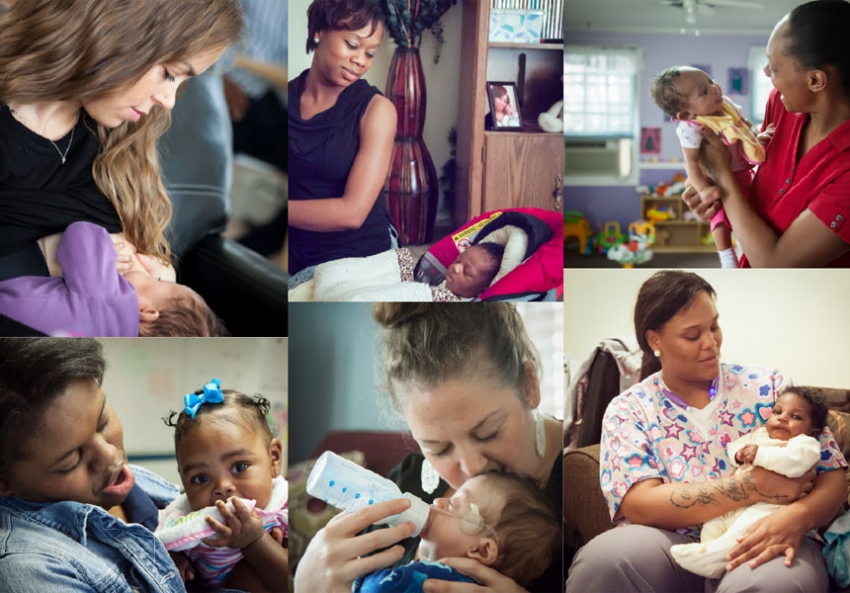
Thirdly as an economist, you will know that this has a cost. Paid parental leave means that the company gets hit twice. First with the loss of the mother's time and then the cost of maternity cover or if the role isn't covered, then lack of productivity. This, when aggregated, means there is a cost of this. Sometimes it can be handled. Sometimes it can't and ends up being very painful. So the studies that this article talks about say there's no impact. Or they couldn't measure it. Or they were able to manage the impact. Finally remember that the unmarried people in the office have started to complain. Why should they bear the cost of somebody who is taking a lifestyle choice? It's a fair question. Difficult decisions son. When you will become a manager, you'll have to deal with these questions. Missing you. And remembering the bestest day in my life when you were placed in my arms :) Love you Baba The Real War on Families: Why the U.S. Needs Paid Leave Now http://inthesetimes.com/article/18151/the-real-war-on-families (via Instapaper) Each one of these women went back to work less than two months after giving birth due to the financial toll of unpaid maternity leave. (Kate Milford)
Benrahou had to attend to another crisis: she was the mother of a very sick baby, and her carefully constructed paid maternity leave had disintegrated.
Leigh Benrahou began laying plans to have a second child almost as soon as she had her first, a daughter named Johara, in 2011. Benrahou, 32, wanted to time the next birth so that when she returned to work, her mother, who works at an elementary school and has summers off, could babysit. Most importantly, Benrahou wanted to spend as much time as she could with her new baby while also keeping her relatively new job as the registrar at a small college.
While her husband, Rachid, 38, earns enough at a carpet cleaning company to cover their mortgage and food, without her paycheck they'd be forced to live close to the bone. And if she quit her job, Benrahou, who has a masters in nonprofit management, would take a big step backward in what she hoped would be a long career in higher education.
So Benrahou, who has wavy dark blond hair, blue eyes and a tendency to smile even through difficult moments, set about what may be the least romantic aspect of family planning in the United States: figuring out how to maximize time with a newborn while staying solvent, employed and, ideally, sane.
Only in America
Most people are aware that Americans have a raw deal when it comes to maternity leave. Perhaps they've heard about Sweden, with its drool-inducing 16 months of paid parental leave, or Finland, where, after about 9 months of paid leave, the mother or father can take—or split—additional paid "child care leave" until the child's third birthday.
But most Americans don't realize quite how out of step we are. It's not just wealthy, social democratic Nordic countries that make us look bad. With the exception of a few small countries like Papua New Guinea and Suriname, every other nation in the world—rich or poor—now requires paid maternity leave.
Paid parental leave frees mothers and fathers from choosing between their careers and time with their infants. For women, still most often the primary caregivers of young children, this results in higher employment rates, which in turn translates to lower poverty rates among mothers and their children.
Research shows that paid leave can also be a matter of life and death for children. By charting the correlation between death rates and paid leave in 16 European countries, Christopher Ruhm, a professor of public policy and economics at the University of Virginia, found that a 50-week extension in paid leave was associated with a 20 percent dip in infant deaths. (The biggest drop was in deaths of babies between 1 month and 1 year old, though mortality of children between 1 and 5 years also decreased as paid leave went up.)
According to the Bureau of Labor Statistics, only about 13 percent of U.S. workers have access to any form of paid family leave, which includes parental leave and other time off to care for a family member. The highest-paid workers are most likely to have it, according to BLS numbers, with more than 1 in 5 of the top 10 percent of earners getting paid family leave, compared to 1 in 20 in the bottom quartile. Unionized workers are more likely to get benefits than nonunionized workers.
What do the rest of American women do without a law that guarantees this basic support? Some new mothers who don't get paid leave quit their jobs, which can leave them desperate for income and have serious consequences in terms of work opportunities and lifetime earnings. Others may choose not to have children (though it's impossible to definitively quantify how the difficulty of integrating work and childbirth factors into those decisions). And some try to stitch together their own paid leaves through accumulated vacation time and personal days, or through independently purchased insurance policies.
The best-laid plans
Though her employer doesn't offer paid leave, Benrahou figured she'd create her own, taking time away from work through the Family and Medical Leave Act, which entitles new parents to up to 12 weeks off, unpaid. She knew all about the law's loopholes—that, for instance, it only applies to workplaces that have at least 50 employees. Hers did; she wouldn't have taken the job if it hadn't. She knew, too, that she had to have worked for her employer for at least 12 months to qualify. That part was trickier.
She had started her job in February 2014, which meant that she wouldn't qualify until the following February. She counted back nine months from then and got to May, but then, to be safe, tacked on another two months in case the baby came early, so: July. That's when she and Rachid would start trying for a second.
Then there was money. Reluctant to lose 12 weeks of income, Benrahou decided to opt into her employer's disability insurance policy, paying roughly $40 a month into the plan so she could receive 60 percent of her salary for up to six weeks of her maternity leave, plus an additional $1,000 toward the cost of her hospital stay. She would also save up her two weeks of annual paid vacation time.
Numbers crunched and policy purchased, Benrahou went off birth control on schedule in July and became pregnant within a month. But her carefully laid plans started to go awry in her 20th week, when she was diagnosed with placenta previa, which can result in early delivery. Despite some bleeding and cramping, and several brief hospital stays that used up her sick days, Benrahou stuck to her plan, working as much as possible after her diagnosis in order to save her precious vacation time. But, in late December, her water broke. Though her due date was April 1, Leigh Benrahou gave birth by C-section on Christmas Eve—too soon to qualify for FMLA leave or any payoff from her disability insurance.
Ramzi Benrahou was born at 26 weeks and just over 2 pounds. Knowing that 20 percent of babies born at his gestational age don't survive, Leigh spent the first hours after the delivery singularly focused on her tiny son's survival. He needed oxygen, since his lungs weren't fully developed. And, when he was whisked away for medical attention, Benrahou had to attend to another crisis: She was the mother of a very sick baby, and her carefully constructed paid maternity leave had disintegrated. So, freshly stitched up and still groggy from anesthesia, she spread out her medical fact sheets, insurance policy papers and lists of phone numbers on her hospital bed and began to grapple with her new reality. Though her college was on winter break, which put off her return by about a week, Benrahou realized she'd have to go back to work when classes resumed on January 6, less than two weeks after giving birth.
Less than a month
Like Benrahou, most U.S. women end up returning to work sooner than they'd like—sometimes just weeks or days after having a baby. Just how soon they're going back is difficult to determine. We know that most employers don't offer paid leave, but no federal agency collects regular statistics on how much post-childbirth time off, paid or unpaid, women are actually taking.
Census data on employment patterns among first-time mothers show that between 2005 and 2007, more than half who worked during their pregnancy were back on the job within three months of giving birth. A 2008 study by the Department of Health and Human Services' Maternal and Child Health Bureau, meanwhile, found that the average length of maternity leave, when taken, was 10 weeks. But more recent data is scarce, even though the recession left many women living on razorthin margins, ratcheting up the pressure to rush back to work after giving birth.
How are new mothers faring in today's age of austerity? Data analyzed for In These Times by Abt Associates, a research and evaluation company, provides a window into these experiences. Abt went back to a 2012 survey it conducted for the Department of Labor of 2,852 employees who had taken family or medical leave in the last year, looking specifically at the 93 women who took time off work to care for a new baby.
Nearly 12 percent of those women took off only a week or less. Another 11 percent took between one and two weeks off. That means that about 23 percent—nearly 1 in 4—of the women interviewed were back at work within two weeks of having a child.
The educational divide between those who took shorter and relatively longer leaves is striking: 80 percent of college graduates took at least six weeks off to care for a new baby, but only 54 percent of women without college degrees did so.
Pumping in the parking lot
What's it like to be back on the job in the first weeks after having a baby?
For Natasha Long, who was back three weeks after her third child, Jayden, was born in 2012, the worst part was missing out on bonding time with her son.
Long, who was 29 at the time, was determined to make sure Jayden got breast milk. But the factory where she worked, ACCO Office Supplies in Booneville, Mississippi, didn't have a lactation room. So when she was on breaks, she had to run out to her truck. She sat in the cab, worried that someone might see her, and pumped, while tears rolled down her face and over the plastic suction cups attached to her breasts.
Long cried because she wanted to be holding her baby rather than sitting in the parking lot of a factory in her old Yukon Denali. But exhaustion clearly also played a role in her emotional state. Her job was simple—to place stickers with the company logo on the bottom right-hand corner of plastic binders and then box up the binders. But the shifts were long—from 6 a.m. to 6 p.m.—and she put in four or five a week. Because the factory was an hour's drive from her home in Okalona, Mississippi, Long had only 10 hours left in the day to do everything else, including tend to her three children, spend time with Jayden's father, and sleep. By the time she got back in the evening, her children, who were being looked after by her father during the day, were on their way to bed. To pump breast milk before leaving for work, she had to get up at 4 a.m.
After just a few days of this crazed schedule, Long began to develop strange symptoms, including a headache that never seemed to go away and a choking sensation that left her feeling breathless. She started biting her fingernails to the quick—something she'd never done before—and crying a lot. "I felt like I was alone," says Long. "I wanted to fall off the face of the earth." Long had never been depressed. But when she went to the doctor, he surmised that her physical symptoms were rooted in her mental state, which was itself rooted in her schedule. When her doctor said he thought she was depressed, Long worried that if child welfare authorities found out, they might take her children away. She had seen other people's children put in foster care. But when her doctor prescribed her antidepressants, she took them.
Long is not the only one to suffer emotionally from a quick return to work. Research has shown that longer maternity leaves, whether paid or unpaid, are associated with a decline in depressive symptoms, a reduction in the likelihood of severe depression, and an improvement in overall maternal health, according to a working paper issued by the National Bureau of Economic Research. One national study of 1,762 mothers found that a one-week increase in maternity leave was associated with a 5 to 6 percent reduction in depressive symptoms from six to 24 months after birth. Another found that women who took less than eight weeks of paid leave experienced more depression than those who had longer leaves and were in worse health overall. Mothers who work more than 40 hours a week, as Long was, were more likely to be depressed than those who worked 40 hours or less, according to a study by Child Trends, a research center.
Women who go back sooner also tend to breastfeed less, which cuts into the benefits breast milk confers, including better immunity and lower rates of childhood obesity, allergies and sudden infant death syndrome. It was only through heroic efforts that Long was able to breastfeed Jayden until he was 1.
Shorter maternity leaves may also have a negative effect on the development of early motor and social skills and even, later, on vocabulary, according to several studies. So far, Jayden, 3, hasn't shown signs of missing any developmental milestones. What nags at Long is the thought that her absence in those first few months might have affected their relationship. He refuses to call her "mama," and although there's no research to indicate this would be a result of failed early bonding, she still fears that's the reason.
Too busy to fight
For low-income women, the lack of paid maternity leave is just one of many missing supports to help them stay afloat while bringing new life into the world. By the time Jayden was born, pregnancy had already put Long in a perilous financial situation. She was on bed rest for the last four and a half months of her pregnancy. Big Dollar, where she worked at the time, didn't fire her for not coming in—but it didn't pay her, either. So Long filed for public assistance, which required her to attend classes. Though Mississippi is supposed to exempt people who are physically unable to take such classes, and Long's doctor had warned her to stay off her feet, she says she was denied benefits when she didn't attend.
Family members pitched in to pay for her groceries and rent while she was unable to work, but by the time Jayden was born (healthy, at 37 weeks), Long knew she had reached the limit of their generosity. When she went back to work at the dollar store, they offered her only reduced hours. It wasn't enough to repay her debts, so she went to an employment agency, made no mention of her days-old baby, and got her job at ACCO.
Other social supports are glaringly absent for U.S. mothers, especially poor ones, who fill waiting lists for scarce subsidized childcare spots and underfunded early education classes. In comparison, Sweden and Denmark spend roughly 10 times what we do on childcare per person.
Without adequate options or support, low-income workers, who are more likely to live paycheck to paycheck and less likely to have access to any type of leave, often have little choice but to power through. As our data confirm—and as finances dictate—less educated women, who tend to have lower-paying jobs, are likely to take less time off after having children. Often, that means not just going back to work early, but going back to very long work hours, very early.
Raven Osborne, for instance, a 22-year-old single mother in Tupelo, Mississippi, went back to work just one week after her first child, Kylan, now 2, was born in August 2013. In addition to being a full-time college student, Osborne was waitressing full-time at IHOP, but her earnings—tips plus a base salary of $2.13 an hour—weren't enough to cover her rent, car payments and daycare costs. Perhaps ironically, her tips were much higher—sometimes more than $100 a shift—when she was visibly pregnant. But once she had the child, they went down again, so Osborne added a few overnight shifts at Texaco when Kylan was four weeks old, leaving the baby with his grandmother. Working upwards of 60 hours each week, the new mother barely saw her son, except when she got home from work, when she often fell asleep holding him. She could have taken unpaid leave from IHOP but chose not to because she needed the pay.
This winter, Osborne returned to work four weeks after her second child, Anthony, was born. Now she's working full-time at a debt collection agency on top of several shifts at the nearby Coles supermarket.
"I don't like asking for help" is how Osborne explains the frantic pace she's kept up during her first year-and-a-half of motherhood. Her mother pitches in by watching the kids when she can, though she, too, has two full-time jobs—one at Walmart and another as an aide at a retirement community.
Clearly, women with low earnings are the least likely to have a financial cushion that allows them to forgo a paycheck. But it's not only those on the bottom of the pay scale who can't afford to take unpaid leave. More than 2.5 million employees need time off from work to care for themselves or another but can't afford to take it, according to a 2012 study from the Center for Economic and Policy Research.
Tracy Malloy-Curtis, a fundraiser at a nonprofit in New York City, could have taken more time off, unpaid but with job security, after she had a baby a few years back. ("It's a civil rights organization," she explains, though she doesn't want to name it because she still works in the field.) Instead, Malloy-Curtis, who is 43, married, and the primary breadwinner in her family, went back five and a half weeks after having a son—and a complicated C-section—for fear she otherwise could not afford to pay her mortgage and cover the other basic costs of her life.
"Physically, I was a wreck," she says. An infection around her C-section wound hadn't yet healed when she went back to work. "I was still bleeding, my incision wasn't closed." Pus dripped down her leg under her work clothes.
Those who do take leave may find themselves penalized afterward. Jackie Wheeler took six weeks of paid maternity leave after her son, Enzo, was born in 2011. Wheeler, who lives in Westminster, Colo., was working at the front desk of a local branch of Chase Bank. Though her son had severe medical problems as a result of being born early, Wheeler had intended to go back to her job. Before giving birth, she says, she had even been talking with her boss about interviewing for an assistant manager position. "I saw myself as moving along in the company," she says.
But after she returned to work and Enzo was released from the hospital, she took another six weeks of leave. At that point, her boss told her he thought it was best that she resign—if he didn't fill her position right away, he said, corporate headquarters would eliminate it. And Wheeler was too overwhelmed at the time to challenge him.
The birth of hope
While, in the United States, the lack of time off can too often turn new motherhood into a distressing ordeal, most other cultures treat this immediate post-natal period as a sacred time, when both the new mother and baby receive help and special attention. Throughout history and all over the world, people have tended to carve out a minimum of at least six weeks in which women are exempt from responsibilities other than child care, according to Malin Eberhard-Gran, a Norwegian public health scholar who has compiled a cross-cultural comparison of post-natal practices.
In some Muslim traditions, new mothers spend the first 40 days after birth in their mothers' homes, for instance. Many Latin American cultures also bracket during the same period, known as la cuarantena (from the Spanish word for "forty"), and exempt women from work responsibilities. In some other countries, women are granted special treatment for even longer. Traditionally, women in Japan and India go to their mothers' homes for several months after giving birth. And today, by law, the 30 countries in the Organization for Economic Co-operation and Development (OECD)—democracies with market economies—provide an average of more than a year of paid leave.
Here in the United States, advocates have been fighting for a century to get new parents just a few weeks off with pay. But the tide may be turning. In 2002, California became the first state to pass a paid family leave law, which provides workers who need to care for a new baby with 55 percent of their usual weekly pay, to a limit of $1,104 for up to six weeks. New Jersey passed a similar law in 2008. And in 2013, Rhode Island granted workers up to four weeks off with pay for "family care," including care of a new baby. Despite dire warnings from business interests, most employers in New Jersey and California (where programs have been in effect long enough to be studied) haven't found that paid leave has hurt productivity, profitability or turnover. (Full disclosure: I was a co-author of the New Jersey study).
The Obama administration is attempting to build momentum for paid sick leave, one of the main ways women piece together paid maternity leave. In the 2015 State of the Union address, President Obama called on Congress to send him a bill guaranteeing U.S. workers seven days of paid sick leave—but in early August, Senate Republicans blocked a Democrat-sponsored bill to do so. In the meantime, Obama has an executive order in the works that will extend a week of paid sick leave to all federal contractors, and his adminstration has issued $1.25 million in grants to study how paid leave programs can be developed in states. Labor Secretary Tom Perez, who has been outspoken on the issue, has spearheaded a #leadonleave campaign, in which he and White House aide Valerie Jarrett travel the country to boost local paid leave policies.
But, so far, even a Democratic administration committed to the issue hasn't been enough to overcome resistance to it. When bills have been debated in states, Republicans have been so vehement that paid leave is bad for business and a "job killer" that legislation at a federal level has been assumed to be a no-go. And, at least until very recently, congressional Republicans have mostly scoffed at Democratic efforts. But for the first time, a bill proposed by Sens. Kirsten Gillibrand (D-N.Y.) and Rosa DeLauro (D-Conn.) this spring that would provide benefits for workers who take time off to care for a new baby or sick family member was met with a counterproposal from Republicans, which would allow hourly workers to put overtime toward paid leave.
The issue is also clearly gaining ground in certain states, where at least ten family leave proposals have been introduced since March. Though Republican presidential candidates have had little to say about the issue, Democratic contenders Hillary Clinton and Bernie Sanders have both come out as strong proponents of paid leave. While Sanders has been more specific about his plan, calling for 12 weeks off, with pay, both are making a moral case to which there is no politically sound retort: Families need paid time off to take care of their new babies. Men, women and children will gain from this basic human dignity.
Barreling ahead
After three months, Leigh Benrahou only has a blurry recollection of her first weeks back at work just days after her premature son was born. "I remember walking really slow and wearing stretch pants and just making it happen," she says hazily. She spent those early days cutting a path between the college; the hospital's neonatal intensive care unit (NICU), where Ramzi spent four months and underwent two stomach surgeries; her 3-year-old daughter's daycare center; and her home, where, despite her exhaustion, she found it difficult to sleep.
At work, Benrahou tended to the needs of her students, whose questions about enrollment requirements and course changes occasionally provided distraction from her own, far graver problems. But mostly it was surreal—and painful—to be there. Climbing stairs was difficult because of her recent surgery. And pretty much every time she closed the door to pump breast milk, she wound up crying. Harder still was being away from her tiny baby, whose health was still so uncertain. Every time she got a call from the hospital when she was at work—and there were many—her stomach clutched.
"They say it's like being on a roller coaster, [having a child] in the NICU," says Benrahou. "But a roller coaster is fun. I wanted to throw up all the time."
Benrahou didn't throw up, though. Instead, like so many other American women, she barreled ahead, doing her best to both take care of her newborn and remain employed. Though she never got to take leave when and how she had planned, she was recently able to take 12 weeks off through the FMLA under the category of caring for a sick relative—in this case, her infant son. And now the woman who so painstakingly planned her family's future doesn't know what's ahead. Ramzi's long-term prognosis is unclear; he's still on oxygen and has a feeding tube. About a quarter of babies born at 26 weeks go on to have lasting disabilities.
Benrahou's hope is to keep working. And mostly she remains upbeat. But sometimes she can't help but wonder whether Ramzi's early birth was preventable; and whether continuing to work after her diagnosis so she could make the best of her miniscule amount of time off brought about Ramzi's early delivery. It certainly wasn't the way she planned it. This article was supported by the Leonard C. Goodman Institute for Investigative Reporting.
It was good speaking to you yesterday Kannu. I think you did just fine. You were able to answer most of the questions. It's a tough interview. It's a tough bank. That's why it's at the top son. You're already in the top ranks by being in Oxford. But they want even more selectivity even from Oxford and rest of the top universities. And this brutal meritocracy keeps on going on. It doesn't stop son. This isn't to discourage you. This is a constant challenge for you to constantly improve yourself. Constantly learn and improve. While having a good sense of humour. And I was so proud of you yesterday. Your tone was confident and calm. Very good son.
That's the stuff of hero's son. Like this man. Can you imagine having to saw off your own leg? Holy crap. I've been there to a much smaller extent. When I used to really suffer from the HS boils. Once I got a giant one in my left armpit when I was in Frankfurt and I had to give a hugely important presentation to the European Central Bank. Usually my way of handling large painful boils is to gobble a fistful of painkillers till the boil burst. But that made me dozy and would slur and basically look and behave like a drunk.
So I decided to sort out the boil. I used to carry a Swiss knife back then in 1998. So ran it under loads of very hot water in the hotel bathroom. And then knotted my hanky for a teeth guard. Filled the bath with the hottest water I could stand and then popped in, and cut out the boil. Not fun. Specially since it was in the right armpit. And was using a mirror which kept fogging up. With my wet left hand. Clutching a tiny Swiss knife. But the sodding bleeding wouldn't stop. It kept on weeping blood and pus. As you know, joints are a pain to bandage. So I wrapped up my armpit and over the shoulder with a plastic bag. Tied it into place with a piece of rope. And then went to work looking like a teapot with my right arm akimbo. Mamma was quite accustomed to looking at my clothes all blood stained. Not a fun time.
My PwC partner paul betts asked me what the hell was I doing? So I told him. He just shook his head and said, you're a nutter! But pain is pain. Just one more thing to overcome and conquer :)
Anyway. Have fun son. Busy days now for you with your assignments tutorials and interviews and events. It will all be worth it.
Can't wait to see you this weekend son. I will be making your dishes with a smile :)
When a farmer and migrant worker got thrombosis in his legs, China failed him. In the end, he had to saw off his own rotting leg in order to survive. Zheng Yanliang’s story is an allegory of the struggle to the Chinese healthcare system.
His shroud had already been purchased when, on April 14, 2012, Zheng Yanliang, 48, a Chinese man from Hebei Province, summoned up the last of his strength to lean out of his bed and reach for his toolbox. He took out a hacksaw. Then he wrapped the handle of a backscratcher in a piece of material, which he stuck in his mouth so that he could bite on it. He did not hesitate. He had thought about his options and concluded that he had only one choice, this unthinkable, monstrous deed. He placed the saw against his right leg, a hand’s breadth below his hip, and began to saw.
“[Our research] underwent peer review and was thought to be very solid and worthwhile research,” says Dr. Fred Rivara, who was part of the team that researched gun violence. “The CDC stood by our research — they had funded it and they stood by it. Unfortunately, it raised the attention of the National Rifle Association, who then worked with pro-gun members of Congress to essentially stop funding firearm research.”
Rivara, a professor of pediatrics and epidemiology at the University of Washington at Seattle Children's Hospital, discovered that having a gun in the home is associated with a threefold increase in the risk of a homicide.
“The most common reason that people have a gun is because they have it for home protection,” he says. “Unfortunately, the data indicates that having a gun is associated with both an increased risk of homicide, but even more importantly, an increased risk of suicide. We know that, for example, if there’s a gun in the home, the risk of suicide among adolescents and young adults increases tenfold.”
This article uses individual records of 930,000 burials and 630,000 baptisms to reconstruct the spatial and temporal patterns of birth and death in London from 1560 to 1665, a period dominated by recurrent plague. The plagues of 1563, 1603, 1625, and 1665 appear of roughly equal magnitude, with deaths running at five to six times their usual rate, but the impact on wealthier central parishes falls markedly through time. Tracking the weekly spread of plague, we find no evidence that plague emerged first in the docks, and in many cases elevated mortality emerges first in the poor northern suburbs. Looking at the seasonal pattern of mortality, we find that the characteristic autumn spike associated with plague continued into the early 1700s. Natural increase improved as smaller crises disappeared after 1590, but fewer than half of those born survived childhood.
A story of London.
These are the mortality graphs in London plague years by parish relative to median mortality in the preceding five years. What is very clear is that the deaths happened in North London..actually near where we live. Fascinating behaviour. It was quite interesting to imagine how these outbreaks and epidemics would grow through time, can you imagine deaths at 5-6 times normal rampaging through the crowded, dirty tenements of London? fascinating.
We will face this problem more and more. I have heard so much from so many people that boys are useless idiots as far as looking after the parental units are concerned. Its the daughters who help look after the old folks. But people don't think about the impact this has on the daughters. One way of seeing this is to see if this has any mental health issues. This obviously means that the health care and social care sectors of the country have to worry about it. Also for the old fogeys, please put aside sufficient money so that you have proper support in a care home or with nursing, or what have you. You have already managed to bugger it up with loading debt on them but one to think deeply..
2. Is caring for elderly parents detrimental to women’s mental health? The influence of the European North-South gradient Date: 2013-11 By: Elenka Brenna (Dipartimento di Economia e Finanza, Università Cattolica del Sacro Cuore ) ; Cinzia Di Novi (Università Ca’ Foscari, Dipartimento di Economia, Venezia ) In the last decades, both the lengthening of life expectancy and an accentuated decline in birth rates have reduced the consistency of the younger generational cohorts. Due to an ageing population, the burden of care giving is expected to intensify in the next quarter of the century in Europe, especially for mature women. This paper investigates the impact of the provision of constant care for elderly parents on the mental health of adult daughters, between the ages of 50 and 65, living in different European countries. Data is collected from the Survey of Health, Ageing and Retirement in Europe (SHARE). Information on mental health status is provided by Euro-D depression scale, a standardized measure of depression employed across European countries. We focus on differences in the effects according to a North–South gradient: we test whether the relationship between informal caregiving and mental health differs across European macro- regions. Our results reveal the presence of a North-South gradient in the effect of caring on women’s mental health. Keywords: caregiver burden, depression, parent care, LTC systems, mature women JEL: I10 I12 D10 URL: http://d.repec.org/n?u=RePEc:ctc:serie1:def004&r=age
An interesting historical record of how an arrow wound was healed son. I was reminded of how taita did a similar thing in wilbur smith's novel.
Btw son, do learn how to do first aid. It's very useful and the time you need the knowledge, it's going to be vital. One of the things like swimming, cycling etc. good things to know.
Plus it allows you to know yourself son. Medically. I don't mean that you need to do a Michelangelo and go about doing dissection on dead bodies but a working knowledge of medicine, anatomy and being accustomed to blood and organs helps.
Given at the session Aspects of Medieval Military History I, at the 48th International Congress on Medieval Studies (2013)
Michael Livingston, Associate Professor at The Citadel, explains what happened in one of the most remarkable cases of battlefield surgery from the Middle Ages – the arrow wound suffered by the future Henry V at the Battle of Shrewsbury in 1403.
Prince Henry was only 16 years old when he marched with his father’s forces to Shrewsbury in western England to fight against the rebel army led by Henry “Harry Hotspur” Percy. With English longbowmen on both sides of the battle, arrows caused many of the dead and wounded, including Henry Percy, who was killed when he lifted up his visor and was struck down by a shot.
According to one chronicler’s report, Prince Henry was also “hurt in the face by an arrow.” A much more detailed account survives in the Philomena, a medical tract written by John Bradmore. The account was originally in Latin, and a Middle English translation of it survives as well.
This is one of the reasons why I wasn't a success in India. Not so much anyway. The amount of corruption and decay present is just breathtaking. Even in the university sector where I spent so much time, I was gobsmacked at how professors and administrators would steal. Left right and centre son. It was crazy.
Having integrity is vital Kannu. You have to have the ability to sleep peacefully. It could be moral or religious but never compromise with your integrity or honour son. You, your colleagues and your company, rise and fall by this factor. I've been in several situations where the company fell down and it's been punished badly. But not badly enough son as you could have noted from the press articles. What really makes me upset is that because nobody was punished, everybody is punished. So by default I'm guilty of something that somebody else did in a country far away. It's no good telling me that we won't do it again. You can bloody well believe that we won't do it again. But there is a very good case to fire and ban people who did do fraud. Like in this company.
Keep your head up son, no hanky panky at work and nose clean. Honourable with high integrity.
FORTUNE — On the morning of Aug. 18, 2004, Dinesh Thakur hurried to a hastily arranged meeting with his boss at the gleaming offices of Ranbaxy Laboratories in Gurgaon, India, 20 miles south of New Delhi. It was so early that he passed gardeners watering impeccable shrubs and cleaners still polishing the lobby’s tile floors. As always, Thakur was punctual and organized. He had a round face and low-key demeanor, with deep-set eyes that gave him a doleful appearance.
His boss, Dr. Rajinder Kumar, Ranbaxy’s head of research and development, had joined the generic-drug company just two months earlier from GlaxoSmithKline, where he had served as global head of psychiatry for clinical research and development. Tall and handsome with elegant manners, Kumar, known as Raj, had a reputation for integrity. Thakur liked and respected him.
Like Kumar, Thakur had left a brand-name pharmaceutical company for Ranbaxy. Thakur, then 35, an American-trained engineer and a naturalized U.S. citizen, had worked at Bristol-Myers Squibb (BMY) in New Jersey for 10 years. In 2002 a former mentor recruited him to Ranbaxy by appealing to his native patriotism. So he had moved his wife and baby son to Gurgaon to join India’s largest drugmaker and its first multinational pharmaceutical company.
Organ donation is a curious beast and I have spoken about it before on this blog (see here, here). So it was of interest that I found this article. I quote the abstract:
Giving registered organ donors priority on organ waiting lists, as has been implemented in Israel and Singapore, provides an incentive for registration and has the potential to increase the pool of deceased donor organs. However, the implementation of a priority rule might allow for loopholes—as is the case in Israel—in which an individual can register to receive priority but avoid ever being in a position to donate organs. We experimentally investigate how such a loophole affects donation and find that the majority of subjects use the loophole when available. The existence of a loophole completely eliminates the increase in donation generated by the priority rule. When information about loophole use is made public, subjects respond to others’ use of the loophole by withholding donation such that the priority system with a loophole generates fewer donations than an allocation system without priority.
Its usually bloody moronic religious reasons why people don't like doing this. I quote this time from Judaism
While the Israeli legislation mitigated this particular type of gaming, it introduced a different loophole in the organ allocation system. One of the reported motivations for implementing the priority allocation legislation in Israel was widespread concern over free riding by ultraorthodox religious groups. These groups generally do not recognize brain death (i.e. when the brain ceases to function) as a valid form of death and consequently oppose providing deceased donor organs.5 Members of these religious groups do not oppose receiving organs, however, even those recovered from brain dead donors. It has been argued that this group of explicit free riders—those who will accept organs but not provide them—is a major factor for the historically low rates of organ donation in Israel (Lavee et al. 2010, Lavee and Brock 2012). The priority allocation system was meant to minimize this free riding by rewarding registered donors and giving free riders lower priority on waiting lists.
Nevertheless, the implementation of the Israeli priority legislation created a loophole that may allow this type of free riding to continue. The Israeli donor card gives a registrant the option to check a box requesting that a clergyman be consulted before organ donation occurs (see Figure 1).6 An individual who wants priority but does not want to be a donor could check that box with the implicit or explicit understanding that his clergyman would refuse donation if the supposed “donor” were to die and be in a position to have his organs recovered.
Ridiculous and because of these loopholes, the rate of organ donation is seriously low in Israel.
This is especially true among Pashtun parents like Usman. A father of four living in the Karachi slum of Bhains Colony, he contracted polio as an infant in the early 1980s. It has left him visibly disabled, his loping gait the result of an almost useless right leg that he must lock out with a rigidly tensed right hand at every step. As a polio victim himself, he insisted that his eldest children be vaccinated. But by the time workers came to inoculate his youngest child, Musharaf, reports of Dr Afridi’s activities on behalf of the CIA had reached him.
“If the incident in Abbottabad did not happen,” he admitted ruefully, speaking of his fellow Pashtuns in general, “and these rumours didn’t spread to us, we would have continued the vaccinations as we had been.” But Usman refused the vaccine drops for Musharaf, and one morning in January the two-year-old woke crying and unable to move his leg. “I was trying to get him to sit and I remember what my mother told me: ‘When you were little I was trying to get you to stand and you couldn’t stand.’” His face is pained as he recounts the episode. “With my mother’s words in my mind I tried to make him stand, but he couldn’t and it hit me hard – that, God forbid, something has happened to him.” Just weeks after the deaths of those vaccination workers, the young child with a winning smile had become Pakistan’s first confirmed polio case of 2013.
“I know if I had given him the vaccine this wouldn’t have happened,” Usman confesses, admonishing himself. “You shouldn’t have been fooled by people.” I follow him as he clambers slowly down the rough concrete stairs out of his house and stops to watch a hobbling Musharaf join a group of children playing with a pink balloon.
What can you say? What can you do? just one of the little tragedies that we have to thank so many people from, ranging from Obama to Osama.
Lettuce has been harvested for millenia—it was depicted by ancient Egyptians on the walls of tombs dating back to at least 2,700 B.C. The earliest version of the greens resembled two modern lettuces: romaine, from the French word “romaine” (from Rome), and cos lettuce, believed to have been found on the island of Kos, located along the coast of modern day Turkey.
But in Ancient Egypt around 2,000 B.C., lettuce was not a popular appetizer, it was an aphrodisiac, a phallic symbol that represented the celebrated food of the Egyptian god of fertility, Min. (It is unclear whether the lettuce’s development in Egypt predates its appearance on the island of Kos.) The god, often pictured with an erect penis in wall paintings and reliefs was also known as the “great of love” as he is called in a text from Edfu Temple. The plant was believed to help the god “perform the sexual act untiringly.”
I think teenagers will be more happy to eat this if they are told that its going to help them boink!
I saw Min in the Petrie Museum the other weekend.
people were not very happy with the display of the erect Phallus and when it was first displayed in the early 20th century, it was covered by a label!
Interestingly, for many many years, the idea of seeing the nude was anathema to Europe. We have so many instances that nude statues or even examples of Min like the above had the phallus hidden. I came across another article here. The abstract:
This essay proposes that we question the current understanding of the Italian Renaissance nude by examining contemporaries’ perceptions of nakedness. Despite the importance of the nude for the development of Western art, there have been few studies that consider how the revival of the nude form in fifteenth-century Italy was understood by people at the time.Most scholars, understandably, see the new fashion for portraying naked figures in the fifteenth century as a direct reflection of the enthusiasm for classical antiquity during this era. Without denying the crucial importance of antique precedents, I wish here to investigate another possibility: that travellers’ accounts of naked natives encountered on European voyages of exploration, particularly those to sub-Saharan Africa, influenced the creation of what has been called a ‘Renaissance anthropology’ – debates about the nature of mankind.This provided a new conceptual filter through which the nude figure was seen – and in some cases, these accounts may have directly affected the iconography of otherwise puzzling images.
Here’s an example of an iconic image
Masaccio, Expulsion from Paradise, 1426. Fresco, 208 × 88cm. Florence: Brancacci Chapel, Santa Maria del Carmine
Interesting how our ideas of nudity change…this painting is in a chapel! So the painting was painted in 1425. Then around the 18th century, Cosimo Medici asked for fig leaves to be painted on the genitals to hide them. Then in 1980, the painting was cleaned and the fig leaves removed.
We frequently have “bring your daughter to work” day, a way to encourage more women participation in the banking industry, but when I saw this Dalit man’s photograph with his baby daughter, it took me aback.
His name is Babloo (my namesake as it happens) and he lives in Bharatpur, a small town in India. His wife died during childbirth but to keep body and soul together, he makes a living driving a rickshaw.


![image_n_ehr12098-fig-0006[1]](https://blogger.googleusercontent.com/img/b/R29vZ2xl/AVvXsEgX2wYQVhL4nAETA5CGw4VaCfU1lzErLaaXXFd4Vv5dfhjxGmPBChbdlq79bbQMFjsEYHfUZQM0x77To_OSMyE9c4JLOtQ18ZamOy1-FdnPXr51dKDDeNHxg1RizhOLK-fJBREuud9YWyI/s1600-h/image_n_ehr12098fig000614.png "image_n_ehr12098-fig-0006[1]")
![319659ab-a0d1-452d-8512-16f433086057[1]](https://blogger.googleusercontent.com/img/b/R29vZ2xl/AVvXsEjEs5OZ48srstrXXc8IW13HPjJJzKcSoUoIF-G4zSMwr11wAxcc79XMbtd1Yt3MQL0CU_lppbafPaZHZxW21TNMh_lfk6r2qPpfWe2fbenyzWdlc7NqCWJ5Jx5Z6Ylw9dYLykqgdHlVbrc/s1600-h/319659aba0d1452d851216f43308605711.png "319659ab-a0d1-452d-8512-16f433086057[1]")
![min-phallus-611[1]](https://blogger.googleusercontent.com/img/b/R29vZ2xl/AVvXsEielq3sJdhA7ZFmMh9usyBL3qrxhHEoNvpBkg9VzOmtZQo1EYsbYVkvytLA9rjnjuunsTuz2Ab7GiFexDjhFRd3M9JDKfd8ax61JYplc6X3fCVDtoZ6nQ_kWxjRbM0-l6lZpNxFQYPcKY8/s1600-h/minphallus61112.jpg "min-phallus-611[1]")

![masaccio_verdrijving_grt[1]](https://blogger.googleusercontent.com/img/b/R29vZ2xl/AVvXsEikAITrTSQJP579NMa8n2iy80opw3ZyFFQ_B6DmVrNtAqrCLKwOdnqWbyzVRAzasCmj9gevLlDEwC8RqKsgY3YeUFId0TrI0k_TK0KsHtmrE7yy98nkxtnalGKYo7MlQOkQYNDLbUgZPcc/s1600-h/masaccio_verdrijving_grt14.jpg "masaccio_verdrijving_grt[1]")
![330px-Masaccio-TheExpulsionOfAdamAndEveFromEden-Restoration[1]](https://blogger.googleusercontent.com/img/b/R29vZ2xl/AVvXsEgasVGObPR1XXqgOBtPYeNixlHYLT8wXjxtRymVq6pLvMGfVH-QFj3iR6Q8yJmbTCFdpc5ruMtjNqet7n870buGBBqaDuQhu-YlbrB0r8IITQhiMROxQKkFhez4JOTBV_TKsxw9SMJhbtE/s1600-h/330pxMasaccioTheExpulsionOfAdamAndEv%25255B2%25255D.jpg "330px-Masaccio-TheExpulsionOfAdamAndEveFromEden-Restoration[1]")
