Showing posts with label Arabs. Show all posts

Thursday, November 1

Stubborn as a Kurd

No wonder these people are so stubborn.

IMG_5681

Here is an extract from the Economist. heh. fascinating. Did you know Saladin was Kurdish as well? I didn't. For those who might be interested, he defeated the crusaders and founded his own dynasty. Fascinating story and amusing as well. He was forgotten in Arab lands till the West resurrected him for its own ends, and then the Arabs took to him with gusto. As it so happens, the Eagle of Saladin has been adopted by Egypt, Yemen, Palestine and for some very strange reason UAE and Yemen (there is no connection, lol). But they are stubborn. But one day I have to go to Damascus…its on my list, far too many interesting connections there with history.

Monday, July 30

Why the Arab Spring will be difficult to sustain

Here’s one very good reason. I quote some excerpts from this rather shocking report.

Earlier this year, a debate on how to foster reading habits among Arab youth was prompted after the Arab Thought Foundation’s Fikr released its fourth annual cultural development report in January, saying that the average Arab child reads “six minutes” a year in comparison to 12,000 minutes its Western counterpart spends.
It also reported that an Arab individual on average reads a quarter of a page a year compared to the 11 books read by an American and seven books by a British person.

Another survey on reading habits in the Middle East in April 2011 made for a depressing read. Only one in five read on a regular basis and among those under 25 ─ nearly 65 per cent of the 3,667 questioned by Yahoo! Maktoob Research ─ about one in three seldom or never read a book for pleasure.

The survey’s results shows similar reading habits across countries. In an Arab League table of readers by nations, the United Arab Emirates placed fifth behind Bahrain, Egypt, Morocco and Iraq. In the UAE, just 22 per cent of people described themselves as regular readers.

One thing which the report doesnt mention is the sheer rejection of secularism, the requirement for open minds and thoughts. When everything is going to be fed through your local mullah or you made to regurgitate what you have memorised, what’s the big point of learning to read?

Reading opens the windows of the soul and brain, religion closes it. I do not have much hope that this will improve in the short term, till the Arab lands remove the cancer of religion and become secular, this will remain an issue

Friday, August 5

9/11 impacted Muslim Earnings in Germany

Pretty obvious, I would have said.

While available evidence suggests that the events of September 11th negatively influenced the relative earnings of employees with Arab background in the US, it is not clear that they had similar effects in other countries. Our study for Germany provides evidence that the events also affected the relative earnings of Muslims outside the US. However, the results show that there was no uniform effect on all types of Muslims across all types of firms. Accounting for moderating factors, a significantly negative effect can primarily be found for low-skilled Muslims employed in small- and medium-sized firms. This conforms to theoretical expectations. Moreover, we demonstrate that defining appropriate treatment and control groups is crucial for identifying the effects.

But I think the article confuses Arabs with Muslims. All Muslims are not Arabs and all Arabs are not Muslims.

Saturday, February 12

How Al Jazeera Shapes Political Identities

Excellent coverage on how Al Jazeera is providing an identity to Arabs, something that socialism or even Nasserism couldn't. It all ended up in a sad mishmash of fundamentalist Islam, economic illiteracy and political despotism resulting in horrific unemployment, human right abuses and corruption. I quote:

a respondent who reports watching Al Jazeera and Al Arabiya every day is roughly 15-20 points more likely to identify as Muslim than a respondent who watches these networks between 0-2 days a week. The effects on Arab identification appear somewhat smaller.

In 2006, I wrote a column on this. I quote: (echoing that famous quote, I frequently quote myself, it adds spice to my conversation Smile with tongue out)

Then we have Al Jazeera, the TV channel which burst into view with the closest thing one can think of a nuclear explosion, in the global media environment. I have previously spoken about this channel (http://piquancy.blogspot.com/2003/04/agree-to-disagree.html or http://tinyurl.com/nmwed). But with its free speech, passionate panel discussions and open debates, independent views, wide ranging topics (frequently touching very taboo subjects such as religion, politics, terrorism, education, etc.), giving air time to dissidents, Israeli’s, and other people and groups who are normally censored out etc. In particular, it offers a voice for Al-Qaeda’s messages to the wider world in its non-censored full glory. For an Arab world starved of such open discussion, this channel and its participants are one of the most important opinion framers in this part of the world. In particular, Sheikh Yusuf al-Qaradawi, one of the regular presenters on this Qatar based channel, a graduate of Al Azhar, involved with the Muslim Brotherhood, is a very potent voice through this channel.

Sunday, June 6

Good news on the logophilia and biblophilia in Arab Lands

See here.


There was a special stand for the foundation of Dubai’s Sheik Makhtoum, who has launched a project to subsidize the translation and publications of 1,000 books a year into Arabic.
The Abu Dhabi Authority for Culture and Heritage has launched a parallel project, called Kalima, to subsidize the translation and publication of Arab works into other languages.


All this to be taken with a grain of piquant salt!!!

Tuesday, December 22

The early Christian insurgency in Islamic Spain and impact on today’s terrorists

I was having a chat about Arabic conquests with an Egyptian friend and said, well, you are an Arab. He got very upset about it and said he aint Arab, no way Jose. (He is..). Anyway, so we got talking about early Islamic history and we discussed how the edges of the Islamic Empire generally fought off the imperialistic shackles. Here’s an example of the geographic spread.
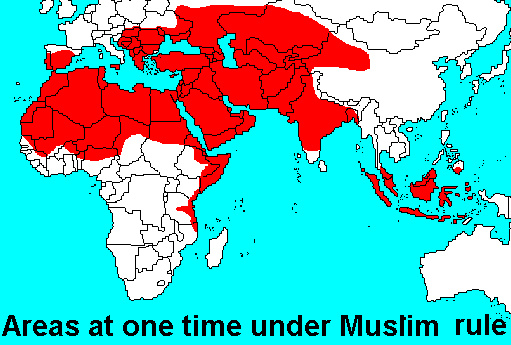

It's in the area of southern Europe and India where the resistance seems to be most ferocious and ultimately they did throw off the imperialistic yoke to “assume” their older civilisation. But Northern Africa, the Middle East, Iran and Central Asia became Muslim. I remembered reading an interesting paper on this topic, specially related to Spain and thought of giving a quick overview.

The loss of Spain and India seems to have seared the psyche somehow as you can still hear the fundos complain bitterly about the loss of these two territories and maintain that they will win them back again (see below). But while the story of India is well known, it's only the loss of the Spanish kingdom by the Moors that is known. Nobody knows much about what happened after the invincible armies of the Moors rolled over North Africa into Spain and then into southern France till they were stopped by Charles Martel. After the Islamic kingdom was created and formed in Spain, what then? What happened in the immediate aftermath? We know about the reconquista, but what about the intervening period? 


This paper sheds some more light on what happened. The first reason for the success of the resistance was the negation of the use of cavalry by the Muslim forces up in the mountainous region. Without the quick ability to move around the battlefield, the Muslim forces suffered serious casualties and were simply unable to push through to their ultimate conquest of the total peninsula. Also waging war in the mountains is a disaster for the attacking forces and all the advantages lie with the defenders.

The second problem was the inequitable distribution of booty and this caused severe fighting amongst the Muslim nobles. Booty and looting is an accepted part of the Islamic laws of warfare, but then those lovely laws cannot deal with the normal human greed. Time after time, whether in Spain or in the Ottoman Empire or in India, you find that the seeds for the disaster or downfall of the Islamic empire can be related to this factor. Also one has to remember that succession in most Muslim empires and kingdoms was a very bloody affair with siblings being slaughtered regularly. One can see this in the Moorish Kingdoms, in Ottoman times, in Egypt, in the Arab regimes or in the various assorted empires or kingdoms in South Asia. Not that the Christian kingdoms were not better with revolts, but they were less afflicted than the Muslims due to the steadily accepted primogeniture rule, which made the crucial difference.

It took 800 years or so before the Moors were pushed out, but push out they did. Time seems to have moved differently at that time. But then, this kind of time frame isn't surprising. Take Greece for example, the Ottomans went in by about the 13th century and were not chucked out till the 19th century. 
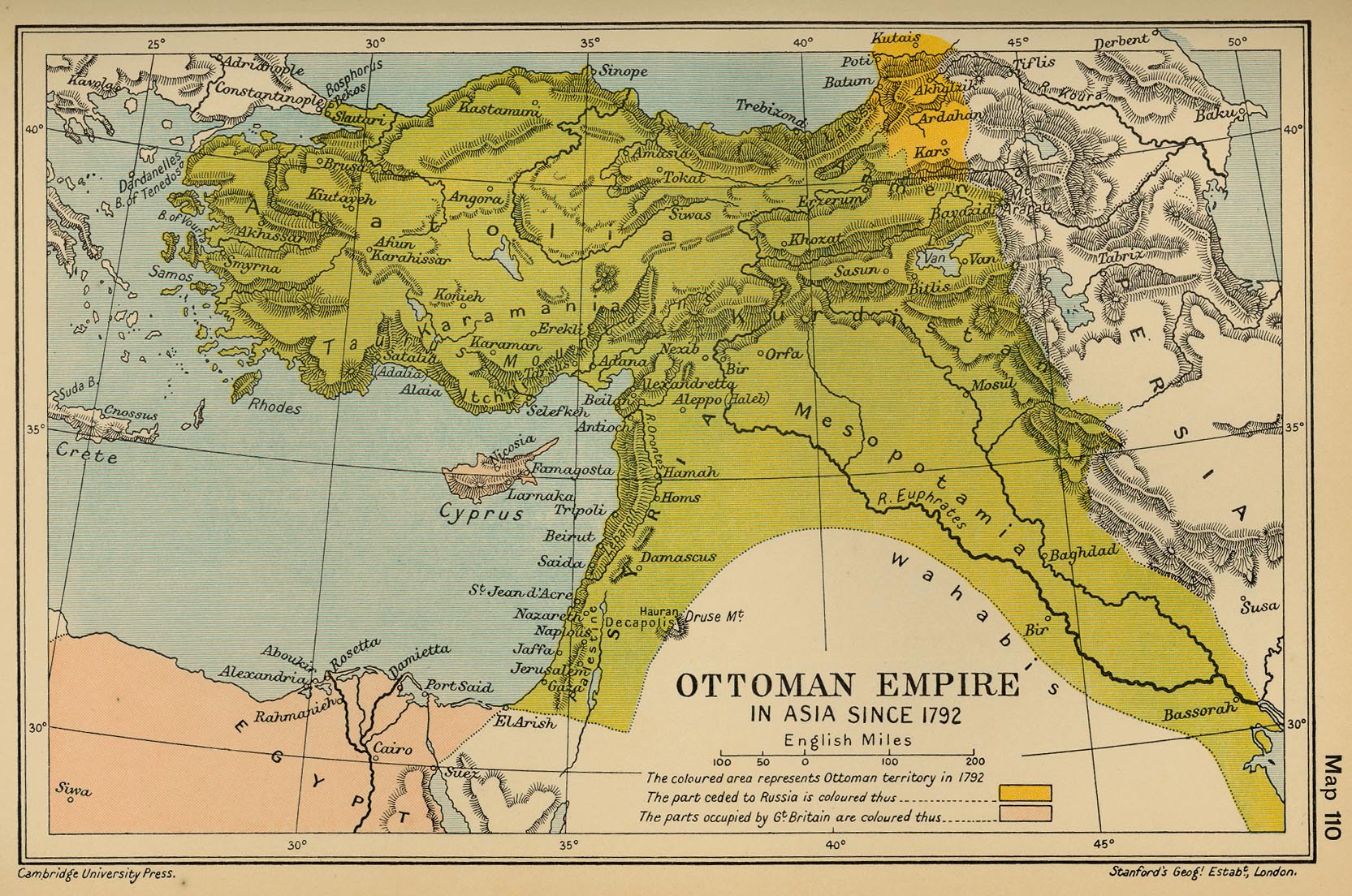

How about the Mughal Empire? It started around 1500 and frankly didn't end till 1857 or so. Mind you, I just read an article which claimed that the British were responsible for the demise of the Mughal Empire. Actually, the Mughal Empire was pretty much dead much before the East India Company had anything to do with it, not least because of Aurangzeb’s administration and activities. What was left by 1857 was a pimple on the rump of the grand empire which was soon pricked.

 
So it takes time. The Christian rebels in Spain also benefited from the proximity of other Christian kingdoms from where they got their sustenance and support as well. Also, the Spanish resistance maintained their northern Christian kingdoms which ultimately provided the bedrock and bedspring from which the reconquista started.

The other factor which is common in these countries such as Spain, Greece and India was the strength of their respective beliefs. In other words, the local populace didn't give in to the blandishments of the Muslim conquerors and retained their faith. It is this factor which allowed the native population to resist and ultimately overthrow the Imperialistic invaders unlike in Arab and other lands where they gave up. Quite an interesting paper which sheds light on the very early days of the reconquista. Without this period of resistance, one can well imagine that Spain could well have followed in the same footsteps of Algeria, Egypt, etc. who became Muslim countries (although that comment about Egyptians not being Arab is interesting, I might return to that argument sometime)

Which leads me to the second interesting paper. Why is Spain so important to the fuglies? The abstract quotes:

The purpose of this article is to look at the importance and treatment that Spain receives in jihadist propaganda. This study offers a series of empirical observations based on a content analysis of a sample of propaganda produced by jihadist groups between January 1994 and September 2008. The analysis of this material, the context in which it was spread, and a comparison with other Western countries leads to the conclusion that the role played by this country in jihadist propaganda can only be understood by taking into account “structural factors” that have little to do with a greater or lesser level of interference in “Islamic affairs.”

Out of the 2233 documents that the researchers studied, Spain appeared in 2.3% of them, USA in 67%, UK in 5%, Russia in 3%, France in 2.7% and Israel in 14.2%. In particular, the issue of Al Andalus seems to be seared into their psyche. I quote:

In this category have been grouped all the mentions made that refer to the period of Muslim occupation of the Iberian peninsula, understood as between the invasion begun from the north of Africa in 711 until the elimination of the last Islamic redoubt in Spain in 1492 with the taking of the Kingdom of Granada by the Catholic Monarchs. This is a period of history with a profound evocative power in the Muslim collective imaginary. To use the term “Al Andalus” implies speaking about a past of artistic, architectural, literary, and scientific brilliance, but also implies speaking of a period of greater Islamic political power. Said term forms part of the conceptual baggage for all of the world's Islamic population, independently of the degree of religious practice, political affiliation, or attitudes toward terrorist violence. This remembrance has a character of yearning, of lament and pain for the loss of a territory that symbolized the highest level of splendor of Muslim civilization.
This remembrance of a painful episode for Islam is present in jihadist discourse. It is significant that the first mention of Spain on the part of bin Laden was precisely in these terms: “Let the whole world know that we shall never accept that the tragedy of Al Andalus will be repeated in Palestine.”
However, for Al Qaeda these allusions, far from constituting a mere rhetorical resource, acquire the character of an aggressive claim. For jihadist terrorism, the Iberian Peninsula is “dar al islam,” a land pertaining to the ummah, an Islamic land, taken and occupied by infidels. Jihadist terrorism incorporates among its objectives the “return” to Muslims of any land that at some time was under the control of Islam; it is a fight that must lead to the restoration of the original borders of the medieval Caliphate. According to Ayman al-Zawahiri: “Jihad seeks the liberation of Palestine, the entire country of Palestine and to liberate every land that used to be a territory of Islam, from Spain to Iraq.” This defining of the original and immovable boundaries of Islam has become a true “mantra” for Al Qaeda. Although it is true that this objective is seen as a long-term goal, and that first it will be necessary to complete a series of prior objectives of great importance, its repetition is replete with meaning in the sense that it sets out an unrenounceable goal for the jihadist movement. In fact, the “obsession” of Al Qaeda to recover the “lost Al Andalus” now forms a part of the discourse of the rest of the networks that integrate the jihadist constellation. Thus, for example, in a communiqueacute from April 2007 produced by Al Qaeda in the Islamic Maghreb the following can be read: “By Allah, we will neither return our sword into its scabbard nor enjoy life until we liberate every Islamic land from [the hands of] the Crusaders, the apostates, and the collaborators, and until our ritually cleansed feet walk [once again] in the stolen [land of] Al Andalus and in desecrated Jerusalem.”…….
……Of equal importance is seeing how this aggressive demand has been incorporated into the ideology of groups geographically distant from Al Andalus, such as the Afghan Taliban. In June of that same year, the prominent Taliban leader Mansour Dadallah stated the following in an interview broadcast by Al-Jazeera: “Jihad will remain an individual duty incumbent upon us, until we regain Al Andalus and all the countries occupied by the infidels.” Regarding the Al Andalus category, it is an authentic exception among the “far enemy.” The jihadists make no territorial claims on any other Western nation, which leads to the amplification of the presence of Spain within the totality of communicative activity of jihadism.
The weight of history in the Muslim imaginary means that the mention of Al Andalus is full of implicit meaning. The targeted public understands perfectly not only to what is being referred to, but also what is the approach of the jihadist groups. Accordingly, the jihad against Spain is justified, not only for Spain's military presence in Afghanistan or its clear support for the U.S. enemy, but also as a legitimate struggle to liberate Islamic land from its Christian occupier. In this sense, the confrontation with Spain goes beyond Spain's policies toward the Muslim world and has a structural character, given that the nation is situated over a territory that by right belongs to Islam and its peoples.
The researchers note that it’s only in the case of Spain that they call it as Al Andalus, the rest of the benighted infidel countries are usually referred to in their current usage names like America, Israel, etc. etc. What really worried me was the ending of the paper and I quote:

In short, one can conclude through analysis of the presence of Spain in jihadist propaganda that independently of the degree of implication of this country in the Islamic world, Spain must endure a threat of structural character that converts it into a perennial target of jihadist terrorism.

While I do not have the data-set, looking at the fulminations that happen in Pakistan and the assorted beards in Pakistan, Kashmir and other unsavoury locations and the arguments made for Spain, there is a chance that India will face threats of a structural character of this ilk. The keyword is stolen. In other words, even if the Kashmir problem is resolved, the threat will only be diminished, not fully removed as long as Al Queda and its compatriots exist. See for example the explanation made for LET at the CFR site. As the BBC reports:

Lashkar's professed ideology went beyond merely challenging Indian rule in Jammu and Kashmir. In a pamphlet entitled "Why Are We Waging Jihad?" the group defined its agenda as the restoration of Islamic rule over all parts of India.

See the word “restoration”? this is what is the operative word. And if more corroboration is required, read this report by Husain Haqqani, the current Pakistani Ambassador to the the Court of Saint Obama.  This report talks about the ideologies of South Asian Jihadi Groups.

Tuesday, September 29

Arabs bear brunt of gene disorders

I am not sure if I mentioned this before but in the dim and distant past, i worked in the magic kingdom of Saudi Arabia and there, the wife of a friend of mine used to work in a maternity hospital. My friend is an expatriate with an international bank and has worked around the globe so his wife has experience of birthing internationally. Something that she said to me stuck to my mind, that she has never experienced the level of genetic disorders that she found in Saudi Arabia. I knew they usually go about marrying their cousins and frankly incestuous marriages are quite common, but…..

Here’s a more medically accurate report on this issue. I quote:

Arabs suffer from one of the highest rates of genetic disease in the world, according to a research institute. Some 906 genetic disorders have been identified in Arabs and their descendants, reports the Centre for Arab Genomic Studies (CAGS), and about 200 of those are prevalent among Arabs in the GCC alone.

So how big is this consanguinity problem?

About 63 per cent of the genetic conditions in Arab populations are due mostly to marriage between close relatives such as first cousins, clinically known as consanguinity.Such marriages, deeply ingrained in Arab culture, are on the rise in the UAE, where the rate is the fifth-highest in the Arab world. In Dubai, 40 per cent of marriages are between relatives, according to the latest statistics. In Al Ain that figure reaches 54 per cent, and in Abu Dhabi 32 per cent. Across the Arab world, Sudan and Mauritania have the highest rates, amounting to two-thirds of all marriages. However, consanguinity is on the decline in, for example, Egypt and Tunisia.

Will it change? I doubt it. In any case, I am sure it will turn out to be just a crusader or Zionist plot (just joking, for crissake!)

Wednesday, June 17

Economic performance of the Arabic book translation industry in Arab countries

One of the quotes that caught my eye while reading the Arab Human Development Report back in 2003 was:

  • Spain translates in one year the number of books that have been translated into Arabic in the past 1000 years and
  • For every one million Arabs only one book is translated into Arabic each year

While the latter is difficult to compare and contrast, but then the first one is particularly poignant. The Arab world being what it is, getting them out of the rut of ignorance and misery is important. As before, education is a vital component in getting these people out of their current state and for what, they need books. And if the books haven't been translated into Arabic, then you have an issue. See here for a good step in fixing this issue.

Then I saw this paper (the abstract is at the bottom). Pretty good detailed research with some good recommendations. There are serious points to be raised here which the Abstract talks about so I am not going to belabour the point. I quote some important bits that the abstract missed out:

Next Page Foundation conducted the first readership survey in five Arab countries (Egypt, Lebanon, Morocco, Saudi Arabia, and Tunisia) in 2005. The main conclusions of this survey can be summarised as follows:

  • With the exception of Egypt and Saudi Arabia, a share larger than expected of the literates in the other countries surveyed does not read.
  • Among those who read the share of infrequent (up to 30 minutes per day) and low readers (31-60 minutes per day) makes up the majority.
  • Reading is something children learn at school; there is almost no reading support by family members.
  • Reading is stopped at ages 15-19; it is closely linked to leaving school or other institutions of education.
  • Most who decrease or stop reading do not return to reading at all.
  • School does not initiate reading for life but limits this to school only; deficits must be seen in school manuals and in the absence of young adult literature.
  • Arabic is the preferred language of reading.
  • More books in this language on topics of interest would make a considerable part of readers read more.
  • There is a high religious-mindedness in terms of content and topics of reading.
  • Interests professed for certain topics do not necessarily translate into the reading of such topics. (From Next Page Foundation Home Page: www.npage.org).

And these Arab Countries can be considered to be the top of the list of Arab countries. If this is the level at the top, then you can well imagine the situation lower down the list. But the authors missed out on the biggest factor (the religious establishment) and was very light on the second biggest factor (the government sector). The first bit relates to the second last aspect in the previous list. If most if not all what you read is religious pap, then knowledge generation will be challenging. After all, blind faith sits very uneasily with ever questioning knowledge generation. And the religious establishment is extremely tight in all these countries.

To let the common man be educated and questioning will directly hit them. Secondly, none of these countries are exactly free. Their method of control of their population is to keep them ignorant or in the bit of the somnolent daze. An example is their tight control over the media. If your media isn't free, how on earth do you expect your book publication and translation industry to be free and break its bounds? You cannot simultaneously have a free and open reading society while your political system, your educational and your religious establishment is under chains.

That said, the recommendations that the authors give can only do good. I quote:

The first such role is that of improving the quality and availability of the generalised inputs that publishing companies draw on, such as educated human resources (qualified translators and other specialized personal), physical and technological infrastructure (hardware and software for information communication technology) and capital.

Second, government should encourage upgrading and innovation with the aid of rules, regulations, and incentives. Through regulations, tax policies, the enforcement of IPR, antitrust laws, and many other measures, governments influence the climate in which publishing companies compete. That influence should be used to encourage investment, innovations, and other determinants of economic performance.

Third, government should leverage its investment in skills, research capabilities and infrastructure to facilitate the process by which all local clusters form and develop. Such investment feeds whole groups of firms and industries. Thinking in terms of clusters rather than industries also encourages publishing companies to work closely with suppliers and customers.

Fourth, and perhaps most subtly, government leaders should challenge local companies and people in their regions to raise their sights and strive for greater competitiveness. The ability of government to signal the future fosters economic upgrading.

Policies affecting production factor conditions:

  • Improve the documentation of Arabic translation needs. This can be achieved by creating a regional Internet-based database that would constitute an information base on what has been translated, what is being translated, and what will be translated from foreign languages into Arabic.
  • Design and implement translation support programs on a sustainable basis. This would create and maintain a critical mass of translators and publishing companies. The supply side of the translation industry would be strengthened.
  • Invest in human resources by building a strong basic education system for all citizens, thus eradicating illiteracy; by setting high educational standards; by supporting institutions that develop specialised skills (such as specialised professional translators); and last, but not least, by creating incentives for company investment in training.
  • Support science and technology by creating incentives for private research and development (for example, in the area of electronic publishing, e-commerce, machine translation software development, and so forth) and for promoting wide dissemination of basic scientific knowledge in areas that affect the development of the Arabic translation industry.
  • Invest in physical infrastructure; the special needs of the Arabic translation industry should also be taken into consideration.
  • Create some sort of accreditation body for translators to control for good quality and to lessen the costs of asymmetric information in the Arabic translation industry.

Policies affecting demand conditions:

  • Support readership surveys. This would help to identify the real needs of the reading public, as well as to monitor whether reading promotion policies in general and translation support programs in particular have a measurable impact, especially on young people.
  • Stimulate early demand for translated books in Arabic; for instance, for public schools, universities, and public administration.
  • Act as a sophisticated buyer in purchasing (ask for high quality of translated books).
  • Promote translation quality assessment programs. To enhance demand for translated books, programs for translation quality control are needed.

Policies affecting related and supporting industries:

  • Facilitate cluster development along the lines of the value chain of the book industry.
  • Promote training programs among professional of the Arabic translation industry in the fields of marketing and distribution.
  • Improve distribution outlets.
  • Promote the role of nongovernmental professional publishing and translation associations in disseminating knowledge and mobilising resources, thus creating positive externalities in the Arabic translation industry.

Policies affecting strategy, structure and rivalry:

  • Promote local competition by deregulating the structure of industry and strictly enforcing antitrust policy and IPRs.
  • Expand interregional and international trade and investment by opening book markets, promoting exports, and attracting appropriate foreign investment in those markets.

My only objection is, these recommendations are effectively asking for a complete rejig of how their societies work. If one doesnt do that, then it would be like providing a pan of makeup to a person suffering skin cancer.

Knowledge has always been at the heart of economic growth and development. It is disseminated chiefly through the different stages of education, R&D, the mass media and the translation industry. In Arab countries there has been a widespread impression that there is a low level of translation activities, which in turn has led to a low output of the translation industry in those countries. This paper addresses this issue; its overall objectives are: (1) to describe the economic performance of the Arabic book translation industry in Egypt, Lebanon, Morocco, Saudi Arabia, and Syria; (2) to understand empirically the economic performance of that industry, the focus here being on qualitatively analysing the major determinants (positive and negative factors) affecting the growth process of that industry; and (3) to provide policy makers and business leaders in the Arab region with theoretically sound and evidence-based advice on the issues analysed in the project.
To provide an empirical base for answering those questions, both published data and fresh new data have been used. For the latter purpose, a questionnaire-based survey was conducted in the year 2005 among 190 experts, covering firm representatives and experts in industry and government. The Porter (Diamond) model has been used as a theoretical background. The empirical results were incorporated in five national case studies. This paper synthesises the results of the national reports, giving a comparative account of the performance of the Arabic book translation industry in the five Arab countries.
The overall results suggest that the Arabic book translation industry in these Arab countries has not yet achieved the level of development of other developing and developed countries. Underperformance of the Arabic book translation industry is attributable to (among other factors) severe coordination failures. This is a state of affairs in which the inability of the different agents (translators, book publishers, suppliers, customers, and supporting organisations, state, and so forth) to coordinate their behaviour (choices) leads to suboptimal outcomes. Since the economic performance of the translation industry often involves complementary investments whose return depends on other investments being made by other agents, coordination is crucial. Obviously, neither market forces nor the state have undertaken this coordination activity sufficiently. The Arabic book translation industry seems to suffer from both market failure and government failure.
In light of these results the Arabic book translation industry offers great economic potential that should be mobilised systematically in the future. This paper discusses how this can be achieved, based on a well-designed and implemented process of upgrading and innovation in companies, industries, and clusters related to translation activities. Public policy, properly understood and adequately implemented, can play an important role in this process.

Keywords: Economics of translation; Arabic translation; Arab World; translation industry; Morocco; Egypt; Saudi Arabia; Lebanon; Syria

Sunday, April 26

Peace in Israel-Arab in our times, teach them Cricket

heh, I just love this.


That’s not the way to catch, but never you mind:

and we have stance challenges, but that’s also ok :)

Next year, its :

Next year, it wants to bring cricket to Palestinians and Jews in Jerusalem.

Wonderful news :)

Tuesday, December 16

A shoe here, a kick there, welcome to Democracy

Well, the discussion about the shoe throwing at Dubya Bush is all over the news, but here's something else, a man kicked Taiwan's ex-President in the patootie. I quote:

A 65-year-old Taiwanese protester has been jailed for two months after he kicked the country's former president, Chen Shuibian, in the behind.

Su Ansheng, a member of a group promoting unification between Taiwan and China, refused to apologise for the attack and said he wanted to teach Mr Chen, who is on trial for corruption, a "lesson".

Su managed to get close enough to kick Mr Chen at a court hearing in July. He was also given another month in prison for insulting Taiwan's former envoy to Japan.

I wish more politicians were treated like this. Bastards would learn how to behave properly. Specially corrupt ones and incompetent ones.

Saturday, May 24

Women make gains in Arab boardrooms

Excellent news and very shameful for Japan and Italy. I quote:

Public companies listed in Oman and Kuwait have more women on their boards than in Italy and Japan, highlighting rare gains made by businesswomen in one of the most restrictive parts of the world.

Overall, the numbers arent that good,

The representation on boards in the two Gulf countries masks a bleaker overall picture: across the region women represent only 1.5 per cent of board seats, compared with 13.6 per cent in the US and 22 per cent in Norway.

But its a start at improving women's lives.

Saturday, April 26

An update on the Comoros issue

I wrote about the Comoros issue before. Nobody has been killed in the invasion and toppling of the rebel government. And as I predicted, nobody really gives a toss. And this is what throws up the hypocrisy of people. Just because it is a tiny island off the coast of Africa in the Indian Ocean, it is not important. Hypocrisy galore. Would there be stop the war processions? Would people stand up for the right of self determination? As I said, hypocrisy galore.

But here's a good article on the impact of this intervention by the AU. I quote:

Should the AU have the responsibility to protect in defiance of the whims and self-interest of the regime, where clear human rights violations are taking place? Should it act, or simply react when called upon to do so? Should intervention only be considered when major conflict has already laid waste to peace and security? Has the Comoros intervention signalled a radical departure in the AU’s policy of intervention? Will pre-emption now form a critical component of African peacekeeping and conflict resolution?

And what happened to the rebel leader? Here's an eyewitness note. Oh! and France is involved neck deep in this mess. Not that this war seems to have impacted business and trade, investments are going on. The situation is a bit murkier than I first made out.

Comoros is involved with the Arab League and is thanking Libya and Sudan (holy cow, I can well see those two countries being the standard bearer of democracy and self determination...). Other countries also were involved in the invasion from Tanzania and Senegal. Mind you, the French and the Americans offered logistical help to the AU forces. Very murky indeed.

But, again, the silence on the part of the world is so curious.

Thursday, April 17

Good news on the logophilia and biblophilia in Arab Lands

See here.

There was a special stand for the foundation of Dubai’s Sheik Makhtoum, who has launched a project to subsidize the translation and publications of 1,000 books a year into Arabic.
The Abu Dhabi Authority for Culture and Heritage has launched a parallel project, called Kalima, to subsidize the translation and publication of Arab works into other languages.


All this to be taken with a grain of piquant salt!!!

Monday, April 14

And now religion/ethnicity is a problem in Sudan

Why do you want to know about religion and ethnicity in a census? Read this and wonder. Personally speaking, I see no reason to know about it. The sole reason to know about it would be if there was a civil war, but again, if the Arabs and Africans want to duke it out, then well, here you go with the problem, it would be interesting to find out what the result is?

Ah, ha!, now we understand, see here. The reason why the Arabs do not want to know about religion and ethnicity (which puzzled me, since when did the Arabs suddenly become interested in Secularism?) is because they are actually in a minority and if a proper census is done, their relative demographic weaknesses will be exposed. Fairly typical....

All this to be taken with a grain of piquant salt!!!

Monday, April 7

British Ahwazi Friendship Society

Did you know about this society? It is a society set up relating to the arabs who live inside Iran. Quite a fascinating history they have and rather interesting current situation.

All this to be taken with a grain of piquant salt!!!

Sunday, April 6

Jews in Mecca & Medina?

It didnt take long to get a reaction to the US House Resolution 185 which talked about the Jewish Refugees from Arab Lands. I quote:

It is a “ploy to give Israel a share in every Arab country” and force the Arabs to drop Palestinians’ “right to return” from their negotiations with the Israelis, Sheikh Hilal Mabrouq told the congregation during his sermon at the Najma mosque yesterday.
“It is very clear that the resolution is one step forward to strengthen Israel’s existence in the region,” he said.
“Each Arab country had a Jewish community which lived in peace with the Arabs before the establishment of Israel. I think it is only meant for finding a share for Israel in each Arab country,” he said.

But the best part was this one which I didnt not consider:

“I will not be surprised if the US Congress came up with another resolution tomorrow, claiming the right of the Jews who had left the Arab peninsula after the appearance of Islam to return to both Makkah and Al Madina and establish a Jewish community there,” he said.

Lol, well, me being evil, i can very well think, well, why not? if length of stay and presence on land is indeed the case, right of returns cuts all ways... What will Israel and the assorted Arab League countries do?

Thursday, April 3

Is it the Arabian Gulf or the Persian Gulf??

Now I have read both, but as this petition shows, the debate is still rumbling on with ~70k people already signed up to it. (Note the dig at the age of the various Arab sheikdoms...) But I would say that the Iranians have a point....


For the records, the name Persia has always been used to describe the nation of Iran, its people, and its ancient empires since 600 BC. It is derived from the ancient Greek name for Iran's maritime province, called Fars or Pars in modern Persian, Pars in Middle Persian and Pârsa in Old Persian, a word meaning "above reproach.” Persis is the Hellenized form of Pars, and through the Latinized word Persia, the other European nations came to use this word for the region. This area was the core of the original Persian Empire.

Since ancient times almost all foreigners referred to the entire country
as Persia until March 21, 1935, when Reza Shah Pahlavi formally asked the
international community to call the country Iran — a name that the people of
Persia, themselves, used to refer to their country since the Sassanian period.
"Iran" means "Land of Aryans". In 1959 some Persian scholars protested to the
government that the name change had separated the country from its ancient
civilization. Therefore, the late King Mohammad Reza Shah Pahlavi announced that both Persia and Iran can be used in Western languages.

Without disparaging the Arabs, Iranians are proud of their non-Arab heritage and
strongly resent any attempt at denigrating or changing any aspect of their
Iranian heritage. And the Persian Gulf occupies a pivotal place in the Iranian
history and culture. Furthermore, Iran abuts the Persian Gulf for 2,000 Km,
while about a dozen recently-created Arab Sheikhdoms and emirates border the
Gulf on the other side.


All this to be taken with a grain of piquant salt!!!

No Shake Hands, No Talk!

I hope sister Yvonne is listening and bearing in mind the next time she goes to cover the Arab League meetings. Check this out. I quote: (I was laughing my head off)

"In a rare lapse of his trademark diplomacy, Arab League Secretary
General Amr Moussa refused to give an interview to a female TV reporter who
would not shake his hand for religious reasons, press reports said on
Sunday."Manar al-Sabagh, a correspondent for the Hezbollah-affiliated Lebanese
Al Manar TV channel, refused to reciprocate when Moussa extended his hand at the
start of an interview during the Arab Summit in Damascus, Egyptian daily
Al-Masry Al-Youm reported." 'I don't shake hands,' Sabagh told the veteran Arab
diplomat, to which he reportedly replied: 'We'll neither shake hands nor
talk.'"
Source: Al-Arabiya (Saudi-owned, Dubai-based), April 1,
2008


All this to be taken with a grain of piquant salt!!!

Wednesday, April 2

Freedom of speech anybody?

Knowing the supine and principle-less behaviour of the United Nations and the Secretary General, I am not surprised that people want to hide what they say. Very well, hide what you say but in return, we want a freedom of information act on the United Nations. You are currently using MY tax money, and I demand to know what you are spending it on. And, hmmm, why do you want to hide things in a democratic institution? Oh! sorry, we are talking about Arabs here....

Sunday, February 17

Arab states plan TV crackdown

You already know what I am going to say, no? I am afraid this is fairly typical of these countries that they cannot see the truth or actually experience the intelligence of their citizens. Criticism and debate are good for the soul, they show the ways your country can be improved. But because most of the leaders are either autocrats or kings, their bases are very weak and rest more on religion and/or security pressure. Hence, press down on anything like debate and discussion.

Read this and weep. I quote:

In a collective effort to curb satellite channels such as al-Jazeera, Arab states have adopted a charter that authorises individual countries to penalise media organisations deemed to have offended political and religious leaders or to have damaged social harmony and national unity.

In recent years the explosion in the number of satellite channels - there are now about 500 on air, most of them privately owned - has meant that states have lost control over what their populations could see on their television screens.

Channels such as al-Jazeera, which has managed to upset most Arab governments at one point or another, have provided platforms for opposition groups and breached taboos by broadcasting stories about human rights violations and election fraud.

And see this

"The commitment to freedom of expression is a main cornerstone of Arab media activity, provided that the practice of this freedom should be informed by a sense of awareness and responsibility in order to protect the higher interests of Arab states and of the Arab nation," says the -document.

I was laughing and falling about. First about the fact that it was the Arab states talking about freedom of speech and secondly, they are actually dressing up the freedom of speech bit under the interests of "higher interests of Arab states and Arab Nations". Which means, the interests of the despots, autocrats and dictators. Esphoks. Disgusting. How hypocritical can you get?