A daily dose of odds and sods, some interesting, some bizarre, some funny, some thought provoking items which I have stumbled across the web. All to be taken with a grain of daily salt!!
Tuesday, August 16
Historical GDP growth rates
Thursday, May 26
The Longest War in the World Had No Casualties
This was a funny episode indeed. Slightly related to my research as well as the Dutch were, by this time, shipping vast quantities of spices from the East Indies and India over to Europe. Plus the east India company and Dutch east India company (VOC) were competing as well for trade routes and spice supplies.
Anyway, it was funny reading about how people went into a war and nobody knew it :)
Love
Baba
The Longest War in the World Had No Casualties
http://www.atlasobscura.com/articles/the-worlds-longest-war-only-ended-in-1985
(via Instapaper)

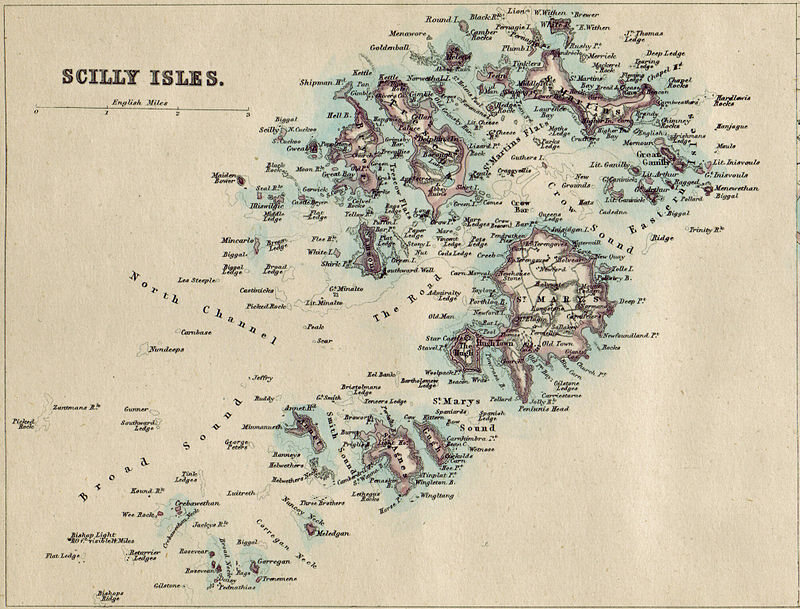
A 19th-century map of the Scilly Isles. (Photo: Public Domain/WikiCommons)
Some historians consider England's Scilly conflict to be the longest war in known history, dragging on for a staggering 335 years. Yet one side was not a country in its own right, there were no casualties for the entire duration, and not a single shot was fired. Neither side even remembered they were still at war until someone checked the paperwork.
All of which begs the question: if war is declared but neither nation remembers, does it still count?
The Isles of Scilly are five inhabited islands and a multitude of other uninhabited rocks off the coast of Cornwall at the southwestern tip of England. With a population of roughly 2,000, the islands rely on fishing and tourism as the main sources of income. It is doubtful that anyone would consider them an international threat. Yet, somehow, they were at war with the Netherlands from 1651 until a mere 30 years ago.
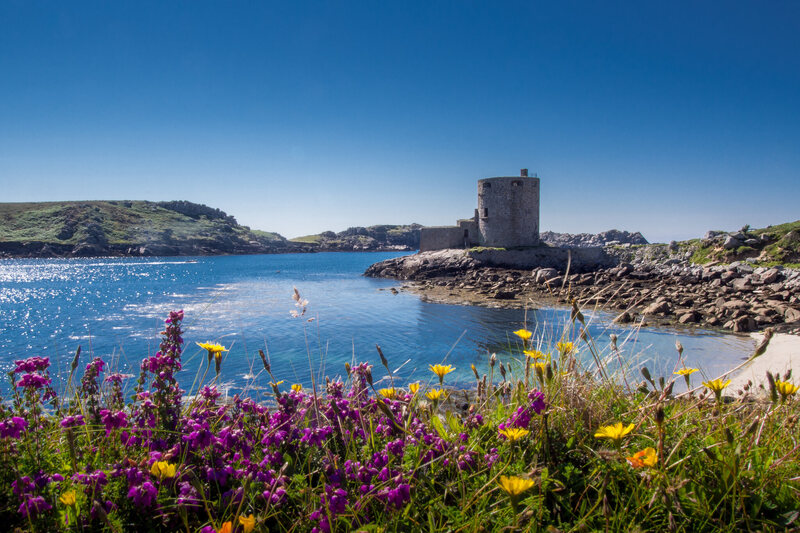
Cromwell's Castle, a 17th-century fort, on the island of Tresco, in the Isles of Scilly. (Photo: Nathan Siemers/flickr)
To understand the origins of the 335-Years' War, we need to go back in English history to the time of the Second Civil War (1642-1648), fought between Oliver Cromwell's Parliamentarians and the Royalists, better known as the Roundheads and the Cavaliers. Cornwall was one of the last Royalist strongholds, but in 1648, it too fell into Cromwell's hands. Britain being an island nation, it had one asset in its Navy, which had declared its support for the Royalists. And so, as the Parliamentarians swept across the country, the Navy was pushed further back until its only possible safe harbor was the Isles of Scilly. At the time, the Isles were owned by Sir John Grenville, a close friend of Prince Charles (later King Charles II), and therefore a staunch Royalist.
Meanwhile, across the English Channel, the Dutch were winning their independence from Spain in the Eighty Years War. The English had been allies with the Dutch since the war's beginning, thanks to the protestant Queen Elizabeth 1. As the Netherlands gained independence they naturally wanted to maintain good relations with England, but with Civil War underway, they had to decide whom to support. Since it looked as though the Parliamentarians would overthrow the Royalists, the Dutch chose to ally with them. This included the support of the Dutch Navy. The Royalist Navy, down in the Scilly Isles, put up quite a strong resistance, seizing a number of Dutch ships and a great deal of cargo.
In the spring of 1651, Admiral Maarten Tromp of the Dutch Navy landed to demand reparations. Seeing that none were forthcoming, he reputedly declared war on the Isles of Scilly.
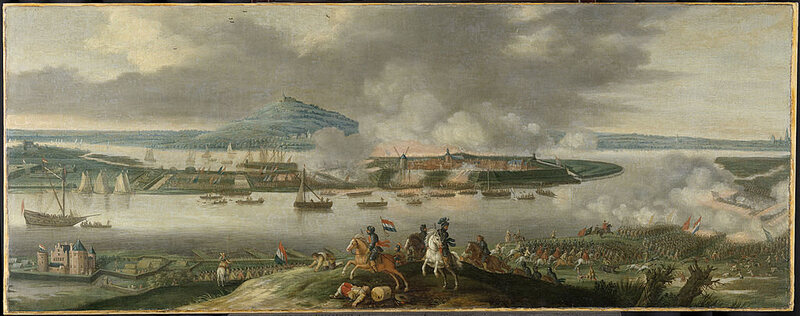
A painting showing the Siege of the Schenkenschans, part of the 80 year war between the Dutch and the Spanish. (Photo: Public Domain/WikiCommons)
Within a matter of weeks, a final push by the Parliamentarians led to the surrender of the remaining Royalist ships. The Dutch knew that they no longer faced any sort of threat and set sail for home. It seems they forgot one minor detail: the Scilly Isles weren't technically a nation in their own right and so no one remembered to make the peace.
Years turned into decades, turned into centuries, and the war with the Dutch fell into local folklore. Generations passed on the tale that the islands remained at war with the Netherlands. No officials seemed to know if it was true or not.
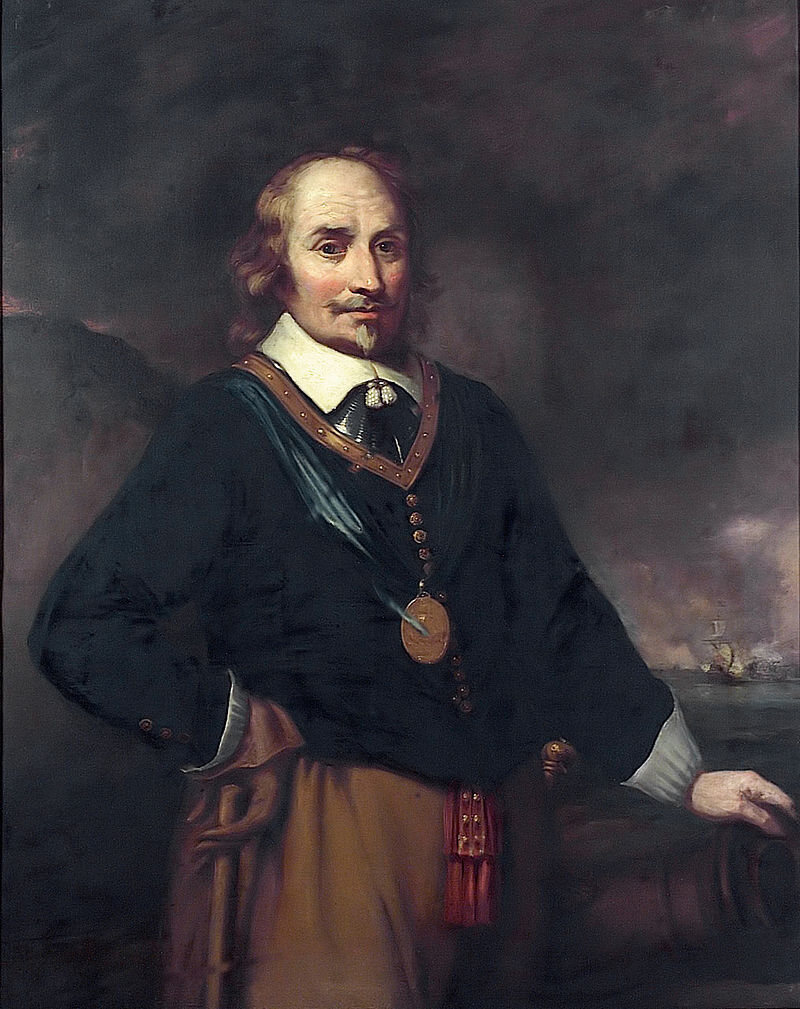
Admiral Maarten Tromp of the Dutch Navy, who reputedly declared war on the Isles of Scilly. (Photo: Public Domain/WikiCommons)
Finally in 1985, a member of the island council and a keen local historian, Roy Duncan, decided to investigate the story for himself. He wrote to the Dutch Embassy, asking them to look into the matter. A response came back: after much searching, it seemed that no record existed of a peace treaty ever being signed. On April 17, 1986, the Dutch Ambassador visited the Isles of Scilly to sign said peace treaty, thereby putting an end to what is now fondly referred to as the 335-Years' War.
Whether the declaration of war was legally binding remains in doubt to this day. Some historians argue that Tromp had no authority to declare war, and was simply blustering in the hopes of receiving compensation for damaged and lost goods. Furthermore, even if his declaration had merit, it surely would have been resolved in the 1654 treaty between England and the newly-formed Netherlands.
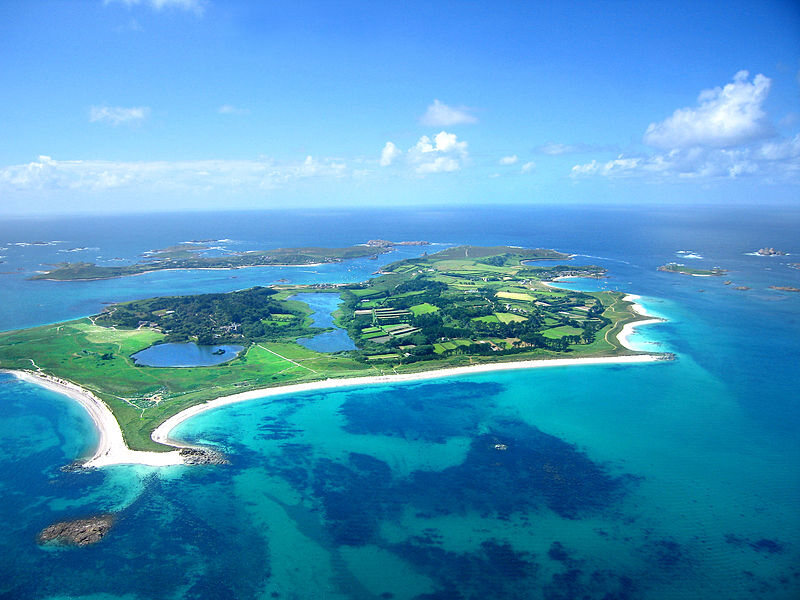
An aerial view across Tresco and the other Isles of Scilly. (Photo: Tom Corser/tomcorser.com/WikiCommons CC BY-SA 2.0 UK)
The ceremony marking the signing of the peace treaty in 1986 was more of a publicity move than it was an important event in international relations. Even Duncan admitted that the issue of the war had been "a joke for many years". The signed declaration of peace remains on display in the Council Chambers in Hugh Town on St. Mary's Island, and a quirky incident of British history has allowed the Isles of Scilly to lay claim to a place in the record books.
Monday, September 23
Wages, prices, and living standards in China, 1738–1925: in comparison with Europe, Japan, and India
This was the formative years of modern democracy. So the economic background to these years is important, as a matter of fact, the authors actually analyse the wages, prices and living standards in various countries over this period with reference to what the great old man, Adam Smith, thought. I quote the conclusion:
Our investigation of Asian and European wages and prices shows that the situation differed somewhat from Adam Smith's impressions. Money wages were in accord with his view: in China, they were certainly lower than wages in the advanced parts of western Europe in the eighteenth century and similar to those in the lagging parts of Europe. By the twentieth century, however, wages in all parts of Europe were higher than in China. Contrary to Smith, the cost of living was similar in China and in Europe in the eighteenth century.
The upshot of the wage and price comparisons is that living standards were low in China. In the eighteenth century, advanced cities like London and Amsterdam had a higher standard of living than Suzhou, Beijing, or Canton. The standard of living in the Chinese cities we have studied was on a par with the lagging parts of Europe, the Ottoman Empire, India, and Japan. By the twentieth century, enough progress had occurred in even the backward parts of Europe that their standards of living were beginning to creep above those in China. Wages seemed to have slipped in China in the eighteenth century. Still, most of the difference between Europe and China in 1913 was due to European advance rather than Chinese decline.
In spite of the above, a major surprise is our finding that unskilled labourers in major cities of China and Japan—poor as they were—had roughly the same standard of living as their counterparts in central and southern Europe for the greater part of the eighteenth century. This calls into question the fundamental tenet of the large ‘rise of the west’ literature that sees western Europe—as a whole—surpassing the rest of the world in the early modern era. Our article suggests that it was only England and the Low Countries that pulled ahead of the rest. The rest, in this context, includes not only Asia but also much of Europe.52
In this regard, Adam Smith neglected regional variation and thereby over-generalized the comparison of Europe and China. But our findings also dispute the revisionists' claim that the advanced parts of China, such as the Yangzi Delta, were on a par with England on the eve of the industrial revolution, for we find real wages for unskilled labourers in the Yangzi Delta to have been no higher than those in Beijing or Canton. Clearly, our database on China could be greatly improved and we do not claim to have given the final answer to this question. Nevertheless, any newly discovered data would have to be very different from what is currently available in order to convince us that pre-industrial Chinese living standards were similar to those in the leading regions of Europe.53 In this regard, Adam Smith's pessimism looks closer to the truth than the revisionists' optimism. Of course, establishing the existence of an income gap between north-western Europe and China in the early modern era only takes us halfway towards the resolution of the great divergence debate. The search for a causal explanation of the great divergence still looms large as a future research agenda.
Much to think about but let me link to one existing situation. People complain about stagnating wages/incomes in so many OECD countries. See here, here, here and here for some examples. And this too over one decade or so. But China saw wage stagnation for a very long period of time. Not only that, vast swathes of Europe was also stagnant for many many moons. So it is of interest when people claim that the West rose on the back of the industrial revolution, erm, no, only the low countries and UK rose.
crucially, the lesson to be learnt from here is to focus on productivity. USA does brilliantly on productivity, we in the UK and India are crap at it. We do not educate our folks well enough, we are not innovative enough, we do not use technology enough, and we do not encourage investment enough. Bah!
Wages, prices, and living standards in China, 1738–1925: in comparison with Europe, Japan, and India
This was the formative years of modern democracy. So the economic background to these years is important, as a matter of fact, the authors actually analyse the wages, prices and living standards in various countries over this period with reference to what the great old man, Adam Smith, thought. I quote the conclusion:
Our investigation of Asian and European wages and prices shows that the situation differed somewhat from Adam Smith's impressions. Money wages were in accord with his view: in China, they were certainly lower than wages in the advanced parts of western Europe in the eighteenth century and similar to those in the lagging parts of Europe. By the twentieth century, however, wages in all parts of Europe were higher than in China. Contrary to Smith, the cost of living was similar in China and in Europe in the eighteenth century.
The upshot of the wage and price comparisons is that living standards were low in China. In the eighteenth century, advanced cities like London and Amsterdam had a higher standard of living than Suzhou, Beijing, or Canton. The standard of living in the Chinese cities we have studied was on a par with the lagging parts of Europe, the Ottoman Empire, India, and Japan. By the twentieth century, enough progress had occurred in even the backward parts of Europe that their standards of living were beginning to creep above those in China. Wages seemed to have slipped in China in the eighteenth century. Still, most of the difference between Europe and China in 1913 was due to European advance rather than Chinese decline.
In spite of the above, a major surprise is our finding that unskilled labourers in major cities of China and Japan—poor as they were—had roughly the same standard of living as their counterparts in central and southern Europe for the greater part of the eighteenth century. This calls into question the fundamental tenet of the large ‘rise of the west’ literature that sees western Europe—as a whole—surpassing the rest of the world in the early modern era. Our article suggests that it was only England and the Low Countries that pulled ahead of the rest. The rest, in this context, includes not only Asia but also much of Europe.52
In this regard, Adam Smith neglected regional variation and thereby over-generalized the comparison of Europe and China. But our findings also dispute the revisionists' claim that the advanced parts of China, such as the Yangzi Delta, were on a par with England on the eve of the industrial revolution, for we find real wages for unskilled labourers in the Yangzi Delta to have been no higher than those in Beijing or Canton. Clearly, our database on China could be greatly improved and we do not claim to have given the final answer to this question. Nevertheless, any newly discovered data would have to be very different from what is currently available in order to convince us that pre-industrial Chinese living standards were similar to those in the leading regions of Europe.53 In this regard, Adam Smith's pessimism looks closer to the truth than the revisionists' optimism. Of course, establishing the existence of an income gap between north-western Europe and China in the early modern era only takes us halfway towards the resolution of the great divergence debate. The search for a causal explanation of the great divergence still looms large as a future research agenda.
Much to think about but let me link to one existing situation. People complain about stagnating wages/incomes in so many OECD countries. See here, here, here and here for some examples. And this too over one decade or so. But China saw wage stagnation for a very long period of time. Not only that, vast swathes of Europe was also stagnant for many many moons. So it is of interest when people claim that the West rose on the back of the industrial revolution, erm, no, only the low countries and UK rose.
crucially, the lesson to be learnt from here is to focus on productivity. USA does brilliantly on productivity, we in the UK and India are crap at it. We do not educate our folks well enough, we are not innovative enough, we do not use technology enough, and we do not encourage investment enough. Bah!
Friday, October 12
In the Sorting Office
Kannu
You are living through some very interesting times where technology is destroying old ways of living and doing business.
This is an example of how giant monolithic businesses fall apart when they cannot handle structural change.
When very large trees fall, they take many other trees with them and leave a swathe of destruction around them. So one has to be careful from three perspectives. One, how to manage this tree fall from society's perspective. Second is to ensure you don't get hurt by the tree fall. And third is to ensure that you learn to profit from this tree fall.
People usually only see one perspective. But the trick is to see all three as they are all interrelated.
So have a think about it, we will soon stop needing paper based mail but parcels and other bits still are required to come to our door due to home e-shopping. How do we ensure this happens? How can we manage otherwise? And where can you invest in alternatives so that you can profit from this collapse in the post office?
Something to think about son.
Ps: was happy to hear that you are settling down and liking college. If as you say, that its easy, then challenge yourself by spending time in the library or do other stuff :). See the lecturers in the online university.
Love
Baba
In the Sorting Office
http://www.lrb.co.uk/v33/n09/james-meek/in-the-sorting-office
In the Sorting Office
James Meek
Somewhere in the Netherlands a postwoman is in trouble. Bad health, snow and ice and a degree of chaos in her personal life have left her months behind on her deliveries. She rents a privatised ex-council flat with her partner and so many crates of mail have built up in the hallway that it’s getting hard to move around. Twice a week one of the private mail companies she works for, Selektmail, drops off three or four crates of letters, magazines and catalogues. She sorts and delivers the fresh crates but the winter backlog is tough to clear. She thinks her employers are getting suspicious. I counted 62 full mail crates stacked up in the hall when I visited recently. There was a narrow passageway between the wall of crates and her personal pile of stuff: banana boxes, a disused bead curtain, a mop bucket. One of the crates has crept into the study, where the postwoman’s computer rears up out of her own archival heaps of newspapers and magazines. Should these two streams of paper merge they would not be easily separated. The postwoman hasn’t given up. She had a similar problem with the other private mail company she works for, Sandd, a few years back. ‘When I began at Sandd in 2006 I delivered about 14 boxes of mail every time,’ she said. ‘I couldn’t cope and at Christmas 2006 I had about 90 of these boxes in the house. By New Year’s Day we had 97. There were even boxes in the toilet.’ The postwoman is paid a pittance to deliver corporate mail. She hasn’t done her job well, yet so few people have complained about missed deliveries that she hasn’t been found out.
Across the world, postal services are being altered like this: optimised to deliver the maximum amount of unwanted mail at the minimum cost to businesses. In the internet age private citizens are sending less mail than they used to, but that’s only part of the story of postal decline. The price of driving down the cost of bulk mailing for a handful of big organisations is being paid for by the replacement of decently paid postmen with casual labour and the erosion of daily deliveries.
Friday, September 30
Dutch doctors urge end to male circumcision
Quite right too, this is a barbaric custom to snip off the foreskin. And no, just because it has been shown to help avoid AIDS is not a good reason. Nor is it a good reason that its culturally or religiously mandated. In Hinduism, people argued that women need to jump into the funeral pyre of their husbands. Same old same old. Muppets. I quote:
AMSTERDAM: Dutch doctors want politicians and human rights groups to speak out and discourage the practice of male circumcision in the Netherlands because they say it is a “painful and harmful ritual,” and a violation of children’s rights.
Between 10,000 and 15,000 boys are circumcized in the Netherlands each year, mostly for religious reasons and not always with an anesthetic, according to the Royal Dutch Medical Association (KNMG) which represents surgeons, pediatricians, general practitioners and urologists.
“We want to discourage male circumcision, because it is an unnecessary procedure with complications, which violates the integrity of the child,” Lode Wigersma, a spokesman for the association, told Reuters on Friday.
“This is not an innocent procedure, we see complications in about 5 percent of the cases, as well as some long-term and psychological implications,” he said.
Male circumcision involves the removal of all or part of the foreskin of the penis. It is a ritual obligation for infant Jewish boys, and is also a common rite among Muslims, who account for the largest share of circumcised men worldwide.
The Dutch medical association has urged religious leaders to find alternative rites of passage that are not irreversible and which are not painful for the child.
The practice of female genital mutation has been prohibited by law in the Netherlands since 1993 for all ages.
Thursday, July 28
Kosher or Animal Cruelty?
Well, i am afraid I am on the side of the animal cruelty people. Yes, we have spoken about this many times, at end of the day, we are killing the animal so drawing the line on how you kill the animal is hypocrisy, but then the idea is that you do need protein and please do not get me started on the vegetarian argument, but you do not need to needlessly torture or cause pain to the animals. And yes, many animal farms are bad but that’s not what the usual laws state. The law states, in countries like UK and USA and EU and and and that you are not to do cruelty to animals and there is a pretty good state of history and precedent in defining what cruelty is.
See what the Dutch are doing. I quote:
The bill sponsored by the tiny Animal Rights Party, the first such group in Europe to win seats in a national parliament, passed the lower house of parliament and must be approved by the upper house before becoming law. It stipulates that livestock must be stunned before being slaughtered, contrary to the Jewish kashrut laws and Muslim halal laws that specify that animals killed for their meat must be unwounded at the time of slaughtering. Stunning damages the nervous system.
“This way of killing causes unnecessary pain to animals. Religious freedom cannot be unlimited,” Marianne Thieme, head of Animal Rights Party, said before the vote. “For us religious freedom stops where human or animal suffering begins.”
So what are the Jews saying?
“Has the freedom of religion already been ritually slaughtered?” wondered a tweeter named ‘Bozoc.’ The Netherlands’ Muslim and Jewish communities – about 1 million and 40,000, respectively, in a total population of 16 million – have condemned the proposed ban as a violation of their religious freedom. But as Jacobs pointed out on Tuesday, “only the most observant Muslims – some 30 percent of the total – are against stunning animals.”
But this isnt a question of freedom of religion. You have the right to practise whatever religion you wish as long as your rights do not interfere with other people’s rights. And as it turns out, animals have a right not to have a cruel death. Mind you, the animals do not have a right to life (that’s an interesting conundrum) but there you go.
Incidentally, Luxembourg, Norway, Sweden and Switzerland ban ritual slaughter already. So there is precedent. And yes, male circumcision is as bad as FGM. Let the kid grow up, when he is an adult, he can make the decision to lop off the tip of his todger or to put in a ring.
Incidentally, check this situation out about dogs who get their tails docked.
"MPs have rightly signalled that it is unacceptable in a civilised society to amputate a puppy's tail purely because some people think that it is aesthetically pleasing to disable a dog in this way," he said.
Well said, the idea that for cosmetic or silly sod religions reasons you will go about inflicting cruelty to animals is frankly Neanderthal.
Monday, November 16
Netherlands and its minorities
Came across two articles on how Netherlands are dealing with their minority issue. If you recall, this is the land where Theo van Gogh was killed by a rather lunatic idiot and since then, minorities, specially Muslim, have had issues.
First article related to how Dutch Egyptians have problems with their children’s education. This made me seriously wonder how on earth are we going to improve if male patriarchies are going to be simultaneously try to control their daughters, give them crap education and then at the same time, steal from the benefits system. What on earth is going on with these chaps? For them to say that an Egyptian State school education is better than a Dutch state school education is frankly ludicrous. They are suffering from delusion. I quote:
The ministry's investigation revealed several reasons why parents in Amsterdam are sending their children to Egypt. "It appears that the parents feel the quality of education in Egypt is higher than in the Netherlands," Dijkstra wrote to parliament in April. "A number of them feel the culture and the education package in Egypt is more appropriate." Other parents cited conflicts between ethnic groups at school, or personal reasons like divorce or illness.
A more varied picture emerges from a dozen interviews with the parents of Egyptian-Dutch children conducted by NRC Handelsblad in Egypt. None of the parents wanted to see their full name in print, mostly because they were afraid to lose child support or other benefits.
Adel may say his main motive was economic, but he complained most about the freedom and rights granted to children in the Netherlands. He is afraid to lose custody if he spanks his children. His brother's conviction for child kidnapping scared him. After divorcing his Dutch wife, Adel's brother had taken their two children to Egypt in violation of the custody agreement. When he returned to the Netherlands for work he was arrested and sent to prison for three years.
This is seriously stupid, the reason why these immigrants went to the Netherlands was to participate and earn from Dutch culture. Do they think that the economy, culture and earnings in Netherlands came from a culture, educational system which was akin to Egypt? if so, why leave in the first place? Its again these men being stupid. And nobody seems to think of the children’s rights either.
Second article related to rates of intermarriage. Now intermarriage is usually taken as a very good indicator of improving race relations. According to this note, and I quote:
Over 90 percent of Turkish and Moroccan immigrants in the Netherlands who got married in 2008 did so with someone out of their own ethnic group. Less than 10 percent married a white Dutch person, according to the Central Bureau for Statistics (CBS).
Last year, 28,000 people of non-Dutch origin got married. Over half were non-Western immigrants (the rest being Western immigrants), of whom about half were Turkish and Moroccan, most of them born in the Netherlands or having come there shortly after they were born abroad.
Seven in 10 Western brides and bridegrooms married a white Dutch partner. Among the non-Western immigrants, this was less than 25 percent. Among Turks alone, the figure was just 8 percent, and among Moroccans, only 7 percent. Surinamese and Antilleans (about 30 percent) boosted the figure for the whole non-Western group.
Around 15 percent of the non-Western immigrants and almost none of their Western counterparts that got married did so with a partner coming over from the country of origin. Among Turks and Moroccans, this figure was 20 and 14 percent respectively.
Sixty-three percent of the Dutch Turks who married, married another Turk already living in the Netherlands. For Moroccans, this domestic 'own group' figure was as much as 70 percent.
For years, over 80 percent of non-Westerners have got married to a partner of the same origin. Since 2004, when the rules for migration marriages were tightened up, 'import' marriages have become less frequent but not domestic 'own group' marriages.
Looks like there is a fair way to go still.
Saturday, August 29
40% of Somali & Ethiopian Women in Netherlands Genitally Mutilated
This was indeed shocking news. I quote:
THE HAGUE, 30/05/09 - Four out of ten Somali and Ethiopian women who give birth in the Netherlands have been genitally mutilated. This is relatively few, Health State Secretary Jet Bussemaker wrote to the Lower House on Friday.
The figures were recorded by research organisation TNO after questioning midwives. The number of cases of female circumcision is fairly low, since nine out of ten women in the countries of origin have been circumcised, Bussemaker reasoned.
To obtain a better picture of female circumcision, the state secretary previously announced that midwives would be registering this form of mutilation. They will also be trained in how to discuss circumcision with families.
I realise that the populace concerned is small, but the percentages are shocking. Criminal. And dont think this is just Islam. Ethiopia is a Christian nation. Christ, what a mess. But there is hope over to the south of Europe. I quote:
Italy plans to launch a campaign to focus attention on Female Genital Mutilation (FGM) in a bid to stem its practice in the country, Equal Opportunities Minister Mara Carfagna said on Wednesday. Some 150 million women are victims of the practice world-wide, with an estimated 35-40 thousand cases in Italy by foreigners living in the country, said Carfagna who called FGM "torture, a barbaric action".
The government plans to run a series of ads on state-run television in a bid to convince parents to end the practice.It is also setting up a committee to deal with the problem, which Carfagna said is "an underestimated phenomenon". "I plan to use my ministry's funds to combat and prevent a practice which violates human rights," she told a news conference. The government has already earmarked some 3.5 million euros and plans to add another four million to back 21 projects set up to deal with FGM.
FGM, which is also known as female circumcision, covers a number of different practices, usually involving either removing the clitoris or sewing up the vagina. The most severe form, infibulation, entails both, and accounts for around 15% of all procedures. An estimated 150 million women around the world have undergone genital mutilation, while some 6,000 girls are mutilated every day, according to the London-based human rights organization Amnesty International.
It is practiced in at least 28 African countries, and is also common in some Middle Eastern states, including Egypt, Yemen and the United Arab Emirates. Italy passed a law in January 2006 outlawing FGM. IT lays down jail terms of up to 12 years for those who carry out the procedure on adult women and up to 16 years if it is carried out on a minor or in exchange for money. Doctors caught carrying out FGM are banned from their profession for up to ten years. The law is applicable even if the woman is operated on abroad.
Wednesday, August 26
Interethnic marriages – how are the children impacted?
Quite an interesting question, no? And a partial answer is given here. I quote some interesting bits:
As interethnic marriages are becoming more common in immigrant countries research on how these marriages affect the development of human capital of their children is growing. The findings are mixed. Chiswick and DebBurman (2004) and Ramakrishnan (2004) find that children from couples with one US born parent attain more years of education than children from couples with two foreign born parents.
The two studies differ in the importance of the gender of the US born parent. Chiswick and DebBurman (2004) find that having a US born father (+0.19 years) is more important than having a US born mother (+0.13 years), but according to Ramakrishnan (2004) having a US born mother (+0.26 years) is more important than having a US born father (+0.14 years). Furtado (2005) finds that having a US born mother even has a negative effect on the educational attainment of children. Children with a foreign born father and a US born mother have a higher high-school dropout rate than children from a foreign born mother and a US born father or two foreign born parents.
Besides this, the authors find that:
We find that children from marriages with native mothers have a higher educational attainment than children from ethnic homogeneous Moluccan couples or couples with a native father. In raising Moluccan children, mothers traditionally play a dominant role, and for native Dutch mothers it is easier to support their children in their educational career because they have more experience with and knowledge about the Dutch educational system and possibly also better language skills than Moluccan mothers from the first and second generation.
This was quite interesting. I never thought about it in this way at all. Always thought that there was a difference between the native born kids and foreign born kids, but as it seems, the impact of the parents is important. I have seen that in my own case as well. We missed out on many opportunities for our own kids because we did not know the in’s and out’s of the British educational system. For example, in hindsight, we should have worked much harder on getting our son into the grammar school stream and for that, we should have bought a house near the damn school. But we will learn from this for our little princess.
Sunday, June 14
How low you are when even other far right parties shun you
What I loved in this particular interview with Geert Wilders is that even he, a committed right winger Islamophobist hates the BNP. His conversations around Islam are ludicrous anyway, and see my previous related note. but this was the best bit, I quote:
In the European Parliament his four MEPs will not ally with the British National party, he said, claiming he had never met a BNP Member. "I understand they talk a lot about blacks and whites. This is disgusting," he said.
Its such a tragedy when even fellow right wingers hate you. I was near dying from laughing at this. How amusing. And this is the party you guys voted for. lol lol lol. How absolutely amusing.
Friday, April 17
Monday, February 2
ABN in talks with RBS on buying back arms
When I read this today morning, my jaw hit the ground. The veritable cheek of those gits is amazing, after running a perfectly good bank to the ground, the market punished them severely. And now, they want to recreate and purchase some bits back? The Chutzpah of some people…and some people never learn. Read and Weep.
ABN Amro, the nationalised Dutch bank, has held exploratory talks with Royal Bank of Scotland on buying back some of its former businesses as the Dutch government tries to recreate a viable third large Dutch bank.
Wouter Bos, Dutch finance minister, told the Financial Times that there had been contact between RBS and ABN. But he said the idea was not to seek to recreate ABN Amro as it was before RBS led a consortium of banks in 2007 that bought it and broke it up.
“It’s going to be a new bank,” he said. “In the Dutch market there is still room next to ING and Rabobank for another major player and I believe also in Europe there is still room for a Dutch bank that expands, that has a foreign network, that can serve Dutch clients, at least Europe-wide.”
It is most likely that ABN Amro will seek to buy back international operations that it lacks in its current form, which is dominated by a domestic retail banking operation.
RBS also owns ABN’s former corporate banking operations, which served large Dutch corporate clients and some small and medium businesses, but the business has already been integrated into RBS management and IT systems, making it less easy to separate
Quote of the Day:
If you can't beat your computer at chess, try kickboxing.
--Anonymous
Sunday, March 30
Dutch businesses threaten to sue over anti-Islam film
What stupid idiots. The whole idea of freedom of speech is inextricably linked into the way our society works and how business's work in that society. For these brain dead idiots to now say that they are going to sue somebody for exercising a very boring way of expressing his freedom of speech is spectacularly stupid.
But the list of people who lined up to condemn free speech was quite interesting, note them down well, these people are the real enemies of civilisation and liberalism, starting from that idiot UN Secretary General.
And the stench of hypocrisy from the leaders of various countries is quite interesting. But then, they would not know basic principles of freedom of speech and liberalism if it bit their backsides! But that's fine, that is the reason why generally people from their countries want to come to a country where liberalism rules.
Here, read and weep!.
Sunday, February 17
The Dutch have refused to sign off on the EU Budget
Remember this post about the EU Budget? Now the Dutch have sneered at this absolutely disgusting state of affairs and refused to sign off on the half baked abortion of a budget. I quote:
The Netherlands is to refuse to sign off on the European Union's accounts, in an attempt to force national governments to take more responsibility for the European money they spend......
The court of auditors, the EU's financial watchdog, has qualified the EU's accounts for 12 years in a row for lack of controls. It found that 12 per cent of the €32bn regional fund budget was paid out in error in 2006. That was six times the error rate for agricultural subsidies. Though only a fraction of it may have been misused, states were unable to show they had sent it to the right recipient, the auditors said.
Sunday, October 28
Dutch debating over Guantanamo Bay Prisoners
Well, the Dutch seem to be debating over the possibility that they would take in the Guantanamo Bay prisoners who have been found as non-guilty by the USA. But they cannot be sent back to their original countries because of fears that they would be tortured.
Let me see if I understand this. USA kidnaps these people and imprisons them illegally. They are citizens of Saudi Arabia and Egypt which tortures them. And the problem is now Netherlands? Say what? How does that work out? Why is this not USA's problem?
Monday, October 22
The rioting by Moroccans in Netherlands
But there is a different angle as well. Shri Ashok Chowgule kindly forwarded me this news story by an Indian Journalist talking about the Indians in Netherlands. Very thought provoking. Some extracts:
India is shining in the Netherlands which covets its market and workforce. But Dutch society is in ferment over immigration, which begs the question: How long before the Indian workforce faces the integration test?
Yet the queen, accompanied by the CEOs of eight Dutch companies, is to visit India after 21 years. The interregnum is when India, in the eyes of the Netherlands, changed from being a pre-liberalisation basket case to a post-liberalisation economic wunderkind coveted for its market and knowledge workforce. A Dutch official put it candidly: "We need a market
and a workforce. You need investments and employment avenues. We both win."
The perceived attractions of emerging India have in fact meant a relaxation in the till-now tight Dutch immigration policy. In March this year, the Social and Economic Council of Netherlands advised changing the labour migration policy - from a strict "no, unless" to a more
lenient "yes, provided that." Yet it is not a uniform lowering of barriers. The "yes" policy is reserved for knowledge and highly skilled workers, both of whom are in plentiful supply in India. Dutch Foreign Minister Maxime Verhagen confirmed to the Indian press group that visa
and permit procedures had been accelerated for these categories; indeed that Indians already accounted for 30 per cent of skilled migrants into Holland.
Obviously, the policy continues to tilt towards a "no" for the lower-end potential immigrants - hardly any from India but a sizeable number from the Middle East. Not just this. The red carpet rolled out to Indian tech workers contrasts sharply with the way the Netherlands has been treating its own citizens of Moroccan and Turk descent. The same people who brightened up at the mention of India, applauding the Indian workers' discipline and exemplary behaviour while on Dutch soil, barely concealed their animosity towards these two ethnic groups, which were typecast as difficult, and stubbornly different.
The positive Dutch attitude to potential Indian immigrants stems partly from India's upgraded international standing. And partly from the conviction that Indians, disciplined and hard working as they are, will easily adjust to the Dutch way of life. India is so much the current
flavour that Dutch citizens of Surinami-Indian origin are today identifying less with Surinam and the Netherlands than with India, a home they left over a century ago. The Surinami Indians are better off than the Turks and the Moroccans. Yet they have not been fully accepted by a country that constantly asks for evidence of their integration. The community resents this and is betting on a closer identification with India to rid itself of the underdog tag.
India must surely feel flattered by all this. Yet sooner rather than later, the Netherlands will realise that upwardly mobile as Indians are they will not give up their identity. Dutch society is in ferment which begs the question: How long before the Indian workforce faces the integration test?
I think this will need deep thinking on part of the Public as well as the European Muslim population. This isnt the right reaction, I am afraid.
All this to be taken with a grain of piquant salt!!!
Friday, September 14
Citizens without a country, a language without speakers and a God without worshippers
But I was a bit of a ruminative mood. Its like languages, when people stop speaking it, it dies. The only place where it lives is in dusty libraries and museums and research laboratories, on mp3 files and old wax cylinders. It is extinct. Its as dead as the Norwegian blue parrot. Only fit for people watching the scratchings or marks on the walls like we do with the Sumerian clay tablets or Egyptian hieroglyphics?
But here's a tough question, when the worshippers of a god die out, what happens to the God? where does she/he/it go? Do they fade away? Do they go fight with another God? or do they end up like languages? graven dusty images in glass cases of museums? Like museums? How about Horus? Or Baal?
Given the current kerfuffle over Lord Ram in India, Allah/Christ in rest of the world, Yawveh in Israel and Buddha in Pakistan, what happens if their worshippers do not worship them any more?
All this to be taken with a grain of piquant salt!!!
Tuesday, August 7
The Jihad in Netherlands, the land of the Liberal Toke
I quote, "Officials estimate that the group had more than fifty members and that at least a few hundred radical Islamists are now living in the Netherlands. Moreover, as of April 2006, the AIVD estimates that between ten and twenty jihadist networks are active in the Netherlands, most of them autonomous local networks similar to the Hofstad group."
So the situation is indeed tense and significant in Netherlands. Looking at the diffuse nature of the jihadi's in Netherlands, attacks such as the Glasgow attacks are quite possible, but nobody can stop the Bouyeri attack, a lone ranger type of attack, a fanatic jihadi, armed with a kitchen knife and butchering an unarmed man, woman or child in a street. And it is indeed quite possible.
I would finally like to draw attention to the concluding 2 paragraphs of this report. The murder and ritual butchery of Theo van Gogh was the defining 9/11 moment for Netherlands. I quote, "This self-perpetuating spiral of distrust and hatred became apparent in the Netherlands after Theo van Gogh's assassination. Prosecutors in the Bouyeri trial declared that the group's aim was to "drive a wedge between different segments of Dutch society," and some events indicate that the group achieved partial success. Forty percent of Dutch interviewed in the immediate aftermath of the murder said they hoped that Muslims "no longer felt at home" in the Netherlands. A number of mosques and Islamic schools across the country were vandalized or firebombed; in response, churches were also damaged, triggering a rise in attacks and counterattacks that shocked what had traditionally been considered one of Europe's most tolerant societies. Applying pressure to the weak spot in an already fragile social environment, the killing significantly exacerbated the tensions already present in the country."
There is structural danger in Netherlands, just like we are seeing in the United Kingdom, United States of America and in other countries, and depressingly, I cannot see that the governments or civil society are able to address this issue.
All this to be taken with a grain of piquant salt!!!
TY - JOUR
JO - Studies in Conflict & Terrorism
PB - Taylor & Francis
AU - Vidino, Lorenzo
TI - The Hofstad Group: The New Face of Terrorist Networks in Europe
SN - 1057-610X
PY - 2007
VL - 30
IS - 7
SP - 579
EP - 592
AB - Between 2003 and 2006, members of the so-called Hofstad group planned various terrorist attacks inside the Netherlands, including the assassination of controversial filmmaker Theo van Gogh. Amateurish in its modus operandi and composed mostly of second-generation Muslim immigrants, Hofstad perfectly exemplifies the new terrorist networks that are growing in most European countries. Its perception of Europe as a battlefield of jihad, no less critical than Iraq or Afghanistan, signifies the break from the networks that operated in the continent in the 1990s. Its amorphous structure and lack of ties with international networks make Hofstad the quintessential example of the homegrown terrorism that is worrying European intelligence agencies.
UR - http://www.informaworld.com/10.1080/10576100701385933
ER -