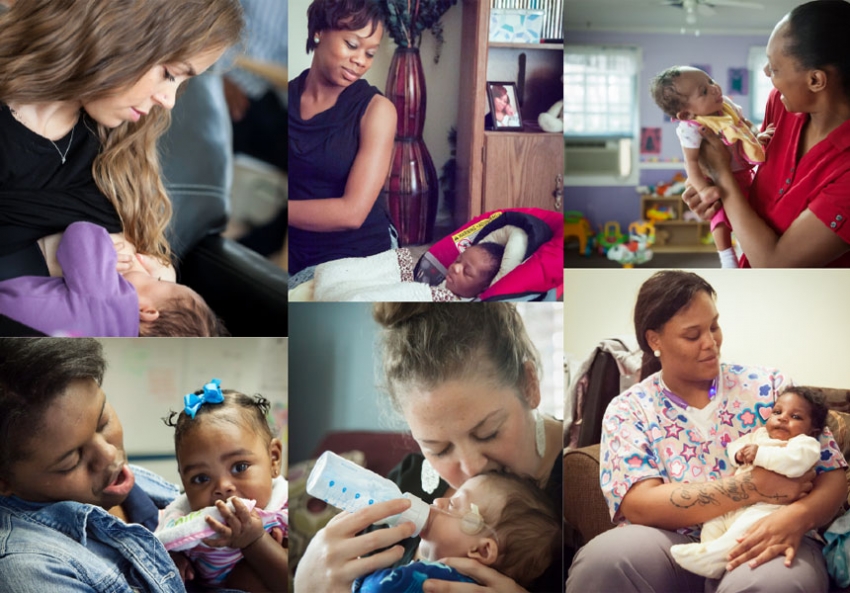
A daily dose of odds and sods, some interesting, some bizarre, some funny, some thought provoking items which I have stumbled across the web. All to be taken with a grain of daily salt!!
Heels terrify me...they are just lethal I tell you. Couple of my friends at work tried to explain how heels work but I gave up...apparently there is some deep significance to women's shoes which have a red underside but didnt quite comprehend why that is so important.
Anyway, this research seems to say that women tend to keep up with the rich based on their heels...I quote
Fashion seems to embrace two opposite goals--fitting in with the crowd and standing out from it. Now new research reveals that the choice to fit in or stand out depends on who exactly the crowd is -- and the size of their high heels. That is, women adjust their fashion to look similar to the rich but different from the poor.Kurt Gray, a co-author at the University of North Carolina at Chapel Hill, and his colleagues investigated thousands of shoe purchases made by women who move to different cities, showing that women adopt the local trends when moving to wealthier cities but ignore them when moving to lower socioeconomic (SES) cities."In other words, women want to look like the rich girls, and different from the poor girls," said Gray, an assistant professor of psychology in UNC College of Arts and Sciences.To examine trends of conformity and individuality, Gray and his colleagues at Carnegie Mellon University and Yale University teamed up with a large-online fashion retailer. They examined five years of shoe purchases--16,236 in total--of 2007 women who moved between one of 180 U.S. cities. Because fashion choices are hard to quantify, they used a straightforward number: the size of high heels.Their analyses revealed that heel sizes changed when women moved, but not uniformly. When women moved to higher SES zip codes such as New York City or Los Angeles, the heel size closely matched the heel size that other women in that zip code had bought--showing a desire for conformity. But when women moved to lower SES zip codes, the heel size closely matched the heel size of their own past purchase--showing a desire to keep their individuality.The team of researchers, who included Jeff Galak, Nina Strohminger, Igor Elbert and Gray, label this phenomenon "trickle down conformity," because fashion preferences trickle down from the top but seldom up from the bottom. As Gray explained, "Walmart watches the styles on the runways in Milan, but Milan never watches the styles at Walmart."The explanation for this lopsided conformity is the deep human urge for status. "From the beginning of time, people have thirsted for respect and social standing, and have aligned themselves with the powerful and distanced themselves from the powerless," said Gray. "So it makes sense that they do the same with heel sizes."There is also reason to believe that this "aspirational fashion" is getting more prevalent. Inequality is increasing in America, and research reveals that the bigger the gap between rich and poor, the more people want to look rich. Such aspirations fuel the fortunes of fashion sites that provide high-status goods for low prices.This study examined only women, but there is no reason to believe it applies only to them. "Men do the same thing when they purchase clothes, electronics or cars," said Gray, "When you move from Wichita to LA, you look around and sell your Chevy for a BMW, but when you move from Los Angeles to Wichita, Kansas, you look around, and then just keep the BMW."This research builds off the past work of Gray and Strohminger, which examined what color combinations make outfits the most fashionable. "We often think of fashion as something frivolous, but it's an industry worth $1.7 trillion annually, and clothing often helps define ourselves," said Gray.With their current study, Gray and colleagues reveal that fashion industry isn't only about making money, but letting people look like they belong with money.Story Source:The above post is reprinted from materials provided by University of North Carolina at Chapel Hill. Note: Materials may be edited for content and length.Journal Reference:
Jeff Galak, Kurt Gray, Igor Elbert, Nina Strohminger. Trickle-Down Preferences: Preferential Conformity to High Status Peers in Fashion Choices. PLOS ONE, 2016; 11 (5): e0153448 DOI:10.1371/journal.pone.0153448
I completely agree with the sentiments. And I actually think that the estimates are on the low side. You two are the biggest joys of my life. And I think what mum does to ensure we all have a home and love and food and cuddles and scolding and and and is priceless. So never think that she's just a housewife. For me, she's the fund manager for overseeing my two biggest joys and investments.
What mum brings to the table is priceless. She has created a home for us. A place for safety. A place for fun and games. A place where there's always a hug and a cuddle. Despite all my attempts to fill the house with books and artefacts and make it a museum, she still manages to keep it a neat tidy and clean home.
And she not only does all all this but she writes and writes well. In various forms. Books. Short stories. Scripts. Novels. Fiction and non fiction. I heard her speak recently and she's passionate. She comes across as a person who cares about her topics and subjects. And people recognise it. Which is why she is a best selling author and people love her.
There are two ways of looking at this problem son. Well three ways. When you and Diya were born, I didn't have parental leave. And mamma didn't work so the question of leave didn't exist. But if fathers leave was available, then I would have loved to take it. Spend more time with you. When you have your kids, son, make sure you take the full amount. Don't worry about the future son. Or career. The time you spend with your new born baby and your wife is so precious that it will keep on giving you happiness through your entire life time. Secondly, there's the USA situation. I find it very strange that USA doesn't do it and it's not mandatory like in other countries. Very strange. Then again there's no demographic pressure either. Their birth rates are good. But the republicans are a dying breed anyway so entropy will take care of the nay Sayers.
Thirdly as an economist, you will know that this has a cost. Paid parental leave means that the company gets hit twice. First with the loss of the mother's time and then the cost of maternity cover or if the role isn't covered, then lack of productivity. This, when aggregated, means there is a cost of this. Sometimes it can be handled. Sometimes it can't and ends up being very painful. So the studies that this article talks about say there's no impact. Or they couldn't measure it. Or they were able to manage the impact. Finally remember that the unmarried people in the office have started to complain. Why should they bear the cost of somebody who is taking a lifestyle choice? It's a fair question. Difficult decisions son. When you will become a manager, you'll have to deal with these questions. Missing you. And remembering the bestest day in my life when you were placed in my arms :) Love you Baba The Real War on Families: Why the U.S. Needs Paid Leave Now http://inthesetimes.com/article/18151/the-real-war-on-families (via Instapaper) Each one of these women went back to work less than two months after giving birth due to the financial toll of unpaid maternity leave. (Kate Milford)
Benrahou had to attend to another crisis: she was the mother of a very sick baby, and her carefully constructed paid maternity leave had disintegrated.
Leigh Benrahou began laying plans to have a second child almost as soon as she had her first, a daughter named Johara, in 2011. Benrahou, 32, wanted to time the next birth so that when she returned to work, her mother, who works at an elementary school and has summers off, could babysit. Most importantly, Benrahou wanted to spend as much time as she could with her new baby while also keeping her relatively new job as the registrar at a small college.
While her husband, Rachid, 38, earns enough at a carpet cleaning company to cover their mortgage and food, without her paycheck they'd be forced to live close to the bone. And if she quit her job, Benrahou, who has a masters in nonprofit management, would take a big step backward in what she hoped would be a long career in higher education.
So Benrahou, who has wavy dark blond hair, blue eyes and a tendency to smile even through difficult moments, set about what may be the least romantic aspect of family planning in the United States: figuring out how to maximize time with a newborn while staying solvent, employed and, ideally, sane.
Only in America
Most people are aware that Americans have a raw deal when it comes to maternity leave. Perhaps they've heard about Sweden, with its drool-inducing 16 months of paid parental leave, or Finland, where, after about 9 months of paid leave, the mother or father can take—or split—additional paid "child care leave" until the child's third birthday.
But most Americans don't realize quite how out of step we are. It's not just wealthy, social democratic Nordic countries that make us look bad. With the exception of a few small countries like Papua New Guinea and Suriname, every other nation in the world—rich or poor—now requires paid maternity leave.
Paid parental leave frees mothers and fathers from choosing between their careers and time with their infants. For women, still most often the primary caregivers of young children, this results in higher employment rates, which in turn translates to lower poverty rates among mothers and their children.
Research shows that paid leave can also be a matter of life and death for children. By charting the correlation between death rates and paid leave in 16 European countries, Christopher Ruhm, a professor of public policy and economics at the University of Virginia, found that a 50-week extension in paid leave was associated with a 20 percent dip in infant deaths. (The biggest drop was in deaths of babies between 1 month and 1 year old, though mortality of children between 1 and 5 years also decreased as paid leave went up.)
According to the Bureau of Labor Statistics, only about 13 percent of U.S. workers have access to any form of paid family leave, which includes parental leave and other time off to care for a family member. The highest-paid workers are most likely to have it, according to BLS numbers, with more than 1 in 5 of the top 10 percent of earners getting paid family leave, compared to 1 in 20 in the bottom quartile. Unionized workers are more likely to get benefits than nonunionized workers.
What do the rest of American women do without a law that guarantees this basic support? Some new mothers who don't get paid leave quit their jobs, which can leave them desperate for income and have serious consequences in terms of work opportunities and lifetime earnings. Others may choose not to have children (though it's impossible to definitively quantify how the difficulty of integrating work and childbirth factors into those decisions). And some try to stitch together their own paid leaves through accumulated vacation time and personal days, or through independently purchased insurance policies.
The best-laid plans
Though her employer doesn't offer paid leave, Benrahou figured she'd create her own, taking time away from work through the Family and Medical Leave Act, which entitles new parents to up to 12 weeks off, unpaid. She knew all about the law's loopholes—that, for instance, it only applies to workplaces that have at least 50 employees. Hers did; she wouldn't have taken the job if it hadn't. She knew, too, that she had to have worked for her employer for at least 12 months to qualify. That part was trickier.
She had started her job in February 2014, which meant that she wouldn't qualify until the following February. She counted back nine months from then and got to May, but then, to be safe, tacked on another two months in case the baby came early, so: July. That's when she and Rachid would start trying for a second.
Then there was money. Reluctant to lose 12 weeks of income, Benrahou decided to opt into her employer's disability insurance policy, paying roughly $40 a month into the plan so she could receive 60 percent of her salary for up to six weeks of her maternity leave, plus an additional $1,000 toward the cost of her hospital stay. She would also save up her two weeks of annual paid vacation time.
Numbers crunched and policy purchased, Benrahou went off birth control on schedule in July and became pregnant within a month. But her carefully laid plans started to go awry in her 20th week, when she was diagnosed with placenta previa, which can result in early delivery. Despite some bleeding and cramping, and several brief hospital stays that used up her sick days, Benrahou stuck to her plan, working as much as possible after her diagnosis in order to save her precious vacation time. But, in late December, her water broke. Though her due date was April 1, Leigh Benrahou gave birth by C-section on Christmas Eve—too soon to qualify for FMLA leave or any payoff from her disability insurance.
Ramzi Benrahou was born at 26 weeks and just over 2 pounds. Knowing that 20 percent of babies born at his gestational age don't survive, Leigh spent the first hours after the delivery singularly focused on her tiny son's survival. He needed oxygen, since his lungs weren't fully developed. And, when he was whisked away for medical attention, Benrahou had to attend to another crisis: She was the mother of a very sick baby, and her carefully constructed paid maternity leave had disintegrated. So, freshly stitched up and still groggy from anesthesia, she spread out her medical fact sheets, insurance policy papers and lists of phone numbers on her hospital bed and began to grapple with her new reality. Though her college was on winter break, which put off her return by about a week, Benrahou realized she'd have to go back to work when classes resumed on January 6, less than two weeks after giving birth.
Less than a month
Like Benrahou, most U.S. women end up returning to work sooner than they'd like—sometimes just weeks or days after having a baby. Just how soon they're going back is difficult to determine. We know that most employers don't offer paid leave, but no federal agency collects regular statistics on how much post-childbirth time off, paid or unpaid, women are actually taking.
Census data on employment patterns among first-time mothers show that between 2005 and 2007, more than half who worked during their pregnancy were back on the job within three months of giving birth. A 2008 study by the Department of Health and Human Services' Maternal and Child Health Bureau, meanwhile, found that the average length of maternity leave, when taken, was 10 weeks. But more recent data is scarce, even though the recession left many women living on razorthin margins, ratcheting up the pressure to rush back to work after giving birth.
How are new mothers faring in today's age of austerity? Data analyzed for In These Times by Abt Associates, a research and evaluation company, provides a window into these experiences. Abt went back to a 2012 survey it conducted for the Department of Labor of 2,852 employees who had taken family or medical leave in the last year, looking specifically at the 93 women who took time off work to care for a new baby.
Nearly 12 percent of those women took off only a week or less. Another 11 percent took between one and two weeks off. That means that about 23 percent—nearly 1 in 4—of the women interviewed were back at work within two weeks of having a child.
The educational divide between those who took shorter and relatively longer leaves is striking: 80 percent of college graduates took at least six weeks off to care for a new baby, but only 54 percent of women without college degrees did so.
Pumping in the parking lot
What's it like to be back on the job in the first weeks after having a baby?
For Natasha Long, who was back three weeks after her third child, Jayden, was born in 2012, the worst part was missing out on bonding time with her son.
Long, who was 29 at the time, was determined to make sure Jayden got breast milk. But the factory where she worked, ACCO Office Supplies in Booneville, Mississippi, didn't have a lactation room. So when she was on breaks, she had to run out to her truck. She sat in the cab, worried that someone might see her, and pumped, while tears rolled down her face and over the plastic suction cups attached to her breasts.
Long cried because she wanted to be holding her baby rather than sitting in the parking lot of a factory in her old Yukon Denali. But exhaustion clearly also played a role in her emotional state. Her job was simple—to place stickers with the company logo on the bottom right-hand corner of plastic binders and then box up the binders. But the shifts were long—from 6 a.m. to 6 p.m.—and she put in four or five a week. Because the factory was an hour's drive from her home in Okalona, Mississippi, Long had only 10 hours left in the day to do everything else, including tend to her three children, spend time with Jayden's father, and sleep. By the time she got back in the evening, her children, who were being looked after by her father during the day, were on their way to bed. To pump breast milk before leaving for work, she had to get up at 4 a.m.
After just a few days of this crazed schedule, Long began to develop strange symptoms, including a headache that never seemed to go away and a choking sensation that left her feeling breathless. She started biting her fingernails to the quick—something she'd never done before—and crying a lot. "I felt like I was alone," says Long. "I wanted to fall off the face of the earth." Long had never been depressed. But when she went to the doctor, he surmised that her physical symptoms were rooted in her mental state, which was itself rooted in her schedule. When her doctor said he thought she was depressed, Long worried that if child welfare authorities found out, they might take her children away. She had seen other people's children put in foster care. But when her doctor prescribed her antidepressants, she took them.
Long is not the only one to suffer emotionally from a quick return to work. Research has shown that longer maternity leaves, whether paid or unpaid, are associated with a decline in depressive symptoms, a reduction in the likelihood of severe depression, and an improvement in overall maternal health, according to a working paper issued by the National Bureau of Economic Research. One national study of 1,762 mothers found that a one-week increase in maternity leave was associated with a 5 to 6 percent reduction in depressive symptoms from six to 24 months after birth. Another found that women who took less than eight weeks of paid leave experienced more depression than those who had longer leaves and were in worse health overall. Mothers who work more than 40 hours a week, as Long was, were more likely to be depressed than those who worked 40 hours or less, according to a study by Child Trends, a research center.
Women who go back sooner also tend to breastfeed less, which cuts into the benefits breast milk confers, including better immunity and lower rates of childhood obesity, allergies and sudden infant death syndrome. It was only through heroic efforts that Long was able to breastfeed Jayden until he was 1.
Shorter maternity leaves may also have a negative effect on the development of early motor and social skills and even, later, on vocabulary, according to several studies. So far, Jayden, 3, hasn't shown signs of missing any developmental milestones. What nags at Long is the thought that her absence in those first few months might have affected their relationship. He refuses to call her "mama," and although there's no research to indicate this would be a result of failed early bonding, she still fears that's the reason.
Too busy to fight
For low-income women, the lack of paid maternity leave is just one of many missing supports to help them stay afloat while bringing new life into the world. By the time Jayden was born, pregnancy had already put Long in a perilous financial situation. She was on bed rest for the last four and a half months of her pregnancy. Big Dollar, where she worked at the time, didn't fire her for not coming in—but it didn't pay her, either. So Long filed for public assistance, which required her to attend classes. Though Mississippi is supposed to exempt people who are physically unable to take such classes, and Long's doctor had warned her to stay off her feet, she says she was denied benefits when she didn't attend.
Family members pitched in to pay for her groceries and rent while she was unable to work, but by the time Jayden was born (healthy, at 37 weeks), Long knew she had reached the limit of their generosity. When she went back to work at the dollar store, they offered her only reduced hours. It wasn't enough to repay her debts, so she went to an employment agency, made no mention of her days-old baby, and got her job at ACCO.
Other social supports are glaringly absent for U.S. mothers, especially poor ones, who fill waiting lists for scarce subsidized childcare spots and underfunded early education classes. In comparison, Sweden and Denmark spend roughly 10 times what we do on childcare per person.
Without adequate options or support, low-income workers, who are more likely to live paycheck to paycheck and less likely to have access to any type of leave, often have little choice but to power through. As our data confirm—and as finances dictate—less educated women, who tend to have lower-paying jobs, are likely to take less time off after having children. Often, that means not just going back to work early, but going back to very long work hours, very early.
Raven Osborne, for instance, a 22-year-old single mother in Tupelo, Mississippi, went back to work just one week after her first child, Kylan, now 2, was born in August 2013. In addition to being a full-time college student, Osborne was waitressing full-time at IHOP, but her earnings—tips plus a base salary of $2.13 an hour—weren't enough to cover her rent, car payments and daycare costs. Perhaps ironically, her tips were much higher—sometimes more than $100 a shift—when she was visibly pregnant. But once she had the child, they went down again, so Osborne added a few overnight shifts at Texaco when Kylan was four weeks old, leaving the baby with his grandmother. Working upwards of 60 hours each week, the new mother barely saw her son, except when she got home from work, when she often fell asleep holding him. She could have taken unpaid leave from IHOP but chose not to because she needed the pay.
This winter, Osborne returned to work four weeks after her second child, Anthony, was born. Now she's working full-time at a debt collection agency on top of several shifts at the nearby Coles supermarket.
"I don't like asking for help" is how Osborne explains the frantic pace she's kept up during her first year-and-a-half of motherhood. Her mother pitches in by watching the kids when she can, though she, too, has two full-time jobs—one at Walmart and another as an aide at a retirement community.
Clearly, women with low earnings are the least likely to have a financial cushion that allows them to forgo a paycheck. But it's not only those on the bottom of the pay scale who can't afford to take unpaid leave. More than 2.5 million employees need time off from work to care for themselves or another but can't afford to take it, according to a 2012 study from the Center for Economic and Policy Research.
Tracy Malloy-Curtis, a fundraiser at a nonprofit in New York City, could have taken more time off, unpaid but with job security, after she had a baby a few years back. ("It's a civil rights organization," she explains, though she doesn't want to name it because she still works in the field.) Instead, Malloy-Curtis, who is 43, married, and the primary breadwinner in her family, went back five and a half weeks after having a son—and a complicated C-section—for fear she otherwise could not afford to pay her mortgage and cover the other basic costs of her life.
"Physically, I was a wreck," she says. An infection around her C-section wound hadn't yet healed when she went back to work. "I was still bleeding, my incision wasn't closed." Pus dripped down her leg under her work clothes.
Those who do take leave may find themselves penalized afterward. Jackie Wheeler took six weeks of paid maternity leave after her son, Enzo, was born in 2011. Wheeler, who lives in Westminster, Colo., was working at the front desk of a local branch of Chase Bank. Though her son had severe medical problems as a result of being born early, Wheeler had intended to go back to her job. Before giving birth, she says, she had even been talking with her boss about interviewing for an assistant manager position. "I saw myself as moving along in the company," she says.
But after she returned to work and Enzo was released from the hospital, she took another six weeks of leave. At that point, her boss told her he thought it was best that she resign—if he didn't fill her position right away, he said, corporate headquarters would eliminate it. And Wheeler was too overwhelmed at the time to challenge him.
The birth of hope
While, in the United States, the lack of time off can too often turn new motherhood into a distressing ordeal, most other cultures treat this immediate post-natal period as a sacred time, when both the new mother and baby receive help and special attention. Throughout history and all over the world, people have tended to carve out a minimum of at least six weeks in which women are exempt from responsibilities other than child care, according to Malin Eberhard-Gran, a Norwegian public health scholar who has compiled a cross-cultural comparison of post-natal practices.
In some Muslim traditions, new mothers spend the first 40 days after birth in their mothers' homes, for instance. Many Latin American cultures also bracket during the same period, known as la cuarantena (from the Spanish word for "forty"), and exempt women from work responsibilities. In some other countries, women are granted special treatment for even longer. Traditionally, women in Japan and India go to their mothers' homes for several months after giving birth. And today, by law, the 30 countries in the Organization for Economic Co-operation and Development (OECD)—democracies with market economies—provide an average of more than a year of paid leave.
Here in the United States, advocates have been fighting for a century to get new parents just a few weeks off with pay. But the tide may be turning. In 2002, California became the first state to pass a paid family leave law, which provides workers who need to care for a new baby with 55 percent of their usual weekly pay, to a limit of $1,104 for up to six weeks. New Jersey passed a similar law in 2008. And in 2013, Rhode Island granted workers up to four weeks off with pay for "family care," including care of a new baby. Despite dire warnings from business interests, most employers in New Jersey and California (where programs have been in effect long enough to be studied) haven't found that paid leave has hurt productivity, profitability or turnover. (Full disclosure: I was a co-author of the New Jersey study).
The Obama administration is attempting to build momentum for paid sick leave, one of the main ways women piece together paid maternity leave. In the 2015 State of the Union address, President Obama called on Congress to send him a bill guaranteeing U.S. workers seven days of paid sick leave—but in early August, Senate Republicans blocked a Democrat-sponsored bill to do so. In the meantime, Obama has an executive order in the works that will extend a week of paid sick leave to all federal contractors, and his adminstration has issued $1.25 million in grants to study how paid leave programs can be developed in states. Labor Secretary Tom Perez, who has been outspoken on the issue, has spearheaded a #leadonleave campaign, in which he and White House aide Valerie Jarrett travel the country to boost local paid leave policies.
But, so far, even a Democratic administration committed to the issue hasn't been enough to overcome resistance to it. When bills have been debated in states, Republicans have been so vehement that paid leave is bad for business and a "job killer" that legislation at a federal level has been assumed to be a no-go. And, at least until very recently, congressional Republicans have mostly scoffed at Democratic efforts. But for the first time, a bill proposed by Sens. Kirsten Gillibrand (D-N.Y.) and Rosa DeLauro (D-Conn.) this spring that would provide benefits for workers who take time off to care for a new baby or sick family member was met with a counterproposal from Republicans, which would allow hourly workers to put overtime toward paid leave.
The issue is also clearly gaining ground in certain states, where at least ten family leave proposals have been introduced since March. Though Republican presidential candidates have had little to say about the issue, Democratic contenders Hillary Clinton and Bernie Sanders have both come out as strong proponents of paid leave. While Sanders has been more specific about his plan, calling for 12 weeks off, with pay, both are making a moral case to which there is no politically sound retort: Families need paid time off to take care of their new babies. Men, women and children will gain from this basic human dignity.
Barreling ahead
After three months, Leigh Benrahou only has a blurry recollection of her first weeks back at work just days after her premature son was born. "I remember walking really slow and wearing stretch pants and just making it happen," she says hazily. She spent those early days cutting a path between the college; the hospital's neonatal intensive care unit (NICU), where Ramzi spent four months and underwent two stomach surgeries; her 3-year-old daughter's daycare center; and her home, where, despite her exhaustion, she found it difficult to sleep.
At work, Benrahou tended to the needs of her students, whose questions about enrollment requirements and course changes occasionally provided distraction from her own, far graver problems. But mostly it was surreal—and painful—to be there. Climbing stairs was difficult because of her recent surgery. And pretty much every time she closed the door to pump breast milk, she wound up crying. Harder still was being away from her tiny baby, whose health was still so uncertain. Every time she got a call from the hospital when she was at work—and there were many—her stomach clutched.
"They say it's like being on a roller coaster, [having a child] in the NICU," says Benrahou. "But a roller coaster is fun. I wanted to throw up all the time."
Benrahou didn't throw up, though. Instead, like so many other American women, she barreled ahead, doing her best to both take care of her newborn and remain employed. Though she never got to take leave when and how she had planned, she was recently able to take 12 weeks off through the FMLA under the category of caring for a sick relative—in this case, her infant son. And now the woman who so painstakingly planned her family's future doesn't know what's ahead. Ramzi's long-term prognosis is unclear; he's still on oxygen and has a feeding tube. About a quarter of babies born at 26 weeks go on to have lasting disabilities.
Benrahou's hope is to keep working. And mostly she remains upbeat. But sometimes she can't help but wonder whether Ramzi's early birth was preventable; and whether continuing to work after her diagnosis so she could make the best of her miniscule amount of time off brought about Ramzi's early delivery. It certainly wasn't the way she planned it. This article was supported by the Leonard C. Goodman Institute for Investigative Reporting.
We will face this problem more and more. I have heard so much from so many people that boys are useless idiots as far as looking after the parental units are concerned. Its the daughters who help look after the old folks. But people don't think about the impact this has on the daughters. One way of seeing this is to see if this has any mental health issues. This obviously means that the health care and social care sectors of the country have to worry about it. Also for the old fogeys, please put aside sufficient money so that you have proper support in a care home or with nursing, or what have you. You have already managed to bugger it up with loading debt on them but one to think deeply..
2. Is caring for elderly parents detrimental to women’s mental health? The influence of the European North-South gradient Date: 2013-11 By: Elenka Brenna (Dipartimento di Economia e Finanza, Università Cattolica del Sacro Cuore ) ; Cinzia Di Novi (Università Ca’ Foscari, Dipartimento di Economia, Venezia ) In the last decades, both the lengthening of life expectancy and an accentuated decline in birth rates have reduced the consistency of the younger generational cohorts. Due to an ageing population, the burden of care giving is expected to intensify in the next quarter of the century in Europe, especially for mature women. This paper investigates the impact of the provision of constant care for elderly parents on the mental health of adult daughters, between the ages of 50 and 65, living in different European countries. Data is collected from the Survey of Health, Ageing and Retirement in Europe (SHARE). Information on mental health status is provided by Euro-D depression scale, a standardized measure of depression employed across European countries. We focus on differences in the effects according to a North–South gradient: we test whether the relationship between informal caregiving and mental health differs across European macro- regions. Our results reveal the presence of a North-South gradient in the effect of caring on women’s mental health. Keywords: caregiver burden, depression, parent care, LTC systems, mature women JEL: I10 I12 D10 URL: http://d.repec.org/n?u=RePEc:ctc:serie1:def004&r=age
An interesting book. Looks like it's translated from the Turkish but not that well. Has some thematic chapters arranged loosely around sultans, the structure of the harem,prostitution, slavery, homosexual behaviour, affairs of the heart, sexual humour and sexual poetry.
It's got copious amounts of illustrations, paintings and drawings by local and international artists and painters.
The author has obviously relied on primary research for her(?) book but the translation is poorly done. The boom jumps around very badly and therefore the editing is also done very badly.
For those who are of an academic bent, will find some of the references useful. For those who are expecting a detailed exposition, will be left wanting as there is very little contextual information given.
A particularly fascinating insight on the sexual descriptions of various nationalities of both sexes by Enderunlu Fazil Bey in his book Hubanname is particular amusing and interesting. Here’s what he says about British Roses (the men).
“They are the silent but very much desired beauties who confuse your mind. They live on a quiet island. These guys who are beardless by birth are of medium height, and are as white as the whitest lily on a stream. Most of these fishlike men are sailors and they have a good sexual apparatus; nevertheless, I can not say that they give much satisfaction.
he was gay, so he didn't know much about women, but that didn't stop him from opining on the various nationalities.
“Eastern Indians: Their face, eyes, and skin are dark. They look like framed pictures on a wall. You wouldn't feel like having sex with them because they are frigid”
Jews: All of them sleep with us. Jewish women and homosexual boys are abundant. The women have plain faces with a dull skin which is as tasteless as snow.
British Women: When their lips move, you hear the nightingale. They are good natured and have lovely faces. They are very keen on finery and they wear sumptuous clothes
Still looking at the mildly Islamist trajectory that Turkey is taking, it's a bit of a surprise to see publications like this coming out in this decade.
In 2006, approximately 49% of violent crimes were not reported to police. Being the victim of sexual assault is expensive; each incident imposes an external cost of over $100k on the victim. However, recent estimates of the total social cost are an order of magnitude larger suggesting that from a social welfare standpoint rape is likely to be underreported if the victim's demand for reporting is price elastic. In spite of the centrality of victim reporting in the functioning of the criminal justice system, to date there is very little systematic evidence on what governments can do to encourage victims to report crimes. We estimate the sensitivity of victims to the cost of reporting in an Alaskan city between 1993 and 2006, during which time a chief of police publicly supported a policy of charging victims of sexual assault for medical procedures required to collect evidence against their attackers. Using a triple differences approach that compares trends in reported sexual assaults to other index crimes over time and across Alaskan cities, we estimate that this shift in cost of approximately $1,200 from the city government to victims reduced the number of reported rapes by between 50 and 80%. This large response highlights the importance of public policies which reduce the private cost of reporting crime.
during the days when you hear about so many bloody sexual assaults happening, we have to reduce the costs of the crime for the victim!
Here's something that you will find of interest. How men steal the earnings of their wives. Despite the fact that it's religiously not mandated. There are two philosophical questions here.
One, how can you ensure proper division of rights? Between man and woman, husband and wife. And what needs to be done from a legal perspective. Is that law from the sharia law? Or shall you do this from the perspective of universal law like the convention of rights of women or United Nations universal declaration of human rights.
Second is what is religion? What has been written down or what is practised? Take this example in this situation. Islam in the majority version clearly says they the monies due to the wife are her's. But the way Islam is practised in Bangladesh is different. Then the question is, who determines who is right? Acres and tomes have been written on pretty much every topic under the sun and there's no consistency.
For both questions, it's vital to remove religion from the public sphere. Absolutely vital son. Because most if not all religions are a way of controlling the populace and more importantly are skewed towards male patriarchy. It's one when you kick out morons of the religious orders that true civilisation exists.
But it will be a long haul. Specially with these abhrahamic religions. Christianity has been controlled by and large. Judaism is still having challenges in Israel and well you know what's happening with Islam across the world. Both your and my generation will struggle with this religious genie son. It has to be forced into the bottle and capped hard. Long fight.
A review of Appropriation of Wives’ Income: a New Form of Dowry in Bangladesh, by Farah Deeba Chowdhury.
Farah Deeba Chowdhury’s dissertation investigates the interrelationship between law, culture, patriarchy, and Islam in the context of contemporary Bangladesh. The dissertation has nine chapters.
Chowdhury has concentrated on the situation of Muslim married women in her dissertation. In the introduction, she argues that many practices in Bangladeshi society are based on misinterpretation of Islam and the main purpose of such manipulation is to seek control over wives’ income, financial resources and other assets. The author characterizes such practice as “appropriation of wives’ income as a new form of dowry” (p. 1). As the dowry system has been legally banned in Bangladesh, the income of working women is now considered as a source of earning for their husbands. The author argues that the root of such practice lies in the norms of patriarchal society. Women are deprived as the patriarchal society never conveys their role to the broader society. Instead, the dominant fallacy is women are only obliged to perform duties towards their in-law’s family.
This was a very amusing read about the medieval marriage and superstitions in England. I quote the last paragraph:
Finally, the bride must not lie back and think of England. Ideally she should think of nothing, as that might influence the health and looks of the child she might conceive that night
This was a fascinating article even if it left me a bit befuddled. What was the hypothesis and how did they manage to come to their conclusions? I quote the synopsis.
The issue of women's empowerment has a long history. This article intends to trace the issue of women's empowerment in the area that now forms contemporary Bangladesh. In this regard, we have delved into the early part of the twentieth century to look into women's writing in numerous journals that were beginning to be published in that era. Looking into Muslim-edited journals, we look into how issues of women's education, writing and the place of women in society were being debated. In this process, we have laid special emphasis on women's writing, using the examples that we have cited as part of a new form of women's voices. What we discover about women's empowerment in this process is that it is a fraught issue, and there is no clear-cut or direct path that can be easily delineated. Early twentieth-century anti-colonial nation-making processes were indeed complex, and in the Bengal region, veered between emphasizing a Bengali as well as a Muslim identity. It is interesting to see how issues of language and the position of women coalesce to form a very exciting arena for researchers.Concentrating on literary writings by women in the early part of the twentieth century, this research is an effort to look into the construction of the modern Bengali Muslim woman, and the connections that can be drawn between the formation of this identity and the emergence of a notion of a Bengali nation. In broad outline, we will be debating the main contours of this nation — based as it is on religious, community and linguistic affiliations. Identity — both at the individual, or community/national level, remained, and remains fluid, as its various dimensions are foregrounded at different times. The nation is also being envisaged as an appendage to modernity, hence the lines that defined modernity at this point are also shifting, and the grounds that the envisaged modern nation occupies are continuously reformed and reconstituted.
foregrounded? eh?
But very interesting to learn about Bengali women writers at the beginning of the last century. Fascinating flowering of their own identity. The authors also navigate and bring out fascinating differences between the urban and rural, muslim and hindu, urdu and bengali speaking and the mixtures thereof.
An interesting paper but curiously left me unsatisfied. I would have liked the authors to have delved deeper into the mix and seen how the Bengali woman emerged, comparing the Hindu and Muslim woman, rather than taking a uni-dimensional perspective because I do believe that there would be a firmer and broader identity with the Bengali bit rather than the religious bit. Still some good references…
the world's law codes are full of stupidities and idiocies. Mostly arising from the religious underpinning of most modern law systems. But thankfully most modern law systems have removed crap like this. But when people say laws are religiously mandated is when all kinds of alarm bells go off.
Stoning still happens today. There are 15 countries in which stoning is either practiced or authorized by law, even if it has never been practiced. In Iran, Mauritania, Nigeria (in one-third of the country's states), Pakistan, Qatar, Saudi Arabia, Somalia, Sudan, the United Arab Emirates, and Yemen, stoning is a legal punishment. However, out of these countries, only in Iran, Pakistan and Somalia have stonings actually occurred, and all instances in Pakistan have occurred outside the legal system.
By comparison, three of the remaining five countries (Afghanistan, Iraq, and Mali) do not condone stoning in national legislation, but sentences and executions have been carried out by non-state actors. In the Aceh region of Indonesia and Malaysia, stoning is sanctioned regionally but banned nationally.
I may have sent this to you earlier. But no worries. This is worth reiterating. Again and again.
You will have loads of girls. As you should. Look around. Know various people. Check them out. Experiment. Spread your wings. You will have your own criteria to select girls. But who do you open up to? Who do you cuddle up in front of a fire and share your thoughts and dreams of winning the world?
One sure fire way to see if she reads. A girl that reads (and I mean reading dead tree books or e books). I didn't mean magazines or TV guide only. Girls who read voraciously are fascinating creatures son.
They are usually quieter. They are difficult to spot because they aren't found in noisy places. They need to be found very carefully. You have to walk gently in the undergrowth. Part the leaves carefully and quietly. Peek around the tree trunks slowly. Don't startle her. Pick a good time and then say a hi.
They are good people to be around. They are full of ideas and full of alternative realities. You can be silly with them and you can be Serious with them. They will never be clingy because they are with their books. You are a fellow traveller. They are difficult to get but the rewards are so much worth it.
It's a good way to know who is better. And remember one thing, son, they will also be checking you out so always have a book to hand :)
Date a girl who reads. Date a girl who spends her money on books instead of clothes. She has problems with closet space because she has too many books. Date a girl who has a list of books she wants to read, who has had a library card since she was twelve.
Find a girl who reads. You’ll know that she does because she will always have an unread book in her bag. She’s the one lovingly looking over the shelves in the bookstore, the one who quietly cries out when she finds the book she wants. You see the weird chick sniffing the pages of an old book in a second hand book shop? That’s the reader. They can never resist smelling the pages, especially when they are yellow.
She’s the girl reading while waiting in that coffee shop down the street. If you take a peek at her mug, the non-dairy creamer is floating on top because she’s kind of engrossed already. Lost in a world of the author’s making. Sit down. She might give you a glare, as most girls who read do not like to be interrupted. Ask her if she likes the book.
More I read about the educational system here in the UK, the more I worry. Why is being clever and intelligent considered to be bad? I quote from this story about why girls don't take up Physics.
For the past two decades, female students have accounted for only one-fifth of those taking the subject at A-level. It is the fourth most popular subject for boys, yet slips to 19th in the rankings for girls. According to a recent study by the Institute of Physics, using information provided by the National Pupil Database, 49% of state co-educational schools in England did not send any girls to study physics at A-level in 2011. By contrast, girls were almost two and a half times more likely to take the subject at A-level if they were at a single-sex school – a finding that suggests there might be an ingrained cultural perception in co-educational establishments that physics is somehow "not for girls".
This is sad indeed. The problem is those little shits (boys!)
So what are the girls saying?
"It's not cool to be clever at the moment, especially as a girl," adds Williams. "Boys don't mind being thought of as geeks, but girls do. I do English lit as well, and I'm the only one in the class who also takes physics. Everyone in the class was kind of like, 'You do physics?'" She curls her lip in disgust. "But we're good because we've got a whole group of friends [doing physics as well]."
These school kids are stupid, seriously stupid. Who will be earning more and having more fun? the idiots or the smarts? Why would you not look up to the smarts?
So what can one do?
The importance of a supportive network of friends taking the same subject is key. But it is also, as Alice points out, a question of seeing more positive role models on television and in schools. Although there are prominent male presenters in popular science – Brian Cox,David Attenborough – there are hardly any female counterparts. And when female scientists do make it on to the pages of newspapers, or into television studios, the way they are presented can be extremely patronising. A 2010 paper by academics at the University of Cardiff examined 51 interviews with scientists, eight of whom were women, pulled from a sample of 12 UK national papers in 2006. Half of the profiles of the women referred to their clothing, physique or hairstyle, compared with 21% of the profiles of men. The male scientists interviewed were often used to signal gravitas, while women were more likely to be said to make science "accessible" or "sexy".
<sighs> here we go again…But the article ends with a spot of brightness
And yet there are signs that the culture is changing. It's not just the clever young women I meet at Lampton who signal the dissolution of previously entrenched ideas, but also those physicists currently working in postgraduate fields. Aki Matsushima, a 26-year-old studying for a PhD in quantum physics at Imperial College, London, insists that the lifestyle of a research scientist "is very flexible and actually accommodating, and in that respect it can be really good for women who have other responsibilities, like childcare. There's been a lot of encouragement and funding to get more women in, and once you're in there's no discrimination. In fact, there's lots of encouragement."
However, Matsushima acknowledges that the lack of female professors is a problem. She, like Donald, attended an all-girl school and then chose to attend a single-sex college at Cambridge. "I knew the course was going to be all men," she explains, "so I applied to a women's college so I could hang out with girls as well." But once Matsushima had made it into the male-dominated world of physics, she found it was – and continues to be – an extremely fair environment, with no gender discrimination.
"Maybe at lunchtime you're hanging out with a load of guys talking about computer games, but that's about it," she says. This year, Matsushima was a finalist in the BBC's Masterchef and came into contact with some professional chefs who told her she would have to work "twice as hard" to make it as a woman. "In cooking, there is a kind of discrimination internally," she says. "That hasn't happened to me in physics."
We need more of this, more women stepping up and the organisations being gender neutral. It is not easy. Over the past 10 odd years, ever since I got into a situation that I would be hiring, I have encouraged the recruitment agencies and HR folks to send more women into the mix. It has been a struggle. For the front office roles, for the sales roles, there is a dearth of good women but it is getting better. For example, right now, my team has a balanced gender ratio, and believe you me, it took a shed load of effort. The pressure to pick the first half way decent candidate (who usually is male) is huge due to business pressures. So to delay hiring, to reach out into the women networks, to insist that for every 2 male cv’s I get, I need a female cv. It slows down the process hugely…
The case of the Indian woman gang raped and who subsequently died from her injuries is pretty gruesome. The onus obviously fell on the police, who basically took corrupt payments to allow these buses to ply. And the dismal rate of convictions (600 cases and 1 conviction). So what do the police themself say? Here are two contradictory views. First:
Reviled as an ineffective, uncouth force that terrorizes people rather than protect them, Delhi Police officials find scarce favour with Delhiites. Indrani Basu of TOI spoke to a lower functionary of the force to unveil a lesser-known side of the daily functioning of the 76,000-strong team that is supposed to keep the city safe.
When I joined the police force, I didn't know I would spend most of my time doing things other than what I was trained for. The public expects police to help them with every problem, including matters unrelated to our work.
The control room receives roughly 24,000 calls a day; 70% of these are not policing matters. Almost daily we are called in for civic disputes, problems with electric supply, presence of stray dogs, monkeys - the list is endless.
Civic agencies should handle such complaints but people call the police as other control rooms don't spring into action. We have to resolve the issue as it may become a law and order problem. There have been occasions where we've fetched electricians or other technicians to resolve some issue.
The public perceives us as unruly and uncouth. Much of this has to do with our working conditions. Unlike other government departments, all of which have fixed work-hours, cops don't have any shift system.
I may have a 12-hour duty but if I get a distress call 30 minutes before I'm to leave, I must attend to the call. This can take hours - many times the next 12 hours - to sort out. It's usual to work 24 hours without rest and continue the next day. The Delhi Police Act says an officer is on duty round the clock. A policeman gets a month's extra salary every year to compensate for working without a shift system, but this compromises quality of work.
Many times we don't get vehicles to respond to distress calls. We usually use private conveyance to reach the crime spot: our own or an auto. There are around 15-20 cops per police station. But not more than four or five motorcycles are provided to each. Most bikes are on patrolling duty.
Some stations have an emergency response vehicle. The conveyance allowance up to an Inspector's rank is about Rs 375 a month. This cripples our work. There is need for a proper emergency response unit for every call received; not leave an officer to his own devices.
Investigations throw up their own kind of miscellaneous expenses that you will never see in official statistics. From getting a post-mortem done to collecting forensic reports, our pocket is made lighter in many ways. We have to submit a charge-sheet within 90 days, but with limited forensic facilities we invariably incur expenses to get test results on time.
Provisions exist to claim investigation expenditure, but it's a tedious process. Also, there are no proper bills for most such expenses. For example, every year we remove several dead bodies. We make our own arrangements to retrieve the body and take it to the mortuary. Usually, we rope in a passerby willing to do the job in return for payment that comes from our own pocket. How can we claim such expenses?
We don't even have basic facilities. No buildings or land are demarcated for police stations when an area is developed. Outposts come up based on need. Many times such outposts are mere tents. It doesn't feel like we work for a serious organization.
Several stations don't have facilities for overnight stay though duty can stretch to three, four days continuously. Issues of mosquitoes, unhygienic surroundings and unavailability of fans plague many. Some police stations don't even have access to drinking water. There may be no water connection even. Lack of proper facilities causes us to function with a negative frame of mind.
Such tough work conditions make us an unhappy lot, which sometimes compromises the police-public interface. Many cope with the pressure by resorting to corruption, anger, brutality - a vicious cycle.
We constantly deal with criminals with no stress-relieving facilities provided. Many cops need psychological counselling, therapy to deal with their daily stress. No such facility is available. Some medical camps have raised these concerns but they are never resolved.
Feel pity for them? Here’s another interview with a copper. The chap also calls the rapists as bastards, as I did, and got into trouble for saying that. But leaving that aside for the moment, the opinions are pretty Neanderthal. Now check what they said about women.
I realised that according to stringent criteria of the Delhi Police, almost all women deserve to be raped. And here’s why:
Who are these people, I'd wonder, who genuinely believe that a woman would deliberately provoke sexual assault. Reuters
One, she is not in a salwar kameez or sari, at all times
Most urban professional women wear a lot of skirts, jeans, blouses, and dresses. And they usually carefully calibrate what they wear according to where they will be: out on the street or at an upmarket bar/restaurant. But all this effort is pointless because as Satbir Singh, Additional SHO of Sector 31 Police Station, Faridabad, puts it: “Ladkiya jo hai unko yahan tak yahan tak (he gestures to mean that women should cover their entire body, then carries on speaking)… Skirt pehenti hai. Blouse dalti hai; poora nahi dalti hai. Dupatta nahi dalti. Apne aapko dikhawa karti hai. Baccha uske taraf akarshit hota hai.” (Girls should be covered from here to here… They wear skirts, blouses, that don’t cover them fully. Don’t wear a dupatta. They display themselves. A kid will naturally be attracted to her.)
Sub-Inspector Arjun Singh, SHO of Surajpur Police Station, Greater Noida, clarifies the position further: “She is dressed in a manner that people get attracted to her. In fact, she wants them to do something to her.”
In other words, unless a woman is fully covered from head to toe – at all times – shewants men to rape her.
Two, if a woman is in a sexual relationship with one man, then she deserves to be raped by him and all his friends. Dharamveer Singh, Additional SHO at Indirapuram Police Station in Ghaziabad, tells Tehelka: “It’s very rare that a girl is forcefully picked up by 10 boys. A girl who gets into a car with boys is never innocent. If she does, she definitely has a relationship with at least one of them.”
Three, she keeps the company of drunk men. Is it bad judgement to drink with strangers in India? Yes. And many of us are far too cautious to slam back the vodka unless we are amongst good friends. But who cares since our men in uniform seem to think that alcohol and opportunity is sufficient – and just – cause for rape:
Roop Lal of Sector 40, Gurgaon, sought to find a rationale to the occurrence of gang-rape: “Jaise hum log baithe hai, zyaada daaru pee li. Chalte peeli. Behnchodh, phekh saala, phir to aise hi hoga. Raat bhar rakh li. Uska jawab kya degi wo apne gharwalon ko, ki jo ek ghante ke liye keh kar gayi hai, aur poori night main kahan gayi thi. To maa-baap to poochenge, bhai bhi poochega. Jinka samaaj hai woh to poochte hai (Say we are sitting and had one drink too many while on the move… it’s obvious that it’ll happen. Keep her for the entire night. What will she tell her parents? She was supposed to be away for an hour and has ended up being out the entire night. Parents will question, so will her brother. Society will ask questions.”)
So when a man drinks, he turns into a sex-crazed animal ready to rape the nearest woman. When a woman drinks, she is a slut looking to be raped. Ergo, women should not drink, nor should she place herself anywhere in the vicinity of men who do. (A rule that includes being in a bar late at night) And even if one of the men happens to be your boyfriend, it is no cause to let your guard down because: See reason #2.
Four, a girl deserves to be raped because her mother is a “slut.” When all else fails, blame the mom. That seems to be the reasoning of the investigating officer in the Noida gang rape case which involved a Class X student. Here’s Ram Malik’s justification for the rape of a minor: “The girl’s mother is divorced. She’s living with another man from the Yadav community. She’s 48 whereas the man is 28. It’s inevitable the two daughters will be wayward, isn’t it?”
Five, a woman deserves to be raped because she belongs to the upper class – or the lower class. Upper class women don’t know how to behave or dress modestly, which invites trouble. They are also either high class hookers, or alcohol and drug-addicted floozies. Their lower class peers, however, are just looking to make a quick buck.
In fact, according to 17 of the 30 policemen interviewed by Tehelka that “real” rape cases are rare: “There are cases but 70 percent involve consensual sex. Only if someone sees, or the money is denied, it gets turned into rape”
Sub-Inspector Manoj Rawat of Noida’s Sector 24 Police Station is far more skeptical: “Everything in NCR happens with mutual understanding. My personal view is that there are one or two percent rape cases in NCR.”
And six, a woman deserves to be raped because she reported the rape. The most astounding revelation in the Tehelka expose is this: most rape complaints are false, motivated by either vindictiveness or monetary gain. It’s an excellent example of circular logic:
Tehelka asked Yogender Singh Tomar, Additional SHO, Sector 39, Noida, if it was easy for a rape victim to approach the police. His answer left us shocked: “Aasaan nahi hota uske liye. Bezzati se sabhi darti hai. Akhbaar baazi se bhi darti hai. Asliyat main wahin aati hai jo dhande main lipt hoti hai (It’s never easy for the victim. Everyone is scared of humiliation. Everyone’s wary of media and society. In reality, the ones who complain are only those who have turned rape into a business).”
In other words, if you’re “really” raped, you would never complain. If you complain, you were not “really” raped.
So here’s the bottomline, ladies and gentleman. If we were to apply the this insane litmus test to all the women we know – friends, family members, distant relatives, colleagues, maids, or acquaintances – none of us would make the grade. According to the Delhi police, we all deserve to be raped.
Before one gets up and going, one has to see that pretty much the same views were uttered by the politicians, they are uttered by the various religious bastards of the sri ram sene ilk from the Hindu right to the Muslim muppets who prefer to shove their women in burqa’s and marry them off to the rich shiekhs by giving them a religious justification for prostitution. Same sermons one gets from pretty much across the society. Try to walk in any Indian city with you wearing a skirt, the stares you get are amazing..its just ludicrous. And yes, I have done so, went across an entire town wearing a ghagra choli on a bet.
A long if very interesting perspective of what women are going to go through. As a person interested in economics, son, you will appreciate how the future generations will live and work, family structures atomised. Not saying if its good or bad, it just is. Learn the differences son and surf them.
Don't be like the girl in her 20's or 30's being surprised when reality mugs her.
In 2001, when I was 28, I broke up with my boyfriend. Allan and I had been together for three years, and there was no good reason to end things. He was (and remains) an exceptional person, intelligent, good-looking, loyal, kind. My friends, many of whom were married or in marriage-track relationships, were bewildered. I was bewildered. To account for my behavior, all I had were two intangible yet undeniable convictions: something was missing; I wasn’t ready to settle down.
The period that followed was awful. I barely ate for sobbing all the time. (A friend who suffered my company a lot that summer sent me a birthday text this past July: “A decade ago you and I were reuniting, and you were crying a lot.”) I missed Allan desperately—his calm, sure voice; the sweetly fastidious way he folded his shirts. On good days, I felt secure that I’d done the right thing. Learning to be alone would make me a better person, and eventually a better partner. On bad days, I feared I would be alone forever. Had I made the biggest mistake of my life?
Ten years later, I occasionally ask myself the same question. Today I am 39, with too many ex-boyfriends to count and, I am told, two grim-seeming options to face down: either stay single or settle for a “good enough” mate. At this point, certainly, falling in love and getting married may be less a matter of choice than a stroke of wild great luck. A decade ago, luck didn’t even cross my mind. I’d been in love before, and I’d be in love again. This wasn’t hubris so much as naïveté; I’d had serious, long-term boyfriends since my freshman year of high school, and simply couldn’t envision my life any differently.
Well, there was a lot I didn’t know 10 years ago. The decision to end a stable relationship for abstract rather than concrete reasons (“something was missing”), I see now, is in keeping with a post-Boomer ideology that values emotional fulfilment above all else. And the elevation of independence over coupling (“I wasn’t ready to settle down”) is a second-wave feminist idea I
This study examines whether communication and culturally embedded concepts influence cross-cultural similarities and differences in marital role conceptions. Young adults from the US, China, South Korea, Japan, India and Malaysia responded to a series of open-ended questions about marriage and marital roles. Analytic induction methods produced categories across six topics (good wife/bad wife, good husband/bad husband, good marriage/bad marriage). Results showed even greater variation in marital role conceptions than hypothesized. Only East Asians nominated a family home focus more and only Chinese and Koreans considered respectfulness and gentleness more for the good wife role than did US participants. Loving/caring nominations did not differ across the cultural groups except for greater nominations by US participants for the good marriage and good wife role conceptions, and proportions of controlling/abusive behaviors did not differ except for the Indian group's higher nominations for the bad wife role. Communication expectations for marital roles showed some cross cultural similarity, as both US and Asian participants rated communication characteristics as more important than attractiveness/ability characteristics, but only for the good wife/husband roles.
its a bit of a d’oh question, but would help raise a chuckle at the entrenchment of national stereotypes. Indian groups seem to be highly interested in the bad wife role, lol
Is Hypatia of Alexandria. An amazing lady who was a Greek Philosopher in Roman Egypt, one of the first guruines in Mathematics, she also was amazing in philosophy and astronomy. A contemporary Christian described her as
There was a woman at Alexandria named Hypatia, daughter of the philosopher Theon, who made such attainments in literature and science, as to far surpass all the philosophers of her own time. Having succeeded to the school of Plato and Plotinus, she explained the principles of philosophy to her auditors, many of whom came from a distance to receive her instructions. On account of the self-possession and ease of manner which she had acquired in consequence of the cultivation of her mind, she not infrequently appeared in public in the presence of the magistrates. Neither did she feel abashed in going to an assembly of men. For all men on account of her extraordinary dignity and virtue admired her the more
Can you fall in love with a woman from history? Yes, I can. What a woman. Here is a painting of her by Charles William Mitchell. Before you think it was prurient, remember this is showing her state after a rabid Christian mob tore off her clothes and just few moments before tore her to pieces.
And guess who killed her? a howling mob of Christians who said that she was a blasphemer, she corrupted young ones and and and.
Yet even she fell a victim to the political jealousy which at that time prevailed. For as she had frequent interviews with Orestes, it was calumniously reported among the Christian populace, that it was she who prevented Orestes from being reconciled to the bishop. Some of them therefore, hurried away by a fierce and bigoted zeal, whose ringleader was a reader named Peter, waylaid her returning home, and dragging her from her carriage, they took her to the church called Caesareum, where they completely stripped her, and then murdered her with tiles. After tearing her body in pieces, they took her mangled limbs to a place called Cinaron, and there burnt them.
I saw this recent article on her and was prompted to blog about this amazing woman. I quote: This is what she was faced with
In Politics, Aristotle tells us, “silence is a woman‟s glory.” St. Paul wrote, “women should keep silent . . . they have no permission to talk, but should keep their place as the law directs” (1 Corinthians 33-34). In 1 Timothy (2:12) St. Paul stated he did not “permit women to teach or dictate to the men” In Moralia Plutarch states the Roman position on women clearly, “the two great duties of a virtuous woman . . . are to keep at home and be silent. For she is only to speak to her husband, as by her husband. Nor is she to take amiss the uttering of her mind . . .” By adopting Platonic/Aristotelian ideologies of women we have, in many ways, reconstructed the universal woman and the universal woman‟s condition in the ancient world as unvaried and universally oppressed.
One good point that the author says is worthy of reiteration:
It is true that many women were probably prohibited from leading lives similar to Hypatia, however, there have been times and places like Alexandria that were less restricted and may have served to empower women. Nor do misogynistic ideologies alleviate the responsibility of contemporary feminist scholars to contest the historical canon of ancient rhetoric. Since traditional history has avoided or suppressed women in history, the trick for feminist scholars is to search for women everywhere, and to recreate historical periods and women‟s lifetimes as fully as possible. With attention to race, class, orientation in addition to gender, we may be able to uncover likely pockets of women‟s empowerment and subsequent activity. I assure you, women like Hypatia of Alexandria were active in a variety of ways in the ancient world, of that there is little doubt. It seems likely that then, as now, they performed work to serve their families, to earn wages, or to serve other interests and, in some places and times like ancient Greece and Alexandria, they participated in scholarly and public life.
If one looks around, the situation is much much better (although its really shameful that the number of women in banking, technology, mathematics, physics and and and are so few and far between compared to men). But we still have problems, the state and men still decide your reproductive rights, women are still told that their virtue is based upon them hiding away behind a ghunghat or a veil, they are still aborted much more than boys. Women should fight, its not a fight that will end soon, remember Hypatia lived between 350-415AD, she faced these problems and she was a brave wonderful girl. Anybody who wears a ghunghat or a veil to me is betraying women down the ages and frankly is a bit of a muppet. Stand up, fight, be a woman, your face, body and mind are yours. And don't give me the answer that its your choice. Its your choice to be hidden away based upon what a man told you? bah.
But on to better things, she has been well documented in video as well.
Here is her death in a film, Agora 2009
A trailer from this film.
And the first of five segments on Hypatia.
I have not been to Alexandria yet, but one day I will go there to say hello to one of my mental goddess (as opposed to my domestic goddess, heh).
This pisses me off. Seriously and totally pisses me off and makes me want to go medieval on them. This is why I actually applauded the attempts by the Iranian woman who wanted to punish her attacker by asking acid to put out his eyes. Before you call me barbaric and thinking about an eye for an eye, this is what she was left with.
Yes, eye for an eye is good. Same with rapists whose penis’s should be hacked off with a blunt shovel and paedophiles should be physically tortured till their gonads pop out of their eyes. Bastards. As it so happens, this brave woman actually forgave her attacker at the last moment. That’s the level of her humanity, you bastard, may you rot here on earth, forget about hell.
And then I read two stories today. First where in Bangladesh, men were sentenced for life terms for an acid attack. Excellent news, these bastards need to be locked away for life. Good for you, Bangladesh.
Dhaka, Sep 10: Four Bangladeshi men have been sentenced to life in prison for throwing acid on a girl who rejected their advances, a media report said.
The incident had taken place in 2006 in northeastern Habiganj district along the border with India, the Daily Star reported.
The four men were identified as Abdul Quaiyum, Haris Miah, Auli Miah and Alkas Uddin.
They were convicted and sentenced in absentia by the district and sessions court in Habiganj of breaking into the house of Abdur Rahman and hurling acid on his 18-year-old daughter Mayarunnesa in February 2006.
Only Haris Miah was arrested, while the others are still at large.
And then in that lovely country, Pakistan, it was doubly heinous.
QUETTA: Four female school teachers received burn injuries on their faces after they were attacked by unidentified men in Quetta on Saturday.
Police informed that the teachers were on their way home in a van when the attackers riding a motorbike threw concentrated acid on their faces, and then fled.
You bastards have ruined 4 women and also stopped students from learning from them.
This is what you left her with. And knowing about Pakistan, I very much doubt that it will be doing anything to these bastards as compared to what Bangladesh did. And before you think I am taking off on Pakistan, this bloody behaviour is horrid and perhaps even worse in India where bride burning and dowries and acid throwing is far more given that its a bigger country. More women are devastated in India. May the lot of them burn themselves. May the acid sprinkling fleas of 1000 camels infest their groin. Bastards.
Reduction in birth rate is good, we have overstressed our globe by too many humans so this reduction is definitely better. But in the short term, this will be good but in the long term this will require changes to how the world operates with reducing populations rather than increasing populations.
Check the economist, they had given an interesting graph of how countries will empty out if the birth rate is less than replacement rate. Quite a lot of countries are facing this issue.
José Alberto, Murilo, Geraldo, Angela, Paulo, Edwiges, Vicente, Rita, Lucia, Marcelino, Teresinha. That makes 11, right? Not including the stillbirth, the three miscarriages, and the baby who lived not quite one full day. Dona Maria Ribeiro de Carvalho, a gravelly-voiced Brazilian lady in her 88th year, completed the accounting of her 16 pregnancies and regarded José Alberto, her oldest son, who had come for a Sunday visit and was smoking a cigarette on her couch. “With the number of children I had,” Dona Maria said mildly, her voice conveying only the faintest reproach, “I should have more than a hundred grandchildren right now.”
José Alberto, who had been fishing all morning at the pond on his ranch, was still in his sweatpants. His mother’s front room in the mid-Brazil town of São Vicente de Minas was just big enough to contain three crowded-in armchairs, a television, numerous family photos, framed drawings of Jesus and the Blessed Virgin, and the black vinyl couch upon which he, Professor Carvalho, retiring head of his university’s School of Economics and one of the most eminent Brazilian demographers of the past half century, now reclined. He put his feet up and smiled. He knew the total number of grandchildren, of course: 26. For much of his working life, he had been charting and probing and writing about the remarkable Brazilian demographic phenomenon that was replicated in miniature amid his own family, who within two generations had crashed their fertility rate to 2.36 children per family, heading right down toward the national average of 1.9.
That new Brazilian fertility rate is below the level at which a population replaces itself. It is lower than the two-children-per-woman fertility rate in the United States. In the largest nation in Latin America—a 191-million-person country where the Roman Catholic Church dominates, abortion is illegal (except in rare cases), and no official government policy has ever promoted birth control—family size has dropped so sharply and so insistently over the past five decades that the fertility rate graph looks like a playground slide.
And it’s not simply wealthy and professional women who have stopped bearing multiple children in Brazil. There’s a common perception that the countryside and favelas, as Brazilians call urban slums, are still crowded with women having one baby after another—but it isn’t true. At the demographic center Carvalho helped found, located four hours away in the city of Belo Horizonte, researchers have tracked the decline across every class and region of Brazil. Over some weeks of talking to Brazilian women recently, I met schoolteachers, trash sorters, architects, newspaper reporters, shop clerks, cleaning ladies, professional athletes, high school girls, and women who had spent their adolescence homeless; almost every one of them said a modern Brazilian family should include two children, ideally a casal, or couple, one boy and one girl. Three was barely plausible. One might well be enough. In a working-class neighborhood on the outskirts of Belo Horizonte, an unmarried 18-year-old affectionately watched her toddler son one evening as he roared his toy truck toward us; she loved him very much, the young woman said, but she was finished with childbearing. The expression she used was one I’d heard from Brazilian women before: “A fábrica está fechada.” The factory is closed.
The emphatic fertility drop is not just a Brazilian phenomenon. Notwithstanding concerns over the planet’s growing population, close to half the world’s population lives in countries where the fertility rates have actually fallen to below replacement rate, the level at which a couple have only enough children to replace themselves—just over two children per family. They’ve dropped rapidly in most of the rest of the world as well, with the notable exception of sub-Saharan Africa.
For demographers working to understand the causes and implications of this startling trend, what’s happened in Brazil since the 1960s provides one of the most compelling case studies on the planet. Brazil spans a vast landmass, with enormous regional differences in geography, race, and culture, yet its population data are by tradition particularly thorough and reliable. Pieces of the Brazilian experience have been mirrored in scores of other countries, including those in which most of the population is Roman Catholic—but no other nation in the world seems to have managed it quite like this.
“What took 120 years in England took 40 years here,” Carvalho told me one day. “Something happened.” At that moment he was talking about what happened in São Vicente de Minas, the town of his childhood, where nobody under 45 has a soccer-team-size roster of siblings anymore. But he might as well have been describing the entire female population of Brazil. For although there are many reasons Brazil’s fertility rate has dropped so far and so fast, central to them all are tough, resilient women who set out a few decades back, without encouragement from the government and over the pronouncements of their bishops, to start shutting down the factories any way they could.
Encountering women under 35 who’ve already had sterilization surgery is an everyday occurrence in Brazil, and they seem to have no compunctions about discussing it. “I was 18 when the first baby was born—wanted to stop there, but the second came by accident, and I am done,” a 28-year-old crafts shop worker told me in the northeastern city of Recife, as she was showing me how to dance the regional two-step called the forró. She was 26 when she had her tubal ligation, and when I asked why she’d chosen irreversible contraception at such a young age—she’s married, what if she and her husband change their minds?—she reminded me of son number two, the accident. Birth control pills made her fat and sick, she said. And in case I’d missed this part: She was done.
So why two? Why not four? Why not the eight your grandmother had? Always the same answer—”Impossible! Too expensive! Too much work!” With the facial expression, the widened eyes and the startled grin that I came to know well: It’s the 21st century, senhora, are you nuts?
Population scholars like José Alberto Carvalho maintain a lively argument about the multiple components of Brazil’s fertility plunge. (“Don’t let anybody tell you they know for sure what caused the decline,” a demographer advised me at Cedeplar, the university-based study center in Belo Horizonte. “We’ll never have a winner as the best explanation.”) But if one were to try composing a formula for crashing a developing nation’s fertility rate without official intervention from the government—no China-style one-child policy, no India-style effort to force sterilization upon the populace—here’s a six-point plan, tweaked for the peculiarities of modern Brazil:
1. Industrialize dramatically, urgently, and late, causing your nation to hurtle through in 25 years what economists used to think of as a century’s worth of internal rural-to-urban relocation of its citizens. Brazil’s military rulers, who seized power in a 1964 military coup and held on through two decades of sometimes brutal authoritarian rule, forced the country into a new kind of economy, one that has concentrated work in the cities, where the housing is cramped, the favela streets are dangerous, babies look more like new expense burdens than like future useful farmhands, and the jobs women must take for their families’ survival require leaving home for ten hours at a stretch.
2. Keep your medications mostly unregulated and your pharmacy system over-the-counter, so that when birth control pills hit the world in the early 1960s, women of all classes can get their hands on them, even without a doctor’s prescription, if they can just come up with the money. Nurture in these women a particularly dismissive attitude toward the Catholic Church’s position on artificial contraception. (See number 4.)
3. Improve your infant and child mortality statistics until families no longer feel compelled to have extra, just-in-case babies on the supposition that a few will die young. Compound that reassurance with a national pension program, relieving working-class parents of the conviction that a big family will be their only support when they grow old.
4. Distort your public health system’s financial incentives for a generation or two, so that doctors learn they can count on higher pay and more predictable work schedules when they perform cesareans rather than waiting for natural deliveries. Then spread the word, woman to woman, that a public health doctor who has already begun the surgery for a cesarean can probably be persuaded to throw in a discreet tubal ligation, thus ensuring a thriving, decades-long publicly supported gray market for this permanent method of contraception. Brazil’s health system didn’t formally recognize voluntary female sterilization until 1997. But the first time I ever heard the phrase “a fábrica está fechada,” it was from a 69-year-old retired schoolteacher who had her tubes tied in 1972, after her third child was born. This woman had three sisters. Every one of them underwent a ligation. Yes, they were all Catholic. Yes, the church hierarchy disapproved. No, none of them much cared; they were women of faith, but in some matters the male clergy is perhaps not wholly equipped to discern the true will of God. The lady was pouring tea into china cups at her dining table as we talked, and her voice was matter-of-fact. “Everyone was doing it,” she said.
5. Introduce electricity and television at the same time in much of the nation’s interior, a double disruption of traditional family living patterns, and then flood the airwaves with a singular, vivid, aspirational image of the modern Brazilian family: affluent, light skinned, and small. Scholars have tracked the apparent family-size-shrinking influence of novelas, Brazil’s Portuguese-language iterations of the beloved evening soap operas, or telenovelas, that broadcast all over Latin America, each playing for months, like an endless series of bodice-ripper paperbacks. One study observes that the spread of televisions outpaced access to education, which has greatly improved in Brazil, but at a slower pace. By the 1980s and ’90s all of Brazil was dominated by the Globo network, whose prime-time novelas were often a central topic of conversation; even now, in the era of multichannel satellite broadcasting, you can see café TVs turned to the biggest Globo novela of the season.
While I was there it was Passione, featuring the racked-by-secrets industrialist Gouveia family, who were all very good-looking and loaded up with desirable possessions: motorcycles, chandeliers, racing bicycles, airplane tickets, French high-heeled shoes. The widow Gouveia, resolute and admirable, had three kids. Well, four, but one was a secret because he was born out of wedlock and had been shipped off to Italy in infancy because … uh, never mind. The point is that there were not many Gouveias, nor were there big families anywhere else in the unfathomably complicated plotline.
“We asked them once: ‘Is the Globo network trying to introduce family planning on purpose?’” says Elza Berquó, a veteran Brazilian demographer who helped study the novelas’ effects. “You know what they answered? ‘No. It’s because it’s much easier to write the novelas about small families.’”
And, finally, number 6: Make all your women Brazilians.
This is volatile territory, Brazil and women. Machismo means the same thing in the Portuguese of Brazil as it does in the rest of the continent’s Spanish, and it has been linked to the country’s high levels of domestic violence and other physical assaults on women. But the nation was profoundly altered by the movimento das mulheres, the women’s movement of the 1970s and ’80s, and no American today is in a position to call Brazil retrograde on matters of gender equity. When President Dilma Rousseff was running for office last year, the fiercest national debates were about her political ideas and affiliations, not whether the nation was ready for its first female president. One of Rousseff’s strongest competitors, in fact—a likely contender in future elections—was a female senator.
Brazil has high-ranking female military officers, special police stations run by and for women, and the world’s most famous female soccer player (the one-name-only dazzling ball handler Marta). When I spent an evening in the city of Campinas with Aníbal Faúndes, a Chilean obstetrics professor who immigrated decades ago to Brazil and has helped lead national studies of reproductive health, Faúndes returned again and again to what he regards as the primary force pushing fertility change in his adopted country. “The fertility rate dropped because women decided they didn’t want more children,” he said. “Brazilian women are tremendously strong. It was just a matter of them deciding, and then having the means to achieve it.”
The Cytotec episode offers sober but illuminating evidence. Cytotec is the brand name for a medication called misoprostol, which was developed as an ulcer treatment but in the late 1980s became internationally known as an early-abortion pill—part of the two-drug combination that included the medication known as RU-486. Even before the rest of the world received the news about pill-induced abortion, though—it entered the French and Chinese marketplaces in 1988, amid great controversy, and was subsequently approved in the U.S. for pregnancy termination—Brazilian women had figured it out on their own. No publicity campaign explained misoprostol; this was pre-Internet, remember, and Brazilian law prohibits abortion except in cases of rape or risk to the woman’s life.
But that law is ignored at every level of society. “Women were telling each other what the dose was,” says Brazilian demographer Sarah Costa, director of the New York City-based Women’s Refugee Commission, who has written about Brazil’s Cytotec phenomenon for the medical journal the Lancet. “There were street vendors selling it in train stations. Most public health posts at that time were not providing family planning services, and if you are motivated to regulate your fertility, even if you have poor services and poor information, you’ll ask somebody, What can I do? And the information will flow.”
The open availability of Cytotec didn’t last long. By 1991 the Brazilian government had put restrictions on it; today it is available only in hospitals, although women assured me that packs of Cytotec could still be obtained over the Internet or in certain flea markets. But the public health service now pays for sterilizations and other methods of birth control. Illegal abortion flourishes, in circumstances ranging from medically reliable to scary. It may not be entirely easy or safe for a Brazilian woman to keep her family small, but there’s no shortage of available ways to do so. And in every respect, women of all ages told me, this is what they now expect of themselves—and what contemporary Brazil, in turn, appears to expect from them.
“Look at the apartments,” said a 31-year-old Rio de Janeiro marketing executive named Andiara Petterle. “They’re designed for a maximum of four people. Two bedrooms. In the supermarkets, even the labels on frozen foods—always for four people.”
The company Petterle founded specializes in sales research on Brazilian women, whose buying habits and life priorities seem to have been upended just in the years since Petterle was born. It wasn’t until 1977, she reminded me, that the nation legalized divorce. “We’ve changed so fast,” she said. “We’ve found that for many young women, their first priority now is their education. The second is their profession. And the third is children and a stable relationship.”
So raising children hasn’t vanished from these modern priorities, Petterle said—it’s just lower on the list, and a tougher thing to juggle now. She has no children herself, although she hopes to someday. As Petterle talked, I heard what was becoming a familiar refrain: Contemporary Brazilian life is too expensive to accommodate more than two kids. Much of the public school system is ruim—useless, a disaster—people will tell you, and families scrape for any private education they can afford. The nationwide health system is ruim too, many insist, and families scrape for any private medical care they can afford. Clothing, books, backpacks, cell phones—all these things are costly, and all must somehow be obtained. And everything a young family might need is now available, as the mall windows relentlessly remind passing customers, with financiamento, short- or long-term.
Want your child to have that huge stuffed beagle, that dolly set in the fancy gift box, that four-foot-long, battery-powered, ride-on SUV? Buy it on the installment plan—with interest, of course. Consumer credit has exploded throughout Brazil, reaching middle- and working-class families that two decades ago had no access to these kinds of discretionary purchases paid off over time. While I was in Brazil, the business magazine Exame ran a cover story on the nation’s new multi-class consumerism. The São Paulo journalist who wrote the story, Fabiane Stefano, described the bustle she witnessed inside a travel agency that had recently opened in a downscale city neighborhood. “Every five minutes a new person came in,” she said. “Eighty percent of these people were going to the Northeast to see family. It takes three days to get there by bus, only three hours by plane.” This was each customer’s first time flying. “The guy had to explain to them that in an airplane they wouldn’t see their luggage for a while.”
It would be a gross oversimplification to suggest that Brazilians are having fewer children just because they want to spend more money on each one. But these questions about material acquisition—how much everything now costs, and how much everyone now desires—both interested and troubled nearly every Brazilian woman I met. Smaller family size has been credited with helping boost the economies of rapidly developing countries, especially the mammoth five now referred to as BRICS: Brazil, Russia, India, China, South Africa. National economic growth brings no assurances of family well-being, though, unless that prosperity is managed thoughtfully and invested in coming generations. “This is something I’ve been thinking about, the way we’re dropping the fertility rate in Brazil and the other BRICS countries, but I don’t see any real work on getting more ethical,” says the marketer Andiara Petterle. “We could be just one billion people in the world, and with the mentality we have now, we could be consuming just as many resources.”
The morning I had coffee with a group of young São Paulo professional women, we sat at a sidewalk table across from a shop that carried eight different glossy parenting magazines. Each was thick with ads: the Bébé Confort Modulo Clip convertible stroller; the electronic “cry analyzer” to identify the reason your baby is crying; the wall-mounted DVD player that projects moving images over the crib (“Distracts better than a mobile!”). We studied the fashion photographs of beautiful toddlers in knits and aviator sunglasses and fake furs. “Look at these kids,” said Milene Chaves, a 33-year-old journalist, her voice hovering between admiration and despair. She turned the page. “And it seems you have to have a decorated room too. I don’t need a decorated room like this.”
Chaves had a long-term boyfriend but has no children, not yet. “And when I do, I want to simplify things,” she said. The half dozen friends around her agreed, the magazines still open on the table before us: attractive objects, they said, but so excessive, so disturbingly too much. These São Paulo women were in their 20s and 30s, with two children or one or none. They followed precisely the patterns described to me by national demographers. When I asked them whether they ever felt nostalgia for the less materialistic life of their elders, two generations back—eight children here, ten there, with nobody expecting decorators to gussy up the sleeping quarters—I was able to make out, among the hooting, the word presa. Imprisoned.
But their answers were nearly drowned out by their laughter.