A daily dose of odds and sods, some interesting, some bizarre, some funny, some thought provoking items which I have stumbled across the web. All to be taken with a grain of daily salt!!
Btw son, if you get a chance, read the Charles Allan book on Ashoka which we have. It's a good, perhaps the best available book on this Indian emperor. I came across references to this particular text Ashokavandana while trying to track down a vicious rumour about him being pretty nasty to some folks after his conversion to Buddhism.
Ashoka is an amazing man. He lives on even now as his symbol of the four lions on a lotus flower is the national symbol of India. His works engraved in stone across India can still be seen. By all accounts, he was a good king, ruling justly for all of his reign. Yes of course he killed and raped and conquered but then we have to be careful not to judge the ancients by our standards.
It's interesting how religions try to control people and pitch the best. This book, written around 200 AD is a good example of trying to push the religious view.
The Ashokavadana (Sanskrit: अशोकावदान, "Narrative of Ashoka") is a 2nd-century CE text that describes the birth and reign of the Maurya Emperor Ashoka the Great. It contains legends as well as historical narratives, and glorifies Ashoka as a Buddhist emperor whose only ambition was to spread Buddhism far and wide.[1]
Ashokavadana is one of the avadana texts contained in the Divyavadana ("Divine Narrative"), an anthology of several Buddhist legends and narratives. According to Jean Przyluski, the text was composed by the Buddhist monks of the Mathura region, as it highly praises the city of Mathura, its monasteries and its monks.[2][3] Also known as Ashokarajavadana, it was translated into Chinese by Fa Hien in 300 CE as A-yu wang chuan, and later as A-yu wang ching(zh:阿育王经) in 500 CE.[4]:16 It was translated into French by Jean Przyluski in 1923, and in English by John S. Strong in 1983.
The history of Bengal has been the focus of a great deal of recent scholarly attention. It has benefitted from waves of topical and methodological interest, but there has long been a need for a comprehensive book on the late colonial period that encompasses revisionist historical perspectives and their conclusions. Since most of the early Congress leaders came from Bengal, in histories written in the 1960s and 1970s that sought to study the clash between British colonialism and Indian nationalism, Bengal featured prominently. As the field of Indian history began to encompass provincial history in addition to nation-centric narratives, Bengal came to assert itself more eloquently by the end of 1970s. What followed were specific focuses on the theme of partition, the history of the subaltern groups, historical experience of women, peasant and working class struggles, communalism, and Hindu and Muslim nationalism. This multipronged approach enriched the area of study overall. Lacunas that remained were quickly corrected. For instance, in partition studies, Bengal was relegated to a backseat because of an overwhelming interest in Punjab, though Bengal was also partitioned. But subaltern studies in the 1980s rescued Bengal from this neglect by encouraging studies on the Bengali peoples’ experience of partition, particularly women and scheduled castes and tribes. No oversight prevailed for long. Now Sabyasachi Bhattacharya’s The Defining Moments in Bengal 1920-1947 offers a welcome broad history within the framework of the ‘constitutive elements of the life and mind of Bengal’ (p. vii), his argument for starting the book with 1920 being that the decade saw a ‘redefinition’ of Bengal’s identity and the birth of a “new ‘Bengali Patriotism’” (p. vii).
I have been looking spasmodically at the Indian diaspora area a bit (it is slightly connected to my current research, how food and condiment and spices and herb usage spread and fused with local cultures) and I am still getting the impression that we dont have that much of diaspora studies compared to say Chinese or Black or Irish diaspora studies. Curious that. A friend told me that its in English studies that its more prevalent, so have to check it out.
Anyway, came across this book, looked quite interesting.
Indians in Kenya: The Politics of Diaspora by Sana Aiyar
Indians have contributed to Kenya’s multiracial tapestry for centuries. At Independence, Indians constituted two percent of the population and formed its petty bourgeoisie. By 1968 Kenya hosted over 170,000 Indian residents. Occupying key roles in the economy and civil service, Indians played no small part in the twentieth-century history of Kenya. Yet, as Sana Aiyar argues inIndians in Kenya: The Politics of Diaspora, an overwhelming emphasis placed on singular territoriality, coupled with the racially bounded nature of scholarship on Kenyan nationhood, has resulted in the historiographical marginalization of Indians, who are assumed to be historically insignificant.
I havent read the book, just read the review and it was interesting in its own rights. You normally associate Indian emigrants as labourers and agricultural workers during the British Empire because that's what they were in the majority, but you dont really hear about the other professions. Yes, Yes, I know Gandhi was a lawyer and there were many who went out there to setup businesses but professions? not that much. the abstract is quite interesting
The story of Indian doctors in Kenya has been “almost entirely written out of the history books” (1). Thus begins Anna Greenwood and Harshad Topiwala’s careful and exhaustively researched monograph, which aims to rectify this oversight by providing a collective biographical portrait of the two hundred or so Indian doctors who practiced Western medicine in Kenya between 1895 and 1940. Topiwala, the son of a Kenya Indian doctor, and Greenwood, a historian of East Africa’s colonial medical service, argue that Indians supplied a “cheap, and also appropriately educated, medical labour force” (33), yet faced harsh material conditions, unequal pay, and a largely hostile European medical establishment. The British colonial state, understaffed and undercapitalized, initially leaned heavily on India for a range of assets—the wealth of its traders, the labor of its indentured servants, and the expertise of its professionals. Yet, as white settlement and political power surged in Kenya by the early 1920s, the Indian presence came to be seen more as a threat than a resource. By 1924, the colonial medical service dismissed its forty-four Indian doctors under the cynical banners of …
this article was very interesting :), it talks about how the Merovingian graves had Indian beads, how they were manufactured, their composition, use and how they were traded. Given that we are talking about the 2 centuries after the Roman Empire crashed, its not surprising that the trade routes remained for 2 centuries afterwards although slowly dying. The authors talk about political upheavals in South India in 6th century and changes in fashion. Absolutely fascinating to see presence of Indian Manufactured goods in Europe so early in the human history. Peter Francis Jr. has devoted much of his research to Indo-Pacific glass beads. These productions are among the emblematic objects made by South Asian glass workshops for nearly two millennia. Despite their wide distribution, both in Asia and Africa and in the Middle East, these tiny beads have never been reported in Western Europe. They have recently been found in large numbers on funerary sites in Merovingian Gaul, dated to between the middle of the 5th and the middle of the 6th century AD (mainly in the form of necklaces or clothing ornaments). Their presence stimulates reflection on the extensive trade between the Merovingian and the Indian worlds. This contribution discusses the technological, typological and chemical characteristics of these beads, as well as their use. http://www.sciencedirect.com/science/article/pii/S2352226716300095
Forget the current situation where we have seen a significant change in the GDP figures, but nations rely on a very long history to develop. Patents. Universities. Infrastructure. Dams. Irrigation Networks. Institutions. All those help and have a very long chain.
Look at the UK, its growth rate was extraordinary and that is what provides you hope that the UK will prosper and develop much more. It will have to rely on the institutions, infrastructure, universities to keep on developing further.
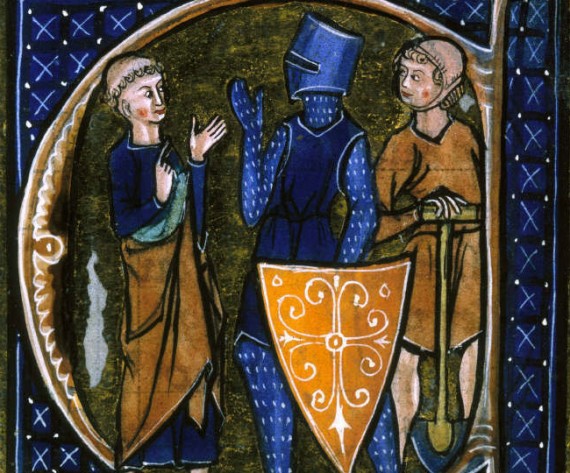
There's the Hindu caste system. Where everybody is divided into castes based upon what you do. And then a bewildering array of sub castes. It's all rubbish of course but still exists I'm afraid. I read about how Dalits, the untouchables and lowest caste people were sold off as slaves by upper classes to the Dutch in the 18th century in India. Tragic. But it was curious to read how this kind of work/profession based societal classification and how it was in the Middle Ages in England and France eh? It took a revolution to remove it in France. You still have it in England but hopefully the class based society will get removed soon without a revolution. Have a lovely day kids. Love Baba Those who pray, those who work, those who fight - Medievalists.net http://www.medievalists.net/2016/01/31/those-who-pray-those-who-work-those-who-fight/
(via Instapaper)
When people first start learning about the Middle Ages, one of the first concepts they are told was that medieval society was divided into three groups – those who pray, such as priests and monks; those who work, like farmers; and those who fight, the warrior class. How did this idea get started and what does it actually mean?
Cleric, Knight and Workman representing the three classes – from British Library Ms Sloane 2435, f.85 '
The concept of the three orders for society is not something you find in the Bible, or in classical sources. The closest thing that to it comes from the seventh-century encyclopedia writer Isidore of Seville, who makes a short reference to the Romans having divided themselves into three groups: senators, soldiers and plebeians.
It seems that our first reference to the idea of three orders comes from a curious source – an Old English translation of Boethius' The Consolation of Philosophy. This work was written by King Alfred the Great (probably with a team of scholars to help him) in the late-ninth century, and he often included his own commentary. It is here that you can find this statement: I wished for tools and resources for the task that I was commanded to accomplish, which was that I should virtuously and worthily guide and direct the authority which was entrusted to me. You know of course that no-one can make known any skill, nor direct and guide any enterprise, without tools and resources; a man cannot work on any enterprise without resources. In the case of the king, the resources and tools with which to rule are that he have his land fully manned; he must have praying men, fighting men and working men. You know also that without these tools no king may make his ability known. Another aspect of his resources is that he must have the means of support for his tools, the three classes of men.
In his article, "The 'Three Orders' of society in Anglo-Saxon England" Timothy Powell explains some of the thinking behind this statement: Alfred's formula is descriptive rather than prescriptive. He is not instructing the three orders in their duties, he is doing the reverse; he is meditating on his own duty to the effect that it is incumbent upon the king to ensure the three orders have the wherewithal they need to fulfil their functions. Alfred does not dwell on the theme; he mentions it as an aside. The point of the passage is not social commentary but a reflection on how he, King Alfred, should exercise his talents to ensure that his memory not be forgotten.
So to determine which religion is the strongest, subject the adherents to bench press experiments. I was laughing helplessly when i read this research paper. Only in India.
For the purpose of the study Two hundred ten (210) men from Buddhist monastery, Vaisanab and
Tantrik(seventy from each group), age ranged from 30 to 35 years were selected randomly as the
subject for the study from Uttar Pradesh, India. All the subjects belong to three different religion of
India. The subjects were categorized into three groups, namely group (A) Himalayan Buddhist (B)
Vaisanabs and (C) Tantriks. All the subjects chosen for the study had completed at least five years in
their respective religious field. To measure Upper Body Muscular Strength YMCA Bench Press Test
was used. To compare the significance difference in mean One-Way analysis of variance (ANOVA)
with LSD Post Hoc test was employed at 0.05 level of significance and it was found significant for all
the three groups. In Post Hoc compassion of bench press test Buddhist and Tantric, Buddhist and
Vaisanab and also Tantric and Vaisanab have significance differs among each other’s.
This thesis addresses how and why West African consumers, especially those along the
Senegal River valley, imported and consumed Indian cotton textiles from the eighteenth
to mid-nineteenth century, despite the fact that they produced textiles of various kinds.
Using quantitative and qualitative sources collected from France, India, Senegal and the
United Kingdom, the thesis fulfils this gap in the existing literature. Throughout this
study, it will be shown that local textile production and consumption in West Africa
based on factor endowments and natural environment shaped consumer demand and
preferences for Indian cotton textiles whose quality was perceived to be more suitable to
the life of inhabitants in the region (especially in the savannah and desert areas) than
European textiles. In addition, Indian textiles not only suited conspicuous consumption
among Africans but also regional economies in which cloth was used as an exchange
medium. In the eighteenth century, West African demand for Indian cotton textiles of
various types was central to the purchase by European merchants of slaves along coastal
areas of West Africa. In the early nineteenth century, which witnessed the transition
from the Atlantic slave trade to the trade in commercial agriculture, dark-blue cotton
textiles produced in Pondicherry, called ‘guinées’, were of essential importance in the
trade in gum Arabic in the lower Senegal River as a currency that replaced a
domestically-produced cloth currency. The gum from the region was indispensable in
the development of the textile industry in Western Europe at that time. This regional
demand influenced the Euro-West African trade and the procurements by Europeans of
cotton textiles in India. The thesis argues that historically constructed consumer agency
in pre-colonial West Africa had global repercussions from the eighteenth to midnineteenth
century.
Most fascinating story of Indian Ocean trade in textiles and interconnections with slavery
This was such an interesting article. If there is one thing which people get excited about, it's unfair discrimination. Whether it's on racial grounds or national origin or gender, this is a constant fight. The right to form groups is way gets in the way. That's why clubs and situations like the below happen. Religion kids, is one of the biggest sources of discrimination and that's why I hate it. Still a fascinating article on how the good fight for equal rights was fought in a little corner of India. Against the country which will end up doing the greatest for the rights of man. Kannu I'm referring to the Thomas Paine rights of man argument. :) Don't forget to book the fat crab today Kannu. Love both of you. Baba Cradle of democracy: When Pondicherry fought for the right to vote in 1789 http://scroll.in/article/805228/cradle-of-democracy-when-pondicherry-fought-for-the-right-to-vote-in-1789 (via Instapaper)
As Pondicherry prepares for legislative assembly elections this spring, it brings to mind a neglected anniversary: over 225 years have passed since residents of this former French colony first sought the right to vote.
Pondicherry is full of signs of France's colonial presence, which lasted from 1674 to 1954. Streets named after French officials, monuments to Indians who fought for France in the First World War, and the accents of French tourists who lounge in cafés all show that the heritage lives on.
A monument commemorates Pondicherrians who died in the First World War. Credit: Wikimedia Commons
But no monument acknowledges that Pondicherry was a cradle of Indian democracy, where Indians, facing off against an openly racist empire, first tried to participate in elections.
In the summer of 1789, the power of the French king collapsed and democratically-elected local governments sprouted across the French empire, including in Pondicherry. The white inhabitants of the colony, numbering only a few hundred (less than 2% of its total population), elected their own town government and excluded Indians from the elections. They claimed that the right to vote would be wasted on Indians, whom they described as too obsessed with caste prejudice to understand democracy. The French meant to have democracy all to themselves, while continuing to impose colonial rule on their Indian subjects.
Pondicherrians, however, not only understood the idea of equality, but were eager to put it into practice. Several communities pursued different kinds of political action to pressure the French government to recognise that Indians deserved the rights of citizenship.
Gandhi is an amazing man kids. As you grow up and learn more about him, you'll understand why he's so amazing. And frustrating as well. His achievements, his thoughts, his views all have frustrated me for so long. I'm slowly working my way through his collected works online. He was a prolific writer and speaker. His collected works span more than 100 volumes. Four times that of an encyclopaedia Brittanica. Voracious reader and an encyclical genius.
But I digress. This is about time. Time is the biggest enemy of mine. And my biggest friend at the same time. In work, I pride myself on being able to fix business. Or deliver things. This depends upon three things. The amount of work to be done. The amount of resources (money, people, technology) and the amount of time that I have. The first two I can change but one thing which I cannot is time. I can never recover any time. That's why it's my biggest enemy.
But it's my friend as well kids. One of the advantages of believing in the Hindu philosophy means that I'm not restricted by normal lifetimes but on multiple lifetimes. One benefit is that I don't fear death.
But timekeeping is vital kids. We have to be on time. It's the greatest form of respect to others and to yourself. We have so much left to do that needlessly wasting time is bleah. Bear in mind that this isn't meaning that you have to be on the go all the time son. Sitting and reading a book. Observing a sunrise. Sitting and talking to a friend are all things you want to do. But not waste time.
Think of your life as a suitcase. You have a choice of just throwing things into it. Or being organised and managing to fit in the tiniest sock and tie into a nook and cranny. (Btw I'm useless at packing) but life is like that. You want a full suitcase when you check out? Or an empty one which is disorganised?
Finally, if you ask me, baba how do I know if I'm wasting time? Think back on anything that you did that didn't excite you. Or raised a smile. Or made you happy. Anything of those times indicate that you wasted that time. One learns.
But in the meantime, be punctual. Respect yourself and others to be on time.
It's kannu's special day today. And I still remember the wonderful day when he was born and I held him in my arms. That tiny little child cradled in my arms. Blinking slowly up at me. And the most joyous time of my life began. Which doubled when Diya was born. Time well spent :)
The watch never left his side. It was the first thing Gandhi reached for when he rose each morning at 4 a.m., and the last thing he checked before going to bed, often past midnight. He consulted it frequently through the day so as never to be late for an appointment. And, at that final moment, when three bullets from an assassin’s Beretta knocked him over, his 78-year-old body slumped to the ground, and the watch also stopped.
Mahatma Gandhi’s Ingersoll pocket watch, costing just a dollar, was among the handful of material possessions he owned. Since he didn’t have a pocket to carry it in, he attached the watch to his dhoti with a safety pin and a loop of khadi string. The Ingersoll is displayed in a glass case at the National Gandhi Museum in New Delhi alongside his bloodstained dhoti and shawl. Together, the three items form a striking metaphor of Kala, the Hindu god of time who is also the god of death.
Gandhi’s legendary punctuality had a utilitarian imperative—without it he would never have been able to answer the sacks of letters and streams of visitors that demanded his attention each day. But, as with everything he valued, it had a moral imperative as well. Simply put, time was tied to his philosophy of trusteeship: the belief that just as we do not own our wealth but are trustees of it—and thus have to use it wisely—similarly, we are trustees of our time. “You may not waste a grain of rice or a scrap of paper, and similarly a minute of your time,” he wrote. “It is not ours. It belongs to the nation and we are trustees for the use of it.” Consequently, any abuse of time was unethical. “One who does less than he can is a thief,” he wrote to a friend. “If we keep a timetable we can save ourselves from the last-mentioned sin indulged in even unconsciously.” While this focus on punctuality may portray Gandhi as skittish and anxious, the opposite was true: a timetable allowed him to give the issue at hand his tranquil and undivided attention.
This is the trip I was talking about. Sometime we have to go to Indonesia Java Thailand Burma Cambodia and Vietnam to see the history of the Hindu and Buddhist kingdoms and the architecture/statue art they left behind. It's not a holiday as lying in the beach and vegetating but this is exciting as well. Can you imagine walking in the footsteps of our ancestors? Their dreams and prayers. Their joys and sorrows.
One day when I grow up, I'm going to go to Afghanistan as well. Don't think I can take you too but it's a plan. And I'm planning the Antarctica trip. That should be violent and exciting :) so be prepared with your sea sickness pills :) I absolutely loved Galapagos. It was a holiday and trip which was absolutely bonkers. We need to do more of that.
an exhibition at the Metropolitan Museum of Art, New York City, April 14–July 27, 2014
Bridgeman Images A tower at the Ta Prohm temple, founded by the Khmer king Jayavarman VII, Angkor, Cambodia, late twelfth–early thirteenth centuries
“People of distant places with diverse customs,” wrote a Chinese Buddhist monk in the mid-seventh century, “generally designate the land that they admire as India.”
Xuanzang was a scholar, traveler, and translator. When he wrote these words in the seventh century, he had just returned from an epic seventeen-year, six-thousand-mile overland pilgrimage and manuscript-gathering expedition to the great Indian centers of Buddhist learning. Buddhism by then had been the established religion of most of South and Central Asia since it was taken up by Emperor Ashoka in the third century BC, around three hundred years after the Buddha’s death in northern India. The account Xuanzang wrote of his journey, Buddhist Record of the Western World, makes it clear that the places he passed through from western China to the Hindu Kush were then very largely dominated by Indic ideas, languages, and religions.
I recently saw this painting last Friday at the Tate Britain at the artist and empire exhibition, son. And I kept looking at it. It's an extraordinary painting not least because the painter has captured the Royal imperial state of all the three girls but also the hugely expensive and rich golden ornaments. I was quite taken by the girls.
But then I read the background to the painting and it was even more interesting. Smallpox is a terrible terrible disease son. It used to kill indiscriminately across vast swathes of the world and those it soared, it would disfigured them horrendously. Look up the wiki entry for smallpox and you'll see why it's such a terrible disease.
So it was good to read that the Brits actually tried to do something about smallpox. And these girls were obviously brave to sit for the painting as well as take the vaccination. Bravo!
Alfred Davey, Bedford, his sale in these rooms, 29th January 1930, lot 58 (as by Zoffany) bt. by the father of the present owner
Exhibited
Victorian and Albert Museum, India Observed, India as viewed by British Artists1760-1860, 1982, no. 22; Fitzwilliam Museum, Cambridge, In the Public Eye, 1991, no. 95, fig.1
Literature
Mildred Archer, India and British Portraiture, 1770-1825, 1979, p. 204, plate 126; Nigel Chancellor, 'A Picture of Health: The Dilemma of Gender and Status in the Iconography of Empire', Modern Asian Studies, Vol. 35, 2001, pp. 769-782
Catalogue Note
This important portrait showing three Royal women from the Court of Mysore in Southern India was painted by Thomas Hickey in circa. 1805. Not only is it one of the finest portraits of an Indian subject by a Western artist during the period of British rule, but it also shows a remarkable understanding of the sitters and of classical Indian symbolism.
Hickey was unusual amongst the British artists who went to India to find work in that he can almost be said to have adopted India as his own country. His initial attempt to reach Calcutta failed as his vessel was captured in August 1780 by the French and Spanish fleets. Hickey made the best of his predicament by settling for a few years in Lisbon, where he found plenty of demand for his work as a portrait painter. His namesake, William Hickey noted that he 'had painted most of the English ladies and gentlemen and was then engaged upon the portraits of several Portuguese of rank'. Notable amongst his sitters was the Bengal Court Servant, John George Livius, who was painted in 1782 on his way back from India. Hickey finally reached Calcutta in 1784.
His neatly painted, small scale portraits of British officers soon proved popular, but particularly notable was Hickey's extraordinary ability to paint native sitters with particular sympathy and understanding. In Laurence Sullivan and his ayah of c. 1785 (Henderson Collection), the beautiful young Ayah is painted with particular subtlety, and the Indian Lady of 1787 (National Gallery of Ireland, Dublin) probably depicts Jemdanee, the bibi of his friend, William Hickey, who is shown to be a woman of rare beauty. Most of Hickey's final years in India were spent in Madras and the first important work which he did there was to paint a series of portraits of Indian princes and courtiers, including Krishnaraja Wadiyar III, the young Raja of Mysore and the wiley Purniya, his Brahmin chief minister. In 1804 Hickey submitted a memorandum suggesting that he should be made 'historical portrait painter to the Hon. East India Company', apparently in response to a wish by the company that information he provided by the various Presidencies to assist with 'a general History of the British affairs in the East Indies'.
It is in this context that Hickey painted this masterpiece. When it was first acquired in 1930 the sitters were described as 'India Princesses' and the picture was said to have been painted by Zoffany, undoubtedly the most celebrated of the Western artists who settled in India to ply their trade. In her important book on India and British Portraiture published in 1979, Dr Mildred Archer correctly reattributed the portrait to Hickey and suggested that the rich jewellery and the composition of this intimate portrait meant that they were 'either temple dancing-girls or experienced courtesans'.
In 1999 the portrait was lent to a loan exhibition at the FitzWilliam Museum in Cambridge where it was seen by Dr Nigel Chancellor who published in 2001 some interesting and thought-provoking theories about the portrait which makes it clear that it has considerably greater significance than had first appeared.
Dr Chancellor pointed out that the assumption that three such ladies with such sumptuous jewellery and such apparent self confidence had to be courtesans was a common, conventional European assessment. Portraits of well born ladies were understandably rare as most would be married and thus confined to purdah, and there would certainly have been a resistance to showing such women as wives from a polygamous society. However the lack of a temple and the failure of the artist to depict the sitter's lower limbs and feet made the idea that they were 'temple dancing girls' highly unlikely – Tilly Kettle's well known picture of An Indian Dancing Girl with a Hookah was an altogether different subject. The opulent jewellery on closer inspection led away from the idea that the ladies were courtesans. The heavy gold sleeve bangles were, as Dr Chancellor points out, one of the defining emblems for women of the Arasu royal clan, and the splendid head-dresses with their distinctive triangular patta on the foreheads established the women as pattaranis or queens who have been crowned as wives of a Raja. The woman on the right of the group is shown with prominent crescent moons on one side of the central band of her head-dress, a reference to the mythical origins of the Mysore Wadiyars (the ancient Hindu dynasty recently restored to power by the British). Dr Chancellor concludes that the portrait probably includes two Mysorean queens, the lady on the left being Rani Devajammani, the Raja's senior wife, and the lady on the right Devajammani of Lakshmivilas Sannidhana, the junior queen who was close in age to the young Raja. The more relaxed lady in the centre resembles Hickey's portrait of the young Raja mentioned earlier and is probably one of the Raja's royal sisters.
The existence of such a rare portrait is explained by the arrival in India at the beginning of the century of the first vaccines against smallpox. Lord William Bentinck, governor of Madras, was anxious to promote its benefits and Mark Wilkes, Resident at the Court of Mysore, was instructed to do all he could to persuade people of its benefits. He was supported by the Raja's minister, Purnaiya (whom Hickey had painted) and most importantly, by Rami Lakshmi Ammani, queen of the old Wadiyar ruler of Mysore and grandmother of the Raja's senior queen. As her husband had died of smallpox she was particularly keen to support vaccination. All this coincided with the betrothal of the young Devajammani, a girl without the dreaded disease, to the young Raja. Her willingness to have the new vaccine was announced in Madras in July 1806. In Hickey's portrait not only is she shown in a white sari with a beautiful unblemished complexion, but she is holding her sari to present her left arm and the sleeve of her bodice indication where the vaccine would be performed, something which a European doctor could do without compromising the modesty of an Indian woman.
This painting would appear to be in generally very good condition. The canvas has been lined. However, there are no apparent tears or damages, and the work would appear to be in good structural condition. There is some craquelure to the paint surface, but this is characteristic for a painting of this age. There is some good remaining impasto on the sitters' jewellery. Examination under ultraviolet light reveals a thick varnish which obscures a clear reading. However, there would appear to be some evidence of a couple of minor areas of retouching in the lower right hand corner of the composition, as well as some retouchings to the edges of the canvas. There is evidence of some older retouchings in the sitters' costumes, but the varnish layer is uneven and hard to penetrate. Held in a plaster gilt and wood frame. "In response to your inquiry, we are pleased to provide you with a general report of the condition of the property described above. Since we are not professional conservators or restorers, we urge you to consult with a restorer or conservator of your choice who will be better able to provide a detailed, professional report. Prospective buyers should inspect each lot to satisfy themselves as to condition and must understand that any statement made by Sotheby's is merely a subjective, qualified opinion. Prospective buyers should also refer to any Important Notices regarding this sale, which are printed in the Sale Catalogue. NOTWITHSTANDING THIS REPORT OR ANY DISCUSSIONS CONCERNING A LOT, ALL LOTS ARE OFFERED AND SOLD AS IS" IN ACCORDANCE WITH THE CONDITIONS OF BUSINESS PRINTED IN THE SALE CATALOGUE."
For people who think history is boring, it frequently comes as a surprise that its like nailing jelly to the wall. It's constantly changing as new facts come to the fore. New interpretations are postulated. New beliefs are promulgated. Sometimes this is ok. Sometimes this gets people very excited. Specially when one talks about religious texts.
The books we think are immutable like the Talmud bible Quran Ramayana and single versions of truth for all times are anything but. They have constantly changed. In layers. They are like clouds. They do exist but their shapes and sizes keeps on changing.
That's why be suspicious whenever anybody says that this is the absolute truth. As an educated man, you will know that nothing is absolute in this world.
I have been wondering about a long-running controversy in Indian textual studies as to the relative merits of analyzing a given textual tradition either ‘into layers’ or ‘as a whole’. I am sure that these two things mean little to someone not in the business of analyzing pre-modern texts, but it is an important issue for our project as, more and more, scholars are identifying with one or the other camp. Beyond this, the issue of how scholars approach religious texts is, in particular, an important one. Questions concerning the historical origin and development of the canonical texts of Christians, Muslims, Jews, Hindus and Buddhists, to name only the most prominent religious traditions, are both contentious and important (and not just to academics). Before I begin my ruminations, I suspect it might be useful for me to say precisely what I mean by analyzing sources ‘into layers’ (by which I refer to textual criticism) or ‘as a whole’ (which I call textual analysis).
The analysis of texts into ‘layers’ involves the examination of the available manuscripts of a given textual tradition to see which parts of it came first and which later. There are quite complex ‘rules’ about how to compare manuscripts with one another, but the basic principle is simple: one finds similarities and differences between manuscripts and consider why they might be there. This is the main business of textual criticism. The practice of textual criticism is also often extended to include educated guesswork as to the development of a given text before we have direct manuscript evidence for it (this is very important in Indian Studies, where there is little manuscript evidence before the latter part of the first millennium CE). This sort of guesswork is often based on the idea that one style of writing (or speaking) might be earlier than another one, or that the presence or absence of words borrowed from other languages is significant. Scholars also look for relationships between different texts (especially if we have more reliable dates for some of them). In Indian Studies, for example, there are a considerable number of Chinese versions of Buddhist texts for which we have reliable dates. This can help us, even if only tentatively, to say something about the date of non-Buddhist sources that have something in common with the Buddhist ones. Scholars also make use of corroborating historical data, such as literature or material culture. They even use their own ideas about the order of development of ideology and practices in India to suggest the presence, or absence, of ‘layers’ of composition in a given text. This might be described as the use of educated guesswork from one area to inform educated guesswork in another! Whatever the precise method, the goal is a constant: the re-construction of the history of the development of a given text.
Quite an extraordinary book. Translated in 1873 by that indophile Richard Burton, it gives a fascinating insight into how the 15th/16th century Hindu viewed marriage and physical love. What makes this book even more fascinating is that it's conjoined with the symposium of Plato. I've never read the latter although I have read the Ananga Ranga many moons back.
The symposium of Plato is a record of an evening in Athens where Socrates and a group of friends, after dinner are lying about on the couches and each is expected to speak about love. And you get the most amazing and exquisite declarations of love. Ranging from the love of God to love of woman to love of a man. Fascinating.
And then Ananga Ranga. It's a book for men. And I love it's lists. Lists of how you should use nails on a woman. Lists of where you can't make love. Lists of how to stroke hair. Lists of how vaginas are. Lists of how skin is. Lists of spells. Lists of potions. Lists of penises. Lists of personality types. Lists of lists. It goes on and on.
Before you think that this is a licentious charter it isn't. It's meant for a man who wants to be with one woman but allows him to know of techniques and knowledge which can ensure the man has 32 women in one. So if you want to be a good lover, definitely read it. And for heavens sake, don't try out any of the potions. They will kill you.
The notes by Richard Burton are fascinating as well. Gives an indication of what people in the 1890's used to think of India. It's a bit shocking to read now but yes.
Here are two articles. The first one is about a woman in India. It's a short story about her life. If you read the article you'll see it's very unemotional. And that's what really hits you. The girl went through problems which would have laid me flat on my back. I don't think I could have done what she did. That's what happens when you aren't careful with money or save kids. You live on the thin edge. And even a tiny problem can really screw up your life. Never kids. Never let yourself get out of the habit of savings. Ever. That's your cushion. Of course we are there to help you out if you need but we wouldn't be there all the time.
And then the second article is more generic. It's about waste management. Human civilisation is throwing out waste like crazy and we will have to pay the price. Heck. We have to pay £79 per year to the council just to take away the sodding garden waste. Stupid or what? I can take care of the waste myself and save a ton.
We are facing a giant problem there and we need to sort it out.
Looking forward to seeing kannu tomorrow and to have fun with you Diya.
My mother left me in Bangalore under the care of my uncle. He worked in a Government office. Later, he asked my family to move to Bangalore as there are more employment opportunities in the city. He managed to get us a hut to stay. My family shifted here but we didn't have any money to buy food, to eat one has to earn. I was 7 or 8 years old then and I was the eldest amongst all my siblings. We picked vegetables from river side and sold it for Rs.7 or 8 and with that I purchased dal (pulses) and rice.
I started work as an incense stick maker. I was able to buy 2 kilos of flour by rolling 4000 "battis" or incense sticks. Paid INR 20 daily, that was the only money which my family was getting.
One day a man approached me, and told me that instead of working so hard, for nothing, join my plastic factory. Initially I was skeptical as I did not know sorting and the types of materials. He challenged me by saying that I can do it. And thinking of my family, I decided to take it up… I was quick at work, and the money was decent. Things improved.
Soon after my mother contracted TB and fell very sick. We had to admit her for 3 months in the hospital. My father at that time was not working. I went to the owner and agreed to do the work of three people. He paid for my mother's treatment. I earned 600 /- and my siblings too dropped out of school. They began helping in the plastic factory and that way we supported the family.
Two to three times, our hut was burned down by the government officials, because we were living there illegally on government land. When we first came here, the hut we lived in was built of mud and leaves it was easy for it to catch fire.
Water was scarce and we had to walk two miles for it. There was no electricity and the toilet was common and out in the open. We had to go find logs to flame for cooking. I was just 8 years old and working harder. The water we used for drinking was toxic. Dead people were thrown in the place where we used to go for fetching water. A lot of people were murdered there. Earlier, people were scared of coming to Nayandahalli because of the reputation.
I was married when my mother fell sick, as that was her wish. My husband was drunkard and not at all nice to me. He made me abort four of my children and looked at women in a very wrong way. I had no say in all of this.
I have 2 children, of 12 and 8 years of age, and I want them to succeed in life. I am happy now. I have admitted them into an English medium school for that very reason. My brother and sister are married and they are leading good lives. Now, my only wish is to see my children get out of this squalor we are living in, and lead a respectable life. People speak to me with respect, seeing the amount I worked for my age.
The post here is a part of the Notes from Nayandahalliseries and is a reflection of an ongoing study supported by Indian Institute for Human Settlements and WIPRO Cares.You can find the previous posts here… Post 1, Post 2, Post 3, Post 4, Post 5 and Post 6.
You can listen to the audio of the interview. It is in Dakhani.
Interviewer: Usha
Transcribed by Pinky Chandran & Ashwini Raj
Audio interview edited by Usha
Notes from Nayandahalli
Shreyas Sreenath*
"Often, in the red light of a street-lamp Of which the wind whips the flame and worries the glass, In the heart of some old suburb, muddy labyrinth, Where humanity crawls in a seething ferment,
One sees a rag-picker go by, shaking his head, Stumbling, bumping against the walls like a poet, And, with no thought of the stool-pigeons, his subjects, He pours out his whole heart in grandiose projects."
–Charles Baudelaire, from Fleurs du Mal (1985, trans. by William Aggeler)
You arrive at the Nayandahalli bus stop to encounter a swirl of dust and unearthed soil. Standing on the Outer Ring Road, your gaze promptly turns from the construction below to the remarkable Mysore Road flyover, zipping above you without a pause to connect the heart of the city to Ramanagara and Mysore. Right beside is another overpass, this one being the new metro line that is scheduled to connect the Bangalore University area to Vijayanagara, and then onto Majestic, the city's central transportation hub. One could easily mistake the turbulent waters rushing below, thick in viscosity, striking in its dark greens and iridescent greys, and emitting a deeply pungent aroma, for one of Bangalore's many open sewers. It is only upon further inquiry that you realize that this is the Vrishabawathi River, a tributary of the Arakavati. A river which, after sustained intake of domestic and industrial waste, has acquired a distinctly man-made quality. Nestled underneath a city consumed by vertical and horizontal growth, Nayandahalli is one of many small towns and gullies that people pass by while traveling on main roads, bridges, and flyovers. One seldom notes their existence; these are places subsumed by greater Bangalore's growth, appearing awkward and anachronistic in its midst. However, their very existence indicates that they occupy a key strategic position in the city's developmental aspirations, as areas responsible for managing the tremendous debris produced as a natural consequence of human progress. From the 19th century rubbish heaps north of London described so vividly in Dickens' Our Mutual Friend,to more recent examples such as the Thilafushi Island in the Maldives or the Zabbaleen settlements in Cairo, communities that extract value from waste have played a crucial role in recycling urban debris into material used for further growth. Their work has often gone unacknowledged, even if their actions have proven politically decisive.
The relationship that a society has with its wastes can reveal much about the circumstances of its past and present making, as well as indicate broad outlines of its future direction. Nayandahalli, as one of Bangalore's main hubs for plastic, metal, paper, and cloth recycling, is one such indicator, a yardstick that epitomizes the relationship Bangalore has with its detritusandwith its own material becoming. Tucked away in dusty corners, underneath flyovers and metro rails, it is physical evidence of the strained relationship that a city, in a moment of technophilia, has with the vast matter it leaves behind, substances with dormant value, regularly drawn upon for the continuation of urban life. It is a relationship that subdues communities that engage in waste work, the work of putting materials into reuse, through active forgetting.Over the course of our interviews with various recyclers, I am struck by how sharply this sentiment is articulated by the various waste segregators, haulers, and godown operators. "Land," says Fatima, "is the most important thing for all of us." A local activist, she comes from a family of scrap dealers.[1]Her husband, Sameer, drives a truck transporting scrap plastic to and from various godowns across the city. "Nayandahalli is filled with hundreds of godowns that constantly have to move about," she elaborated, "because in one way or another, we are all renters. Often, our godowns are rented and so are our dwellings." Fatima explained how, for rentiers, recyclers are never the first priority, especially in the midst of a booming Bangalore property market and rising rent prices. Echoing many others, she cited instances of being chastised by rentiers or neighbors for putting scrap material out in the field for loading, where it was visible for passersby. "Moreover, the haulers and segregators themselves have no place to go back to, they often sleep right in the godown, fearing for their security" she remarked, pointing to the conditions of the workers. Waste work is tolerated only when it is out of sight and out of mind.
Picture Courtesy: Pinky Chandran
Sameer and Fatima take us to an open stretch of land underneath the metro station, on the banks of the Vrishabawathi, where around ten godowns are situated. There we meet Ahmed Pasha, a Godown operator who has formed an association with his colleagues to lobby for political and legal recognition. "We were all situated further in the city," he says, "but when the houses started coming up, it became harder for us to move our materials around." When we ask who owns the property now, he laughs and points to the tea seller's shop next to the godown. "We'll see how long we can stay here", he remarks, turning his gaze to the unfinished metro line above.
Ahmed Pasha and his colleagues are keenly aware of the political and economic processes that delegitimize waste work. For example, a recurring problem faced by godown operators is with tax personnel who seize unsorted waste, fining godown operators upwards of Rs. 1000 when they cannot produce a bill of purchase. That is in addition to the regular bribes one pays to the police for not having professional identification. "In our old neighborhood," states Ahmed Pasha, "we didn't feel so much like outsiders.Here, we need licenses to appear legitimate". In a strange twist of fate, recyclates generate much value for public coffers even in their criminalized form. Waste, to paraphrase theorist Michael Thompson (Thompson 1979), is never simply 'dead weight'; rather, it is that in-between space that allows for one form of value to disintegrate and a new form to be born.
Recycling is paradoxical in that the further one goes down the value chain, the finer and more intricate the valuation process becomes. Here, materials become more intertwined and complex in form.Weighing scales can misguide as much as they measure, since much low value materials have a tendency to soak up moisture as well as mix with forms of biodegradable material. In plastic, lower value material often comes in darker colors, mixed with impurities such as soil or other plastic, making them more brittle and tougher to melt down. An example of this is what the recyclers in Bangalore call the 'kadak' variety of plastic—even here, 'pani-kadak', which is clearer, is more valued than 'kala-kadak', a black or brownish variety.
We meet Badri, who deals primarily in such low value recyclates, at his godown, located on an empty rented lot in a swiftly developing housing bloc. Along with medical waste and small plastic widgets, the godown houses piles of outmoded electronics, such as BSNL land-line telephones, keyboards, ball-based computer mice, as well as rubber coils, CD's, hard plastic motor casings—discarded 'state of the art' technologies of Bangalore's yesteryear, awaiting redemption and re-evaluation. Badri picks out a soiled PVC pipe with an intricate metal and cloth lining that acts as a supportive buttress for the brittle plastic. He says, "to sell this, I have to pick apart the cloth, metal, and plastic. The categories of material that I work with range in the hundreds, each with their market price." After speaking with the segregators at his godown, it is clear that the work takes months to learn, over a period where an individual has to attain the skill of multi-sensory discernment. Some plastics are differentiated upon touch, others have to be broken and smelled, and some dropped or knocked on to bring out a particular sound.
The lower down the waste value chain one goes, the more contested certain political, economic, and social relationships become. Badri explains how his landlord was more than happy to have him set up shop when the housing bloc was still undeveloped. At a time of low growth, his operation served a dual function for his rentier. Not only was his godown a constant source of rent, the hustle and bustle of the godown provided also provided cheap security from those seeking to encroach on the property. In addition to increased rents—Badri approximated that his rent had increased ten-fold—development often brings increased harassment from landlords and neighbors. "When we hosted a health clinic sponsored by a local organization for recyclers," he said, "the landlord told us that he had received complaints from neighbors about suspicious people roaming about on the property. He often threatens to rent out our space to a textile operation." Needlessly to say, segregation is dangerous work that, more often than not, brings ill health—flying glass and plastic shards, along with rusting metal and used medical supplies, are a common sight as workers hammer through materials. .
He recounts one incident when a theft had occurred at the godown. "The police had brought the suspects to the station", he notes, smiling in disbelief, "and had asked these characters why they hadn't stolen something more valuable, like gold. The officers quipped, 'if that was the case, we could have all gained something from this.'"By elaborating on some of the initial interviews we conducted, I have attempted to briefly highlight the substantial human energy and skill that is marshalled to make the vast piles of accumulated urban waste fit for reuse. But it has also been my intention to frame waste as an active material agent, and an invaluable source of value, one that shapes the way our cities function. It bears an imprint on our lives with or without our consent, or our awareness. If we are forced to think of waste, as we often do, as dormant and lifeless, if we are forced to forget its marks on our everyday existence, perhaps it is because of the particularly active role that certain parties play in political and economic subterfuge.
The work of Nayandahalli's recyclers demonstrates that the old adage "where there's muck there's brass" is self-evident. In the last instance, value is always derived from waste, one way or another.
*I would like to thank Malleswari Baddela, Kabir Arora, and Nalini Shekar from Hasiru Dala, as well as the recyclers and activists we spoke to in Nayandahalli, for their support and patience during these interviews. I also thank the Social Science Research Council for providing the research funds that made my field study possible.
The post here is a part of the Notes from Nayandahalliseries and is a reflection of an ongoing study supported by Indian Institute for Human Settlements.You can find the previous post here.
Works Cited
Thompson, M. 1979 Rubbish theory : the creation and destruction of value. Oxford ; New York: Oxford University Press.
[1] All names have been changed to protect the identity of the interviewees.
*Shreyas Sreenath is a graduate student in the Department of Anthropology at Emory University. He volunteers with Hasiru Dala whenever he is in India.
The post was earlier titled as "Thoughts on Informal Waste Economy and the Challenges Faced by its Workers"