There was this fascinating lecture which I attended this week delivered by Professor Hugh Williamson at the Anglo-Israel Archaeological Society at the British Museum.
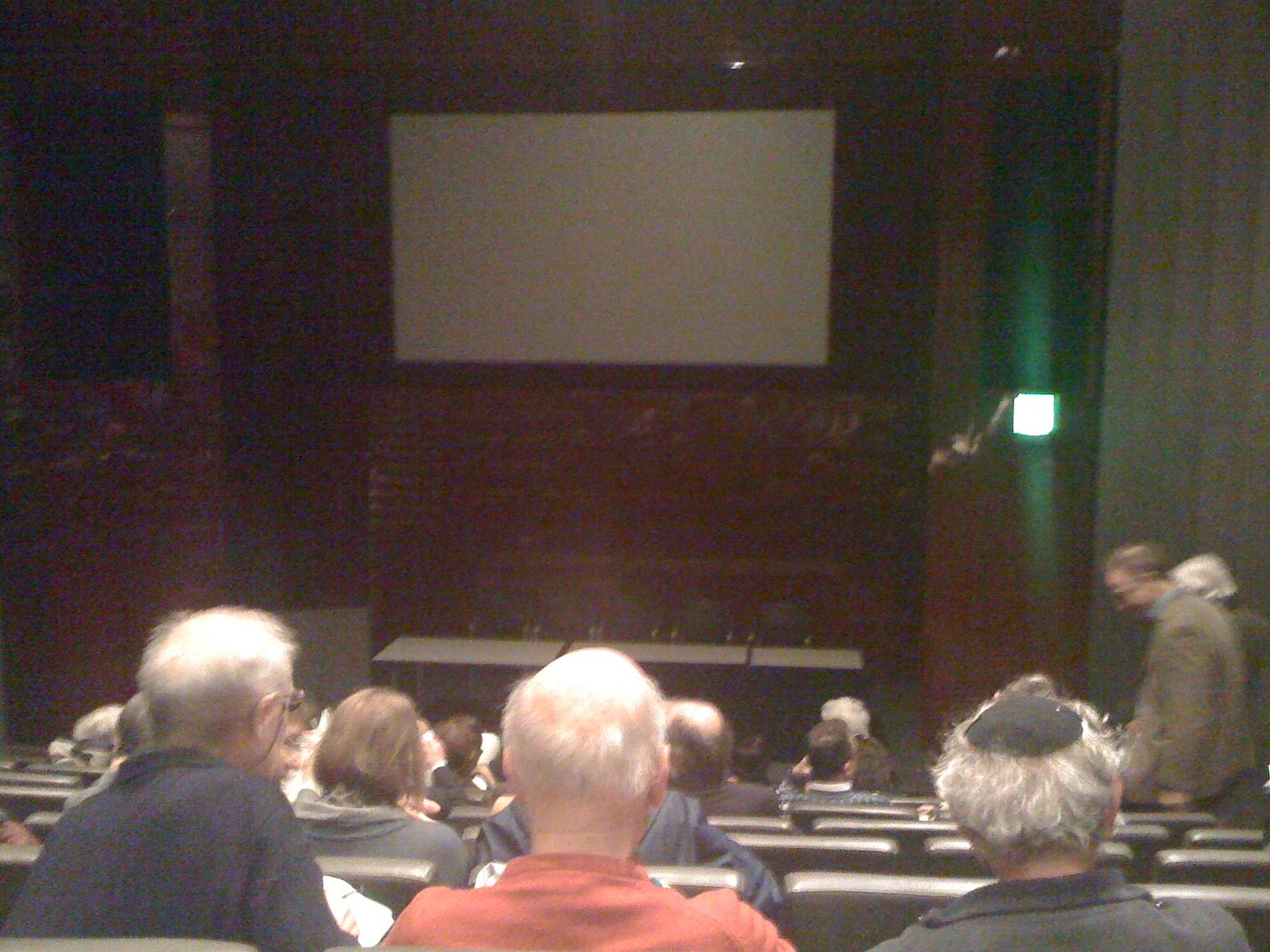
It was a fascinating lecture and I learnt so much about the Bible and Archaeology. It was full of professors, people with spectacular beards and corduroy wearing historians, archaeologists and other luminaries.
My contact with Archaeology goes back to Professor Shankar Tiwari who was the father of a close school friend of mine. His house was brilliant. It was full of statues, coins, reliefs, strange piquant smells from the chemicals he used, dogs, tons of books. It was a total chaotic house and I loved it. I loved the idea of going into the wild and finding out new things, digging up history. Here’s one report of what he had done. He used to spend patient hours explaining what he had found, the history of India and the local areas. I would say that my interest in history is heavily influenced by him. For example, he spent much time in Bhimbhekta. That area shows that man has inhabited those lands with a recorded history and evidence going back 100,000 years. Then you had Wilbur Smith’s Sunbird. As usual, I would get excited when I read about something that proves the Bible was right, for example around the issue of Noah’s Ark.
To cut a long story short, going around in places like Greece, Turkey, Italy, Egypt, India and Israel, you could see the places and remember what you have read in the religious, mythology and history books. Israel specially is gobsmacking. It perhaps has the highest density of historically important events per square meter than anywhere else in the world. Well, at least for the dead kings, generals and priests. Which is what Professor Williamson said. Once history is extended to the ordinary citizen, then the links between archaeology and the Bible become even more diffuse. But more on that later.
Chaim Herzog and Mordechai Gichon wrote a fascinating book on Battles of the Bible. It talks about the various battles fought in Israel down the ages and is a thoroughly good read. Comes highly recommended. The group talks about how archaeology influenced the study of history and vice versa. It liberally refers to the Bible. When I first read the book, it was, on the face of it, quite interesting. It confirmed my deep seated thought the bible’s descriptions are factual and rely significantly on archaeological finds to buttress its claims. And in case, I was reading it from the perspective of military history, strategy and military tactics. Here is a website which describes what I mean. But after this lecture, I went back to reread it and found there is less of corroboration than I originally thought. More woolly and light on evidence I am afraid.
For example, Professor Williamson clearly said, there is simply NO evidence about Abraham that we have found up till now. None. Zilch, Nada, Zero. But look at this page from the Bible Archaeology website. Read it to see there are suppositions, assumptions and propositions about Abraham. Evidence, none. He also said the prevailing view of Israel being populated by external invasions and migrations is not that accurate. It grew more organically rather than from invasion. He clearly said that while he isn't a professor of archaeology, he is a professor of Hebrew and has joined in archaeological digs in the Holy Land before.
Another example he quoted was that of Joshua. No evidence there were any walls or any town that supported those walls. He is supposed to have brought it down and there is supposed to be a war. No town, no walls, no fight, no archaeological evidence whatsoever. Not even of Joshua himself. Jericho was a tiny settlement of 2-3 houses then. Btw, do you know that Joshua is the patron saint of Spies? (amusing!). Here is a good link on this Joshua debate.
He showed some amazing photographs, but I simply couldn't take any good ones photos of my own with my little iPhone. One stone that he showed had Amharic writing about the existence of David engraved on it. This was found first, and then 2 additional fragments were found later on. Interestingly enough, the placement of the fragments against the main stone can change the point about David. I did not get hold of the details of the stone unfortunately so cannot report with some more facts on this.
History, historically speaking, is written for and about kings, generals and priests. Archaeology doesnt usually support the myths we have made up on them. Once we extend history, as is being done now, to the ordinary citizen, life becomes even more difficult for the people who are trying to establish facts to fit in what we see in the Bible. For example, he talked about pig bones were found in so many places and talked about the links with Jewish Dietary Laws and mentions in the Bible. Which brings into question the validity of the history of restrictions on pork eating.
So his point was simple, do not look at the bible as a history book. Look on it as a book of faith, a book of myths and stories, a book which is full of parables. It was written by people who collect memories and then mix it up with rumours, myths, politics, and so on and so forth. All religious books are like this, without exception. Leave archaeology alone.
Here’s another example of archaeologists themselves encouraging thoughts like this. I quote:
The remains of a small house that can be dated back to the time of Jesus have been found in the past days during excavation works in progress in Nazareth, guided by a team of Israeli archaeologists. According to the scientists, this is the first house from that era ever uncovered. The find was announced by professor Yardenna Alexandre, who leads the project on behalf of the Israel Antiquities Authority. She said that the remains have been dated back, with a small margin of error, to around 2000 years ago. "The discovery is of the utmost importance since it reveals for the very first time a house from the Jewish village of Nazareth. It sheds light on common life (in Palestine) in that era", underlines Alexandre in a press meeting. "The building that we found is small and modest and it is most likely typical of the dwellings in Nazareth in that period," the archaeologist added, suggesting that "Jesus and his childhood friends may have known this house". Alexandre pointed out that according to the little written evidence available, including the Gospel, Nazareth at the time was a small Jewish village, which seems to be confirmed by the recent find. "Until now" she specified, "a number of tombs from the time of Jesus were found in Nazareth, however no settlement remains had been discovered that were attributed to this period"
See what I mean? suppositions and assumptions. Jesus may have known this house. This kind of thinking is dangerous.
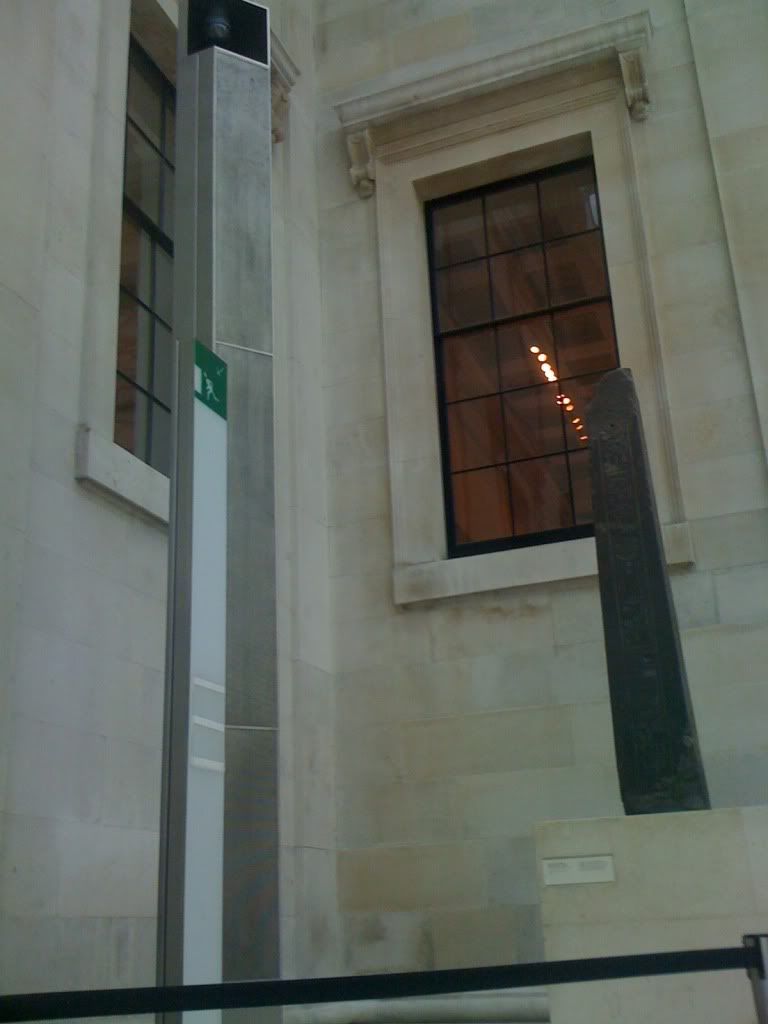
While coming out of the lecture, I noticed these three columns. The one on the right is an ancient Egyptian Stone Pillar of more than 3000 years old. Then you have a silvery lighting tower and finally an information white tower. One is a religious book, the other two are functional or factual. Mixing does not make sense, does it?

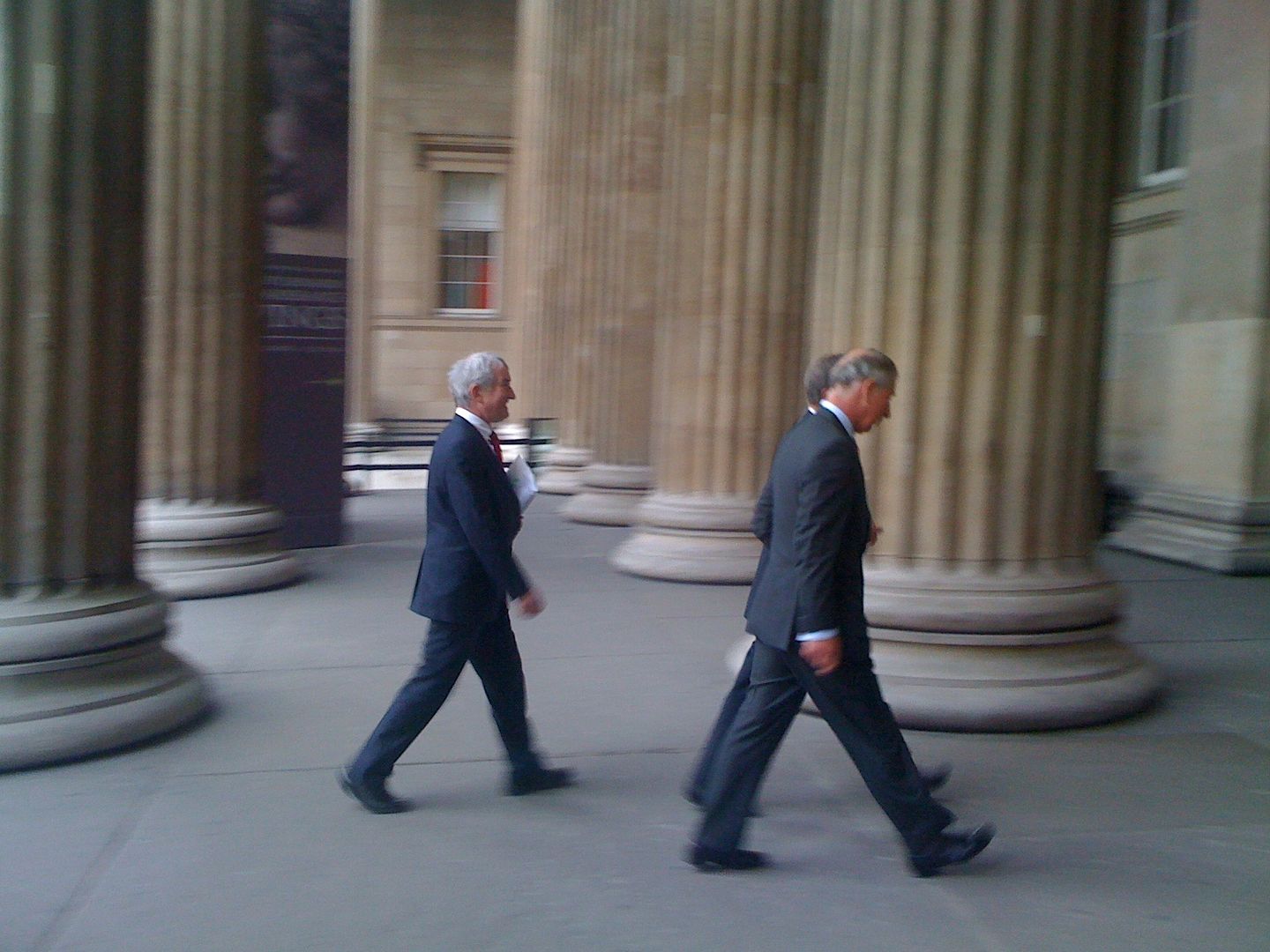
While exiting the British Museum, guess who I bumped into? One of the Kings (well, Prince Charles in this case) for whom history is written.