Showing posts with label Africa. Show all posts

Wednesday, December 9

Fear in the eyes


Can you see the eyes of this migrant who is hiding from the police? Under the car? In Mellila, which is an enclave of Spain on the coast of North Africa. These little enclaves are an historical oddity, left over from the days of colonialism and imperialism. 

And now they are the promised land. Land where African refugees flood into, trying to get into Europe. 

But those eyes. Fear. Totally fear filled eyes. 


Thursday, April 18

Why are women less democratic than men?

Curious, whilst I had heard that there is a clear and statistically significant difference in women versus men voters, I never really delved deeper into it. This paper gave some interesting learning points for me

    1. in developing countries women tend to exhibit less support for democracy than men
    2. the two sexes behave differently in politics, as they vote differently and do not implement the same policies
    3. The evidence for Sub-Saharan Africa indicates that, on average, 73 percent of men believe that democracy is preferable to any other kind of government, while only 65 percent of women agree with this statement
    4. It is well established that men and women vote differently, with women tending to support more left-wing parties;
    5. Three reasons have been put forward as explanations of gender differences in preferences for parties and policies: women’s greater risk aversion and the consequent desire for insurance; women’s lower incomes or expected incomes, for example following a prospective divorce, leading to support for redistribution; and a preference for social expenditures such as basic infrastructure (e.g. water supplies), health and education that impact the production of household goods, including children, on which women tend to specialize;
    6. Evidence for India shows that the type of public goods provided depends strongly on the gender of the local political leader, with female leaders investing more in goods linked to their own concerns, such as drinking water, and spending more in public health provision
    7. the work on corruption and gender has highlighted that females are less likely to be involved in corruption and in bribes and that increasing the share of females in the political arena and, more generally, social equality between men and women reduces the degree of corruption
    8. in countries with a sufficiently high level of the Human Development Index and political rights there is no significant difference in the replies of the two sexes. Such evidence implies that the observed gender gap in democratic support does not capture intrinsic differences in the preferences of men and women but rather that it is highly dependent on the economic and institutional climate in which women live
    9. An alternative hypothesis is that women’s lower support for democracy comes from the fact that democratic transitions are often associated with civil conflict. If women have a higher cost of conflict than men, then they are less likely to support democracy. Our analysis seems to point in this direction. When asked whether the country’s leader should be chosen through open elections, women respond yes as often as men. However, they are less likely to support party plurality and limits on re-election. It is possible that these two aspects are seen by women as sources of potential conflict and hence as the ’down side of democracy’, which would explain their replies to the broader question of whether they think democracy is the best possible regime

Very interesting results indeed. Not much to say other than transitions can really be challenging but it takes a long time for women to recover from transitions like this….something that can actually make their lives better – democracy – has lower support because of high transition costs..

Saturday, October 27

I never realised the aspect of internal brain drain

We know of the brain drain from emerging countries to the west but how about the internal brain drain aspects? fascinating angle and one which I didn't previously consider. Something to think about. I quote:

As a director of international programs at the University of Botswana for four years, I witnessed this indigenous African brain drain up close. Every year it seemed somebody from the law department was recruited to be a judge. I watched as nongovernmental organizations poached at least three of the best female academics for jobs within Botswana. For-profit universities, almost all foreign owned, regularly recruit local Ph.D.’s from the university to give them a local face. Foreign-owned businesses in Botswana are always on the lookout for faculty trained in business, science, and engineering. The government itself has not held back. It has cherry picked at least two of the university’s best administrators for top roles in education. Finally, a number of academics find that their services as consultants are so in demand that they can easily make a much better income as self-employed contractors than working at the university.

Further depleting academic staff at the university is a brain drain to South Africa. Every year at least one faculty member leaves for a very sizable pay raise to work at a university to the south. There is, however, one difference with the internal brain drain and the one to South Africa: Most of the university’s former faculty come back after a year or two. They find the social environment in South Africa much more conflicted and competitive. Also, they feel they are treated as foreigners rather than fellow Africans. And some are surprised that taxes are often higher than they expected. On the other hand, those who leave the university for jobs within Botswana almost never return to academe in any capacity.

Most discouraging is that those leaving are often among the best and brightest. They are creative, ambitious, often charismatic, and almost always top leaders. The result is that the full professor ranks at the university have very few locals and a sizable proportion of expatriates, particularly from other parts of Africa. Indeed, Botswana poaches extensively for senior talent from other African countries, many of whom are quite good as instructors and scholars. These African expatriates often remain in Botswana until retirement because the salaries are much better than what they could earn at home, even in the private sector. However, they usually do not identify with Botswana personally or professionally. Many provide little service to the institution in terms of committees, are not serious about mentoring junior colleagues from Botswana, and do not contribute to the local intellectual environment. So while the university may provoke a brain drain from its sister countries in Africa, it cannot replace the best and the brightest local scholars who have the energy and vision to propel both the institution and the nation forward. Moreover, the university often ends up paying more for these senior expatriates than it would have for the talented locals.

Sunday, July 3

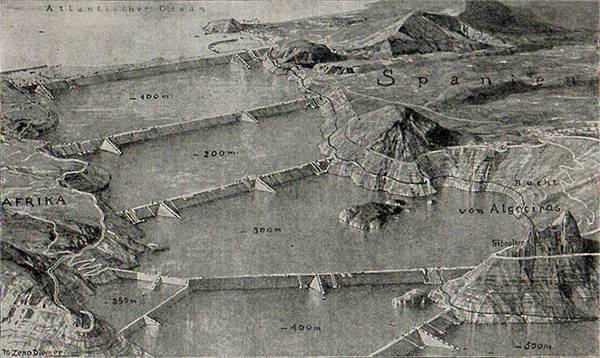
The Lintel Over the Pillars of Hercules

This is an idea to dam the pillars of Hercules and then combine Europe and Asia. Amazing. Well, Hercules was supposed to have created this gap after smashing the Atlas mountain thereby joining the Med and Atlantic. Or He narrowed the straits to stop monsters coming through.

But just imagine if this had been done and this fantastic structure created. Life in Europe and Africa would have been significantly different. Whether we are talking about the trade element or immigration or electricity generation or what have you. Mind you, there would have been some issues with the Suez canal and the Bosphorus/Black Sea.. Nice fun to imagine.. Smile

Thursday, December 30

Amusing take on U2 and Africa

From here. I quote:

An expert commission of African leaders today announced their plan for comprehensive reform of music band U2. Saying that U2’s rock had lost touch with its African roots, the commission called for urgent measures to halt U2’s slide towards impending crisis.

“Our youth today are imperiled by low quality music,” said Commission chairman Nelson Mandela. “We will be lending African musicians to U2 to try to refurbish their sound to satisfy the urgent and growing needs for diversionary entertainment at a time of crisis in the global music and financial sectors.”

Concerns about U2 have been growing in Africa for a while. One Western aid blogger testified to the Commission that his teenage kids found U2’s music “cheesy.” The Mandela Commission proposed that U2 follow a series of steps to recover its Edge:

1) Hire African consultants to analyze U2’s “poverty of music trap”

2) Prepare a Band-owned and Commission-approved Comprehensive U2 Reform Strategy Design (CURSD)

3) Undertake a rehabilitation tour of African capitals to field-test and ground-truth proposed reforms

4) Subject all songs to randomized experiments in which the effect on wellbeing of control and treatment groups is rigorously assessed.

Mandela expressed optimism that the Commission’s report and proposed reforms had come in time to stave off terminal crisis in U2, and restore its effectiveness in the 80s arena rock field.

Saturday, March 6

Four Ways Brain Drain out of Africa is a good thing

A thought provoking post. Also applies to other countries which heavily rely on human capital such as India, Pakistan, Philippines, etc.

Friday, February 6

Lets go to school

image

I just found the juxtaposition of an African irregular militiaman from some forgotten war wearing a back bag which says, “Lets go to School”. The irony was stabbing my eyes, I tell you.

Technorati Tags: ,


Quote of the day:
I know that you believe that you understood what you think I said, but I am not sure you realize that what you heard is not what I meant. - Robert McCloskey

Happiness is not a reward — it is a consequence. Suffering is not a punishment — it is a result.
--Robert Green Ingersoll

Sunday, June 8

A very interesting twist on immigration

Ok, so this is the model. You are, say an insurgent group, like Al Queda or something committed to overthrow the Saudi Royal Family. Al Queda currently takes help from various places such as Pakistan, UAE, Yemen, Sudan, Afghanistan etc. Say it did manage to overthrow the Al Saud's. Then Al Queda is now running Saudi Arabia.

But the Saudi's are upset that in the name of the Ummah, all these indigent and poor immigrants from Yemen, Sudan and Pakistan are taking away all the jobs and creating crime and mess and and and. So the Saudi's kick or try to kick all the immigrant population out.

But then Pakistan, UAE, Yemen, Sudan, Afghanistan etc. remind Saudi Arabia and Al Queda about the help they provided in overthrowing the Al Saud's and say, why are you mistreating our citizens in this manner? Far fetched? no its, not because the identical thing happened in South Africa. Here's the story. I quote snippets:

a spate of violence against immigrants, including Nigerians, reflected historical amnesia. Mr Yar’Adua has faced strong popular pressure to deliver a tough message to the South African government.........Images of foreigners burnt alive and beaten by lynch mobs have been circulating on the internet, fuelling outrage in countries that once welcomed South African fugitives from racial persecution and lent support to the African National Congress (ANC) in its days as a liberation movement.

Racial and ethnic violence against immigrants has a long history which I have intermittently explored here. And in the fullness of time, all are exposed to it, Whites in Zimbabwe, Blacks in South Africa, Jews and Muslims in Europe, and so on so forth.

But again, notice that Nigeria did not talk about the elephant in the room. Why the richest country in Africa has so many emigrants? Why have people emigrated from Mozambique? What made people leave in their millions from Zimbabwe? THAT is the bigger issue, those corrupt, thieving, cheating, robbing leaders. Dragging history into it is just hiding the issue.

Wednesday, March 26

African Union Troops help take back Anjouan

I am not sure how many of you know but there is a wee bit of a war going on in a tiny corner of the world in the Indian Ocean(See here for a bit of a background to this war). So some of the regional African heavies got together, threw their weight around, created an army and went to kick out the chaps who declared independence. Now this step was very interesting for so many reasons. But as usual, I had some stupid questions:


  • So this step was carried out without UN blessings. How many of the howlers at the Iraq war out there are howling equally at this imperialistic step? Speak up, guys, I cannot hear you loud and clear....

  • So this was a dump on a secessionist self determination exercise. How many of the secessionist self-determinist howlers are howling equally at this step? Hello? cant hear you..

  • So Anjouan declared independence. I must have missed the announcements of recognition by USA, Germany, UK etc. just like they did for Kosovo. Where are the police forces and aid convoys from the EU?

  • When is the African Union going to deal in a similar way with Congo, Zimbabwe, Darfur, Sudan, Somalia, Morocco, Western Sahara..?

  • Typically, Anjouan is the island which is most economically active and rich. So this is basically a fight over resources... basically, it was the people who do not have money who went to kick out the people who have money because the people who have money were refusing to pay the people without money....

  • The country was sent to the dogs by some exceedingly stupid economic policies of the state directed kind. Who will repair this and provide aid to fix these issues? The invasion has immediately mucked up the economics of that island for the next many years anyway. The only basis remaining is, whoops, we mucked up again, because of our political, economic and military policies, our people are AGAIN starving, please help with money, food, equipment.... (tens of coups since independence, welcome to paradise on earth...)....

Thinking about all these questions, the quote "is hammam me hum saab nange" (In this bathhouse we are all naked) comes to mind.

All this to be taken with a grain of piquant salt!!!

Sunday, November 18

African Values mucked up by Big Brother

I read this post and I was laughing my head off at the various responses around the globe. Apparently, the chap who won fell in love with a fellow room-mate, was possibly involved in a sexual assault in the house and he was newly married before he entered into the house. Well, the morality and nationalism police seems to have got all very excited about it all. And while I was reading this, I jotted down some African values that one can think of:

  • Theft is ok?
  • Corruption is part of nature?
  • Kleptocracy is a birth-right?
  • War is necessary?
  • Rape is a tool of social policy?
  • Everything can be blamed on imperialism?
  • Tolerate, use and ignore child soldiers?
  • Lack of capital and pathetic economy?
  • Think beetroot juice is a good cure for Aids?
  • Bad infrastructure and steadily getting worse?
  • Tribalism is good?
  • Religious fundamentalism is even better?
  • Rioting is a good way to draw attention?
  • Famine happens?

Unbelievable, its just a TV show, guys, stop moralising!

Technorati Tags:

Thursday, November 15

May these child torturers rot in hell!

Read this and weep, words fail me. And if you have the stomach, see the pictures here. How can you do this to your own children? Just how? I mean, they are such wonderful creatures, creatures to be loved, adored, cuddled and kissed. They are our future, you blithering morons, they are going to be our support, carry on our genes, take care of us. What stupidity!

African Crucible: Cast as Witches, Then Cast Out
By SHARON LaFRANIERE
UIGE, Angola — Domingos Pedro was only 12 years old when his father died. The passing was sudden; the cause was a mystery to doctors. But not to Domingos's relatives.
They gathered that afternoon in Domingos's mud-clay house, he said, seized him and bound his legs with rope. They tossed the rope over the house's rafters and hoisted him up until he was suspended headfirst over the hard dirt floor. Then they told him they would cut the rope if he did not confess to murdering his father.
"They were yelling, 'Witch! Witch!'" Domingos recalled, tears rolling down his face. "There were so many people all shouting at me at the same time."
Terrified, Domingos told them what they wanted to hear, but his relatives were not appeased. Ferraz Bulio, the neighborhood's traditional leader, said seven or eight captors were dragging Domingos down a dirt path to the river, apparently to drown him, when he intervened.
"They were slapping him and punching him," he said. "This is the way people react toward someone accused of witchcraft. There are lots of such cases."
Mr. Bulio is right. In parts of Angola, Congo and the Congo Republic, a surprising number of children are accused of being witches, and then are beaten, abused or abandoned. Child advocates estimate that thousands of children living in the streets of Kinshasa, Congo's capital, have been accused of witchcraft and cast out by their families, often as a rationale for not having to feed or care for them.
The officials in one northern Angolan town identified 432 street children who had been abandoned or abused after being called witches. A report last year by the government's National Institute for the Child and the United Nations Children's Fund described the number of children said to be witches as "massive."
The notion of child witches is not new here. It is a common belief in Angola's dominant Bantu culture that witches can communicate with the world of the dead and usurp or "eat" the life force of others, bringing their victims misfortune, illness and death. Adult witches are said to bewitch children by giving them food, then forcing them to reciprocate by sacrificing a family member.
But officials attribute the surge in persecutions of children to war — 27 years in Angola, ending in 2002, and near constant strife in Congo. The conflicts orphaned many children, while leaving other families intact but too destitute to feed themselves.
"The witches situation started when fathers became unable to care for the children," said Ana Silva, who is in charge of child protection for the children's institute. "So they started seeking any justification to expel them from the family."
Since then, she said, the phenomenon has followed poor migrants from the northern Angolan provinces of Uige and Zaire to the slums of the capital, Luanda.
Two recent cases horrified officials there. In June, Ms. Silva said, a Luanda mother blinded her 14-year-old daughter with bleach to try to rid her of evil visions. In August, a father injected battery acid into his 12-year-old son's stomach because he feared the boy was a witch, she said.
Angola's government has campaigned since 2000 to dispel notions about child witches, Ms. Silva said, but progress comes slowly. "We cannot change the belief that witches exist," she said. "Even the professional workers believe that witches exist."
Instead, her institute is trying to teach authority figures — police officers, teachers, religious leaders — that violence against children is never justified.
The Angolan city of Mbanza Congo, just 50 miles from the border with Congo, has blazed a trail. After a child accused of witchcraft was stabbed to death in 2000, provincial officials and Save the Children, the global charitable organization, rounded up 432 street children and reunited 380 of them with relatives, the witchcraft report stated.
Eleven fundamentalist churches were shut down because of reports of child exploitation and abuse. Eight Congolese pastors were deported. Villages formed committees to monitor children's rights. The authorities say the number of children who are abused or living on the streets dropped drastically.
Uige, about 100 miles to the south of Mbanza Congo, is another story. Surrounded by lush green hills, it is a cluster of mud-clay settlements around crumbling shops pockmarked by bullet holes. In this region, said Bishop Emilio Sumbelelo of St. Joseph's Catholic Church, persecution of children is rising.
"It is very, very, very common in the villages," he said. "We know that some children have been killed."
His church runs the town's only sanctuary for children victimized as witches, a shelter barely bigger than a three-car garage. Thirty-two boys, including Domingos, occupy bunk beds stacked a foot apart, their few clothes stashed in boxes underneath. No shelter exists for girls.
Since July, all newcomers have been turned away. "Children come here to ask for protection, but we have no space," the bishop said. "To date, we have not found any special way to fight against this phenomenon."
Many boys describe pasts of abuse, rejection and fear. Saldanha David Gomes, 18, who lived with his aunt until he was 12, said she turned on him after her 3-year-old daughter fell ill and died.
After, he said, his aunt refused to feed him and bound his hands and feet each night, fearing that he would take another victim.
A neighbor finally warned him to flee. "I am not a witch, and I was not a witch," Saldanha said. "But I had to run away because they were threatening to kill me."
Afonso García, 6, took the shelter's last empty cot in July. "I came here on my own because my father doesn't like me and I was not eating every day," he said matter-of-factly.
After Afonso's mother died three years ago, he moved in with his father. His stepmother, Antoinette Eduardo, said she began to suspect that he was a witch after neighborhood children reported that he had eaten a razor. Besides that, she said, "he was getting thinner and thinner, even though he was eating well."
Under questioning, she said, Afonso admitted that a male relative had visited him in his dreams, demanding that he kill a family member. Afonso denies ever confessing to witchcraft.
What unfolded next is typical of many cases here. Afonso's relatives turned to a traditional healer for a cure.
The healer, João Ginga, 30, wears a fur-collared leather jacket and works out of what he calls a hospital — a cramped mud-walled room. "If someone has a bad spirit, I can tell," he said one recent morning as clients waited on a bench. "We treat more than a thousand cases a year."
With such a busy trade, Mr. Ginga said, he could not remember Afonso's case. Afonso's aunt, Isabella Armando, said her family gave Mr. Ginga $270 in cash, candles, perfume and baby powder to treat Alfonso.
Mr. Ginga performed some rituals, put a substance in Afonso's eyes that made him sob in pain and pronounced him cured, she said. But Afonso's father and stepmother, the only relatives who could afford to care for him, did not agree, and expelled him from their household.
"I pitied him, and I still pity him because he was living in the streets," the stepmother explained. "But we were afraid."
Mr. Ginga is hardly the only healer here who claims to cure child witches. Sivi Munzemba said she exorcised possessed children by inserting a poultice of plants into their anuses, shaving their heads and sequestering them for two weeks in her house.
Moises Samuel, director of the provincial office of the children's institute, said he was concerned not only about traditional healers but also about a bevy of churches with soothsayers who claimed to exorcise evil spirits and drew crowds even on weekdays.
Once a soothsayer or healer brands a child a witch, child welfare specialists say, even the police often back away.
Officers kept Domingos, the boy who was suspended from a rafter, for one night at the station house, then sent him home, said Mr. Bulio, the settlement's traditional leader. They never investigated Domingos's uncle, who Mr. Bulio said led the attack.
"Of course it was a crime," Mr. Bulio said. "But because it is witchcraft, the police do not take any responsibility."
Domingos, now 15, insisted that he said he was a witch only to save his life. But even his 32-year-old mother, Maria Pedro, disbelieves him.
Ms. Pedro is obviously fond of Domingos, her oldest child. She beams over his academic progress and worries about further attacks by his relatives, should he leave the shelter.
Still, she said, she suspects that he was bewitched into murder. "It must be true because he himself confessed," she said, eyeing Domingos carefully across a table in her two-bedroom house.
At that, Domingos stood up and walked swiftly from the house. Ten minutes later, he reappeared in the doorway, his face red and splotchy. "Mother, from this day on, I am no longer your son," he declared fiercely.
Ms. Pedro wordlessly watched him go. "I just don't know why Domingos got so angry," she said later.


All this to be taken with a grain of piquant salt!!!

Saturday, November 3

And the children's cries goes unheard

I talked about the child soldier phenomena before. And it is still going on. See here. I quote:

Five female former child soldiers from Uganda came to the United Nations today to draw attention on the plight of the some 250,000 boys and girls who currently being used as child soldiers around the world.

Nearly a third of child soldiers in northern Uganda are female and women in conflict zones face gender-specific issues, such as rape and torture. Empowering Hands helps women who on average are aged between 20 and 25 and have been in the bush for six years. Many are kidnapped when they are still at school, yet they return to their communities with children of their own.

Tragic, and it is still going on!

Technorati Tags: , ,

Tuesday, October 23

Mozambique's former leader wins award

Now this is indeed good news mixed with a bit of sad as well. The good news is that Joaquim Chissano, the ex-President of Mozambique, has been awarded a Leadership award. This award is meant for people who come into power through elections and then hand over power to a freely elected successor. The good thing is that there is one person who was found worthy enough to win this award. The sad bit is that most of the rest of the lot are such a venal, thieving corrupt lot (and if they aren't venal, corrupt and thieving, they are simply stupid like Mbeki).

But hey, lets clutch at straws! I quote:

Kofi Annan, former UN secretary-general who chaired the selection panel and announced the winner, said this showed the continuing dynamism of a man who had become a role model for the continent, making peace with his own rebel adversaries in 1992 and going on to establish democracy and the beginnings of economic recovery.

"This remarkable reconciliation between opponents provides a shining example to the rest of the world and is testament to both his [Chissano's] strength of character and his leadership," Mr Annan said.

"His decision not to seek a third presidential term reinforced Mozambique's democratic maturity and demonstrated that institutions and the democratic process were more important than personalities," he added.

In 2005, Mr Chissano retired after 18 years with his reputation intact, making him a relative rarity among his African peers.

He was picked from a shortlist of 11 heads of state who stood or fell down in the past three years. More than half of them took power in coups and were therefore ineligible.

Mr Chissano cut his teeth in the war against Mozambique's Portuguese colonisers, becoming head of state when his predecessor died in an air crash in 1988.

Under his rule Mozambique went from being a Marxist, single-party state at war with itself, to a multi-party democracy, still among the world's poorest countries but at peace and with a free-wheeling economy among Africa's fastest growing.

Technorati Tags: , , ,

Monday, October 8

Better management of foodstocks will lead to less famine!

Ethiopia is a country which is in the news for all the wrong reasons. If it is not war then its famine. But now the country is embarking on a remarkable exercise, to implement a commodities exchange which will allow for better price formation, manage the wild swings of prices, better hedging, better knowledge of inventories, better foodgrain production and management of buffer stocks. Some quotes:


The government of Ethiopia, which has one of Africa’s most state-dominated economies, is stepping into uncharted territory by launching a commodity exchange to help alleviate food shortages and encourage the commercialisation of agriculture.
The exchange will create a pool of liquidity and reference prices that reflect the amalgamation of demand from across the country, thereby reducing the price volatility caused by the existence of multiple fragmented markets.
Price tickers at 200 rural sites will give farmers independent access to price information from Addis Ababa, enabling them to negotiate a fairer deal with middle-men and giving them incentives to produce.
Traders, meanwhile, will be able to profit from arbitrage opportunities by buying cheap grain in areas of surplus and selling it at higher prices closer to areas where
there are shortages, which will itself facilitate food distribution.


I know, I know, delivery and execution risks are huge, corruption is always present, but given the fact that these chaps are starting from negative territory, even this government driven initiative is welcome news for me!
Perhaps sometime in the next century, they will actually take the step which will remove famines permanently, and that's the Amartya Sen's prescription: DEMOCRACY. Its not the lack of food which causes famine, its the lack of governance which does it.

All this to be taken with a grain of piquant salt!!!

Thursday, September 27

A blinding insight from the Mozambique's Roman Catholic archbishop

Somebody stab me, I cant take this any more. He says:

Mozambique's Roman Catholic archbishop has accused European condom manufacturers of deliberately infecting their products with HIV "in order to finish quickly the African people".
The archbishop of Maputo, Francisco Chimoio, told the BBC that he had specific information about a plot to kill off Africans. "I know that there are two countries in Europe ... making condoms with the virus, on purpose," he alleged. But he refused to name the countries.
He added: "They want to finish with the African people. This is the programme. They want to colonise until up to now. If we are not careful we will finish in one century's time."

a D' oh moment. What a stupid man, and this is coming from their objections against abortion.

Technorati Tags: , , ,

Wednesday, September 19

Another d'oh story from the United Nations

I find it amazing that we still have pap like this being churned out!

Better IT connectivity can unleash Africa’s economic potential, UN officials say. 19 September 2007 – Better information technology links can help Africa to unleash its economic potential, United Nations and business leaders said today in New York.

You need to remove the dead hand of the state and cut off the greedy grasping hands of the corrupt elite. Then we can do something.

All this to be taken with a grain of piquant salt!!!

Technorati Tags: ,

Sometimes the little guy wins!

Brilliant story, a big attaboy here to Bernard Njonga who took on a corrupt leader, minister, various companies, the global trading system and won!

When it comes to chicken, Europeans seem to only like the breast. The rest of the chicken is almost impossible to sell and ends up being exported at dumping prices. But farmers in Cameroon are refusing to be the victims of globalization, they have fought the import of European chicken legs -- and won.

All this to be taken with a grain of piquant salt!!

Technorati Tags: , , ,

Friday, August 31

The Madonna, Malawi and the NGO community

When Madonna adopted a Malawi baby, the western media was its usual confused lot, fascinated with celebrity on one hand and on the other, cynically sneering at her for trying to use a baby to improve her image.

But what about the Malawians themselves? what did they think? Here comes a nice review of a book which answers some of these questions. The book also talks about how expatriates and foreign origin citizens (such as from India) are so heavily racist towards the local Malawians and how they are oppressed and discriminated against. Sounds like a great book to me and it goes into my Amazon Wish List!

Some quotes:

For most Malawians, the biggest news story of 2006 was the adoption of the thirteen-month-old baby boy David Banda by the mega pop star Madonna. The adoption caused a storm both in Malawi and outside, but for very different reasons. Most of the views expressed in the mainstream media and on blogs in the West focused on whether Madonna was adopting David for reasons to do with enhancing her own media image; yet in Malawi, the debate was on why human rights non-governmental organizations (NGOs) were opposing the adoption.

As far as comments expressed in the Malawian media and on the street went, human rights NGOs opposing the adoption were doing so for reasons that had little to do with baby David's welfare, and everything to do with the NGOs' own image. Many Malawians saw the NGOs' actions as defending themselves from accusations that all they cared for was for their pockets and prestige, as evidenced by the conspicuous, sudden wealth acquired by NGO activists, from expensive SUVs to mansions in Malawi's big cities.


All this to be taken with a grain of piquant salt!!!
Migrations in the ancient ages and now.

An interesting story as to how migrations of early humans's worked out and was helped with the wet weather. No wonder we love to go off to Spain and Italy. And I hate this current poxy weather, its overcast, dull, dim, grey. Its not even raining! (ok, so I am a bit grumpy right now!)

But at this moment, an interesting report on EU migration policy came out. And the migration out of MENA is not driven by wet weather, it is driven by economics and political repression. I quote:.

The EU has seen a shift towards "an externalisation of migration policy" towards the Mediterranean countries of the Middle East and North Africa (Med-MENA) – as proven by current Association Agreements – according to a study by Ounia Doukouré and Helen Oger for the Robert Schuman Centre for Advanced Studies.

The new European migration policy seeks to serve the EU's own interests rather than that of migrant workers, claim the authors – and thus the policy developed since 2002 has focused on illegal migration, border control, the management of migration and asylum and the fight against terrorism, rather than the rights of Mediterranean migrants in Europe.

Doukouré and Oger believe that the Commission's policy specifically targets attention and funds to countries such as Turkey and Morocco in order to try to stop migration in these transit countries, rather than adopting the approach of the Mediterranean countries themselves, which links development with migration – in keeping with World Bank and European Parliament opinion.

The authors claim that the EU's external policy of migration attempts to "Europeanise" the countries geographically closest to Europe by employing diverse regional approaches, rather than encouraging "global and homogenous regionalisation".

Talk about confusion galore!

Migration of Early Humans From Africa Aided By Wet Weather
Science Daily ^ | 8-30-2007 | Geological Society of America

Posted on 08/30/2007 10:15:20 AM PDT by blam

Source: Geological Society of America
Date: August 30, 2007

Migration of Early Humans From Africa Aided By Wet Weather

Science Daily — The African origin of early modern humans 200,000--150,000 years ago is now well documented, with archaeological data suggesting that a major migration from tropical east Africa to the Levant took place between 130,000 and 100,000 years ago via the presently hyper-arid Saharan-Arabian desert.

This migration was dependent on the occurrence of wetter climate in the region. Whereas there is good evidence that the southern and central Saharan-Arabian desert experienced increased monsoon precipitation during this period, no unequivocal evidence has been found for a corresponding rainfall increase in the northern part of the migration corridor, including the Sinai-Negev land bridge between Africa and Asia.

Passage through this "bottleneck" region would have been dependent on the development of suitable climate conditions.

Vaks et al. present a reconstruction of paleoclimate in the Negev Desert based on absolute uranium series dating of carbonate cave deposits (speleothems). Speleothems only form when rainwater enters the groundwater system and vegetation grows above a cave.

Today the climate in the Negev Desert is very arid and speleothems do not form, but their presence in a number of caves clearly indicates that conditions were wetter in the past. Vaks et al. dated 33 speleothem samples from five caves in the central and southern Negev Desert.

The ages of these speleothems show that the last main period of increased rainfall occurred between 140,000 and 110,000 years ago. The climate during this time consisted of episodic wet events that enabled the deserts of the northeastern Sahara, Sinai, and the Negev to become more hospitable for the movement of early modern humans.

The simultaneous occurrence of wet periods in the northern and southern parts of Saharan-Arabian desert could have led to the disappearance of the desert barrier between central Africa and the Levant.

The humid period in the Negev Desert between 140,000 and 110,000 years ago was preceded and followed by essentially unbroken arid conditions; thus creating a climatic "window" for early modern human migration to the Levant. Vaks et al.'s study suggest that climate change had an important limiting role in the timing of dispersal of early modern humans out of Africa.

Reference: Desert speleothems reveal climatic window for African exodus of early modern humans, Anton Vaks, Hebrew University, Institute of Earth Sciences, Edmond Safra Givat Ram Campus, Jerusalem 91904, Israel; et al. pages 831-834.

Note: This story has been adapted from a news release issued by Geological Society of America.
All this to be taken with a grain of piquant salt!!!