Choti
i found reference to this book and have ordered it, i thought you might love to read the blurb.
I loved your description of Jekyll and Hyde, sweetheart, i never thought of the book that way. It is a fascinating book and we all have a Hyde inside us which comes out at the wrong times…we have to keep him under control.
and I loved dancing with you tonight :) you make me so happy.
Anyway, love you and looking forward to watching the movie with you :)
Happy New Year, It will be a very important year for you and I am looking forward to being with you all year long, cuddling, discussing, teasing, tickling and and and.
Love
Baba
Grade 1–4—In this retelling of a West Coast First Nations' myth, a young woman tells her friends that bears are ugly, filthy, dumb animals. The Chief of the Bear People wants to punish her, but his nephew asks for her as his wife. From Mouse Woman she learns that bears can transform into humans and then into bears again. Her bear husband is kind to her, and the seasons pass swiftly. When her brothers hunt for her, her husband takes her up into the snow-covered mountains where she gives birth to twins with human faces and bear cub bodies. Rather than harming her brothers when they come to the mountains, her husband allows himself to be killed, asking only that the young woman sing his death song and teach her people to respect the bears. Unhappy among her own people, she is finally able to transform herself and her children into bears and return to the wilderness. Atanas's exquisite watercolor illustrations capture the natural beauty of the Pacific Coast and the distinctive culture of the First Nations people. A wordless spread of three bears in a grassy meadow with mist-hung mountains in the distance helps readers appreciate the young woman's two transformations-mentally respecting the animal kingdom and physically becoming a bear. This is a welcome addition to units on Native American cultures.—Mary Jean Smith, Southside Elementary School, Lebanon, TN https://www.amazon.com/Woman-Who-Married-Bear/dp/1894965493
Showing posts with label literature. Show all posts
Showing posts with label literature. Show all posts
Sunday, January 1


Wednesday, July 27
Is fiction good for you? How researchers are trying to find out
the answer is yes :)
see here for more details.
It's assumed that reading fiction is good for your mental health, but evidence linking Jane Eyre or Anna Karenina to a broadened mind has been mostly anecdotal. In a Review published on July 19 in Trends in Cognitive Sciences, a psychologist-novelist delves into that issue, arguing that reading or watching narratives may encourage empathy. By exploring the inner lives of characters on the page, readers can form ideas about others' emotions, motives, and ideas, off the page.
\
Monday, July 18
Top Ten James A. Michener Books
I love James Michener kids. He has few things which I admire. He has a vast sweep of history. A huge imagination. A great attention to detail. And a great ability to write prose. So his books take you through the great spread of history on the topic and dip into interesting segments of the history.
Just last weekend I was reminded of his book Hawaii while researching one of the great feasts thrown by the last king of Hawaii. Truly amazing. And yes. If you want to take one book with you on holiday, you can do worse than to take one of his books. Very highly recommended.
Love
Baba
Top Ten James A. Michener Books
http://blog.bookstellyouwhy.com/top-ten-james-a-michener-books
(via Instapaper)
James A. Michener is well known for his historical fiction, in-depth research, and lengthy volumes. His books are strong narratives that take an intimate look at the human experience through the lens of historical events and times now past. They will also make long layovers, lazy beach weekends, and stretches of time disappear in a sea of historical fascination. These are ten of his biggest and best books of all time.

1. Tales of the South Pacific
Michener is well known for this tome, and it won him his Pulitzer Prize. It was adapted for the stage as the Rodgers and Hammerstein musical South Pacific. The book is not only based on true facts of World War II, but also on his own experiences while stationed in the New Hebrides Islands. What makes this one such an enjoyable read is the engaging multiple characters and the riveting tales of human interaction across cultures.2. Return to Paradise
If you loved Tales of the South Pacific, you'll be glad to know that there is a sequel. Return to Paradise picks up where Tales of the South Pacific leaves off and is yet another collection of short stories that depict life in the South Pacific in the late 1940s: a great read and a welcome return to an evocative and exciting narrative.3. The Bridges at Toko-Ri
Tuesday, June 7
The Looking-Glass
Kids.
When I was growing up in Bhopal, we were quite poor. Buying books was very difficult. Still used to manage to get some books from here and there, also inherited loads from didu's uncle and her fathers library. Dadu only had scientific and engineering books. Then we got the British council library but that only had British publications.
At that time ussr was still extant and they had huge soviet publishing houses. The books they would publish would be hugely subsidised. So I would pick up whole rows of Russian literature in English plus science, mathematics and engineering texts. You may have seen them when you were there in February.
So actually ended up getting a great grounding in Russian literature. Much more than American, European, Chinese, Japanese or Spanish literature. Be that as it may, it was an education of sorts son.
Russian literature is a funny one. It's frequently cold and morose. It's very long winded but full of terrible feelings which emerge slowly but when they do, they overwhelm you.
Russian literature therefore closely mirrors Russian culture. They are a tragic people son. Their history is one of horrible pain, sorrow and great tribulation. The typical Russian peasant is perhaps one of the lost ones. Capable of great patience and great losses.
Chekhov was one of the cosmopolitan writers. He can legitimately be called as one of the greatest short story writers son. Another chap who I rate very highly is guy de Maupassant but that's for another time. As mum what she thinks about short stories as she has won awards for her short stories which have been published. Interesting genre.
Read his stories with care kids, it may sound depressing at first but the stories reflect some serious emotions. Huge ones.
Happy reading.
Love
Baba
The Looking-Glass
http://www.eldritchpress.org/
http://www.eldritchpress.org/
�041.htm�þ��Øq@�8"�Øq D�€ÿÕP�Âlx�ÂqÔ�Á'è�Ãâ`��Øq@�
NEW YEAR'S EVE. Nellie, the daughter of a landowner and general, a young and pretty girl, dreaming day and night of being married, was sitting in her room, gazing with exhausted, half-closed eyes into the looking-glass. She was pale, tense, and as motionless as the looking-glass.
The non-existent but apparent vista of a long, narrow corridor with endless rows of candles, the reflection of her face, her hands, of the frame -- all this was already clouded in mist and merged into a boundless grey sea. The sea was undulating, gleaming and now and then flaring crimson. . . .
Looking at Nellie's motionless eyes and parted lips, one could hardly say whether she was asleep or awake, but nevertheless she was seeing. At first she saw only the smile and soft, charming expression of someone's eyes, then against the shifting grey background there gradually appeared the outlines of a head, a face, eyebrows, beard. It was he, the destined one, the object of long dreams and hopes. The destined one was for Nellie everything, the significance of life, personal happiness, career, fate. Outside him, as on the grey background of the looking-glass, all was dark, empty, meaningless. And so it was not strange that, seeing before her a handsome, gently smiling face, she was conscious of bliss, of an unutterably sweet dream that could not be expressed in speech or on paper. Then she heard his voice, saw herself living under the same roof with him, her life merged into his. Months and years flew by against the grey background. And Nellie saw her future distinctly in all its details.
Picture followed picture against the grey background. Now Nellie saw herself one winter night knocking at the door of Stepan Lukitch, the district doctor. The old dog hoarsely and lazily barked behind the gate. The doctor's windows were in darkness. All was silence.
"For God's sake, for God's sake!" whispered Nellie.
But at last the garden gate creaked and Nellie saw the doctor's cook.
"Is the doctor at home?"
"His honour's asleep," whispered the cook into her sleeve, as though afraid of waking her master.
"He's only just got home from his fever patients, and gave orders he was not to be waked."
Thursday, May 5
Charles Dickens and the Linguistic Art of the Minor Character
Choti
I am sure you will love these names :) and specially since you are called as Miss Posh because you have such an extensive vocabulary, you will love how wonderfully this article has been drafted and the words she uses. Amazing, eh? I loved the names.
|
||||||
|
||||||
|
||||||
Wednesday, March 23
Author Reza Aslan reveals 5 pieces of writing that changed his life
Diya
I was so nostalgic yesterday watching your video of your first day at home, you were so cute and adorable, lying there blinking up at the new world. I just so wanted to squish you till you squeaked. Totally cute and cuddly.
Talking about things that change your life, I thought you might appreciate this article. The reason why it caught my eye was the book, brothers karamazov. I think i mentioned this to you, while growing up, we had financial problems so finding a soviet book store where books were sold for 5 rupees was a god send, so I grew up with a shed load of russian literature at home. Translated of course, but they were really classics. Gave me such an insight into the Russian mind.
I loved what you did with the horrible histories books, that kind of thinking about visualisation is very interesting indeed :) but you are doing too much homework, baby, cut down a bit and spend some time on sports and also reading other things...that is also important.
Love you
Baba
|
||||||
|
||||||
Tuesday, February 23
Stranded on the Island of the Blue Dolphins: The True Story of Juana Maria
Choti
You might be interested in this amazing story. I was just amazed reading the story. Can you imagine? Living on an island for so many years? Its so much like Robinson Crusoe (have you read about him? - that's a fictional story though) but this story was so fascinating. Living alone in an island for so long. Nobody to speak to at all. And as it happens, Juana lost the ability to speak, but she would sing. I dont feel bad for her, she obviously had her life and was fairly happy, if we can think so...but really interesting.
Love
Baba
Stranded on the Island of the Blue Dolphins: The True Story of Juana Maria
Feb 3rd 2016, 11:00, by Erin Blakemore

San Nicolas Island is a hell of a place to get marooned. Part of the archipelago of the Channel Islands off the California coast, it's windswept and largely barren—so much so that the U.S. Navy considered it a candidate location for the first tests of the nuclear bomb. It has a modern nickname, though: the Island of the Blue Dolphins. And the woman who inspired this book by Scott O'Dell, the granddaddy of all young adult historical fiction, still confounds historians.
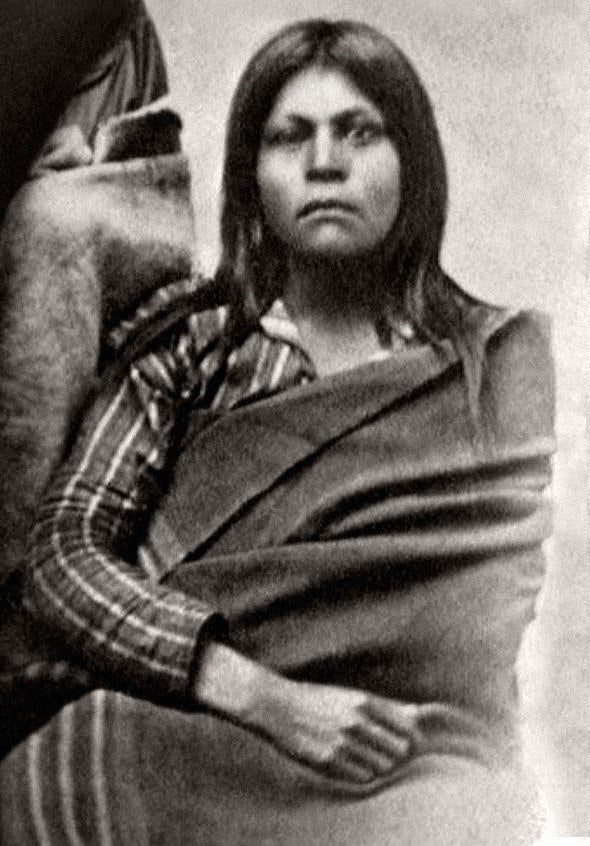
She confounded her contemporaries, too. In 1853, men discovered her on San Nicolas inside a hut made of whalebones and brush. She was wearing a dress made of cormorant feathers sewn together with sinew. She had been on the island by herself for 18 years.

A photograph of a Native American woman, believed to be Juana Maria, who was the last surviving member of her tribe, the Nicoleño.


Sunday, January 10
The Wandering Hat: Iterations of the Medieval Jewish Pointed Cap
this was an absolutely fascinating paper. The abstract



From the twelfth to the seventeenth century, a cone-shaped hat called a pileus cornutus served as a distinguishing sign for Jews in the German-speaking regions of the Holy Roman Empire. What did the hat signify previously, and how did its meaning change after it was imposed on Jews by decree in the thirteenth century? This study traces its history as far back as Greek antiquity, when a pointed “Phrygian” hat was used as a means of identifying barbarians. Traveling on to Rome, where it was known as a pileus, the hat rose to prominence as a symbol for emancipated slaves. Its imposition on Jews in the Middle Ages was a turning point. Thereafter, the hat began to appear in representations of an increasing variety of deceiving figures, real and mythical, including heretics, criminals, and dwarfs. Following the course of the pileus not only sheds light on an intriguing singular phenomenon; it also stands as a paradigmatic example of a “traveling concept” and helps to refine our understanding of cultural transfer—of culture as transfer.
the paper traces the evolution of this fascinating hat. Some examples from the paper


But when I saw this, I felt I had seen these hats before and my daughter helped identifying it..
Friday, January 1
We once had 4 legs and 2 faces
I'm reading Plato's Symposium kids. It's all about love but will talk about that later.
This was a funny description by Aristophanes who is at a dinner party with Socrates and he describes how primeval man was round with four hands and feet, two faces, and could roll forward on four legs like a barrel. That would be so funny to see eh?
Alas, they got uppity and challenged the gods. So Zeus cut them down in the middle and Apollo fixed us up by fixing the cut, fixed the belly. And then because the two separate halves couldn't live together, they started dying off. So Zeus made man and woman separate.
But deep inside you, lives the seeds of that primeval man. So when you meet your soul mate, you cannot explain what you want from her/him but just want to be one.
It's obviously not medically right or evolutionarily correct but a nice explanation by the ancient Greeks eg?
Love
Baba


Book review the Ananga Ranga of Kalyan Malla and the symposium of Plato
Quite an extraordinary book. Translated in 1873 by that indophile Richard Burton, it gives a fascinating insight into how the 15th/16th century Hindu viewed marriage and physical love. What makes this book even more fascinating is that it's conjoined with the symposium of Plato. I've never read the latter although I have read the Ananga Ranga many moons back.
The symposium of Plato is a record of an evening in Athens where Socrates and a group of friends, after dinner are lying about on the couches and each is expected to speak about love. And you get the most amazing and exquisite declarations of love. Ranging from the love of God to love of woman to love of a man. Fascinating.
And then Ananga Ranga. It's a book for men. And I love it's lists. Lists of how you should use nails on a woman. Lists of where you can't make love. Lists of how to stroke hair. Lists of how vaginas are. Lists of how skin is. Lists of spells. Lists of potions. Lists of penises. Lists of personality types. Lists of lists. It goes on and on.
Before you think that this is a licentious charter it isn't. It's meant for a man who wants to be with one woman but allows him to know of techniques and knowledge which can ensure the man has 32 women in one. So if you want to be a good lover, definitely read it. And for heavens sake, don't try out any of the potions. They will kill you.
The notes by Richard Burton are fascinating as well. Gives an indication of what people in the 1890's used to think of India. It's a bit shocking to read now but yes.
Fascinating book.
Wednesday, December 16
Mark Twain on Slavery, How Religion Is Used to Justify Injustice, and What His Mother Taught Him About Compassion
Kids
I just love his work. Mark Twain is one of my hero's and his works are just so amazing. Even so many decades after he wrote them, his words echo and touch chords.
But this is the amazing thing. He's talking about slavery. The feeling of discrimination against somebody else. We all have it kids. You may discriminate against a person with tattoos. Or with a darker skin. Or with a different religion. Common. Very common. But it's horrible. Imagine what Mark Twain's mum correctly identified. The little boy was torn away from his mother and will never see her again.
But despite that, he's smiling and singing and laughing and happy. And that's what I want you kids to learn. Be happy. Laugh. Have hope. People clutch on to their bad experiences. Their horrible memories. Their painful times. And many simply cannot move on. I've got so many that it can make 10 lifetimes sad but you have to rise above bad memories and experiences kids. Sing. Be happy. Help others. If somebody discriminates against you, smile and walk away. You're the bigger person.
But all that pales in comparison to the fact that you've got to read mark twain. All of them. Many times.
I'm sitting here on a bench overlooking the English Channel just on the right side of Eastbourne on Beachy Head. And I can see the lovely sun dappled waters. The bees are buzzing all around, hopping from flower to flower. And there's a nice little breeze. And I can watch the ships and sailboats below me. An extraordinarily peaceful sight. And just letting the atmosphere wash over me. And I'm writing to you both. Pretty lovely time indeed.
Love
Baba
Mark Twain on Slavery, How Religion Is Used to Justify Injustice, and What His Mother Taught Him About Compassion
http://www.brainpickings.org/2014/10/24/mark-twain-on-slavery-empathy-compassion/
(via Instapaper)
“She never used large words, but she had a natural gift for making small ones do effective work.”
Samuel Langhorne Clemens, better known as Mark Twain, is celebrated as America’s greatest humorist — from his irreverent advice to little girls to his snarky stance on creativityto his masterwork on masturbation. But underpinning his winsome wit was piercing insight into the human spirit and all its perplexities. From The Autobiography of Mark Twain: Volume 1 (public library) — which also gave us Twain on how morality and intelligence hinder each other — comes a moving anecdote about how his mother taught him the essence of empathy.
Half a century before “African American” came into popular use as a politically dignified term, Twain recounts his childhood friendships with black slaves:
Monday, November 23
Thomas Mann: An Exploration of Philosophy and Practicality
I haven't read his magnum opus, buddenbrooks but I have read the magic mountain book son. And believe you me, it was tough going. The word dense comes into the picture. I think I was 20-22 when I read it and I was much more bolshie and obstinate then than now. So I struggled through it.
But I never read about how the author felt or his connection with the books and its characters. German literature is something that I haven't really gotten deeper into son. Big fault and hole in my education there. But well we have some time :) so I'm hoping to have fun learning more about this area.
The first book was interesting and the underlying thesis is something that we all struggle with son. What's life for? What do you do? I was quite taken by Steve jobs words when he was on his deathbed. You know what he said? Do you think he talked about iPhone design? Or Mac operating systems? Or the iPad? No. You know what he said? He said that once you have sufficient money, spend time with your friends and family. Thought provoking no? Well he can afford to say that but you do have to get sufficient money in the first instance.
We all have to answer that question son. And another thing. The answer changes. As life goes on, and if you keep asking this question, the answer keeps on changing. You'll find people who find AN answer early in their lives and stick with it. And then there are some like your baba who are ever restless and always thinking there's an answer just beyond the mountain in front.
May you find your answers son. I was so happy to hear the good news tempered by the fact that you're not that well. Hope you get better soon Kannu.
Love you and look forward to seeing you on Thursday :)
Baba
Thomas Mann: An Exploration of Philosophy and Practicality
http://blog.bookstellyouwhy.com/thomas-mann-an-exploration-of-philosophy-and-practicality
(via Instapaper)
Thomas Mann was born into the Hanseatic ruling Mann family, a wealthy clan who held great influence over the city republic of Lübeck, in what was then the German Empire. Mann grew up under the aegis of privilege, raised by tales of his ancestors' prosperity and the ethos of bourgeoisie practicality. The Manns, as ruling families are wont to do, were preoccupied with the maintenance of their influence, wealth, and respectability. Thus, when the 21 year-old Thomas Mann announced his plans to become a writer, his family took his artistic calling as a betrayal of his auspicious pedigree. Despite his family's protests, Mann would not abandon his vocation, and he was effectively disowned. The irony of this event, of course, is that Mann would go on to win the Nobel Prize in Literature, and earn the reputation for being the most significant scribe in German letters since Nietzsche, becoming the most revered member of the very family that spurned his artistic pursuits.
The conflict between the Mann family and Thomas placed the young man in the middle of a plangent clash of culture and philosophy. On one hand, there was the bourgeoisie pragmatism of the Mann family and the European world at large. It entailed the management of power and wealth, of creating a life that was more abundant, efficient, and comfortable. It earned its many disciples the boons of influence, land, beef, tea, firewood, and all else that made life more ostensibly pleasant. All Mann's comforts, his privileges, were indebted to the work and labors of his parentage.
While Thomas Mann appreciated the efficacy and work ethic of his family, he felt it lacking a greater purpose. To Mann, the pursuit of mere money, comfort, and influence was the recipe of a myopic life. He believed careful thought and philosophy were the necessary tools to rescue oneself from the self-centered paradigms of work and leisure, of toil and compensation, and the like. But the artist's life was not a panacea to the spiritual deficiencies of his European milieu. Mann understood, too, that as nice as they are to have, well-wrought morality and philosophy cannot pay anyone's rent.
Mann's struggle, the grand antagonism between philosophy and practicality, between the artist and the businessman, was the thematic spine of his first novel, Buddenbrooks (1901). Published when he was 26 years old, the title lends itself to the name of the noble family it follows over four generations Mann based the family on his own noble roots. The novel begins at a family feast in 1835. The patriarch of the family is Johannes Buddenbrooks, the head of a prosperous although fraudulent grain company. Here, Mann sets the stage for the ideals of laborious pragmatism and purposeful thought to begin their tug of war, one that will last the entire book.
The fate and history of the Buddenbrooks family significantly mirrors Mann's own. Much like the ruling Manns, the Buddenbrooks experience a decline in influence and prosperity as Germany industrializes and the values and hierarchies that supported them in the past no longer apply. The most prosperous Buddenbrook, Johann, thrives as his determination to succeed permits him to swindle his partners and suppliers. His progeny, like the third generation Thomas and his son, Hanno, yearn for more than the fortune of the family business. Thomas' intellectual and financial success are at odds within him. He says, "what is success? That awareness that alone by virtue of my presence I can exert pressure on the movements of life all around me." Thomas is deeply affected by the works of Schopenhauer, and Hanno is captivated by the music of Wagner. But art does not, and cannot, completely solve their spiritual emptiness. In this family saga, Mann simultaneously brings to life generations of characters and dramatizes a great cultural and psychological crisis. Mann objectively captures this paradox of life, or as critic Daniel Burt says, "the conflicting forces in human behavior and thought that give life its fullest meaning and at the same time constitute its greatest peril."
The Nobel Prize typically honors an author's entire oeuvre, but Mann's honor is somewhat anomalous. In 1929, he was awarded the Nobel Prize for "his great novel,Buddenbrooks, which has won steadily increased recognition as one of the classic works of contemporary literature." William Faulkner considered Buddenbrooks to be the best book of the century, and he enthusiastically owned an edition of the novel signed by Mann himself.
Buddenbrooks' success as a work of art is undeniable, but many readers prefer Mann's more mature effort, The Magic Mountain (1924). Called "the great philosophical novel of the 20th century" by Daniel Burt, it illustrates the culmination of Mann's ideological thought, and renders masterfully the very practice of assessing and acquiring beliefs. It has been credited as a grand example of the bildungsroman, as well as a formidable interrogator of the foundations of Western culture itself.
The novel was inspired by Mann's visit to his wife with tuberculosis. Mann caught a cold at the sanatorium where his wife was receiving treatment, and was not allowed to leave. Like his creator, the protagonist of The Magic Mountain, Hans Castorp, cannot leave the sanatorium atop the mountains of Davos. During his stay, he encounters a cast of characters who all introduce Hans to a variety of ideologies. There's the humanist Settembrini, the sensual and carnal Chauchat, the dutiful Ziemssen, and more. The characters often debate and challenge each other, letting Hans listen and take note of the strengths and weaknesses of each philosophy.
Critic Theodore Ziolkowski said that The Magic Mountain, "approaches perfection to a degree rarely achieved on such a monumental scale." Its scope of theme and thought shapes a truly dense novel, leading Mann himself to suggest that one read the book twice to better comprehend it. Much of Mann's thought in other works reaches its apotheosis in this book. Death in Venice, the novella which The Magic Mountain was originally intended to satirically complement, gives way for Mountain to elaborate on the idea of a life of ecstatic triumph over dutiful order.
Illness and death fascinate the novelist, too. Mann wrote of his book, "There are two ways to life: One is the common, direct, and brave. The other is bad, leading through death, and that is the genius way. This concept of illness and death, as a necessary passage to knowledge, health, and life, makesThe Magic Mountain into a novel of initiation." And, as in Buddenbrooks, Mann investigates further the virtues and disadvantages of the bourgeoisie and artistic life, and extends his vital thought to the subjects of political radicalism, time, music, the philosophies of Nietzsche and Schopenhauer, and beyond.
The magic of The Magic Mountain is in part due to the fact that no ideology is given preference. The novel centers on Castorp's exposure to the many contradictory and beneficial ways to live and interpret the world. When Thomas Mann was asked by high school students what Castorp's fate after the novel's end was, Mann offered a fitting answer. If Castorp had survived the Great War, the author said, he would have likely remained "the learner, the listener, testing, rejecting, choosing." This is a fitting prediction for his character, as Mann has created a book which does not purport to have found any "proper" philosophy for life. Rather, Mann has presented an imaginative illustration of how a philosophy may be gained, and how one may continue to be a student of life, dedicated to its full appreciation.
Reader, specializing in Twentieth Century and contemporary fiction. Committed to spreading an infectious passion for literature, language, and stories.
Tuesday, October 20
Strange Sandboxes: Unusual Writing Habits of Five Famous Authors
Kids
These were funny stories about how writers write. I'm starting to do research and have been spending time in the library and at home writing. And it's an indescribable feeling. It's a high. You physically feel that you're on a different plane. I had the Same feeling when I used to code. Music in your ears and you write and type furiously. Words bubble out of your fingers. Your mind is whirring away like a top. Your fingers are typing furiously trying to keep up with the ideas. You flick Windows. You flip pages of the books. You look up at the ceiling. You stare blankly at the pen on your desk. And then dive back into writing. It's such a glorious feeling. Love it.
Btw, observe how Mum writes. It's so cute and funny :) she gets very irate if you disturb her. Very cute :)
Have a lovely day
Love
Baba
Strange Sandboxes: Unusual Writing Habits of Five Famous Authors
http://blog.bookstellyouwhy.com/strange-sandboxes-unusual-writing-habits-of-five-famous-authors
(via Instapaper)
Imagine telling your boss the only way you can be productive at work is after imbibing two or three glasses of sherry. Or by lying flat on your back with your knees tucked tightly toward your chest. Or perhaps in a bathtub brimming with soap bubbles. You'd probably be fired.
But habits or routines similar to these were staples in the creative process for some of America’s most famous authors. These renowned literary figures spared no effort to create a space for the unconscious mind to play. Truly, these strange sandboxes for creativity and inspiration were crucial to the creation of some American classics. Let's explore a few authors and their peculiar, but effective, habits
Tuesday, September 29
Johann Wolfgang von Goethe
It's one of the big regrets in my life that I haven't really explored Goethe that much. Faust of course is required reading but This renaissance man is one of my hero's. What a man. Lawyer. Painter. Scientist. Warrior. Writer. Poet. You name it. And he travelled long and hard. Loved many wonderful women. Had loads of kids. Spawned entire genres. Is remembered posthumously. The man is a legend. In my travels in Germany I've come across his signs. But never managed to really get to grips with him like I've done with other Renaissance men like da Vinci or Michelangelo or Adam smith or Newton or Darwin and a host of others. Funny, I actually totted up the numbers of blog posts, papers and books and photo essays and and and that I've written so far. It's about 11000. Of course the quality sucks compared to Goethe but hey ho. I'm still a young man with much to blather on about eh?
Love
Baba
Johann Wolfgang von Goethe - Wikipedia, the free encyclopedia
http://en.wikipedia.org/wiki/Johann_Wolfgang_von_Goethe
(via Instapaper)
"Goethe" redirects here. For other uses, see Goethe (disambiguation).
"Göte" redirects here. For other uses, see Gote.
Johann Wolfgang von Goethe (/ˈɡɜrtə/;[1] German: [ˈjoːhan ˈvɔlfɡaŋ fɔn ˈɡøːtə] (

listen); 28 August 1749 – 22 March 1832) was a German writer and statesman. His body of work includes epic and lyric poetry written in a variety of metres and styles; prose and verse dramas; memoirs; an autobiography; literary and aesthetic criticism; treatises on botany, anatomy, and colour; and four novels. In addition, numerous literary and scientific fragments, more than 10,000 letters, and nearly 3,000 drawings by him are extant. A literary celebrity by the age of 25, Goethe was ennobled by the Duke of Saxe-Weimar, Karl August in 1782 after first taking up residence there in November 1775 following the success of his first novel, The Sorrows of Young Werther. He was an early participant in the Sturm und Drang literary movement. During his first ten years in Weimar, Goethe served as a member of the Duke's privy council, sat on the war and highway commissions, oversaw the reopening of silver mines in nearby Ilmenau, and implemented a series of administrative reforms at the University of Jena. He also contributed to the planning of Weimar's botanical park and the rebuilding of its Ducal Palace, which in 1998 were together designated a UNESCO World Heritage Site.[2]
Sunday, September 20
Johann Wolfgang von Goethe
It's one of the big regrets in my life that I haven't really explored Goethe that much. Faust of course is required reading but This renaissance man is one of my hero's. What a man. Lawyer. Painter. Scientist. Warrior. Writer. Poet. You name it. And he travelled long and hard. Loved many wonderful women. Had loads of kids. Spawned entire genres. Is remembered posthumously. The man is a legend. In my travels in Germany I've come across his signs. But never managed to really get to grips with him like I've done with other Renaissance men like da Vinci or Michelangelo or Adam smith or Newton or Darwin and a host of others. Funny, I actually totted up the numbers of blog posts, papers and books and photo essays and and and that I've written so far. It's about 11000. Of course the quality sucks compared to Goethe but hey ho. I'm still a young man with much to blather on about eh?
Love
Baba
Johann Wolfgang von Goethe - Wikipedia, the free encyclopedia
http://en.wikipedia.org/wiki/Johann_Wolfgang_von_Goethe
(via Instapaper)
"Goethe" redirects here. For other uses, see Goethe (disambiguation).
"Göte" redirects here. For other uses, see Gote.
Thursday, November 21
Thank you Baba
I am going to kick off a short course on Roman Architecture soon and have been reading up on the great and good like old man Julius and Octavian Augustus. Horace was a good old egg at that time and here’s a lovely poem which I read from the man.
Still, if my character’s flawed by only a few little
Faults, and otherwise sound, just as you’d censure
Perhaps the blemishes scattered over a noble body:
And if no one can accuse me in fairness of greed,
Meanness, debauchery, if in truth, in my own praise,
I live purely, innocently, loved by my friends:
It’s due to my father, who though poor, on poor land,
Wouldn’t send me to Flavius’ school, where fine lads
The sons of fine centurions went with their tablets
And satchel hanging from their left shoulders, carrying
Their eight coins as fee on the Ides of each month,
But instead he bravely whisked his son off to Rome,
To be taught the skills senator or knight would expect
To be taught his son. And if anyone noticed my clothes
And attendants, a big city scene, he’d have thought
The expenses were being met from ancestral wealth.
He, the truest of guardians, toured all my teachers
With me, too. What can I say? He guarded my innocence,
And that’s virtue’s prime ornament, he kept me free
Not only from shameful actions, but slander as well.
He wasn’t afraid someone might call him foolish
If I’d only followed the trade of an auctioneer
Or collector of dues like himself: I’d not have complained
As it turns out I owe him still greater praise and thanks.
It is considered to be one of the most wonderful paeans of praise to a father. Makes one think, no? And while we are at it, thank you Baba.
Tuesday, April 16
Advice To Little Girls
Dear Diya
here is a lovely poem from one of my favourite authors, Mark Twain, called Advice to Little Girls..
Good little girls ought not to make mouths at their teachers for
every trifling offense. This retaliation should only be resorted
to under peculiarly aggravated circumstances.
If you have nothing but a rag-doll stuffed with sawdust, while one
of your more fortunate little playmates has a costly China one,
you should treat her with a show of kindness nevertheless.
And you ought not to attempt to make a forcible swap with her unless
your conscience would justify you in it, and you know you are able
to do it.
You ought never to take your little brother's "chewing-gum" away
from him by main force; it is better to rope him in with the promise
of the first two dollars and a half you find floating down the
river on a grindstone. In the artless simplicity natural to this
time of life, he will regard it as a perfectly fair transaction.
In all ages of the world this eminently plausible fiction has lured
the obtuse infant to financial ruin and disaster.
If at any time you find it necessary to correct your brother,
do not correct him with mud--never, on any account, throw mud at him,
because it will spoil his clothes. It is better to scald him a little,
for then you obtain desirable results. You secure his immediate
attention to the lessons you are inculcating, and at the same time
your hot water will have a tendency to move impurities from his person,
and possibly the skin, in spots.
If your mother tells you to do a thing, it is wrong to reply
that you won't. It is better and more becoming to intimate
that you will do as she bids you, and then afterward act quietly
in the matter according to the dictates of your best judgment.
You should ever bear in mind that it is to your kind parents that you
are indebted for your food, and for the privilege of staying home
from school when you let on that you are sick. Therefore you ought
to respect their little prejudices, and humor their little whims,
and put up with their little foibles until they get to crowding you
too much.
Good little girls always show marked deference for the aged.
You ought never to "sass" old people unless they "sass" you first.
Nice one, you are already such a lovely little princess and you do all this and more :) I specially liked the 2 and 1/2 dollar bargain bit with your brother, perhaps you can try that? I did burn my little sister with a magnifying glass once, she still complains to me about that, so that lesson obviously stuck :)
love
Baba.
Subscribe to:
Posts (Atom)