Let me add to John Water’s brilliant quote
If they don't have books, give them books till they have sufficient books that you feel comfortable in boinking them.
Let me add to John Water’s brilliant quote
If they don't have books, give them books till they have sufficient books that you feel comfortable in boinking them.
This is a fascinating blog post which refers to a recent study on the value addition that teachers bring to the table. I quote the bit which is interesting.
They had access to data for a large urban school district that spanned the 20 years from 1988-89 through 2008-09. The data contained information on test scores for about 2.5 million children in grades 3 through 8, and also the schooling, and when available, earnings of the children after they finished these grades.
They find large effects on subsequent adult earnings when these young students had teachers who produced good improvements in test scores compared to the adult earnings of students who had teachers who produced little improvement in test scores. If teachers were paid in relation to their effects on the subsequent adult earnings of their students, these results imply that teachers with good VA ratings should be paid considerably more than teachers with bad ratings. Adopting such a payment system for teachers would produce an improvement in the quality of teaching because good teachers would be more willing to go into teaching at elementary and high school grades. Such a change may well induce an increase in overall spending on teachers’ salaries and benefits because taxpayers would be willing to support education more generously if they felt students were getting good and useful teaching.
As a teacher myself, as well as a parent and taxpayer, I am interested in the systems around teacher evaluation. I am happy that we are moving towards a more fair system of teacher evaluation rather than just dumping money into the education systems willy nilly.
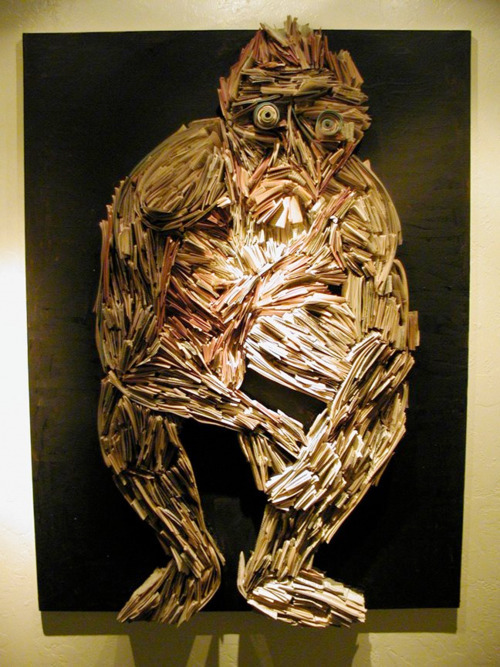
When I was growing up as a teenager, I had this giant poster on my wall.

And what am I riding nowadays?

I just calculated that I have ridden this bike in the last 3 months more and longer than I have actually driven all of this year.
heh, how do dreams change, eh?
Dear son
A free press is vital for democracies. At least that was the model in the 19th and 20th century. It was when communications channels were limited and citizens needed somebody to capture information, edit it and then present it.
But technology is blowing up the media model. Free press was only from the perspective of freedom of speech. But the Internet has made communications open and the economic model simply doesn't work. That's why old style newspapers are slowly but inexorably dying.
But it's not just the technology which has blown up the newspapers. At end of the day, they are businesses as well. Just because they are doing news doesn't mean that they are immune from the laws of economics and good management. This article talks about a classic case of bad strategic management. In this case, the blame clearly lies with the board.
By the time you grow up, not sure what the media foot print will be but I wouldn't invest in a newspaper or publication company. Just too unclear.
Love
Baba
LOS ANGELES REVIEW OF BOOKS | Zell to L.A. Times: Drop Dead
http://lareviewofbooks.org/post/12555828808/zell-to-l-a-times-drop-dead
James O’Shea
The Deal From Hell: How Moguls and Wall Street Plundered Great American Newspapers Public Affairs Books, June 2011. 416 pp.
Since it seemed it couldn’t get much worse, Los Angeles Times editor-in-chief James O’Shea decided to look on the bright side. It was 2007, and the newspaper had a new owner. He was Sam Zell, an iconoclast, as they call rich older men who ride motorcycles and wear leather jackets, whether they look good in them or not. Maybe Zell would be iconoclastic in the right way, you know, odd but decent and smart, useful, so O’Shea phoned the Chicago businessman about giving the Times an in-person interview. Zell agreed. O’Shea then offered to pick up his new boss at the airport. Zell declined, informing O’Shea that his personal jet could easily deposit him near his beach house in Malibu. When Zell called back an hour later, the polite part of their relationship was already done. Zell informed O’Shea that he would, in fact, fly into LAX and make himself available to reporters at an office there. “I was going to invite all of you to come to my house in Malibu,” said Zell — for the second time indicating his address — “until you sent a fucking reporter up there and scared the shit out of my housekeeper.” Zell wanted it conveyed that he traveled in an entirely different social sphere than O’Shea. “Let me tell you something,” he continued in his distinctive rasp. “You want to talk to me, call me and I’ll talk. But you don’t fuck with my employees. Got that?” O’Shea immediately apologized, even though he wasn’t sure what for.
And so began the improbable last chapter in the fall of a major newspaper, as chronicled by O’Shea in The Deal from Hell: How Moguls and Wall Street Plundered Great American Newspapers. Among other things, the book is a reminder that whenever you think things can’t get worse, they can. They can get much, much worse. I was there, at the paper, working at the magazine, with a good critic’s seat, up close and on the aisle. As we were living it, we knew this tawdry drama signaled yet another sea change for newspapers, with potentially devastating consequences for our democracy. It was also, thanks to Zell and his cronies, more entertaining than it had any right to be. The end of the story is in the beginning. But where is the beginning? Orwell aside, let’s say it was 1984.
That year was a numerical high point for newspapers. Americans purchased 63.3 million of them a day. James O’Shea was happily employed at the Chicago Tribune’s Washington bureau. Sam Zell, having made hundreds of millions of dollars in real estate, was busy finding ingenious new ways to avoid taxes. He was at the right place at the right time: regulations were falling away like leaves in autumn. He began acquiring companies that had recently emerged from bankruptcy. Using an accounting loophole called “tax-loss carry-forward,” he could dodge taxes for years on these companies. (This was preferable to rigging real estate transactions through a bank in the Bahamas, a move that almost landed Zell in jail in 1977. He avoided prison by testifying against one of his lawyers, who also happened to be his brother-in-law, and who subsequently served two years for tax evasion.) By 1984, the economy had recovered from Paul Volcker’s stop-go recession, and President Reagan was busy cutting taxes and deregulating the savings and loans and other industries. The mood of the time was pleasure grabbing and hedonistic, not unusual for easy-money eras. On the coasts, people of means kept bowls filled with cocaine they would bring out for company. Finance was thriving. The Wall Street guys smelled of lime cologne, their suits crisper, their hair shinier, and their restaurants more theatrical than anything we had seen in a long time. They said we would all benefit from their windfall, and it seemed like maybe we all would, even if those of us working at our first, low-paying jobs had no idea how.
Son
This is a very important article which talks about low paid jobs. This situation exists in pretty much every developed country. Who will do the jobs like plucking tomatoes? Cleaning toilets? Sorting out fish? Packing cabbages? These are the lowest paid jobs around and the question is, where do you get these people from when the native born don't want to do these? And while the first generation is happy to do those jobs, their second and third generation don't want to. See Germany with Turkish immigrants, England with Pakistani immigrants, and USA with their Hispanic immigrants. The rise of nativist right wing anti immigration wings is a direct consequence of policies like this.
But you cannot pay high wages there. The product or service gets priced out of the market. So what do you do? Not easy to answer son.
I think it's a combination, wages have to rise if supply of labour is constrained, basic economics. On the other hand, when immigrants aren't integrated or made welcome, like Turks and Pakistanis and Jamaicans, they turn into bigger problems.
But still, an interesting article to read son
Love
Baba
Why Americans Won't Do Dirty Jobs - BusinessWeek
http://www.businessweek.com/printer/magazine/why-americans-wont-do-dirty-jobs-11092011.html
In the wake of an immigrant exodus, Alabama has jobs. Trouble is, Americans don’t want them
Skinning, gutting, and cutting up catfish is not easy or pleasant work. No one knows this better than Randy Rhodes, president of Harvest Select, which has a processing plant in impoverished Uniontown, Ala. For years, Rhodes has had trouble finding Americans willing to grab a knife and stand 10 or more hours a day in a cold, wet room for minimum wage and skimpy benefits.
Most of his employees are Guatemalan. Or they were, until Alabama enacted an immigration law in September that requires police to question people they suspect might be in the U.S. illegally and punish businesses that hire them. The law, known as HB56, is intended to scare off undocumented workers, and in that regard it’s been a success. It’s also driven away legal immigrants who feared being harassed.
Rhodes arrived at work on Sept. 29, the day the law went into effect, to discover many of his employees missing. Panicked, he drove an hour and a half north to Tuscaloosa, where many of the immigrants who worked for him lived. Rhodes, who doesn’t speak Spanish, struggled to get across how much he needed them. He urged his workers to come back. Only a handful did. “We couldn’t explain to them that some of the things they were scared of weren’t going to happen,” Rhodes says. “I wanted them to see that I was their friend, and that we were trying to do the right thing.”
His ex-employees joined an exodus of thousands of immigrant field hands, hotel housekeepers, dishwashers, chicken plant employees, and construction workers who have fled Alabama for other states. Like Rhodes, many employers who lost workers followed federal requirements—some even used the E-Verify system—and only found out their workers were illegal when they disappeared.
An interesting article son. Something that you need to read carefully about your career prospects. Keep on thinking if you skills and abilities can be replaced by a computer. Do and pick a career which requires things which a computer cannot do. Manage ambiguity. Need imagination. Think differently. Sales. Change management. Inventing new things.
Love
Baba
Artificial intelligence: Difference Engine: Luddite legacy | The Economist
http://www.economist.com/blogs/babbage/2011/11/artificial-intelligence?fsrc=scn/tw/te/bl/ludditelegacy
 AN APOCRYPHAL tale is told about Henry Ford II showing Walter Reuther, the veteran leader of the United Automobile Workers, around a newly automated car plant. “Walter, how are you going to get those robots to pay your union dues,” gibed the boss of Ford Motor Company. Without skipping a beat, Reuther replied, “Henry, how are you going to get them to buy your cars?”Whether the exchange was true or not is irrelevant. The point was that any increase in productivity required a corresponding increase in the number of consumers capable of buying the product. The original Henry Ford, committed to raising productivity and lowering prices remorselessly, appreciated this profoundly—and insisted on paying his workers twice the going rate, so they could afford to buy his cars.
For the company, there was an added bonus. By offering an unprecedented $5 a day in 1914, he caused the best tool-makers and machinists in America to flock to Ford. The know-how they brought boosted production efficiency still further and made Ford cars ever more affordable. With its ingenious Model T, Ford became the first car company in the world to bring motoring to the masses.
Economists see this as a classic example of how advancing technology, in the form of automation and innovation, increases productivity. This, in turn, causes prices to fall, demand to rise, more workers to be hired, and the economy to grow. Such thinking has been one of the tenets of economics since the early 1800s, when hosiery and lace-makers in Nottingham—inspired by Ned Ludd, a legendary hero of the English proletariat—smashed the mechanical knitting looms being introduced at the time for fear of losing their jobs.
An interesting story of what happens when you take drugs. As you know, I used to smoke and then after using the patch, I left smoking. It's been now what 5 years? One of the worst mistakes in my life, smoking. Even now, I cannot bear being around smokers, mainly because I'm afraid I will start again. Addiction is bad, son.
But also remember we are bio chemical animals. And when we go off the rails and are ill, chemicals are poured into us. In a way, that is worrisome because it's far too easy to pop pills. So my advise is to not take pills as much as possible and rely on diet and exercise.
And never ever do drugs. Besides the fact that I will personally break your legs and Lock you into your room till you break your addiction, you don't need drugs to have fun or feel better. Drugs are for losers, nothing justifies it. Fun, creativity, joy all can and will be done by the power of your mind. And stay away from People who do drugs. They will not only screw up their lives but also yours.
Love
Baba
This Is My Brain on Chantix [longform.org]
http://www.txtpost.com/this-is-my-brain-on-chantix/
I’d heard it was the most effective stop-smoking drug yet. So I took it. Then those reports of suicidal ideation began washing in.
DEREK DE KOFF • NEW YORK • FEB 2008
Things were looking good. My doctor had gone through the test results and told me I was perfectly healthy—except my breathing was a little shallow. That didn’t surprise me. I’d been smoking for twelve of my 32 years, and my father died of lung cancer in his early fifties. That’s why I was having my first physical in five years: I’d decided it was time to stop for good.
I’d heard about Chantix, a relatively new drug from Pfizer that blocks nicotine from attaching to your brain receptors. That way, you stop receiving any pleasure from cigarettes at all—even as the drug, snuggling up to those receptors the same way nicotine does, reduces withdrawal cravings and unleashes a happy little wash of dopamine to boot. Wonderful things they can do nowadays.
My doctor wished me luck as he wrote out the prescription, telling me it was the single most important decision I’d ever make in my life. I had the medication that night, 35 minutes after dropping into Duane Reade. While waiting, I gleefully chain-smoked Parliament Lights. One of Chantix’s big perks is that you can smoke for the first seven days you’re on it (most people take it for twelve weeks)—more than enough time, I thought, to say good-bye to an old friend.
I swallowed my first pill the next day before work. It was a beautiful fall morning, an almost obnoxiously cinematic day to turn over a new leaf. But by the time I was halfway to the office, I started to feel a slight nausea coming on. Of course, that is a common side effect, as are constipation, gas, vomiting, and changes in dreaming. These five symptoms were emblazoned in a large font on the patient-information sheet.
My stomach settled as I finished my first cup of coffee. I slipped into my boss’s office, proudly announcing that I’d just started taking Chantix. “You’ve probably seen the commercial,” I said. A CGI tortoise races against a sprightly CGI hare, while a paternal voice-over reminds us that quitting smoking “isn’t for sprinters … it’s all about getting there!” Clinical trials demonstrated a whopping 44 percent of patients were still off cigarettes after twelve weeks, the ad says. The tortoise winks knowingly.
“You know, I saw something about Chantix,” my boss said, sounding vaguely concerned. He tracked down the story on a CBS Website. It was a sensational report on Carter Albrecht, a Dallas musician formerly with Edie Brickell & New Bohemians. Albrecht had started taking Chantix with his fiancée, with seemingly dramatic side effects. She claimed he had had bizarre hallucinations that worsened when he drank. One evening, he attacked her, something he’d never done before. He then ran to his neighbor’s house and kicked at the door, screaming incomprehensibly. The neighbor was so panicked he wound up shooting Albrecht through the door, killing him.
I loved this and I am going to quote this in full. It is my firm belief that as soon as people start talking about Israel, their brains dribble out of their bottoms (myself included). That’s why I have stopped talking about Palestine and Israel. You see somebody facebooking or emailing about Palestine and Israel and you want to respond? and you immediately should think about how the next few relevant minutes will never return to you in any shape or form in productive use. Plus usually these people are idiots. See below.
From Egypt Independent:
Anonymous gunmen attacked the Rayesa checkpoint outside Arish in Sinai on Friday morning, the 34th such attack in the last 19 months.Checkpoints? You mean, where the military checks to make sure that people aren't transporting weapons and explosives?
Security forces exchanged fire with the assailants, who fled. There were no injuries.
The troops combed the surrounding areas, in addition to inspecting the passing cars and questioning their occupants.
Rayesa checkpoint has been attacked 34 times since the beginning of the 25 January revolution, most recently on 31 August.
The checkpoint is located on the international road leading to Rafah at the east entrance of Arish. It is manned by joint forces of the police and Armed Forces.
A number of checkpoints in Sinai were targeted in August. Egyptian authorities have speculated that radical groups are behind these attacks.
Checkpoints: A Violation of Human RightsSee? I knew that human rights activists were against all checkpoints, everywhere.
Sky McLaughlin
...The very concept of the checkpoint itself stands in gross violation of the human rights of the people. Each human being should be guaranteed the right to emotional and psychological health and security. However the symbolism of these checkpoints has severe psychological repercussions on the people. The implication is that citizens are entirely too dangerous and evil to be allowed the freedom of movement in their own country, or their neighbour’s. The damaging impacts on the psyche, not to mention self-esteem, particularly of young people, are tremendous.
Freedom of movement and the right to physical safety are just two of the fundamental human rights violated by the checkpoints. People are not free to travel from region to region in their own country, and this has far-reaching effects on the relations of the family. Families are split and divided, and cannot join together to provide emotional support and comfort during this time of tragedy and suffering. Fear has become a permanent part of their psyche, as they constantly worry about the time when there may be an emergency in their family, whom they cannot reach in time.
Kannu
People can get very snobbish about coffees. Like I get about scotch whiskey. Or book reading. I suppose son, Everybody has something that they care about. So we have an interesting phenomena. For me, people going nuts about coffee or wine are just strange. But then I'm sure people think I'm nuts about books.
Still, you need to read this. Know what people are being snobbish about. At some point this information may come in use, when you are trying to impress a girl, or tell some snobs that they are talking out of their backsides.
:)
The End of Cheap Coffee [longform.org]
http://www.good.is/post/the-end-of-cheap-coffee/
On a rainy Wednesday afternoon in Venice, California, Dan Kougan spreads out three shot glasses in front of a curious audience. The champagne-colored liquid bubbling on the left is a homemade hops soda. The creamy, tan shot in the middle is a barley-chocolate malt topped with a tuft of steamed milk. And the chestnut-hued beverage on the right, the raison d’être of this whole ordeal, gives off the unmistakable scent of fresh espresso, extracted from the highest-quality coffee beans the developing world has to offer.“Thanks, Dan, I’m really excited!” says Elaine Levia. She smiles as she eyes the Flight of Three—the name given to the triptych of shot glasses on the glass-top bar before her. “Do you have drinking instructions?” she asks.
Of course he does. For a month, Kougan has been planning the details of each beverage for his hops-themed menu. It’s his week to curate the Slow Bar, the backspace of the coffee shop Intelligentsia, where baristas take turns designing and executing a custom menu. The venue is part laboratory, part classroom, and part theater. Coffee groupies sit on bleacherlike benches in a precaffeinated state of awe, waiting for a barstool to open up.
Sip from lightest to darkest, instructs Kougan. “The hops will kind of ramp up in bitterness and effervescence. And then the chocolate malt will curb that flavor, and the espresso will take it back up.”
Levia complies. The coffee alchemy works its magic. “Absolutely phenomenal,” she says. As a fellow barista at the shop, she’s no stranger to the Slow Bar’s signature blend of high-quality espresso—from a refurbished 1972 La Marotta machine— and baroque flourishes. During her week as curator, Levia opted for a “vintage coffee experience,” pairing each brew with a different bite-sized pastry. “It turned into a focus on the drinkware, actually,” she admits. “I served Turkish coffee in Moka pots and tried to make it really, like, ’50s housewife style.” She laughs. “With Fiesta ware.” Another barista highlighted alternative milks—from macadamias, cashews, and Brazil nuts.
The idea of the Slow Bar is to “give the customer an experience that expands their idea of what coffee is,” says Charles Babinski, who trains the staff in different brewing techniques and hosts educational events for customers. It’s a place where customers can sit down and ask questions about coffee, but it’s “not meant to be beating people over the heads with education as much as just creating different coffee experiences.”
“Customer education” and “coffee experiences” are terms you hear a lot when talking to the roasters and baristas who make up the ultra-high-end coffee movement, a trend that’s been percolating for the past decade. If you visit a shop like Intelligentsia—or Blue Bottle in San Francisco or Stumptown in Portland or Third Rail Coffee in New York City—you’ll encounter a staff eager to discuss the distinct regional characteristics (or terroir) and flavor profile of each coffee on the menu, sourced from a handful of elite farms known as “microlots” in places like El Salvador, Kenya, and Indonesia. You’ll be encouraged to try a cup of lightly roasted, brewed coffee, which had become all but passé with the Starbucks-backed ascendancy of dark roasts, espressos, and lattes in the late 1990s. You’ll look on as a brewer takes several minutes to unleash a stream of boiling water from a silver kettle into a cone full of coffee grounds—the meticulous process behind every mug of individually brewed “pour over” coffee—to unlock the beverage’s most subtle flavors.
But perhaps the most memorable part of the experience comes at the register: a cool $5 for an unadorned cup of brewed coffee. And that’s if the bean is more common. This fall, a cup of Intelligentsia’s Kenya Tegu was selling for $6.50. “Ethereal and luminous,” a description on the company’s website reads. “Lychee, persimmon and botanical notes bring a weightlessness to the muscular and expansive Tegu. Marmalade and sweet herbs float in the background while the finish hangs onto a hint of spice.”
Son
This isn't about the protests and stuff. That's strangely confusing and I couldn't figure out what the occupy lot are on about.
But this is about getting hustled. I got hustled once in my life when I was in school. And it was the 3 cup and a ball trick.
Very simple trick and I fell for it. Ended up losing a months pocket money on it. I was 2 years younger than you at that time. I felt like a complete idiot and still do. But it was a good learning experience. Here are some lessons that I learnt from it.
If something is too good to be true then it most definitely is false. You will see these offers about getting rich quickly and those are invariably fake.
Second, always know how much you are willing to lose. That's what I call as fuck off limits. You will lose money. On stocks, on purchases, on dates, on everything relating to money. Thats not a problem. The problem is when you don't have a stop loss limit. And stick to it. Have the discipline to walk away from extreme losses. Define decide dedicate. For example you are making losses in your portfolio but your excuse was that you don't want to lose on transaction fees. I told you to decide on your losses and select some other stocks. What that tells me is that you haven't learnt about your loss levels, you don't have your discipline to cut your losses and the fact that you missed the deadline means that you are still not at the level of dedication. So what are you going to do?
Final lesson learnt, there is no free money. The only money you can be proud of is what you earn through hard work son. Winning through crime or lotteries or gambling etc. etc. is sure to get you in disaster. But learn your figures, angles, your own abilities and characteristics. Rely on yourself to earn money, son. That's the way to have a peaceful nights sleep. Easy money ends up in tears.
Love
Baba
$5 Chess Game, Best-of-Three, Zuccotti Park [longform.org]
http://www.mcsweeneys.net/articles/5-chess-game-best-of-three-zuccotti-park
McSweeney’s Internet Tendency: Fading the Vig: A Gambler’s Guide to Life: $5 Chess Game, Best-of-Three, Zuccotti Park. Download our app and get Internet Tendency optimized for your device,
plus much more!
(hide this message) TIMOTHYMCSWEENEY’Scar horn is stuck and he’s mouthed “I’m sorry” three times already.
Fading the Vig: A Gambler’s Guide to Life
- - - -
David Hill is a gambler. Each column will tell the story of a single bet that he made and examine what that bet reveals about life in America.
See all articles from this column
- - - -
$5 Chess Game,
Best-of-Three,
Zuccotti Park.BY David Hill
- - - -
It’s six in the morning in Zucotti Park. Quiet hours started at eleven, but that isn’t stopping the kid behind me from singing and playing Bob Dylan’s greatest hits on his guitar. I politely tolerate it until he starts to play “Rainy Day Women.” That cinches it.
“Knock it off, it’s quiet hours.”
I point to the sign nearby that lays out the self-mandated rules about music. He scowls at me as he puts his guitar back in its case.
I’m usually more patient than this. Maybe I’m feeling punchy because in two hours the police are supposed to show up and arrest all of us. More likely it has to do with the fact that I’m down two pawns going in to the endgame.
“Sorry, man, but this is a money game,” is all the apology I can muster. I have to focus.
It looks bad now, but you should have seen me earlier. I got here around three, right after the rainstorm quit, after getting several emails and text messages that the cops were planning to storm the park at seven. I packed my bag with extra clothes and some comic books, wrote the National Lawyer’s Guild phone number on my arm, kissed my wife on the forehead and told her I was going to go get arrested at the park. She mumbled something like “good luck” and rolled back over to sleep.
When I arrived at the park people were trying to settle in and get some rest. It had been a rough night of rain that likely kept a lot of people who were planning to help occupy the park away. There were only a couple hundred people here, drying off, straightening up, and winding down.
I walked over to the chess table. Bystanders held their cell phones over the table to offer the players some light. I watched a game between an Eastern European student with a backpack and a young Middle Eastern man in a baseball cap. One glance at their position told me these guys were patzers. I asked them how much they were playing for.
“We aren’t gambling.”
No shit. I asked who has next; the onlookers all shook their heads. I sat down and played the Middle Eastern kid and end up holding the table for the next couple of hours. I’m no chess master. My last rated game had me around 1450. But tonight I was king of the park. It isn’t saying much. This is no Washington Square Park. The players in Zuccotti Park are an embarrassment to the lumpenproletariat park-dwellers of New York City. Then James showed up.
James was a young Puerto Rican guy from the Bronx. He worked for the MTA, a member of TWU Local 100. He had on a 59fifty Yankees cap, a grey hoodie and a backpack. He was polite and pleasant. Like me he had a wife and baby at home. He kept texting his wife to let her know he was still okay and not in jail. He told me he was “a little rusty.” I beat him pretty easily in our first game. I even let him take back a few moves. I felt like a goddamn grandmaster. Then he brought me back down to earth with one question.
“You want to play for money?”
- - -
“So you’re a hustler?”