No respect at all for their elders I tell you. I just don't know about parents these days raising cheeky monkeys like her.

The title is itself shocking isn't it son? This is unfortunately far too common all the time. The literally trillions of dollars poured into the foreign aid budget since world war 2 has been a spectacular failure. Blunt truth. If I had a choice, I'll not give a penny to these big charities. And I don't. I prefer to give my time and energy and ideas. Yes I do pay for few things like the operation for baby Jovita but that's direct help.
Read Bill Easterly's book called as the White man's burden son. It's a tragic indictment of how the aid industry corrupts basic common sense.
And here's a giant example of how the Red Cross failed Haiti. And no lessons are learnt. We keep on doing this shit. Like the kids company. Truly you can fool some people all the time.
It was good to see you son. I'm proud of you and happy for you :)
Love
Baba
How the Red Cross Raised Half a Billion Dollars for Haiti and Built Six Homes
http://www.propublica.org/article/how-the-red-cross-raised-half-a-billion-dollars-for-haiti-and-built-6-homes
(via Instapaper)

The neighborhood of Campeche sprawls up a steep hillside in Haiti's capital city, Port-au-Prince. Goats rustle in trash that goes forever uncollected. Children kick a deflated volleyball in a dusty lot below a wall with a hand-painted logo of the American Red Cross.
In late 2011, the Red Cross launched a multimillion-dollar project to transform the desperately poor area, which was hit hard by the earthquake that struck Haiti the year before. The main focus of the project — called LAMIKA, an acronym in Creole for "A Better Life in My Neighborhood" — was building hundreds of permanent homes.
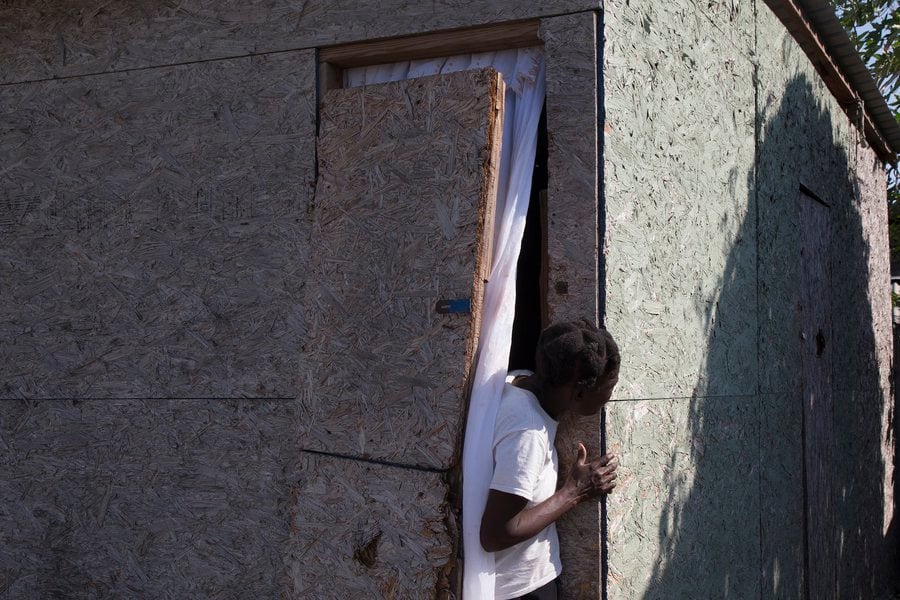
Today, not one home has been built in Campeche. Many residents live in shacks made of rusty sheet metal, without access to drinkable water, electricity or basic sanitation. When it rains, their homes flood and residents bail out mud and water.
The Red Cross received an outpouring of donations after the quake, nearly half a billion dollars.
The group has publicly celebrated its work. But in fact, the Red Cross has repeatedly failed on the ground in Haiti. Confidential memos, emails from worried top officers, and accounts of a dozen frustrated and disappointed insiders show the charity has broken promises, squandered donations, and made dubious claims of success.
The Red Cross says it has provided homes to more than 130,000 people. But the actual number of permanent homes the group has built in all of Haiti: six.
After the earthquake, Red Cross CEO Gail McGovern unveiled ambitious plans to "develop brand-new communities." None has ever been built.
Aid organizations from around the world have struggled after the earthquake in Haiti, the Western Hemisphere's poorest country. But ProPublica and NPR's investigation shows that many of the Red Cross's failings in Haiti are of its own making. They are also part of a larger pattern in which the organization has botched delivery of aid after disasters such as Superstorm Sandy. Despite its difficulties, the Red Cross remains the charity of choice for ordinary Americans and corporations alike after natural disasters.
One issue that has hindered the Red Cross' work in Haiti is an overreliance on foreigners who could not speak French or Creole, current and former employees say.
In a blistering 2011 memo, the then-director of the Haiti program, Judith St. Fort, wrote that the group was failing in Haiti and that senior managers had made "very disturbing" remarks disparaging Haitian employees. St. Fort, who is Haitian American, wrote that the comments included, "he is the only hard working one among them" and "the ones that we have hired are not strong so we probably should not pay close attention to Haitian CVs."
The Red Cross won't disclose details of how it has spent the hundreds of millions of dollars donated for Haiti. But our reporting shows that less money reached those in need than the Red Cross has said.
Lacking the expertise to mount its own projects, the Red Cross ended up giving much of the money to other groups to do the work. Those groups took out a piece of every dollar to cover overhead and management. Even on the projects done by others, the Red Cross had its own significant expenses – in one case, adding up to a third of the project's budget.
Where did the half billion raised for Haiti go? The Red Cross won't say.
In statements, the Red Cross cited the challenges all groups have faced in post-quake Haiti, including the country's dysfunctional land title system.
"Like many humanitarian organizations responding in Haiti, the American Red Cross met complications in relation to government coordination delays, disputes over land ownership, delays at Haitian customs, challenges finding qualified staff who were in short supply and high demand, and the cholera outbreak, among other challenges," the charity said.
The group said it responded quickly to internal concerns, including hiring an expert to train staff on cultural competency after St. Fort's memo. While the group won't provide a breakdown of its projects, the Red Cross said it has done more than 100. The projects include repairing 4,000 homes, giving several thousand families temporary shelters, donating $44 million for food after the earthquake, and helping fund the construction of a hospital.
"Millions of Haitians are safer, healthier, more resilient, and better prepared for future disasters thanks to generous donations to the American Red Cross," McGovern wrote in a recent report marking the fifth anniversary of the earthquake.
In other promotional materials, the Red Cross said it has helped "more than 4.5 million" individual Haitians "get back on their feet."
It has not provided details to back up the claim. And Jean-Max Bellerive, Haiti's prime minister at the time of the earthquake, doubts the figure, pointing out the country's entire population is only about 10 million.
"No, no," Bellerive said of the Red Cross' claim, "it's not possible."
When the earthquake struck Haiti in January 2010, the Red Cross was facing a crisis of its own. McGovern had become chief executive just 18 months earlier, inheriting a deficit and an organization that had faced scandals after 9/11 and Katrina.

Inside the Red Cross, the Haiti disaster was seen as "a spectacular fundraising opportunity," recalled one former official who helped organize the effort. Michelle Obama, the NFL and a long list of celebrities appealed for donations to the group.
The Red Cross kept soliciting money well after it had enough for the emergency relief that is the group's stock in trade. Doctors Without Borders, in contrast, stopped fundraising off the earthquake after it decided it had enough money. The donations to the Red Cross helped the group erase its more-than $100 million deficit.
The Red Cross ultimately raised far more than any other charity.
A year after the quake, McGovern announced that the Red Cross would use the donations to make a lasting impact in Haiti.
We asked the Red Cross to show us around its projects in Haiti so we could see the results of its work. It declined. So earlier this year we went to Campeche to see one of the group's signature projects for ourselves.
Street vendors in the dusty neighborhood immediately pointed us to Jean Jean Flaubert, the head of a community group that the Red Cross set up as a local sounding board.
Sitting with us in their sparse one-room office, Flaubert and his colleagues grew angry talking about the Red Cross. They pointed to the lack of progress in the neighborhood and the healthy salaries paid to expatriate aid workers.
"What the Red Cross told us is that they are coming here to change Campeche. Totally change it," said Flaubert. "Now I do not understand the change that they are talking about. I think the Red Cross is working for themselves."
The Red Cross' initial plan said the focus would be building homes — an internal proposal put the number at 700. Each would have finished floors, toilets, showers, even rainwater collection systems. The houses were supposed to be finished in January 2013.

None of that ever happened. Carline Noailles, who was the project's manager in Washington, said it was endlessly delayed because the Red Cross "didn't have the know-how."
Another former official who worked on the Campeche project said, "Everything takes four times as long because it would be micromanaged from DC, and they had no development experience."
Shown an English-language press release from the Red Cross website, Flaubert was stunned to learn of the project's $24 million budget — and that it is due to end next year.
"Not only is [the Red Cross] not doing it," Flaubert said, "now I'm learning that the Red Cross is leaving next year. I don't understand that." (The Red Cross says it did tell community leaders about the end date. It also accused us of "creating ill will in the community which may give rise to a security incident.")
The project has since been reshaped and downscaled. A road is being built. Some existing homes have received earthquake reinforcement and a few schools are being repaired. Some solar street lights have been installed, though many broke and residents say others are unreliable.
The group's most recent press release on the project cites achievements such as training school children in disaster response.
The Red Cross said it has to scale back its housing plans because it couldn't acquire the rights to land. No homes will be built.
Other Red Cross infrastructure projects also fizzled.
A Red Cross effort to save Haitians from cholera was crippled by internal issues. "None of these people had to die," said a Haitian official.
In January 2011, McGovern announced a $30 million partnership with the U.S. Agency for International Development, or USAID. The agency would build roads and other infrastructure in at least two locations where the Red Cross would build new homes.
But it took more than two and a half years, until August 2013, for the Red Cross just to sign an agreement with USAID on the program, and even that was for only one site. The program was ultimately canceled because of a land dispute.
A Government Accountability Office report attributed the severe delays to problems "in securing land title and because of turnover in Red Cross leadership" in its Haiti program.
Other groups also ran into trouble with land titles and other issues. But they also ultimately built 9,000 homes compared to the Red Cross' six.
Asked about the Red Cross' housing projects in Haiti, David Meltzer, the group's general counsel and chief international officer, said changing conditions forced changes in plans. "If we had said, 'All we're going to do is build new homes,' we'd still be looking for land," he said.
The USAID project's collapse left the Red Cross grasping for ways to spend money earmarked for it.
"Any ideas on how to spend the rest of this?? (Besides the wonderful helicopter idea?)," McGovern wrote to Meltzer in a November 2013 email obtained by ProPublica and NPR. "Can we fund Conrad's hospital? Or more to PiH[Partners in Health]? Any more shelter projects?"

It's not clear what helicopter idea McGovern was referring to or if it was ever carried out. The Red Cross would say only that her comments were "grounded in the American Red Cross' strategy and priorities, which focus on health and housing."
Another signature project, known in Creole as "A More Resilient Great North," is supposed to rehabilitate roads in poor, rural communities and to help them get clean water and sanitation.
But two years after it started, the $13 million effort has been faltering badly. An internal evaluation from March found residents were upset because nothing had been done to improve water access or infrastructure or to make "contributions of any sort to the well being of households," the report said.
So much bad feeling built up in one area that the population "rejects the project."
The Red Cross says 91% of donations went to help Haitians. That's not true.
Instead of making concrete improvements to living conditions, the Red Cross has launched hand-washing education campaigns. The internal evaluation noted that these were "not effective when people had no access to water and no soap." (The Red Cross declined to comment on the project.)
The group's failures went beyond just infrastructure.
When a cholera epidemic raged through Haiti nine months after the quake, the biggest part of the Red Cross' response — a plan to distribute soap and oral rehydration salts — was crippled by "internal issues that go unaddressed," wrote the director of the Haiti program in her May 2011 memo.
Throughout that year, cholera was a steady killer. By September 2011, when the death toll had surpassed 6,000, the project was still listed as "very behind schedule" according to another internal document.
The Red Cross said in a statement that its cholera response, including a vaccination campaign, has continued for years and helped millions of Haitians.
But while other groups also struggled early responding to cholera, some performed well.
"None of these people had to die. That's what upsets me," said Paul Christian Namphy, a Haitian water and sanitation official who helped lead the effort to fight cholera. He says early failures by the Red Cross and other NGOs had a devastating impact. "These numbers should have been zero."
So why did the Red Cross' efforts fall so short? It wasn't just that Haiti is a hard place to work.
"They collected nearly half a billion dollars," said a congressional staffer who helped oversee Haiti reconstruction. "But they had a problem. And the problem was that they had absolutely no expertise."
Lee Malany was in charge of the Red Cross' shelter program in Haiti starting in 2010. He remembers a meeting in Washington that fall where officials did not seem to have any idea how to spend millions of dollars set aside for housing. Malany says the officials wanted to know which projects would generate good publicity, not which projects would provide the most homes.
"When I walked out of that meeting I looked at the people that I was working with and said, 'You know this is very disconcerting, this is depressing,'" he recalled.
The Red Cross said in a statement its Haiti program has never put publicity over delivering aid.
Malany resigned the next year from his job in Haiti. "I said there's no reason for me to stay here. I got on the plane and left."

Sometimes it wasn't a matter of expertise, but whether anybody was filling key jobs. An April 2012 organizational chart obtained by ProPublica and NPR lists 9 of 30 leadership positions in Haiti as vacant, including slots for experts on health and shelter.
The Red Cross said vacancies and turnover were inevitable because of "the security situation, separation from family for international staff, and the demanding nature of the work."
The constant upheaval took a toll. Internal documents refer to repeated attempts over years to "finalize" and "complete" a strategic plan for the Haiti program, efforts that were delayed by changes in senior management. As late as March 2014, more than four years into a six-year program, an internal update cites a "revised strategy" still awaiting "final sign-off."
The Red Cross said settling on a plan early would have been a mistake. "It would be hard to create the perfect plan from the beginning in a complicated place like Haiti," it said. "But we also need to begin, so we create plans that are continually revised."
The Red Cross says it provided homes to more than 130,000 Haitians. But they didn't.
Those plans were further undermined by the Red Cross' reliance on expats. Noailles, the Haitian development professional who worked for the Red Cross on the Campeche project, said expat staffers struggled in meetings with local officials.
"Going to meetings with the community when you don't speak the language is not productive," she said. Sometimes, she recalled, expat staffers would skip such meetings altogether.
The Red Cross said it has "made it a priority to hire Haitians" despite lots of competition for local professionals, and that over 90 percent of its staff is Haitian. The charity said it used a local human resources firm to help.
Yet very few Haitians have made it into the group's top echelons in Haiti, according to five current and former Red Cross staffers as well as staff lists obtained by ProPublica and NPR.
That not only affected the group's ability to work in Haiti, it was also expensive.
According to an internal Red Cross budgeting document for the project in Campeche, the project manager – a position reserved for an expatriate – was entitled to allowances for housing, food and other expenses, home leave trips, R&R four times a year, and relocation expenses. In all, it added up to $140,000.
Compensation for a senior Haitian engineer — the top local position — was less than one-third of that, $42,000 a year.
Shelim Dorval, a Haitian administrator who worked for the Red Cross coordinating travel and housing for expatriate staffers, recalled thinking it was a waste to spend so much to bring in people with little knowledge of Haiti when locals were available.
"For each one of those expats, they were having high salaries, staying in a fancy house, and getting vacation trips back to their countries," Dorval said. "A lot of money was spent on those people who were not Haitian, who had nothing to do with Haiti. The money was just going back to the United States."
Soon after the earthquake, McGovern, the Red Cross CEO, said the group would make sure donors knew exactly what happened to their money.
The Red Cross would "lead the effort in transparency," she pledged. "We are happy to share the way we are spending our dollars."
That hasn't happened. The Red Cross' public reports offer only broad categories about where $488 million in donations has gone. The biggest category is shelter, at about $170 million. The others include health, emergency relief and disaster preparedness.
It has declined repeated requests to disclose the specific projects, to explain how much money went to each or to say what the results of each project were.
There is reason to doubt the Red Cross' claims that it helped 4.5 million Haitians. An internal evaluation found that in some areas, the Red Cross reported helping more people than even lived in the communities. In other cases, the figures were low, and in others double-counting went uncorrected.
In describing its work, the Red Cross also conflates different types of aid, making it more difficult to assess the charity's efforts in Haiti.
For example, while the Red Cross says it provided more than 130,000 people with homes, that includes thousands of people who were not actually given homes, but rather were "trained in proper construction techniques." (That was first reported by the Haiti blog of the Center for Economic and Policy Research.)
The figure includes people who got short-term rental assistance or were housed in several thousand "transitional shelters," which are temporary structures that can get eaten up by termites or tip over in storms. It also includes modest improvements on 5,000 temporary shelters.
The Red Cross also won't break down what portion of donations went to overhead.
The Red Cross says that for each dollar donated, 91 cents went to Haiti. But here's what actually happened in one $5.4 million project to improve temporary shelters.
Source: American Red Cross and ProPublica Analysis
Credit: Sisi Wei/ProPublica
McGovern told CBS News a few months after the quake, "Minus the 9 cents overhead, 91 cents on the dollar will be going to Haiti. And I give you my word and my commitment, I'm banking my integrity, my own personal sense of integrity on that statement."
But the reality is that less money went to Haiti than 91 percent. That's because in addition to the Red Cross' 9 percent overhead, the other groups that got grants from the Red Cross also have their own overhead.
In one case, the Red Cross sent $6 million to the International Federation of the Red Cross for rental subsidies to help Haitians leave tent camps. The IFRC then took out 26 percent for overhead and what the IFRC described as program-related "administration, finance, human resources" and similar costs.
Beyond all that, the Red Cross also spends another piece of each dollar for what it describes as "program costs incurred by the American Red Cross in managing" the projects done by other groups.
The American Red Cross' management and other costs consumed an additional 24 percent of the money on one project, according to the group's statements and internal documents. The actual work, upgrading shelters, was done by the Swiss and Spanish Red Cross societies.
"It's a cycle of overhead," said Jonathan Katz, the Associated Press reporter in Haiti at the time of the earthquake who tracked post-disaster spending for his book, The Big Truck That Went By. "It was always going to be the American Red Cross taking a 9 percent cut, re-granting to another group, which would take out their cut."
Given the results produced by the Red Cross' projects in Haiti, Bellerive, the former prime minister, said he has a hard time fathoming what's happened to donors' money.
"Five hundred million dollars in Haiti is a lot of money," he said. "I'm not a big mathematician, but I can make some additions. I know more or less the cost of things. Unless you don't pay for the gasoline the same price I was paying, unless you pay people 20 times what I was paying them, unless the cost of the house you built was five times the cost I was paying, it doesn't add up for me."

This story was co-published with NPR. Mitzy-Lynn Hyacinthe contributed reporting.
Read about how the Red Cross botched key elements of its mission after Superstorm Sandy and Hurricane Isaac in PR Over People: The Red Cross' Secret Disaster. And about how the Red Cross' CEO has been serially misleading about where donors' dollars are going.
If you have information about the Red Cross or about other international aid projects, please email justin@propublica.org.

Justin Elliott is a ProPublica reporter covering politics and government accountability. Previously, he was a reporter at Salon.com and TPMmuckraker and news editor at Talking Points Memo.
Laura Sullivan is a NPR News investigative correspondent whose work has cast a light on some of the country's most disadvantaged people.
Kannu
Here's an example of how people lose their arguments. A laudable objective. Stop war. I concur with that. I hate war as well. But the author forgets few things. That a state has to first and foremost keep its citizens safe and there are competing ideologies and missions which stop them from doing so. Think about the police. Why do you need them?
Second is to make silly comparisons. Don't make an aircraft carrier and instead use the money to build water systems. Good. Whose going to pay for that? Running costs for the next 30 years? The American taxpayer will pay for the world's water system? There's that little matter of democracy to worry about.
When people make arguments like this,, they cause more damage to their own cause. Just noise.
Love
Baba
America dumbs down: a rising tide of anti-intellectual thinking
http://www.macleans.ca/politics/america-dumbs-down/
(via Instapaper)

Furthermore: This US Memorial Day Remember War Is Murder
BY GLEN BARRY · MAY 25, 2014, Ecological Internet: We must stop glorifying war murders and their perpetrators, and demobilize globally in order to address the far greater threat of abrupt climate change and ecosystem collapse. Murder has not, nor will it ever, make us free.
This was another pleasant surprise kids. Did I tell you that I went looking for his house in chennai last year? And found it? It was just a normal house. Perhaps I was reading too much into it. Or was hoping to see some plaques or something but nothing. Maybe that's the right metaphor. India has these brilliant people but they aren't recognised at all. The man was brilliant and his work is still being recognised in amazing ways. That's one of my regrets. That I'm not able to spend more time doing mathematics. So much to learn and so little time. It's so much fun doing maths. Specially when you're trying to derive things. Pure mathematics was beyond me though. This was more applied maths that I liked. I couldn't get my head around the pure abstract thinking that pure mathematics requires. But I'm happy both of you like mathematics. It's fun and games.
Anyway read and admire kids :)
Ramanujan surprises again | plus.maths.org
https://plus.maths.org/content/ramanujan
(via Instapaper)

A box of manuscripts and three notebooks. That's all that's left of the work of Srinivasa Ramanujan, an Indian mathematician who lived his remarkable but short life around the beginning of the twentieth century. Yet, that small stash of mathematical legacy still yields surprises. Two mathematicians of Emory University, Ken Ono and Sarah Trebat-Leder, have recently made a fascinating discovery within its yellowed pages. It shows that Ramanujan was further ahead of his time than anyone had expected, and provides a beautiful link between several milestones in the history of mathematics. And it all goes back to the innocuous-looking number 1729.
Ramanujan's story is as inspiring as it is tragic. Born in 1887 in a small village around 400 km from Madras (now Chennai), Ramanujan developed a passion for mathematics at a young age, but had to pursue it mostly alone and in poverty. Until, in 1913, he decided to write a letter to the famous Cambridge number theorist G.H. Hardy.
Here's an interesting book review son, on the slavery issue around the Indian Ocean. This area actually saw greater numbers of slaves and for longer compared to the Atlantic side and that wasn't anything less. It's just that we know more about the slavery trade to the Americas than we know about the Indian Ocean trade, the Arab trade, the intra-African trade. That was brutal as well. India has a huge slavery market and elements of that in terms of indentured servitude still survives to this day!
But still this book gives some perspectives on the slavery trade in the Indian Ocean despite the lacunae.
Look forward to seeing you tonight son.
Love
Baba
H-Net Reviews
https://www.h-net.org/reviews/showrev.php?id=45247
(via Instapaper)
Indian Ocean Slavery in the Age of Abolition. New Haven: Yale University Press, 2013. 264 pp. $35.00 (paper), ISBN 978-0-300-16387-2.
Reviewed by Marina Carter (Research Associate, School of History, Classics and Archaeology, University of Edinburgh)
Published on H-Slavery (November, 2015)
Indian Ocean Slavery in the Age of Abolition, edited by Robert Harms, Bernard K. Freamon, and David W. Blight, is the latest of several publications that help to address the comparative neglect of the Indian Ocean vis-à-vis the Atlantic in the literature on slavery and the slave trade, while emphasizing that the two are not readily comparable. As Harms notes in his introduction, "the older Indian Ocean commercial economy never lost its identity. Underneath the dominant European capital and shipping, networks of indigenous traders travelling in traditional vessels remained vibrant and even expanded in the nineteenth century" (p. 3). The collected essays in this volume navigate carefully through these choppy waters of complex identities and competing spheres of influence and cover much ground.
Diya
This is the article which we discussed on Saturday. You remembered the natural history museum where we saw the dodo. I'm not sure if you remember the Christ church college where we went 2 years back when dada was being interviewed or the dining room which is mentioned here.
What a lovely backstory about Alice. She was real! And she had kids. It brings that story alive. I think we need to read the book again and also maybe go see the movie again. I think they've released a sequel again. I love the book and how the imagination runs riot there.
You can ask dada when he's home today about the colleges if you want :)
Hope you feel better today choti. Gives you a big hug and cuddle :)
Love
Baba
Finding Alice’s ‘Wonderland’ in Oxford
http://www.nytimes.com/2015/11/15/travel/alice-in-wonderland-oxford-lewis-carroll.html
(via Instapaper)
Alice was Alice Liddell, the 10-year-old daughter of Henry George Liddell, the dean of Christ Church, the largest college of Oxford University. Mr. Dodgson was Charles Lutwidge Dodgson, a mathematics lecturer at Christ Church, a recently ordained deacon in the Church of England, brilliant logician and consummate storyteller.
He acceded to her request, and over the next few months recorded the story in a manuscript he eventually illustrated and gave to Alice as a Christmas gift in 1864.
Encouraged by friends, including the fantasy writer George MacDonald, he expanded the book, commissioned illustrations by the political cartoonist John Tenniel, and had it published at his own expense under the name Lewis Carroll. In the 150 years since the publication of “Alice’s Adventures in Wonderland,” it has influenced creations as varied as “Finnegans Wake” by James Joyce, illustrations by Salvador Dalí and a mock turtle soup from the British chef Heston Blumenthal. The book and its author were remarkable: the one for its utter departure from moralistic children’s stories into a world of subversive nonsense, the other for talents as diverse as mathematics and logic, photography and poetry and an ability, nurtured in his childhood home of 11 siblings, to entertain and connect with children.
Fantastic as it was, “Wonderland” was rooted in the place Dodgson lived and worked: the city and environs of Oxford with its ancient university, its “dreaming spires” and its surrounding countryside. Oxford is a city teeming with tourists and traffic, whose shop windows, in the sesquicentennial year of “Wonderland,” overflow with Alice merchandise; but if one listens closely, if one ducks through stone arches, opens creaky oaken doors, and descends to quiet riverside paths, one can still find the Oxford of Charles Dodgson and Alice.
I set out to discover that place, beginning with the college of Christ Church, where Dodgson lived from 1851 until his death in 1898 at age 65 and Alice lived from the time she was 3 until her marriage in 1880.
Visitors enter the college through the Meadows Buildings, erected by Dean Liddell in 1862. Dodgson’s first rooms in the college were in the cloisters, and here I saw the great Norman doorway to the chapter house — now called the Queen Alice door after a similar doorway in Tenniel’s illustration of Queen Alice in “Through the Looking-Glass.”
 Illustration by Kjell Reigstad
Here's an interesting take on something that you already know son. Water scarcity is a fact of life across so many countries and England included. Two years back, there was a hose pipe ban in the uk. Despite it raining so much. There are tons of reasons but mainly it's because we don't manage water properly and the stresses are huge. Despite a slowly reducing population, many countries are severely water stressed. There was a nasa hydrological map which showed how much ground water aquifers have been depleted in Asia Middle East and Africa. This will blow up the economics terribly.
But oases are truly beautiful son. I've seen them in india and Saudi Arabia. To see them emerge out of the dusty desert is extraordinary. The feeling of happiness and joy. The feeling of being alive. It's fecund. It's fertile. The water. The brilliant green. Truly amazing sights.
I'm running a small project in Nicaragua with the university of Bedfordshire where we will be trying to help a village become water sustainable. By using water harvesting techniques, improved irrigation methods, aquifer replenishment, and so on and so forth. This 5 year plan will be fascinating. I've never worked with water before. Hsbc is also sponsoring water charities and I'm getting involved there as well. This is going to be a big strategic issue for us.
Look forward to speaking to you tonight son.
Love you
Baba
The high environmental cost of our oasis fix – Rebecca Lawton – Aeon
http://aeon.co/magazine/science/the-high-environmental-cost-of-our-oasis-fix/
(via Instapaper)
Seen from the air, the single verdant parcel of land with its straight borders and sharp edges resembles a green postage stamp pasted on a great expanse of manila envelope. Inside the boundary, a screen of trees hides a palatial estate, acres of emerald turf, a paved circular driveway, and an extensive array of tumbling, marble fountains. Outside the rectangle, a hot, rock-strewn fan of tan alluvium extends unvegetated and unwatered for half a kilometre to another such parcel, then another, then another. Toward the city centre eight kilometres away, residences cluster closer together but emulate the lush feel of the outlying estates with their surfeit of palm trees, water features and improbably green turf.
Despite working in a bank son, I have problems with debt. I had a long discussion with many technologists and senior managers last week at an industry dinner. They were all getting excited about technological disruptions. Fine. But where's the growth from these new developments? Is this actually adding value? I don't think so. This is extracting more value from unused assets such as spare bedrooms and unused cars but a leap in productivity or sustainable demand isn't there. Where there is, is primed with debt with the underlying assumption that this investment will actually return monies which will be more than the interest rates. Which doesn't usually. So capital is wasted.
So debt is dodgy. It hobbles you. It forces you to regularly pay. And at a time when you've got to be more flexible and fun to meet the challenges.
Interesting thesis son.
Love
Baba
The Devil's in the Debt
http://www.bloombergview.com/articles/2015-11-06/inequality-and-excessive-debt-cause-financial-crisis
(via Instapaper)

The 2008 financial crash was a self-inflicted, avoidable economic catastrophe. It wasn't the result of war or political turmoil, or the consequence of competition from emerging economies. It didn't derive from underlying tensions over income distribution or from profligate government spending.
No, the origins of this crisis lay in the dealing rooms of London and New York banks and shadow banks -- part of a global financial system whose enormous personal rewards had been justified by the supposed economic benefits of financial innovation and increased financial activity.
Many people are legitimately angry that few bankers have been punished. Some were incompetent, others dishonest. Yet they were not a fundamental driver of the crisis any more than the misbehavior of individual financiers in 1920s America caused the Great Depression.
Post-crisis regulatory reforms also miss the mark. Much focus has been placed on making sure that taxpayers never again have to bail out “too big to fail” banks. That's certainly important, but government bailout costs were small change compared with the total harm the financial crisis caused.
The Federal Reserve has sold all its capital injections into banks at a profit, and made a positive return on its provision of liquidity to the financial system. Across the advanced economies, bailout and support costs will be, at most, 3 percent of gross domestic product.
The full economic cost is far bigger. Advanced economies' public debt on average increased by 34 percent of GDP between 2007 and 2014. More important, national incomes and living standards in many countries are 10 percent or more below where they could have been, and are likely to remain there in perpetuity.
Such losses could happen again, and neither bankers threatened by prison nor a no-bailout regime will guarantee a more stable financial system. A fixation on these issues threatens to divert us from the underlying causes of financial instability.
Kannu Diya
Here's a chapter from horrible histories. How Hindu King's nicked idols and destroyed temples properly. Of course one can say that the Hindu kings didn't destroy the idols but that's a quibble. The champions of idol destruction are of course the children of that very jealous God of Jews, Christians and Muslims. Very very jealous. Reading the scriptures will give you a shiver. He's pretty clear (or at least his scribes said so) that if you worship another God, you will be cast into hell and bad stuff will happen.
Of course this is all utter rubbish. The idea that a God is all tied up in blocks of stone or is unique is complete and utter rubbish. At best, idols are focus objects. Objects of art. Objects of veneration. But to expect that they have some innate divinity is rubbish. But see how many wars have happened over idols. Mecca. Jerusalem. Ayodhya. Constantinople. Thebes. Mexico. You name it.
Religion is a way of control kids. Don't mix with faith.
Have a lovely Week. Best of luck with the interviews son.
Love
Baba
War trophies: When Hindu kings raided temples and abducted idols
http://scroll.in/article/767065/war-trophies-when-hindu-kings-desecrated-temples-and-abducted-idols
(via Instapaper)

Temple desecration under the Muslim rule in India was a continuation of the policy the ruling dynasties pursued in the pre-Islamic period. Hindu kings victorious in battles plundered the temples their vanquished rivals patronised, ferreted away the deities installed there, and in extreme cases, even broke them. Such instances are documented and known to historians.
But this phenomenon has failed to inform the public discourse on Islamic iconoclasm. This has enabled the proponents of Hindutva to project the destruction of temples under Muslim rulers as an assault on the Hindu religion, and as an example of the tyranny perpetrated on its followers.
I

