Saturday, October 29


Friday, October 28
should you do a phd?
both of you have mentioned that you may want to consider doing a PhD. it is a good thing to do, kids, but you should be sure of why you want to do it. I came across this article which gives a very good response to if you should do a phd. I have done phd's for professional reasons as well as personal reasons. All my PhD's had something to do with my job but I didn't get my job because of my phd…it was because of the skills I had. For example, i got a job in a s/w firm because i was able to code, do complex mathematical and statistical calculations and knew financial markets but then anybody with a MSc could get it as well.
so something to think about :)
and now i have to go to the library to work on my PhD..I have to go check out some ledgers dating back the 1700's :)
love
Baba
======
"I don't know if we'll have time to meet again before I go back but I just wanted to wrap up and give you some more thoughts on doing a PhD, if you are considering it
1. It's good to have an idea why you are doing it, for example to get a certain kind of job in industry, or to get an academic job, or just to expand your knowledge. I think all of these reasons are fine. Remember that professorships are very few and today, most PhDs can not continue to become full professors. In many fields, postdocs are in a way "cheap labour" relative to their skill level. I don't recommend doing a PhD just because you have nothing better to do ;-)
Over the years since the 70's or so, the number of PhD students has increased dramatically, as has the number of postdocs, but the number of associate/assistant or tenured professors has not really changed. It has become much, much harder to climb that academic pyramid that you may be dreaming of...
2. As I said it's important to have an advisor you like and respect... some advisors really like the scientific field and some are more political/administrators. Both kinds may work for you depending on your personal style, and both kinds may cause problems for you. It may be very hard to switch advisor once you start, depending on the country you do it in, and this person's name will be with you forever. It seems to me that in practice, almost everybody has a mixed experience with their supervisors, so there will be good and bad things, just like in any relationship. In many ways I was lucky with my supervisor, because he secured funding and allowed me a lot of research freedom, but he was a little bit too political for me to really respect him as a mentor (keep this comment to yourself please).
3. Whatever you do, almost nobody will earn more money at the end of their career because they had a PhD. On the other hand, you may get to do more interesting jobs, and some jobs indeed require a PhD. As an experienced software engineer, fortunately you will always be employable anyway (in today's market conditions) so you don't need to worry too much about your worst case situation. You will not be unemployed and forced to live with your parents. PhDs in history or philosophy are not that lucky in 2015...
4. (Advice for actually doing a PhD.) PhD students spend many years focusing on a very small part of their field, so it seems common to lose your sense of proportion during or after you've done it. I still think of a lot of things in terms of programming languages...
So if you ever do it, you should try to keep an outside life as much as possible (non-academic friends, physical exercise etc) to make sure your life doesn't become totally unbalanced.
Also, I would at that point recommend not taking your own publications and publication record too seriously, even though it may be a condition for graduating.. ("at least three high level publications" or something similar might be an expectation). Your supervisor will always push you to publish, since he/she gets credit for it, for free. I worried way too much about this, which actually hurt my results and caused a lot of pain. Just like in love, the only way to win that game is not to be too desperate ;-)"
so something to think about :)
and now i have to go to the library to work on my PhD..I have to go check out some ledgers dating back the 1700's :)
love
Baba
======
"I don't know if we'll have time to meet again before I go back but I just wanted to wrap up and give you some more thoughts on doing a PhD, if you are considering it
1. It's good to have an idea why you are doing it, for example to get a certain kind of job in industry, or to get an academic job, or just to expand your knowledge. I think all of these reasons are fine. Remember that professorships are very few and today, most PhDs can not continue to become full professors. In many fields, postdocs are in a way "cheap labour" relative to their skill level. I don't recommend doing a PhD just because you have nothing better to do ;-)
Over the years since the 70's or so, the number of PhD students has increased dramatically, as has the number of postdocs, but the number of associate/assistant or tenured professors has not really changed. It has become much, much harder to climb that academic pyramid that you may be dreaming of...
2. As I said it's important to have an advisor you like and respect... some advisors really like the scientific field and some are more political/administrators. Both kinds may work for you depending on your personal style, and both kinds may cause problems for you. It may be very hard to switch advisor once you start, depending on the country you do it in, and this person's name will be with you forever. It seems to me that in practice, almost everybody has a mixed experience with their supervisors, so there will be good and bad things, just like in any relationship. In many ways I was lucky with my supervisor, because he secured funding and allowed me a lot of research freedom, but he was a little bit too political for me to really respect him as a mentor (keep this comment to yourself please).
3. Whatever you do, almost nobody will earn more money at the end of their career because they had a PhD. On the other hand, you may get to do more interesting jobs, and some jobs indeed require a PhD. As an experienced software engineer, fortunately you will always be employable anyway (in today's market conditions) so you don't need to worry too much about your worst case situation. You will not be unemployed and forced to live with your parents. PhDs in history or philosophy are not that lucky in 2015...
4. (Advice for actually doing a PhD.) PhD students spend many years focusing on a very small part of their field, so it seems common to lose your sense of proportion during or after you've done it. I still think of a lot of things in terms of programming languages...
So if you ever do it, you should try to keep an outside life as much as possible (non-academic friends, physical exercise etc) to make sure your life doesn't become totally unbalanced.
Also, I would at that point recommend not taking your own publications and publication record too seriously, even though it may be a condition for graduating.. ("at least three high level publications" or something similar might be an expectation). Your supervisor will always push you to publish, since he/she gets credit for it, for free. I worried way too much about this, which actually hurt my results and caused a lot of pain. Just like in love, the only way to win that game is not to be too desperate ;-)"
Saturday, October 15
The Bella Miquelina affair: The transatlantic slave trade, British suppression and one African’s quest for liberty in the Bay of All Saints, Salvador, Brazil in 1848
this was such a fascinating read. Yes, there was slavery in the UK but to its credit, it was perhaps the first to fight very hard against slavery as well. Here's a story of how the UK fought for ending slavery in Brazil.
In the late afternoon of Saturday 22 April 1848, the British cruiser H.M.S. Grecian gave chase to a suspicious-looking ship it encountered off the coast of Bahia, Brazil. By midnight, the Greciansucceeded in seizing the slave ship Bella Miquelina. One week later, the Bella Miquelina sailed into the Bay of All Saints at Salvador, Bahia, Brazil under the direction of a British prize crew. The appearance of this captured vessel with 517 Africans on board “set off alarms” all over the city. Many Bahians feared that disembarkation might cause the spread of disease and increase slave resistance in the city. As negotiations unfolded during the next 48 hours between Bahian authorities and British representatives, a group of 80 men attacked the Bella Miquelina in hopes of gaining control over the ship and taking the Africans. The British prize crew successfully held of this attack. In the midst of this turbulent milieu, a fugitive African slave named John Freeman rowed a small boat to the side of the Grecian and asked for assistance. Commander L.S. Tindal allowed Freeman to remain on board. Six weeks later, the Bella Miquelina returned to Sierra Leone and the Africans were freed by the British Vice-Admiralty Court at Freetown. One year later, Freeman returned to Sierra Leone on board H.M.S. Adventure as a free man. These events shed light on British strategies to suppress the slave trade to Brazil in 1848 as well as Brazilian and African responses.
In the late afternoon of Saturday 22 April 1848, the British cruiser H.M.S. Grecian gave chase to a suspicious-looking ship it encountered off the coast of Bahia, Brazil. By midnight, the Greciansucceeded in seizing the slave ship Bella Miquelina. One week later, the Bella Miquelina sailed into the Bay of All Saints at Salvador, Bahia, Brazil under the direction of a British prize crew. The appearance of this captured vessel with 517 Africans on board “set off alarms” all over the city. Many Bahians feared that disembarkation might cause the spread of disease and increase slave resistance in the city. As negotiations unfolded during the next 48 hours between Bahian authorities and British representatives, a group of 80 men attacked the Bella Miquelina in hopes of gaining control over the ship and taking the Africans. The British prize crew successfully held of this attack. In the midst of this turbulent milieu, a fugitive African slave named John Freeman rowed a small boat to the side of the Grecian and asked for assistance. Commander L.S. Tindal allowed Freeman to remain on board. Six weeks later, the Bella Miquelina returned to Sierra Leone and the Africans were freed by the British Vice-Admiralty Court at Freetown. One year later, Freeman returned to Sierra Leone on board H.M.S. Adventure as a free man. These events shed light on British strategies to suppress the slave trade to Brazil in 1848 as well as Brazilian and African responses.
Sunday, October 9
Saturday, October 1
so when the immigrants have to be deported, which date do we start at?

Wednesday, September 28
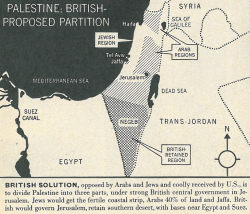
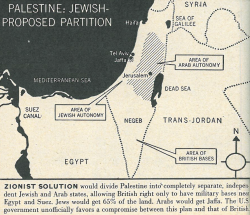
Where Israel could have ended up if it didnt end up where it did

in the mid 1940's, there was a big debate about where the Land for the Jews could be, specially after the Holocaust. Palestine had a problem because the British royally screwed it up as usual and you can see the problems till date.
the United Kingdom proposed Uganda which wasnt taken up but I came across this poster where other places around the world were recommended for the New Israel.
I wonder what the world would have been like if number 10 was used on top of India?
Tuesday, September 27
Tomb Security in Ancient Egypt: How and Why Did the Egyptians Protect Their Tombs?
When I was young, i wanted to be an Egyptologist..well, I still do..and may well do it once I grow up...
but in the interim, this paper was a fascinating overview of how the egyptian tomb security system evolved to safeguard their contents. Didnt quite work, did it? as with walls and computer security defences, its a never ending fight.
Protecting the dead from abuse is an ancient human instinct but Egypt raised this concern to levels never seen before or since. Tomb robbery is well attested in Egypt from the earliest times and it becomes obvious when looking at the architecture of the Egyptian tomb that physical measures were soon taken to prevent it. This begs several questions: Why did the Egyptians expend such effort in defending their tombs? How did they protect them? And what influence did this have on the design of the tomb?

but in the interim, this paper was a fascinating overview of how the egyptian tomb security system evolved to safeguard their contents. Didnt quite work, did it? as with walls and computer security defences, its a never ending fight.
Protecting the dead from abuse is an ancient human instinct but Egypt raised this concern to levels never seen before or since. Tomb robbery is well attested in Egypt from the earliest times and it becomes obvious when looking at the architecture of the Egyptian tomb that physical measures were soon taken to prevent it. This begs several questions: Why did the Egyptians expend such effort in defending their tombs? How did they protect them? And what influence did this have on the design of the tomb?
Sunday, September 25
“Godnapping” in the Ancient Near East
this was so fascinating, kings would kidnap the God Statues of the countries and kingdoms they conquered and took them back...
now this is something that India should have done as well, instead of breaking the idols and temples and mosques, you take it away to your own kingdom, eh? much better idea, no?
See the article here.

now this is something that India should have done as well, instead of breaking the idols and temples and mosques, you take it away to your own kingdom, eh? much better idea, no?
See the article here.

I captured the cities of Tarbaṣu and Yaballu. I carried off 30,000 people, together with their possessions, their property, their goods, and their gods. I destroyed those cities, together with cities in their environs, making them like the tells after the Deluge. – Assyrian King Tiglath-pileser III (745-727 BCE)
When Mesopotamian polities went to war, the successful party gained more than just territory. Triumphant kings boast in their inscriptions that they carried off royal family members, deportees, and precious goods and treasures. Often nested in these lists is a more unusual type of loot: the gods of the losing king or polity were also moved into the victorious king’s homeland. This particular removal of gods, called “godnapping” by modern scholars, is attested over a long period of Mesopotamian history, from the start of the 2nd millennium through the 5th century BCE. But how can a mortal carry off a divine being against its will?
Ancient Near Eastern gods were represented on earth by cult images. Often anthropomorphic, the images were made from a wooden core with precious metals and stones as decoration. These statues would have stood in temples, locations that were thought of as the houses of the gods, and received offerings there. Because of the perishable nature of the core material, none of the original cult images have survived until today, but there are texts that describe the creation of these statues and the rituals that imbued them with the divine spirit. Reliefs also depict these divine images, as seen in an example from the Assyrian king Tiglath-pileser III’s palace reliefs in Nimrud, which features Assyrian soldiers carrying off an enemy’s gods. Most of the evidence for godnapping, however, comes from texts, including royal inscriptions, chronicles, and letters.
Friday, September 23
A beggar running alongside King George V's coach, 1920 - I will just leave this here

for more details, click here.
Turns out the beggar is actually an old soldier. That is how kings and governments repay soldiers..hate hate hate war...rubbish.
Subscribe to:
Posts (Atom)