now this is a very interesting result.
I quote
Parents who excel at math produce children who excel at math. This is according to a recent study that shows a distinct transfer of math skills from parent to child. The study specifically explored intergenerational transmission -- the concept of parental influence on an offspring's behavior or psychology -- in mathematic capabilities.
there's a genetic transfer...
so if they are rubbish at maths, blame their parents? and then their parents? and and and?
Saturday, September 3


Friday, September 2
Getting kids to do more maths
As you may know, I am a STEM ambassador and once every month or so, pop into a London school to speak to children about them doing more STEM and talk about how I use Maths in my day to day work. So it was with interest that I read this article
I quote
Now there's obviously a difference in outlook here. I work in banking and we DO use mathematics. We use statistics, we use calculus, we use matrix algebra and we can get some really funky stuff. We use operational research and optimisation techniques. Dont forget we also use quite a lot of physics (money behaves like a fluid?) and stuff like that. In many of my banking jobs, i hired PhD's in physics, chemistry, astronomy, comp science, etc. But no trigonometry :) or geometry.
But i can see why people want to use it as a filter. Doing Maths gives signals that you are structured, you are able to handle abstractions, you care good with numbers, you can review and analyse numbers, so on and so forth. It also gives signals that you are a good analyst (not that sure about this one). I would also posit that people with maths are maybe a bit more financial literate? although I dont have any evidence for this
So interesting view.
I quote
The math myth is the myth that the future of the American economy is dependent upon the masses having higher mathematics skills. This myth goes back to at least Sputnik, when the Russians were going to surpass us because they were better in math and science. It returned in the late 80's when the Germans and Japanese were going to surpass us because they were better in math and science. It's occurring again now because the Indians and Chinese are better than us in math and science. I find it difficult to find anyone who uses more than Excel and eighth grade level mathematics (=arithmetic, and a little bit of algebra, statistics and programming). In the summer of 2007 I taught an advanced geometry course and had two students in the class who had been engineers and one who had been an actuary. They claimed never to have used anything beyond Excel and eighth grade level mathematics; never a trig function or even a log or exponential function! There is in fact a deskilling going on in our economy, where even the ability to make change is about to disappear as an important skill. Vivek Wadhwa has described how there's no shortage of scientists and engineers. I've been concerned with what skills those who are working as scientists and engineers actually use. I find that the vast majority of scientists, engineers and actuaries only use Excel and eighth grade level mathematics. This suggests that most jobs that currently require advanced technical degrees are using that requirement simply as a filter. In particular, I'm working on documenting the following: Math Myth Conjecture: If one restricts one's attention to the hardest cases, namely, graduates of top engineering schools such as MIT, RPI, Cal. Tech., Georgia Tech., etc., then the percent of such individuals holding engineering as opposed to management, financial or other positions, and using more than Excel and eighth grade level mathematics (arithmetic, a little bit of algebra, a little bit of statistics, and a little bit of programming) is less than 25% and possibly less than 10%.
Now there's obviously a difference in outlook here. I work in banking and we DO use mathematics. We use statistics, we use calculus, we use matrix algebra and we can get some really funky stuff. We use operational research and optimisation techniques. Dont forget we also use quite a lot of physics (money behaves like a fluid?) and stuff like that. In many of my banking jobs, i hired PhD's in physics, chemistry, astronomy, comp science, etc. But no trigonometry :) or geometry.
But i can see why people want to use it as a filter. Doing Maths gives signals that you are structured, you are able to handle abstractions, you care good with numbers, you can review and analyse numbers, so on and so forth. It also gives signals that you are a good analyst (not that sure about this one). I would also posit that people with maths are maybe a bit more financial literate? although I dont have any evidence for this
So interesting view.
Thursday, September 1
Public Mass Modern Education, Religion, and Human Capital in Twentieth-Century Egypt
People faff around with educational systems at their peril because the impact of even minor changes are felt 2-3 generations ahead. But people dont listen and as the quote goes, fools rush in where angels fear to tread.
See this example from Egypt
See this example from Egypt
Abstract
Public mass modern education was a major pillar of state-led development in the post-Colonial period. I examine the impact of Egypt's transformation in 1951–1953 of traditional elementary schools (kuttabs) into modern primary schools on the Christian-Muslim educational and occupational differentials, which were in favor of Christians. The reform granted kuttabs' graduates (where Muslim students were over-represented) access to higher stages of education that were previously confined to primary schools' graduates. Exploiting the variation in exposure to the reform across cohorts and districts of birth among males in 1986, I find that the reform benefited Muslims but not Christians.
What Europe is suffering from is the result of generalizing education among all levels of society… they have no chance of avoiding what happened [Europe's 1848 revolutions]. So if this is an example in front of us, our duty is simply to teach them how to read and write to a certain limit in order to encourage satisfactory work and not to spread education beyond that point.Muhammad Ali Pasha, Ottoman Viceroy of Egypt (1805–1848), in a private letter to his son, Ibrahim Pasha (in Judith Cochran 1986, p. 6)
Education is like the water we drink and the air we breathe.Taha Hussein, Egyptian liberal intellectual and Egypt's Minister of Education (1950–1952)
The poor go to heaven, but can't they have a share on Earth too? They are willing to give up a share in heaven in exchange for a share on Earth.Gamal Abdul-Nasser, President of Egypt (1956–1970) (Excerpt from a public speech)
Wednesday, August 31
The second biggest bibliographic tragedy after the burning of Alexandria Library
I never heard this before but now that I have read it, its so tragic!
http://talkinghumanities.blogs.sas.ac.uk/2016/08/30/burning-books-the-great-fire-of-london/
http://talkinghumanities.blogs.sas.ac.uk/2016/08/30/burning-books-the-great-fire-of-london/
In September 1666, the ‘lamentable and dismal fire’ that we now know as the Great Fire consumed most of the City of London, from Fleet Street to the edges of the Tower of London, coating what remained in inches of soot, destroying homes, churches and ancient company halls, and causing many thousands to sleep out under the late-summer stars. As many as 100,000 people were rendered homeless, more than 80 churches were razed, along with St Paul’s Cathedral, the Royal Exchange and the Guildhall. Within three days, four-fifths of the ancient city had been destroyed.The flames not only consumed buildings, but also paintings, tapestries, and evaporated thousands of gallons of wine, beer and other liquor (estimated at over £1m in value). Many thousands of books and manuscripts also joined the pyre in perhaps one of the most terrible, and perhaps neglected, losses of the Great Fire. As one chronicler of the fire notes ‘Never since the burning of the great library at Alexandria had there been such a holocaust of books’ (W G Bell, The Great Fire of London in 1666
Tuesday, August 30
Indo-Pacific glass beads from the Indian subcontinent in Early Merovingian graves (5th–6th century AD)
this article was very interesting :), it talks about how the Merovingian graves had Indian beads, how they were manufactured, their composition, use and how they were traded. Given that we are talking about the 2 centuries after the Roman Empire crashed, its not surprising that the trade routes remained for 2 centuries afterwards although slowly dying. The authors talk about political upheavals in South India in 6th century and changes in fashion. Absolutely fascinating to see presence of Indian Manufactured goods in Europe so early in the human history.
Peter Francis Jr. has devoted much of his research to Indo-Pacific glass beads. These productions are among the emblematic objects made by South Asian glass workshops for nearly two millennia. Despite their wide distribution, both in Asia and Africa and in the Middle East, these tiny beads have never been reported in Western Europe. They have recently been found in large numbers on funerary sites in Merovingian Gaul, dated to between the middle of the 5th and the middle of the 6th century AD (mainly in the form of necklaces or clothing ornaments). Their presence stimulates reflection on the extensive trade between the Merovingian and the Indian worlds. This contribution discusses the technological, typological and chemical characteristics of these beads, as well as their use.
http://www.sciencedirect.com/science/article/pii/S2352226716300095
Monday, August 29
An Ascetic on an Emaciated Nag
I came across this photograph of an Ascetic on an Emaciated Nag in a book in the British Library.


The artistic elements of the painting - well leave that aside for the moment, but this was so brilliantly executed that all I could do was to stare at it. Just look at it, the artist has managed to draw out the typical Hindu ascetic and that too riding a nag! absolutely amazing.
Wednesday, August 24
A Selective Review of Scholarly Communications on Palm Leaf Manuscripts
I have a small but growing collection of palm leaf manuscripts so it was interesting to learn more about these manuscripts from this paper
A Selective Review of Scholarly Communications on Palm Leaf Manuscripts
Abstract - The very purpose of this paper is to provide a meticulous review of literature on various aspects of palm leaf manuscripts. Through the process of review, it aims to highlight the antiquity of palm leaf manuscripts, the process of seasoning and writing over the leaves, the physical, chemical and biological factors of deterioration, the classification and cataloguing process of manuscripts, different traditional / modern methods of preservation and conservation as well as the viability and prospects of digital preservation of manuscripts and the attempts taken by various manuscript libraries for digitization.
http://digitalcommons.unl.edu/cgi/viewcontent.cgi?article=3838&context=libphilprac
Monday, August 22
Napoleon
I just finished reading this book by Bruno Colson called as Napoleon: On War.. Quite an interesting book, son. It reviews prior work on Napoleon as a military commander and compares his work with Clausewitz. you may think this is a bit of a chimney thing which Baba does. :) I have included the review below.
But I see this as a different matter, son. Deals are like battles. winning large number of deals is like a war. And then you have an overarching grand strategy of the sector and overall business. So learning from war, for me, is vital. Yes, there are significant differences between war and banking but its not that much of a difference in so far as there are limited resources, there are competitors, there is a political and economic element, there are winners and losers, and so on and so forth. Let me quote a bit from the conclusion of the book
> In an army, unified command is essential. Supplies are an important task and local resources are there to contribute. If troops are not battle-hardened, it is better to entrust them with a defensive mission, which is accomplished better by men used to staying in the same sector, where they will have acquired habits. They must not be arranged in a cordon: that is equivalent to being strong absolutely nowhere. When you do not know where the enemy will attack, it is better for troops to be positioned in close echelons, so that they can be concentrated rapidly at the point under attack. If you attack, you will seek to outflank or envelop the enemy, but out of his view. It is always difficult to combine different forms of attack simultaneously. The simplest moves are the best. They are accompanied by concentrated fire. In moun- tainous terrain above all, you must not attack an enemy position head on. The enemy must be flushed out by making for his flank or rear. If you attack a town, it is better not to commit your infantrymen in the streets. An occu- pation is always difficult. In any event, forces must remain concentrated and be mobile. The main towns, where the important people whose collabor- ation is essential reside, must be held. Mobile columns will pursue insurgents, but without committing blunders. It is necessary to make examples, but also to issue pardons. Finally, all possibilities must be envisaged when one engages in war. It is necessary to reckon on the worst. Plans must be carefully prepared, but remain open to adaptation depending on circumstances. You must always ask yourself how the enemy will react. When it comes to the enemy, it is necessary to target the essentials—the main front—and direct your efforts there. If a breach is made, the secondary fronts will fall of their own accord. A conquest must always be accompanied by political gestures. Any military objective is subordinate to a political objective and every general must possess civil qualities. This does not preclude the supreme commander having to enjoy a certain freedom of action in the theatre where he is in charge. These observations can be applied to all wars, including those of the early twenty-first century.
>
If nothing else, you can see how these basic rules will help you to think about where to place your relationship managers, your capital, your attention, your pitching, and so on and so forth. each of these rules are golden rules for warfare and will be similar to business as well. Very interesting indeed. If you look at the business leaders, they are all having history or military history book.
But one thing you have to remember about Napoleon. He was tactically brilliant, won so many wars, was very focussed on the human element, but he was not a strategist and its that inability to bring in the political, economic, and other elements made him lose in the end. At end of the day, he left France smaller than what he took. So despite his great reputation, he lost in the end. You learn more from failures, son.
Best of luck with your presentation, I am very proud of you, that is good work, really good work on the presentation.
Your proud father.
Baba
=======
https://www.h-net.org/reviews/showrev.php?id=46865
In the more than two centuries since his rise to power during the French Revolution, the world at large has been fascinated with Napoleon Bonaparte, justly considering him as one of the great geniuses of all time. In particular, his military successes have led numerous authors, after his defeat and fall from power in 1815, to attempt to distill his writings into a series of maxims that could be studied and applied to current events. This concept has proven difficult. While exiled on Saint Helena, Napoleon himself considered writing about the art of war, but before his death in 1821 he ordered his efforts to be destroyed. Since the third decade of the nineteenth century, a number of scholars have sought to synthesize and recreate this material, with varying degrees of detail and accuracy, using the emperor's correspondence, official records, observations by his associates, and other sources.
Sunday, August 21
When I nearly fell into the gutter and met with old London Ghosts
So I found out about a little secret that London has. So off I went


And you peer down into the grate. Can you see what I am peering at?


Its full of wires and stuff, but the side signs are what are thoroughly fascinating. So the background is that long time back, the street level was much much lower than now. There used to be a pub here and many more buildings.
But in 1896, all this stuff was demolished and the current Charing Cross Road constructed with an office building on top. So nothing else remains, other than these two signs showing two levels of the London street.
it was strange, standing in the middle of the very busy street, peering up and down the grate, getting some very weird looks at me. And then just stood there trying to imagine the old London. I could really feel it, its one of those places where the old London Ghosts roam.

So I have arrived at the intersection of Charing Cross Road and Old Compton Street in Soho.


See? lovely old place full of book stores of the dodgy kind.

And you peer down into the grate. Can you see what I am peering at?

Can you see two signs? Saying Old Compton Street?
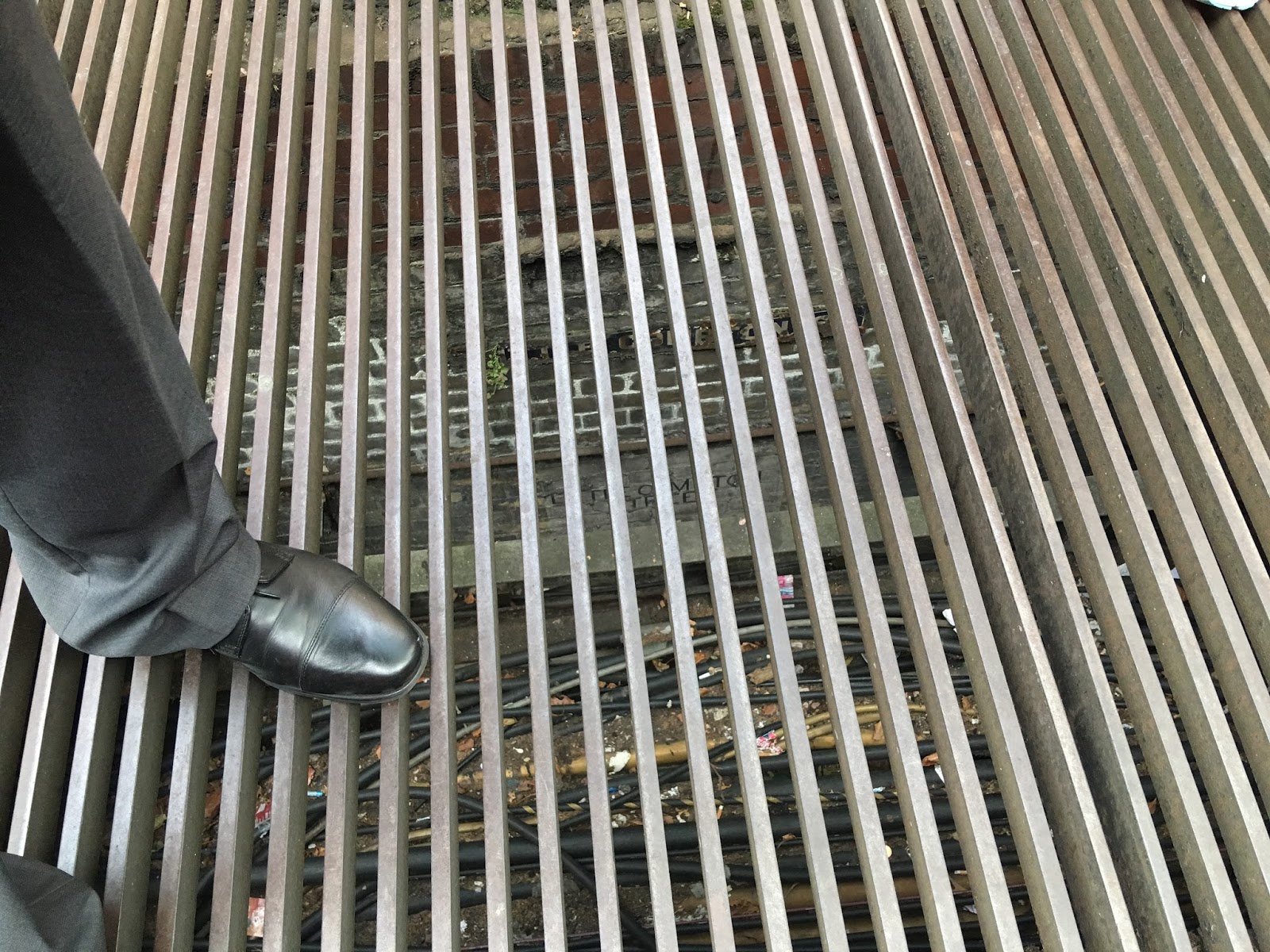
Its full of wires and stuff, but the side signs are what are thoroughly fascinating. So the background is that long time back, the street level was much much lower than now. There used to be a pub here and many more buildings.
But in 1896, all this stuff was demolished and the current Charing Cross Road constructed with an office building on top. So nothing else remains, other than these two signs showing two levels of the London street.
it was strange, standing in the middle of the very busy street, peering up and down the grate, getting some very weird looks at me. And then just stood there trying to imagine the old London. I could really feel it, its one of those places where the old London Ghosts roam.
Saturday, August 20
Why do the most flamboyant males have the evolutionary edge? – Alex Riley | Aeon Essays
Something relating to our Ecuador visit. And to Darwin of course. A most fascinating overview of why males spend so much time in impressing females. And other males so that they are frightened away from the females. We aren't that different from animals or peacocks and this has driven our behaviours.
Very interesting to note how human behaviour is also aligned to ensuring our mitochondria is aligned with our partner's.
Love
Baba
Why do the most flamboyant males have the evolutionary edge? – Alex Riley | Aeon Essays
https://aeon.co/essays/why-do-the-most-flamboyant-males-have-the-evolutionary-edge
(via Instapaper)
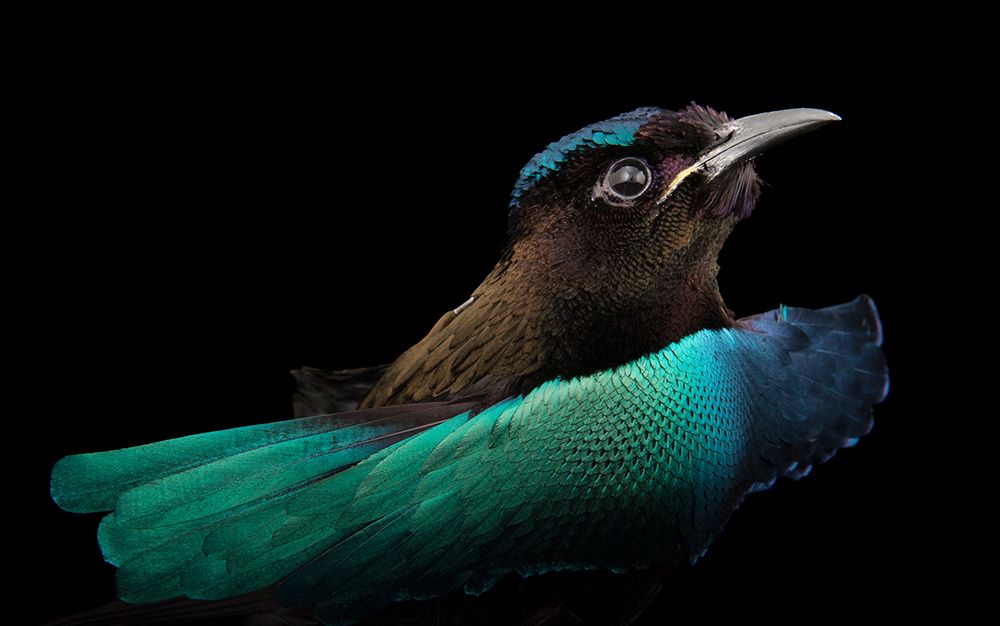 For a large part of his life, Charles Darwin didn't like peacocks. It wasn't their loud vocalisations – a high-pitched, piercing combo of laughter and screaming. That he could deal with. What kept him up at night was the peacocks' tails. As he wrote to a friend in 1860, the sight of those ornate feathers made him feel sick whenever he gazed at them. Why? Because he couldn't explain them. The plumes of turquoise, blue and brown, trailing behind many times the bird's body length or spread into a wide fan of flamboyancy, was an affront to his theory of evolution by natural selection, a process founded on efficiency and removal of extravagance.
Not only is such a train of feathers metabolically costly, it is also readily visible to any carnivore looking for an easy meal. With all the predation, pathogens and diseases that living things need to overcome, Darwin wondered, how could such self-destructive beauty evolve? Why would an animal go to such extremes to make life harder, and death more likely? He finally hit on a plausible answer in 1871. In the second part of his book The Descent of Man, he explained that there is more to life than mere survival. Animals need to have sex, too. And because females are often more heavily invested than males in egg production and parental care, they are more likely to take the lead in choosing mates, too. As Darwin wrote: 'It's not a struggle for existence, but a struggle between the males for the possession of the females.'
Very interesting to note how human behaviour is also aligned to ensuring our mitochondria is aligned with our partner's.
Love
Baba
Why do the most flamboyant males have the evolutionary edge? – Alex Riley | Aeon Essays
https://aeon.co/essays/why-do-the-most-flamboyant-males-have-the-evolutionary-edge
(via Instapaper)
Not only is such a train of feathers metabolically costly, it is also readily visible to any carnivore looking for an easy meal. With all the predation, pathogens and diseases that living things need to overcome, Darwin wondered, how could such self-destructive beauty evolve? Why would an animal go to such extremes to make life harder, and death more likely? He finally hit on a plausible answer in 1871. In the second part of his book The Descent of Man, he explained that there is more to life than mere survival. Animals need to have sex, too. And because females are often more heavily invested than males in egg production and parental care, they are more likely to take the lead in choosing mates, too. As Darwin wrote: 'It's not a struggle for existence, but a struggle between the males for the possession of the females.'
Subscribe to:
Posts (Atom)