Son
See this review of a book which is on my list of to be read books. I've spoken to you before about the threats of the state. Besides the wars that states wage son, they also kill and maim their own people with great enthusiasm. The United Kingdom was responsible for millions of deaths in the great Bengal famine. Something that Salil uncle and j discussed recently in Singapore. The USA is going through some of its ructions over race and locks up a disproportionate number of black citizens.
But they have to start somewhere. Just like hitler did son. See how they worked out. And then there's the entire issue of collaborators. What do you do when a man forces you to act immorally? Difficult philosophical question at the best of times. Bloody question of survival when you're in a death camp.
Read and weep son. This is where the final solution started for tens of millions of people in Europe.
Love
Baba
Patrick Montague. Chelmno and the Holocaust: A History of Hitler's First Death Camp. Chapel Hill: University of North Carolina Press, 2011. 416 pp. $75.00 (cloth), ISBN 978-0-8078-3527-2.
Reviewed by Richards O. Plavnieks (Stetson University)
Published on H-German (September, 2014)
Commissioned by Chad Ross
An In-depth Inquiry into Hitler's First Death Camp: Chelmno
Twenty years in the making, Patrick Montague's chronicle, Chelmno and the Holocaust, does not disappoint. The book's first chapter, titled "Prologue," is not the book's prologue, but in fact explains the "prologue" to Chelmno—and in turn, situates Chelmno as an opening chapter of the Holocaust. It is in this regard that the book makes its finest contribution to scholarship: a detailed history of Adolf Hitler's least-known death camp. Moreover, the illumination of the camp's key role as a pioneer of the Nazi death camp model suggests a place for Montague's work in the library of indispensable scholarship on the Holocaust.
Saturday, November 26
Fwd: Hitlers first death camp


Friday, November 25
Fwd: is religion better for you?
Kannu
We have spoken about religion quite often, well I have emailed to you :) not sure if you have read them but then that's what Baba's do, lecture to their kids. Dadu does that to me. I noticed he doesnt do that to you! :) but then the link between a grandfather and grandchild is different. Anyway
Here's a fascinating article, son.
Religious Market Structure, Religious Participation, and Outcomes: Is Religion Good for You?
Jonathan Gruber
NBER Working Paper No. 11377
Religion plays an important role in the lives of many Americans, but there is relatively little study by economists of the implications of religiosity for economic outcomes. This likely reflects the enormous difficulty inherent in separating the causal effects of religiosity from other factors that are correlated with outcomes. In this paper, I propose a potential solution to this long standing problem, by noting that a major determinant of religious participation is religious market density, or the share of the population in an area which is of an individual's religion. I make use of the fact that exogenous predictions of market density can be formed based on area ancestral mix. That is, I relate religious participation and economic outcomes to the correlation of the religious preference of one's own heritage with the religious preference of other heritages that share one's area. I use the General Social Survey (GSS) to model the impact of market density on church attendance, and micro-data from the 1990 Census to model the impact on economic outcomes. I find that a higher market density leads to a significantly increased level of religious participation, and as well to better outcomes according to several key economic indicators: higher levels of education and income, lower levels of welfare receipt and disability, higher levels of marriage, and lower levels of divorce.
http://www.iefpedia.com/english/wp-content/uploads/2010/05/RELIGIOUS-MARKET-STRUCTURE.pdf
You can read the article if/when you are free or interested. But this was a curious antidote to my usual comments about religion being a pain in the backside. It still is, but as you can see from this article, people who are religious and live next to each other in the same religion are better educated, richer, more married and presumably more happy. Now how do you square the circle? The way I see it, peer pressure is a big big thing, son. If the religion keeps on telling you that you have to obey god and then your group shows off its religiousity by doing well, then the group will self pressure each to be better. Note that in the article, its mainly jews and christians who are researched. I wonder what would have been the result if we had other religious groups involved? Then that would be funny, then we could say that if you are a christian and live in a christian area, then you are better off than a hindu or a muslim.
Still, stay away, son, you dont need peer pressure or God to tell you to be good and happy and be nice. End of :)
Love
baba
Thursday, November 24
Fwd: Resting in peace
Diya
I'm sitting just outside Changi prison and museum. It was a very emotional journey darling. But first a bit of history as you like history. You're such an amazingly unique little girl. Most other girls are pining over ponies and dolls while my wonderful girl sits in the corner and quietly reads about history.
The Japanese invaded Malaysia and Singapore. There were a ton of British and commonwealth soldiers who slowly withdrew down the spine of Malaysia and then went into Singapore. The Japanese kept coming down and then defeated them. The British and allies then fought back in world war 2 and 4 years later after the first atomic bomb was dropped on Hiroshima and the second on Nagasaki the Japanese surrendered.
During the war years, Changi prison was where all the commonwealth and allied soldiers were imprisoned, tortured and killed in their thousands. So when you get a chance sweetheart, do visit here. You will see evidence of how men can be cruel to each other. You can see evidence of how men can be brave and help each other. You can see how women saved their children despite being tortured. Very emotional and history coming alive.
But when I was just exiting the museum, I saw this poster. And that nearly made me cry. Had lumps in my throat.

Wednesday, November 23
gita
Kannu
I've mentioned this book to you before. It's one of the few books I get to re-read every year.
Here is a good review of it and I'll let you read this first before you get my thoughts.
The philosophy which you're reading son in oxford is the Greco Roman European tradition. It's the judeo Christian one. Quite a fascinating and quite powerful one.
Of course there are other schools son. There's the Buddhist one. There's the jain one. There's the huge number of variants from the Muslim Islamic Arabic side. You have the Shinto perspective. The animist perspective. The shamanism angle. You have the Druidic or even the Wiccan one. And then there's the Hindu one. From where this text of Gita emerges son.
So the first point is, which one should you read? Well based upon the quote, good people learn from their mistakes and great people from others, you need to read all of them.
Which one should you follow? Ah there my wonderful son, you have to decide yourself which makes sense to you. Me? I take a broad based approach and consider all of them valid. Needless to say, Hinduism has a richness in thought productivity, breadth, concepts, metaphysical thought that I haven't come across anywhere else frankly. Not surprising. It's so old. Oldest as a matter of fact still in existence. Then again that's no great claim to fame. The Catholic Church claims to be the oldest organised religious organisation and it still has faults. But I digress.
The philosophical framework which you are reading has slowly moved away from the divine to the individual. Saint acquinas or reading the work of Jeremiah in the Old Testament or Luke or john in the New Testament will give you a perspective that God is omnipotent and you've got to follow him and the rules in the book to be happy. Obedience. But now the philosophy from Paine to Adam smith to Hegel to Voltaire and down to Hayek and Zizek and and all say that you've got to follow your heart. Sod God.
Same with Islam. What started with the gates of itijihad open and people like the brethren of purity being open and honest has come down to people quoting ibn tammiya while chopping off somebody's head. Buddhists too a very functionally beautiful set of Buddha's teachings religion and converted it into a mumble feat of mindnumbingly boring set of rituals and prayers. Every time I see a prayer wheel or a prayer flag, I just wonder at the thought process behind the philosophy which links a circular motion of an object to God. Jainism is slowly heading that way.
But the Gita is strange son. Every year I read it and I think of it in different ways. Last time I read it, it made me feel that I have the godhead in me. At one time I felt like dying because I felt so insignificant and meaningless. There was no point to life if everything was a giant deterministic multi regression based engine. Then one time it made it cry wanting to be with God. Strange son. Everytime I've met God I feel like crying. I guess it's because there's just so much emotion welling up that normal means of expression die and I end up standing there like a complete idiot and crying silently. Well there's your idiot dad for you.
I don't have to tell you about the stupidities of the caste system son. You're far too intelligent to believe in it but take the Gita with you to the mountains son. You can download an electronic copy and just read bits of it when you can. Keeps your mind challenged :) not now I think your current course is challenging you anyway. But I think you'll face and hit the problem I have son. You start running out of things to challenge yourself with and that's where the ultimate challenge is to know yourself, God, etc etc. Never ending fun and games and confusion and frustration.
Have a lovely weekend Kannu
Love and miss you. Can't wait to see you in 2 weeks. I'm feeling very tired. It's been near 4 weeks that I've been doing two shifts constantly under some pretty hairy office conditions and it's starting to make me look forward to the holidays :)
Love you
Baba
Tuesday, November 22
quote - “When you start to really know someone, all his physical characteristics start to disappear.
“When you start to really know someone, all his physical characteristics start to disappear. You begin to dwell in his energy, recognize the scent of his skin. You see only the essence of the person, not the shell. That’s why you can’t fall in love with beauty. You can lust after it, be infatuated by it, want to own it. You can love it with your eyes and body but not your heart. And that’s why, when you really connect with a person’s inner self, any physical imperfections disappear, become irrelevant.”
Lisa Unger, Beautiful Lies
Kannu
i came across this quote today. found it very useful son. Given the ugly ass face i have got, i was never able to coast on my good looks lol. people with good looks do have a built in benefit. they get more pay, they get more partners, they get more forgiveness, they are more popular, they get off more traffic tickets etc etc. and this is academic research, but you cannot do anything about what and how you look. you can be well dressed and presentable but thats it. you have to be 10 times better at your personality and intellect to compete with the beautiful people. an outgoing personality, a happy laugh, twinkling eyes, a sense of humour, well read personality, all is what you use to even up the odds. not that you arent good looking, i think you are brilliant but then i am biased :)
but that not what i wanted to say, son. everybody you look around will be running around trying to look good. seriously. the cult of external beauty is tremendous son. with the rise in social media, apps, photography, etc. etc. thats what you will see, first reactions. people spend an awesome amount of time money and energy in making sure they look good. cosmetic surgery. makeup (just read about this man who is an editor of a magazine, takes 4 baths a day and puts on makeup!!!!) and puts their best side forward on their social media presence etc. etc.
which is fine. everybody wants to be loved and be admired and look good and and and. but then as i have always told you son, never follow the crowd. thats why you pretty much totally ignore what people look like and use the non common, unique ways to indentify and know the insides of a person. see how they walk. see how they react to a flower or an abandoned dog. look at how they pour ketchup son. See how they use their cars. know how they scratch their noses. i have told you about sniffing people discreetly. that's what you need to do.
not that im saying not to have lust. of course you should have it. be out there and have fun with beauty and and and :) but dont forget to look deeper son. thats where the real person lives, not on the surface.
that said, ive got to end with a counterfactual quote by jean kerr, 'im tired of all this nonsense about beauty being only skin deep. thats deep enough. what do you want - an adorable pancreas?' :)
love
baba
Monday, November 21
Royalit: What Did Medieval Kings Read? - Medievalists.net
Such a curious question kids. But there's a serious point to this question. When you're in high positions, you need to read not only to improve yourself but also to entertain yourself.
The problem with YouTube and tv is that it forces you to take whatever they are phasing on you. You are a vase to be filled rather than a fire to be lit.
I've seen kids and students and even adults spend their time in front of the tv. They become flabby in their minds kids.
Read. Whatever you want but read. That makes you interesting. Not boring.
Have a lovely week
Love
Baba
Royalit: What Did Medieval Kings Read? - Medievalists.net
http://www.medievalists.net/2016/04/20/royalit-what-did-medieval-kings-read/
(via Instapaper)
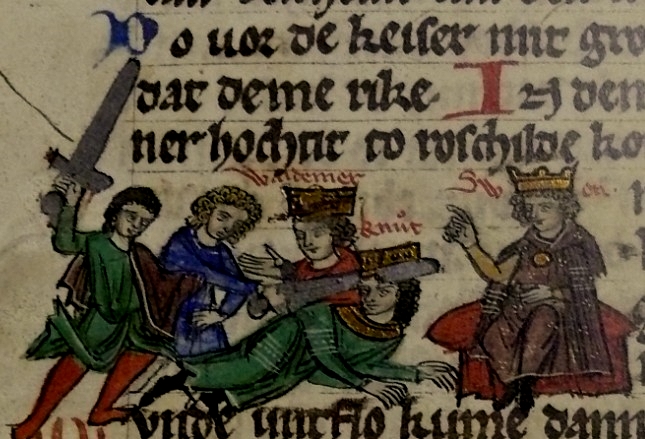
Great medieval kings
I was recently reading an interesting article called by Nicholas Vincent, which looked at what we know about the books kings owned in the Middle Ages. Interestingly, there is a stretch of two centuries in which we can't prove any specific books that have survived the Middle Ages were indisputably owned by any English king (Vincent, p.73). (Later kings helpfully signed their names into a bunch of books, or wrote ex libris – "from the library of" – so that their ownership can be pretty easy to demonstrate.) But even though we can't prove their ownership, we know that kings and queens did read. The question of the day is: what did they read?
Perhaps it's obvious, but one of the big things kings read about was kingship, as in how-to books, starting with the Old Testament. If a king was expected to be as wise as Solomon, then he'd better read up on Solomon, and King David, for that matter. Edward IV had a not-so-subtle how-to book in his collection which was referred to in his accounts as "Le Gouvernement of Kings and Princes" (McKendrick, p.173 ). Royals wished to know more about the world they were ruling over, too, evidently, since Henry II was said to be interested in learning both European and Arabic knowledge (Vincent, p.83), and John read Pliny the Elder, a medieval encyclopedist (Vincent, p.85). John also read Valerius Maximus, whose Memorabilia, as Vincent points out, deals with "the vexed question of relations between religion and the secular authorities, between the Caesars and 'the wisdom of pontiffs'" (Vincent, p.85). Vincent also points out that John received this book mere days after the papal interdict of England went into effect in March, 1208. (Coincidence? I think not.) Royals read about themselves and their histories, as well. Henry II and Eleanor of Aquitaine seem to have been responsible for commissioning histories of the Normans and of Britain (Vincent, p.88); Edward the Confessor's widow (Edith) commissioned the Vita Edwardi ("Life of Edward") to commemorate her husband (Vincent, p.75); and Queen Adela did the same for her husband, Henry I (Vincent, p.88). Edward IV held a copy of Froissart's work, which would have outlined the history of the fourteenth-century kings (McKendrick, p.165). As far as administration goes, we know that William the Conqueror ordered the creation of The Domesday Book, but seems it wasn't until King John that royal correspondence was copied and kept on hand for kings to read. But, "from 1215," Vincent says, "we even have the name of the first recorded royal archivist, William 'Cuckoo Well' (Kukku Wel)" (Vincent, p.82). Rounding out the books necessary to being a good king were the moral works of the classical authors and the church fathers like Origen, Augustine, and Peter Lombard (Vincent, p.85). Oh, and also horoscopes (Vincent, p.88), because even kings need to hedge their bets.
Aside from books and records necessary to kingship were books necessary to the soul. Vincent writes,
In 1239 … to furnish the chapel of Sherborne castle, the King [Henry III] ordered a Missal, a Gradual with Troper, a Breviary (portehors) with Antiphonary, a Legendary, a Psalter, a book of collects, a Capitulary (or book of short readings) and a Hymnary (p.90).
The problem with YouTube and tv is that it forces you to take whatever they are phasing on you. You are a vase to be filled rather than a fire to be lit.
I've seen kids and students and even adults spend their time in front of the tv. They become flabby in their minds kids.
Read. Whatever you want but read. That makes you interesting. Not boring.
Have a lovely week
Love
Baba
Royalit: What Did Medieval Kings Read? - Medievalists.net
http://www.medievalists.net/2016/04/20/royalit-what-did-medieval-kings-read/
(via Instapaper)
Great medieval kings
Perhaps it's obvious, but one of the big things kings read about was kingship, as in how-to books, starting with the Old Testament. If a king was expected to be as wise as Solomon, then he'd better read up on Solomon, and King David, for that matter. Edward IV had a not-so-subtle how-to book in his collection which was referred to in his accounts as "Le Gouvernement of Kings and Princes" (McKendrick, p.173
). Royals wished to know more about the world they were ruling over, too, evidently, since Henry II was said to be interested in learning both European and Arabic knowledge (Vincent, p.83), and John read Pliny the Elder, a medieval encyclopedist (Vincent, p.85). John also read Valerius Maximus, whose Memorabilia, as Vincent points out, deals with "the vexed question of relations between religion and the secular authorities, between the Caesars and 'the wisdom of pontiffs'" (Vincent, p.85). Vincent also points out that John received this book mere days after the papal interdict of England went into effect in March, 1208. (Coincidence? I think not.) Royals read about themselves and their histories, as well. Henry II and Eleanor of Aquitaine seem to have been responsible for commissioning histories of the Normans and of Britain (Vincent, p.88); Edward the Confessor's widow (Edith) commissioned the Vita Edwardi ("Life of Edward") to commemorate her husband (Vincent, p.75); and Queen Adela did the same for her husband, Henry I (Vincent, p.88). Edward IV held a copy of Froissart's work, which would have outlined the history of the fourteenth-century kings (McKendrick, p.165). As far as administration goes, we know that William the Conqueror ordered the creation of The Domesday Book, but seems it wasn't until King John that royal correspondence was copied and kept on hand for kings to read. But, "from 1215," Vincent says, "we even have the name of the first recorded royal archivist, William 'Cuckoo Well' (Kukku Wel)" (Vincent, p.82). Rounding out the books necessary to being a good king were the moral works of the classical authors and the church fathers like Origen, Augustine, and Peter Lombard (Vincent, p.85). Oh, and also horoscopes (Vincent, p.88), because even kings need to hedge their bets.Aside from books and records necessary to kingship were books necessary to the soul. Vincent writes,
In 1239 … to furnish the chapel of Sherborne castle, the King [Henry III] ordered a Missal, a Gradual with Troper, a Breviary (portehors) with Antiphonary, a Legendary, a Psalter, a book of collects, a Capitulary (or book of short readings) and a Hymnary (p.90).
Sunday, November 20

Saturday, October 29
Friday, October 28
should you do a phd?
both of you have mentioned that you may want to consider doing a PhD. it is a good thing to do, kids, but you should be sure of why you want to do it. I came across this article which gives a very good response to if you should do a phd. I have done phd's for professional reasons as well as personal reasons. All my PhD's had something to do with my job but I didn't get my job because of my phd…it was because of the skills I had. For example, i got a job in a s/w firm because i was able to code, do complex mathematical and statistical calculations and knew financial markets but then anybody with a MSc could get it as well.
so something to think about :)
and now i have to go to the library to work on my PhD..I have to go check out some ledgers dating back the 1700's :)
love
Baba
======
"I don't know if we'll have time to meet again before I go back but I just wanted to wrap up and give you some more thoughts on doing a PhD, if you are considering it
1. It's good to have an idea why you are doing it, for example to get a certain kind of job in industry, or to get an academic job, or just to expand your knowledge. I think all of these reasons are fine. Remember that professorships are very few and today, most PhDs can not continue to become full professors. In many fields, postdocs are in a way "cheap labour" relative to their skill level. I don't recommend doing a PhD just because you have nothing better to do ;-)
Over the years since the 70's or so, the number of PhD students has increased dramatically, as has the number of postdocs, but the number of associate/assistant or tenured professors has not really changed. It has become much, much harder to climb that academic pyramid that you may be dreaming of...
2. As I said it's important to have an advisor you like and respect... some advisors really like the scientific field and some are more political/administrators. Both kinds may work for you depending on your personal style, and both kinds may cause problems for you. It may be very hard to switch advisor once you start, depending on the country you do it in, and this person's name will be with you forever. It seems to me that in practice, almost everybody has a mixed experience with their supervisors, so there will be good and bad things, just like in any relationship. In many ways I was lucky with my supervisor, because he secured funding and allowed me a lot of research freedom, but he was a little bit too political for me to really respect him as a mentor (keep this comment to yourself please).
3. Whatever you do, almost nobody will earn more money at the end of their career because they had a PhD. On the other hand, you may get to do more interesting jobs, and some jobs indeed require a PhD. As an experienced software engineer, fortunately you will always be employable anyway (in today's market conditions) so you don't need to worry too much about your worst case situation. You will not be unemployed and forced to live with your parents. PhDs in history or philosophy are not that lucky in 2015...
4. (Advice for actually doing a PhD.) PhD students spend many years focusing on a very small part of their field, so it seems common to lose your sense of proportion during or after you've done it. I still think of a lot of things in terms of programming languages...
So if you ever do it, you should try to keep an outside life as much as possible (non-academic friends, physical exercise etc) to make sure your life doesn't become totally unbalanced.
Also, I would at that point recommend not taking your own publications and publication record too seriously, even though it may be a condition for graduating.. ("at least three high level publications" or something similar might be an expectation). Your supervisor will always push you to publish, since he/she gets credit for it, for free. I worried way too much about this, which actually hurt my results and caused a lot of pain. Just like in love, the only way to win that game is not to be too desperate ;-)"
so something to think about :)
and now i have to go to the library to work on my PhD..I have to go check out some ledgers dating back the 1700's :)
love
Baba
======
"I don't know if we'll have time to meet again before I go back but I just wanted to wrap up and give you some more thoughts on doing a PhD, if you are considering it
1. It's good to have an idea why you are doing it, for example to get a certain kind of job in industry, or to get an academic job, or just to expand your knowledge. I think all of these reasons are fine. Remember that professorships are very few and today, most PhDs can not continue to become full professors. In many fields, postdocs are in a way "cheap labour" relative to their skill level. I don't recommend doing a PhD just because you have nothing better to do ;-)
Over the years since the 70's or so, the number of PhD students has increased dramatically, as has the number of postdocs, but the number of associate/assistant or tenured professors has not really changed. It has become much, much harder to climb that academic pyramid that you may be dreaming of...
2. As I said it's important to have an advisor you like and respect... some advisors really like the scientific field and some are more political/administrators. Both kinds may work for you depending on your personal style, and both kinds may cause problems for you. It may be very hard to switch advisor once you start, depending on the country you do it in, and this person's name will be with you forever. It seems to me that in practice, almost everybody has a mixed experience with their supervisors, so there will be good and bad things, just like in any relationship. In many ways I was lucky with my supervisor, because he secured funding and allowed me a lot of research freedom, but he was a little bit too political for me to really respect him as a mentor (keep this comment to yourself please).
3. Whatever you do, almost nobody will earn more money at the end of their career because they had a PhD. On the other hand, you may get to do more interesting jobs, and some jobs indeed require a PhD. As an experienced software engineer, fortunately you will always be employable anyway (in today's market conditions) so you don't need to worry too much about your worst case situation. You will not be unemployed and forced to live with your parents. PhDs in history or philosophy are not that lucky in 2015...
4. (Advice for actually doing a PhD.) PhD students spend many years focusing on a very small part of their field, so it seems common to lose your sense of proportion during or after you've done it. I still think of a lot of things in terms of programming languages...
So if you ever do it, you should try to keep an outside life as much as possible (non-academic friends, physical exercise etc) to make sure your life doesn't become totally unbalanced.
Also, I would at that point recommend not taking your own publications and publication record too seriously, even though it may be a condition for graduating.. ("at least three high level publications" or something similar might be an expectation). Your supervisor will always push you to publish, since he/she gets credit for it, for free. I worried way too much about this, which actually hurt my results and caused a lot of pain. Just like in love, the only way to win that game is not to be too desperate ;-)"
Subscribe to:
Posts (Atom)