Thursday, August 18

‘A Man of very surprising Genius’: John Bagford, Bookseller and Collector - Untold lives blog

So a month back, kids, I went for a walk around London. It was lead by this librarian who took us around buildings and places where bagford had an association with. I've written about him earlier to you. 
I can understand why people are not happy with him. For him to cut out title pages is a crime. Heinous. 
But compared to that, he did help create some of the great libraries of London so that's good. 
Interesting chap :)

Love
Baba


'A Man of very surprising Genius': John Bagford, Bookseller and Collector - Untold lives blog
http://britishlibrary.typepad.co.uk/untoldlives/2016/04/a-man-of-very-surprising-genius-john-bagford-bookseller-and-collector.html
(via Instapaper)

[H]e was a Man of very surprising Genius, and, had his education...been equal to his natural Genius, he would have proved a much greater Man than he was. And yet, without this Education, he was, certainly, the greatest Man in the World in his way...
So wrote the Oxford antiquary Thomas Hearne of his friend John Bagford (b. 1650/51, d. 1716): a man of humble background and little formal education, a one-time shoemaker who made a career as a bookseller. Since he counted among his customers such luminaries as Hans Sloane and Robert Harley – whose libraries went on to form foundation collections of the British Museum – Bagford's activities are of no little interest in the history of the British Library and its books. Bagford is principally remembered today for amassing important collections of early printed ballads and title-pages. The latter he gathered with the object – unfulfilled at his death – of writing 'an Historical Account of that most Universally Celebrated, as well as Useful Art of Typography'.
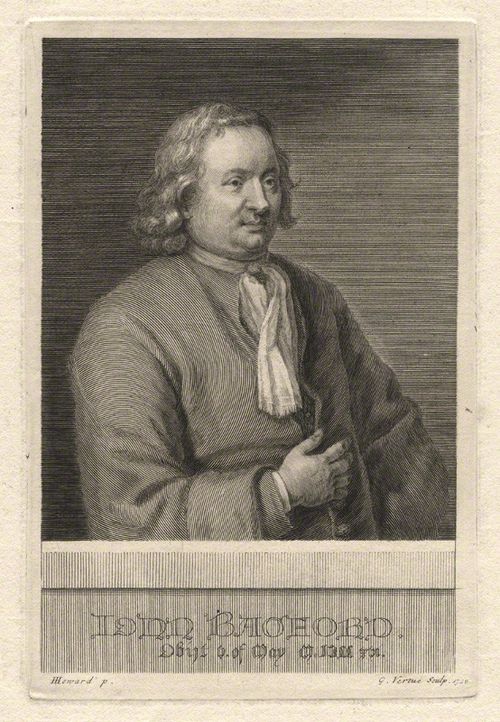
Engraving of John Bagford by George Vertue, after the painting by Hugh Howard. © National


Wednesday, August 17

A Terrifying Journey Through the World's Most Dangerous Jungle

This was a difficult read. I'm a family of migrants. Going back several generations. Crossing internal and external boundaries. Burma. Bangladesh. Nepal. India. It's a strange feeling. To read about bangladeshis being in Panama and Columbia. Going through very tough situations. And then can you imagine? Being forced to go back after crossing the ferocious most dangerous jungle? Will kill your spirit :(


A Terrifying Journey Through the World's Most Dangerous Jungle
http://www.outsideonline.com/2098801/skull-stake-darien-gap
(via Instapaper)

"Huelo chilingos," the boatman shouts over the drone of an outboard motor. I smell migrants.
I turn around and see nothing but a wall of dark, unruly jungle, then I slump back into the bow of the canoe. Five days we've been out here, waiting for a group of foreigners to appear on this godforsaken smuggler's route in the Darién Gap, and all we have to show for it is sunburn and trench foot. Our search is starting to feel futile.
For centuries the lure of the unknown has attracted explorers, scientists, criminals, and other dubious characters to the Gap, a 10,000-square-mile rectangle of swamp, mountains, and rainforest that spans both sides of the border between Colombia and Panama. Plenty of things here can kill you, from venomous snakes to murderous outlaws who want your money and equipment. We've come to find the most improbable travelers imaginable: migrants who, by choice, are passing through the Darién region from all over the world, in a round-about bid to reach the United States and secure refugee status

Tuesday, August 16

Historical GDP growth rates

these figures are very thought-provoking.


Forget the current situation where we have seen a significant change in the GDP figures, but nations rely on a very long history to develop. Patents. Universities. Infrastructure. Dams. Irrigation Networks. Institutions. All those help and have a very long chain. 

Look at the UK, its growth rate was extraordinary and that is what provides you hope that the UK will prosper and develop much more. It will have to rely on the institutions, infrastructure, universities to keep on developing further. 

Tuesday, August 9

BBC News: Could wearing a suit harm your career?

Kannu

Remember you laugh at me for talking about hygiene factors? :) Here's some research behind it son. A highly polished pair of shoes. A crisp white shirt. A discreet piece of individuality via the cufflinks. A statement and discreet tie. All helps to buttress your skills and expertise. 

I keep on hearing that people in suits work for people in t shirts. Yes. That's right. But people in suits end up earning much more consistently than people in t shirts. So there are pro's and cons to everything. A well cut suited person provides the frame. It's like saying that a painting doesn't need a good frame. Or a book doesn't need a good binding. No it doesn't but if it has it, then the value of the painting goes up hugely. See? Why forego advantages when you can have them? 

Have a lovely day son

Love

Baba


I saw this on the BBC News App and thought you should see it:

Could wearing a suit harm your career?
Could sticking to the traditional suit at work hamper your career?
Disclaimer: The BBC is not responsible for the content of this email, and anything written in this email does not necessarily reflect the BBC's views or opinions. Please note that neither the email address nor name of the sender have been verified.

Friday, August 5

My father my hero

Kannu

I'm rereading Marcus Aurelius's meditations. He's one of history's greatest leaders. I'll be sharing some snippets with you if you don't mind. 

The first one is where he praises his father (copied below). One of my heros is my father, your Dadu. He's an amazing character. Why do you think I love him? Because of his dedication to duty towards work and family. He is the epitome of dedication. Plus great humour. And he's ferociously intelligent. He had a very difficult life son but despite all those, he managed to raise two children and have a good life. 

And I was reminded of your grandfather when I read Marcus praising his father. And he's so happy to correspond with you, you really bring him so much joy Kannu. Thank you for loving and giving him time despite your busy schedule. 

Love

Baba

XIII. In my father, I observed his meekness; his constancy without

wavering in those things, which after a due examination and deliberation, he had determined. How free from all vanity he carried himself in matter of honour and dignity, (as they are esteemed:) his laboriousness and assiduity, his readiness to hear any man, that had aught to say tending to any common good: how generally and impartially he would give every man his due; his skill and knowledge, when rigour or extremity, or when remissness or moderation was in season; how he did abstain from all unchaste love of youths; his moderate condescending to other men's occasions as an ordinary man, neither absolutely requiring of his friends, that they should wait upon him at his ordinary meals, nor that they should of necessity accompany him in his journeys; and that whensoever any business upon some necessary occasions was to be put off and omitted before it could be ended, he was ever found when he went about it again, the same man that he was before. His accurate examination of things in consultations, and patient hearing of others. He would not hastily give over the search of the matter, as one easy to be satisfied with sudden notions and apprehensions. His care to preserve his friends; how neither at any time he would carry himself towards them with disdainful neglect, and grow weary of them; nor yet at any time be madly fond of them. His contented mind in all things, his cheerful countenance, his care to foresee things afar off, and to take order for the least, without any noise or clamour. Moreover how all acclamations and flattery were repressed by him: how carefully he observed all things necessary to the government, and kept an account of the common expenses, and how patiently he did abide that he was reprehended by some for this his strict and rigid kind of dealing. How he was neither a superstitious worshipper of the gods, nor an ambitious pleaser of men, or studious of popular applause; but sober in all things, and everywhere observant of that which was fitting; no affecter of novelties: in those things which conduced to his ease and convenience, (plenty whereof his fortune did afford him,) without pride and bragging, yet with all freedom and liberty: so that as he did freely enjoy them without any anxiety or affectation when they were present; so when absent, he found no want of them. Moreover, that he was never commended by any man, as either a learned acute man, or an obsequious officious man, or a fine orator; but as a ripe mature man, a perfect sound man; one that could not endure to be flattered; able to govern both himself and others. Moreover, how much he did honour all true philosophers, without upbraiding those that were not so; his sociableness, his gracious and delightful conversation, but never unto satiety; his care of his body within bounds and measure, not as one that desired to live long, or over-studious of neatness, and elegancy; and yet not as one that did not regard it: so that through his own care and providence, he seldom needed any inward physic, or outward applications: but especially how ingeniously he would yield to any that had obtained any peculiar faculty, as either eloquence, or the knowledge of the laws, or of ancient customs, or the like; and how he concurred with them, in his best care and endeavour that every one of them might in his kind, for that wherein he excelled, be regarded and esteemed: and although he did all things carefully after the ancient customs of his forefathers, yet even of this was he not desirous that men should take notice, that he did imitate ancient customs. Again, how he was not easily moved and tossed up and down, but loved to be constant, both in the same places and businesses; and how after his great fits of headache he would return fresh and vigorous to his wonted affairs. Again, that secrets he neither had many, nor often, and such only as concerned public matters: his discretion and moderation, in exhibiting of the public sights and shows for the pleasure and pastime of the people: in public buildings. congiaries, and the like. In all these things, having a respect unto men only as men, and to the equity of the things themselves, and not unto the glory that might follow. Never wont to use the baths at unseasonable hours; no builder; never curious, or solicitous, either about his meat, or about the workmanship, or colour of his clothes, or about anything that belonged to external beauty. In all his conversation, far from all inhumanity, all boldness, and incivility, all greediness and impetuosity; never doing anything with such earnestness, and intention, that a man could say of him, that he did sweat about it: but contrariwise, all things distinctly, as at leisure; without trouble; orderly, soundly, and agreeably. A man might have applied that to him, which is recorded of Socrates, that he knew how to want, and to enjoy those things, in the want whereof, most men show themselves weak; and in the fruition, intemperate: but to hold out firm and constant, and to keep within the compass of true moderation and sobriety in either estate, is proper to a man, who hath a perfect and invincible soul; such as he showed himself in the sickness of Maximus.

there are many other countries who do not like international courts and are happily going down the Zimbabwe route

this article was very interesting and rather sad, the power of states needs to be managed and controlled.

This article discusses three credible attempts by African governments to restrict the jurisdiction of three similarly situated sub-regional courts in response to politically controversial rulings. In West Africa, when the Court of the Economic Community of West African States (ECOWAS) upheld allegations of torture by opposition journalists in Gambia, that country’s political leaders sought to restrict the Court’s power to review human rights complaints. The other member states ultimately defeated Gambia’s proposal. In East Africa, Kenya failed in its efforts to eliminate the East African Court of Justice (EACJ) and to remove some of its judges after a decision challenging an election to a sub-regional legislature. However, the member states agreed to restructure the EACJ in ways that have significantly affected the Court’s subsequent trajectory. In Southern Africa, after the Southern African Development Community (SADC) Tribunal ruled in favour of white farmers in disputes over land seizures, Zimbabwe prevailed upon SADC member states to suspend the Tribunal and strip its power to review complaints from private litigants. Variations in the mobilization efforts of community secretariats, civil society groups and sub-regional parliaments explain why efforts to eliminate the three courts or narrow their jurisdiction were defeated in ECOWAS, scaled back in the EACJ and largely succeeded in the SADC.


 It is indeed sad that states do not uphold the law, politicians need to be controlled tightly otherwise they will busy go about buggering up countries.

Thursday, August 4

The U.S. President Has a Blank Check for Waging War

Kids

As I've said so many times before, I hate wars. It's the most spectacular waste of energy and lives. And pretty much war mongers are literally bastards who are intellectually dishonest. But they are murderers. We launch wars, get thousands and millions killed and then the people who actually ordered the wars go on to become rich. Look at the prime ministers and presidents. 

Surely they should obey laws? Read this article to see why you have to constantly be on the guard against people exceeding their powers including democratic mandates. I asked my member of Parliament what his vote did after the Syrian war and he has no answer. Such are our leaders. 

Bah

Love

Baba 


The U.S. President Has a Blank Check for Waging War
http://warisboring.com/articles/the-u-s-president-has-a-blank-check-for-waging-war/
(via Instapaper)


Let's face it — in times of war, the Constitution tends to take a beating. With the safety or survival of the nation said to be at risk, the basic law of the land — otherwise considered sacrosanct — becomes nonbinding, subject to being waived at the whim of government authorities who are impatient, scared, panicky or just plain pissed off.

The examples are legion. During the Civil War, Pres. Abraham Lincoln arbitrarily suspended the writ of habeas corpus and ignored court orders that took issue with his authority to do so. After U.S. entry into World War I, the administration of Woodrow Wilson mounted a comprehensive effort to crush dissent, shutting down anti-war publications in complete disregard of the First Amendment.

Amid the hysteria triggered by Pearl Harbor, Pres. Franklin Roosevelt issued an executive order consigning to concentration camps more than 100,000 Japanese-Americans, many of them native-born citizens. Asked in 1944 to review this gross violation of due process, the Supreme Court endorsed the government's action by a six-to-three vote.

Thursday, July 28

The Economist | Big economic ideas: Breakthroughs and brickbats

One of the interesting things with my new job, son, is that I'm immediately pitched straight and deep into macro and micro economics. Quite an interesting situation. I've got to help figure out how to help direct taxpayers money to firms and sectors which can export more and better and perhaps even for the first time.

Exporting more has a direct implication on our country's economic prosperity and therefore our happiness. In other words, my job is to make our companies successful by exporting. So I will be delving deep into these (and other theories) all over again.

In most of the cases, it's basic hygiene factors which are missing and we forget them. Information. Risk management. Removal of barriers. Improvement in pricing. Right incentives. Education.

I thought of sending this to you as you still have one year to go but then if you had to recommend a target for a merger, these economic theories come into the picture so you might want to keep an eye out.

Did I mention how proud I am of you? I saw you rushing out today to go to work and I was telling mamma. Just a few years back, his worry was pickachu or what game to play. And now he's all grown up. I'm actually surprised and very impressed how well you've picked up good working habits. This level of work is very very rare and you, my son, are doing it very well.

But the role of internship is not just to get a job. It's also to let you know if you do want to do this job. We just want you to be happy and achieve your goals. If you want to be an investment banker fine. If you want to become an academic fine. We just want you to be happy and will support you as much as we can and more.

Love you son.

Baba


http://www.economist.com/news/leaders/21702469-what-economists-can-learn-disciplines-seminal-papers-breakthroughs-and-brickbats?frsc=dg%7Cc

Wednesday, July 27

Trying out the English Longbow

We went to Portsmouth and besides having a great time, we tested out some long bows.

There were two longbows there, one with a 40pound pull and another with a 90 pound pull, both of us were unable to pull it to the full extent. The actual pull required back in those days was 170 pounds.


and then i came across this little documentary showing how a longbow is made. it was just so mesmerising, i tell you.
The Birth Of A Weapon. Part I. English longbow making. from John Neeman Tools on Vimeo.

Is fiction good for you? How researchers are trying to find out

the answer is yes :)

see here for more details.

It's assumed that reading fiction is good for your mental health, but evidence linking Jane Eyre or Anna Karenina to a broadened mind has been mostly anecdotal. In a Review published on July 19 in Trends in Cognitive Sciences, a psychologist-novelist delves into that issue, arguing that reading or watching narratives may encourage empathy. By exploring the inner lives of characters on the page, readers can form ideas about others' emotions, motives, and ideas, off the page.
\